A Beginner's Guide to the Best Miniature Jewelry Box
Learn how to choose the perfect miniature jewelry box for rings, studs, and travel. Discover anti-tarnish linings, materials, and organization tips.

What Defines a True Miniature Jewelry Box?
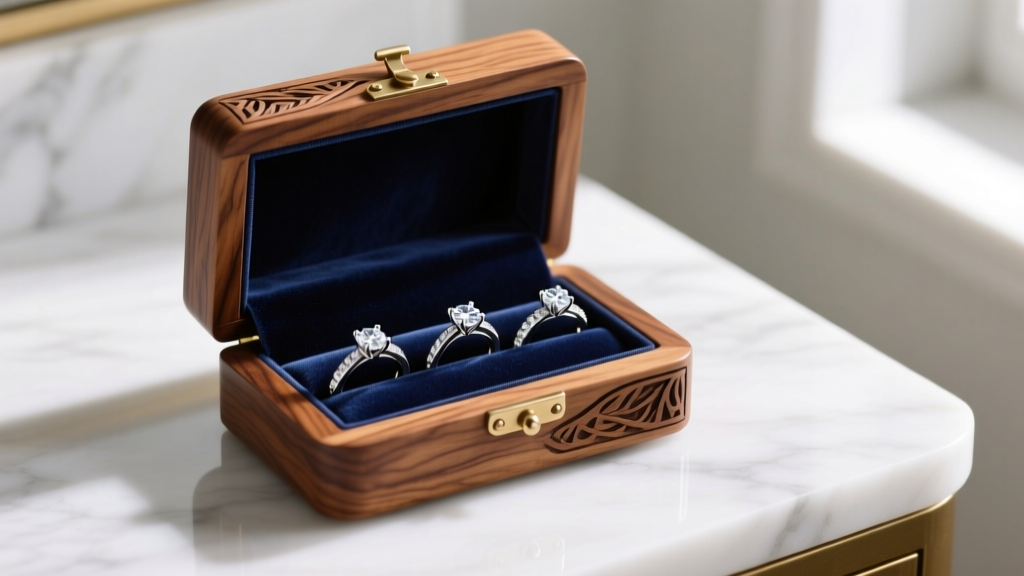
When your collection consists of high-value, small-footprint pieces like solitaire rings, diamond studs, and ear cuffs, a sprawling multi-drawer armoire is unnecessary overkill. Enter the miniature jewelry box. A true miniature box is defined by its strict footprint—typically measuring between 3x3 inches and 5x4 inches, with a height not exceeding 3 inches. Unlike standard travel cases that prioritize length for necklaces and bracelets, miniatures are engineered for depth, compartmentalization, and creating a sealed micro-environment. For beginners stepping into the world of micro-organization, understanding the engineering behind these tiny vaults is the first step toward protecting your most precious assets.
Exterior Materials and Structural Integrity
The exterior shell of your miniature jewelry box does more than look pretty; it acts as the primary barrier against environmental pollutants. Many budget-friendly boxes on the market are constructed from MDF (Medium-Density Fiberboard). While MDF is cheap and easy to mold, the urea-formaldehyde resins used in its manufacturing can off-gas sulfur compounds and acidic vapors over time. According to conservation standards, these vapors accelerate the oxidation of sterling silver and can degrade porous gemstones like pearls and turquoise. Always opt for solid hardwoods (like walnut, maple, or mahogany) or high-grade, injection-molded ABS plastics if you are storing reactive metals.
If you prefer the aesthetic of leather, you must pay close attention to the tanning process. Chrome-tanned leather utilizes sulfur-based chemicals that will transfer through the lining to your silver, causing rapid blackening (silver sulfide formation). Always seek out vegetable-tanned leather or high-quality synthetic PU leather for the exterior to ensure chemical stability.
The Science of Anti-Tarnish Linings
The interior lining is where the true magic of a miniature jewelry box happens. Standard velvet looks luxurious to the untrained eye, but it traps ambient humidity and offers zero chemical protection against airborne hydrogen sulfide. For serious collectors, active tarnish prevention is non-negotiable. Pacific Silvercloth is widely considered the gold standard in the industry. It is a 100% cotton flannel embedded with thousands of microscopic silver particles. These particles act as a sacrificial anode, reacting with hydrogen sulfide in the air before it can reach your jewelry, effectively keeping your silver brilliant for years.
| Lining Material | Tarnish Protection | Moisture Control | Lifespan | Best For |
|---|---|---|---|---|
| Standard Velvet | None | Poor (Traps moisture) | Indefinite | Costume jewelry, short-term display |
| Microfiber | Low | Moderate | 3-5 Years | Gold, platinum, hard gemstones |
| Pacific Silvercloth | High (Active) | Moderate | 5-7 Years | Sterling silver, copper, brass |
| Polyurethane Foam | None | High (Wicking) | Indefinite | Heavy travel, impact protection |
Interior Architecture: Rings, Studs, and Micro-Hardware
Space is at a premium in a miniature jewelry box, making interior architecture critical. Ring rolls must have at least 1.5 inches of spacing between slots. If the slots are too tight, the prongs of a marquise or princess-cut diamond will snag on the adjacent fabric, potentially loosening the stone over time. For stud earrings, the post holes must be heavily reinforced. A standard 20-gauge or 18-gauge earring post is roughly 0.8mm to 1.0mm thick. Pushing this metal through unreinforced velvet repeatedly will tear the fabric and expose the underlying cardboard or foam, leading to structural failure and lost earrings. Look for boxes with metal grommets or high-density EVA foam backing hidden behind the fabric layer.
Hardware and Closure Mechanisms
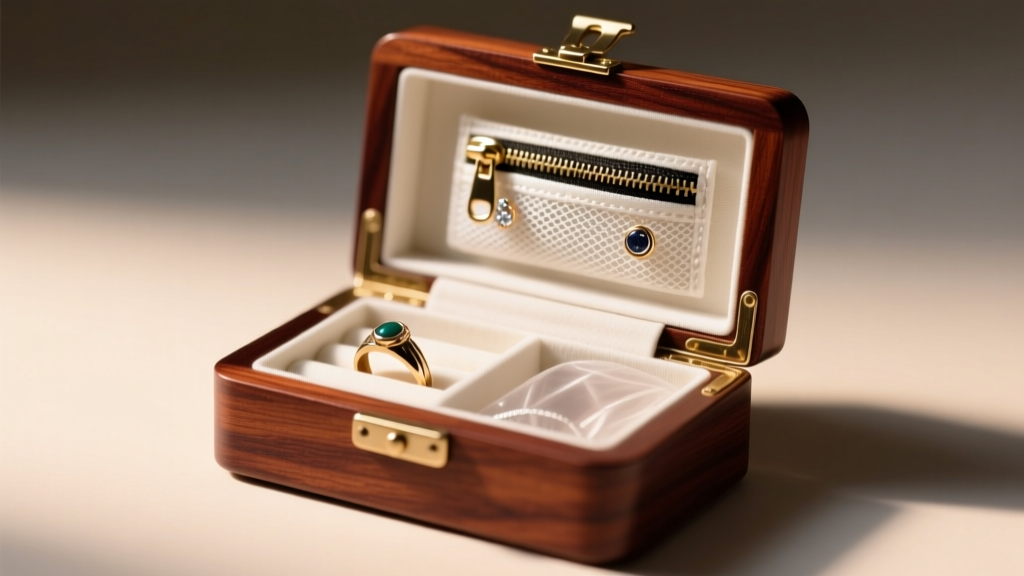
Magnetic closures are incredibly popular for miniature boxes due to their sleek, seamless profile. Most high-end manufacturers use N52 neodymium magnets to ensure a tight seal. However, a crucial warning for beginners: never store mechanical watches or smartwatches in a box with strong neodymium clasps. The magnetic field can magnetize the delicate hairspring of a mechanical movement, causing it to run erratically or stop entirely. If you plan to store a vintage timepiece alongside your rings, a mechanical brass latch or a precision-machined zipper is the vastly superior choice.
Travel vs. Vanity: Choosing Your Use Case
Are you keeping this box on your vanity, or tossing it into a carry-on? The environment dictates the design. For vanity use, a hinged lid with a stay-open prop is ideal for daily access. For air travel, you must consider TSA regulations and cabin pressure changes. A miniature box with a simple snap-latch might pop open in a pressurized cabin if the internal foam expands slightly due to temperature and altitude shifts. For frequent flyers, a locking hasp or a secure zipper perimeter is essential to prevent a mid-flight spill of diamond studs across the cabin floor.
Maintenance and Care Routine
Even the best anti-tarnish linings eventually saturate. Pacific Silvercloth typically loses its efficacy after 5 to 7 years of regular use, or when the embedded silver particles turn completely brown or black. You cannot wash it, as detergents will strip the active agents. Instead, use a dry, soft-bristled brush to remove dust, and store the miniature box itself inside a larger ziplock bag with a fresh 3M anti-tarnish strip when not in use to prolong the lining's life. Furthermore, avoid placing raw silica gel packets directly inside the box. While they absorb moisture, the Gemological Institute of America (GIA) warns that extreme dryness can cause organic and hydrated gems like opals, pearls, and emeralds to craze or crack.
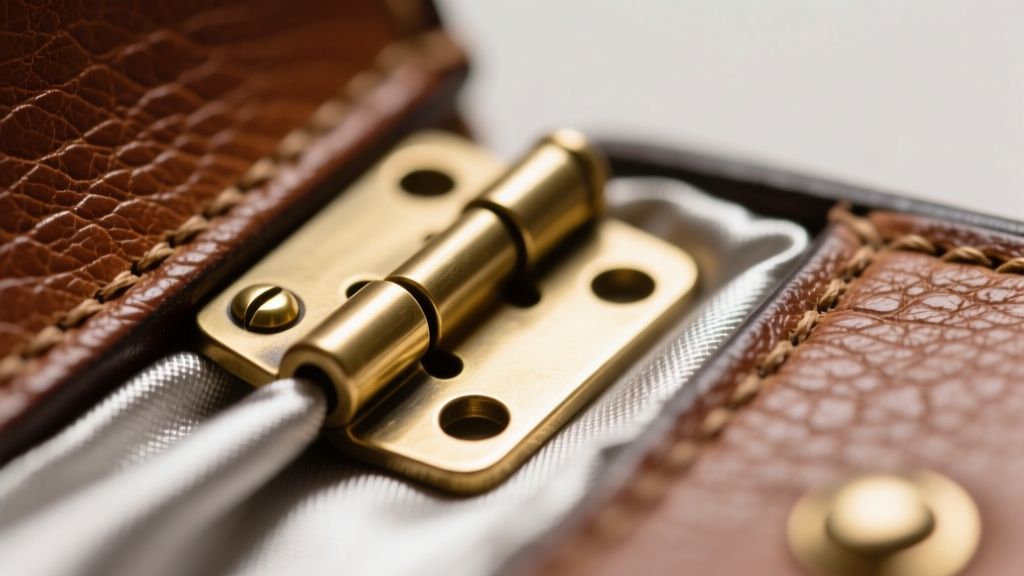
Expert Tip: To maintain the structural integrity of your miniature box's hinges, apply a microscopic drop of synthetic watch oil to the brass pivot points once a year. This prevents metal-on-metal friction and ensures the lid glides smoothly without stressing the interior fabric seams.
By understanding the material science and architectural nuances of these tiny storage solutions, you can confidently select a miniature jewelry box that not only organizes your collection but actively preserves its value and brilliance for decades. For more detailed care instructions on specific metals, consult the Jewelers of America care guidelines to ensure your storage environment perfectly matches your gemstones' unique needs.


