Jewelry Box With Drawers: 2026 Budget vs Premium Value Guide
Compare budget and premium jewelry box with drawers options. Discover which materials, hardware, and anti-tarnish linings offer the best value.

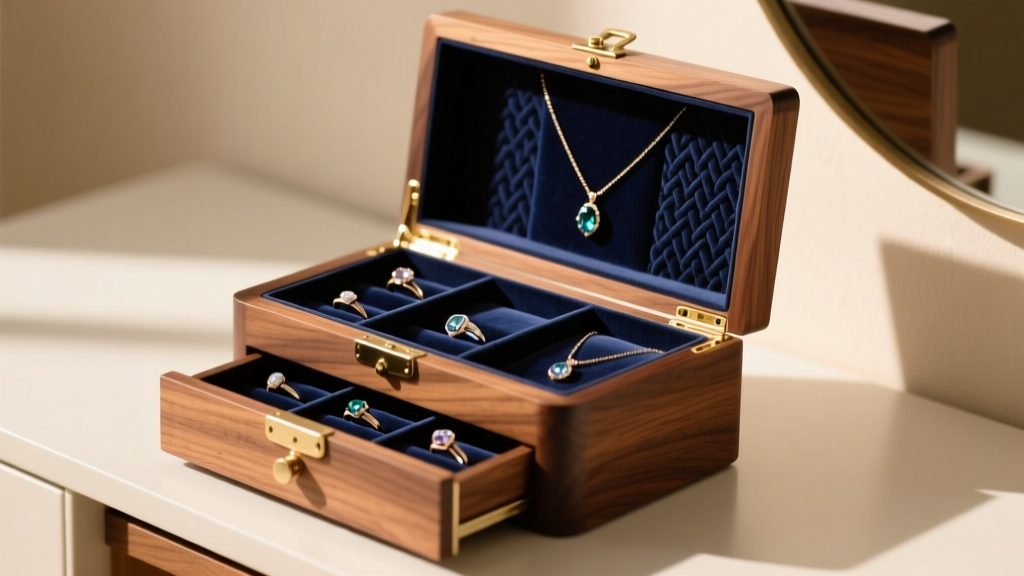
The True Cost of Cheap Jewelry Storage
When evaluating a jewelry box with drawers, the initial price tag rarely tells the full story of its value. The market is currently saturated with 'fast furniture' storage solutions that prioritize aesthetic mimicry over material integrity. While a $30 multi-drawer organizer might look adequate on a vanity, the hidden costs of cheap jewelry storage manifest in damaged collections. Failure modes in budget boxes include polyurethane (PU) leather hydrolysis (peeling), medium-density fiberboard (MDF) swelling in humid environments, and the use of acidic glues that actively accelerate silver sulfide tarnishing. According to the Gemological Institute of America (GIA), improper storage is a leading cause of gemstone abrasion and metal degradation. In this 2026 value assessment, we dissect the material science, hardware mechanics, and anti-tarnish technologies that separate a disposable expense from a generational investment.
Material Breakdown: MDF vs. Solid Wood vs. Acrylic
The structural core of your jewelry box with drawers dictates its lifespan, weight capacity, and environmental resilience. Here is how the three dominant materials compare in the current market.
Medium-Density Fiberboard (MDF) and PU Wraps
MDF is the backbone of the budget tier ($25 to $60). It is manufactured by breaking down hardwood or softwood residuals into wood fibers, combining them with wax and resin, and applying high heat and pressure. While inexpensive, MDF is highly susceptible to moisture. If placed in a humid bathroom or coastal climate, the edges will inevitably swell and crumble. Furthermore, the PU leather wraps used to hide the MDF are prone to hydrolysis, a chemical breakdown where the synthetic coating flakes off after 18 to 36 months, leaving a sticky residue that can ruin delicate chains.
Kiln-Dried Solid Hardwoods
Premium boxes ($250 to $600+) utilize kiln-dried solid woods like North American black walnut, white oak, or cherry. Kiln-drying reduces the wood's moisture content to roughly 6-8%, preventing future warping and ensuring the drawer tracks remain perfectly aligned for decades. Solid wood also allows for dovetail joinery at the drawer corners, a hallmark of structural integrity that completely eliminates the need for metal brackets or glue. However, buyers must ensure the interior is sealed with a water-based, non-acidic polyurethane finish; oil-based finishes can off-gas volatile organic compounds (VOCs) that tarnish silver and damage porous pearls.
Cast Acrylic and Polycarbonate
Occupying the mid-tier ($80 to $150), cast acrylic offers a modern, transparent alternative. Acrylic is chemically inert, meaning it will never off-gas or react with your metals. It is ideal for collectors who want immediate visual inventory of their pieces. The primary drawback is its Mohs hardness rating; acrylic scratches easily, meaning rings with diamond or sapphire settings can permanently mar the interior surfaces if not housed in separate soft pouches.
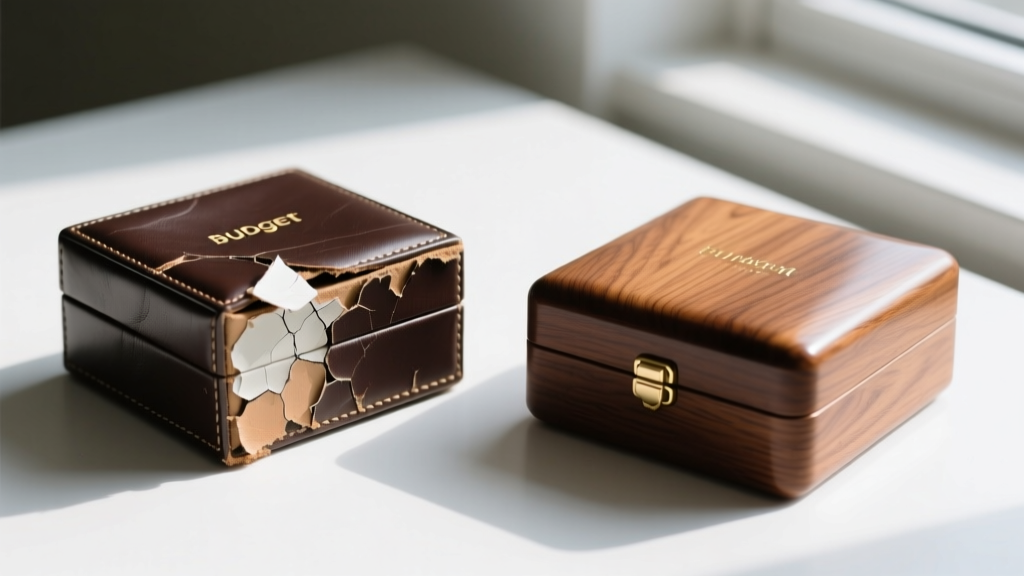
Hardware and Linings: Where the Budget Fails
The tactile experience and protective capabilities of a jewelry box with drawers are entirely dependent on its hardware and interior linings. This is where manufacturers of budget boxes cut corners to maintain low price points.
Drawer Glides: Friction vs. Ball-Bearing
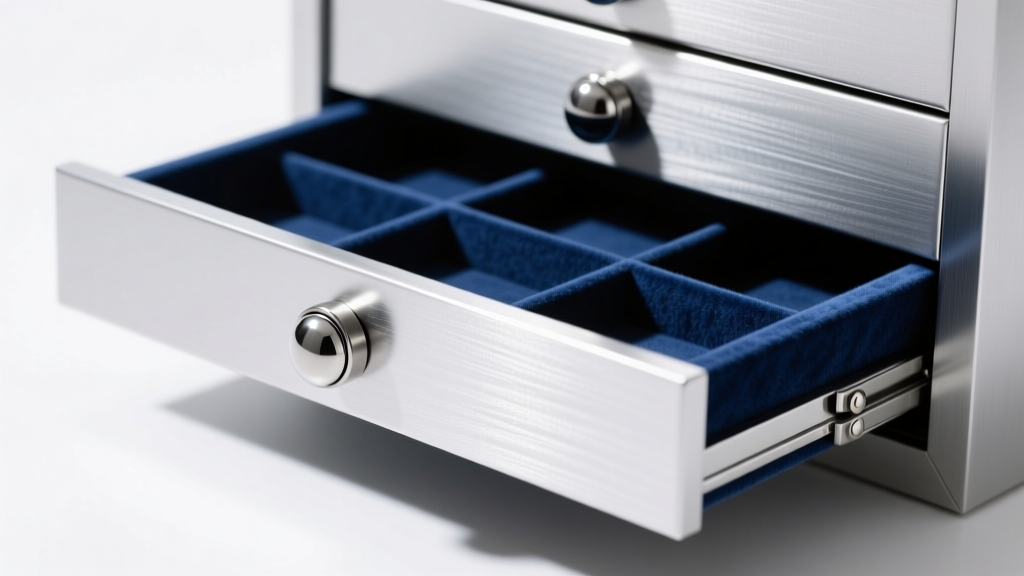
Budget boxes rely on wood-on-wood friction or cheap plastic runners. Over time, friction causes the wood to wear down, resulting in drawers that stick, wobble, or drop entirely when pulled. A premium jewelry box utilizes metal ball-bearing drawer glides. These glides distribute the weight of heavy metal collections (like solid gold chains or silver bangles) evenly, ensuring a smooth, silent operation that will not degrade over decades of daily use.
Anti-Tarnish Linings: Pacific Silvercloth vs. Generic Flannel
The Silver Institute notes that hydrogen sulfide (H2S) in the ambient air is the primary culprit for silver tarnish. Budget boxes line their drawers with generic poly-blend flannel, which offers zero chemical protection and can actually trap moisture against the metal. Premium boxes invest in specialized anti-tarnish fabrics. The gold standard is Pacific Silvercloth, a patented material that embeds microscopic silver particles into the fabric. These particles act as a sacrificial anode, intercepting and neutralizing H2S gas before it can reach your jewelry. While a generic velvet lining might cost the manufacturer $0.50 per yard, genuine anti-tarnish cloth costs upwards of $15 per yard—a cost that directly impacts the retail price but saves you hundreds of hours of polishing.
2026 Value Assessment Matrix
To help you navigate the market, we have compiled a comparative matrix detailing the specifications you should expect at each price tier for a standard 3-drawer jewelry box.
| Tier | Price Range | Core Material | Drawer Glide | Lining Type | Expected Lifespan |
|---|---|---|---|---|---|
| Budget | $25 - $50 | MDF / PU Leather | Friction Wood | Poly-Flannel | 1 - 3 Years |
| Mid-Tier | $80 - $160 | Engineered Wood / Veneer | Plastic Runners | Treated Velvet | 4 - 8 Years |
| Premium | $250 - $600+ | Solid Walnut / Oak | Metal Ball-Bearing | Pacific Silvercloth | Lifetime |
“The most common jewelry damage we see in appraisal is not from wear, but from improper storage. Micro-scratches on gold and accelerated tarnish on silver are almost always traced back to acidic adhesives and abrasive linings in budget storage units.”
— Independent Gemological Appraiser
When to Splurge and When to Save
Does every collector need a $500 solid walnut jewelry box with drawers? Absolutely not. True value assessment requires matching the storage solution to the specific metallurgical and gemological needs of your collection.
The Splurge Justification: Silver, Pearls, and Opals
If your collection is heavy on sterling silver, you must invest in a premium box with verified anti-tarnish linings. The cost of premium storage is quickly offset by the elimination of harsh chemical polishes that strip silver patinas over time. Similarly, organic gems like pearls and opals require specific humidity levels and soft, non-abrasive environments. A premium solid wood box with proper airflow and silk or high-grade flannel linings prevents the micro-fractures that occur when these gems are stored in airtight, acidic, or overly dry budget environments.
The Save Justification: Stainless Steel, Titanium, and Fashion Jewelry
If your daily rotation consists primarily of stainless steel, titanium, tungsten, or gold-plated brass fashion jewelry, a budget or mid-tier acrylic and MDF box is entirely sufficient. These modern metals are highly resistant to tarnish and environmental degradation. Spending $400 on anti-tarnish technology for a collection of surgical steel nose rings and titanium huggies is a poor allocation of capital. In this scenario, prioritize visibility and compartmentalization over chemical protection.
The 'High-Low' Strategy for Hybrid Collectors
For collectors who own both fine jewelry and everyday fashion pieces, the smartest 2026 strategy is the 'High-Low' approach. Invest in a compact, premium jewelry box with drawers specifically dedicated to your high-value silver, gold, and porous gemstones. Keep this box in a climate-controlled bedroom. Simultaneously, utilize a budget-friendly, stackable acrylic drawer system on your vanity for your everyday stainless steel and titanium pieces. This hybrid approach ensures your most vulnerable assets receive museum-grade protection while keeping your daily accessories highly visible and accessible, maximizing the overall value of your storage ecosystem.


