The Anatomy of a Fabric Jewelry Box: Archival Linings & Tarnish Tech
An expert deep dive into fabric jewelry box construction, analyzing archival linings, anti-tarnish chemistry, and structural adhesives for collectors.

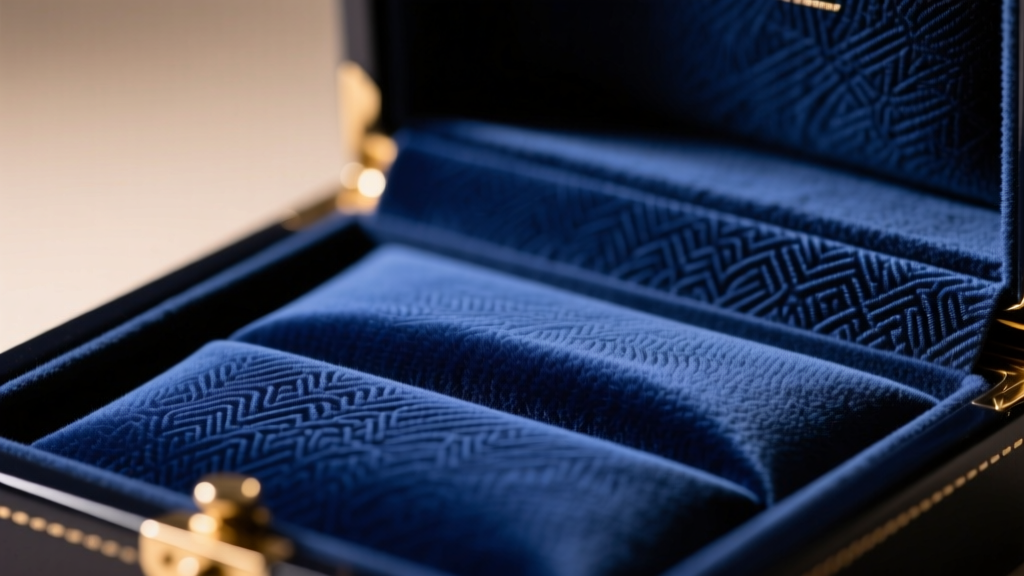
Most consumers view a fabric jewelry box as a mere aesthetic vessel—a decorative shell to keep necklaces untangled and rings secure. However, for serious collectors, horologists, and archivists, the internal engineering of these storage solutions dictates the chemical longevity of the pieces inside. A poorly constructed box can accelerate silver sulfide formation, degrade organic gemstones like pearls, and introduce acidic off-gassing that permanently damages precious metals. In this expert deep dive, we deconstruct the material science, archival textiles, and anti-tarnish chemistry that separate a destructive storage trap from a true preservation-grade fabric jewelry box.
The Core Architecture: Substrates and Off-Gassing
The structural integrity of any fabric-covered box begins with its internal skeleton. Mass-market manufacturers typically rely on Medium-Density Fiberboard (MDF) or recycled grayboard. MDF is bound using urea-formaldehyde resins, which continuously off-gas volatile organic compounds (VOCs) and formaldehyde. In a sealed micro-environment, these gases react with moisture to form trace formic and acetic acids, leading to rapid corrosion of silver and copper alloys.
Archival-grade fabric jewelry boxes utilize lignin-free, acid-free paperboard that is buffered with calcium carbonate to maintain an alkaline pH between 8.0 and 9.0. This buffering agent neutralizes any ambient acids that might migrate from the environment. When evaluating a high-end box, look for specifications citing the Photographic Activity Test (PAT) ISO 18916, which ensures the substrate will not induce chemical degradation in sensitive materials over time.
Textile Science: Decoding the Outer Fabric Shell
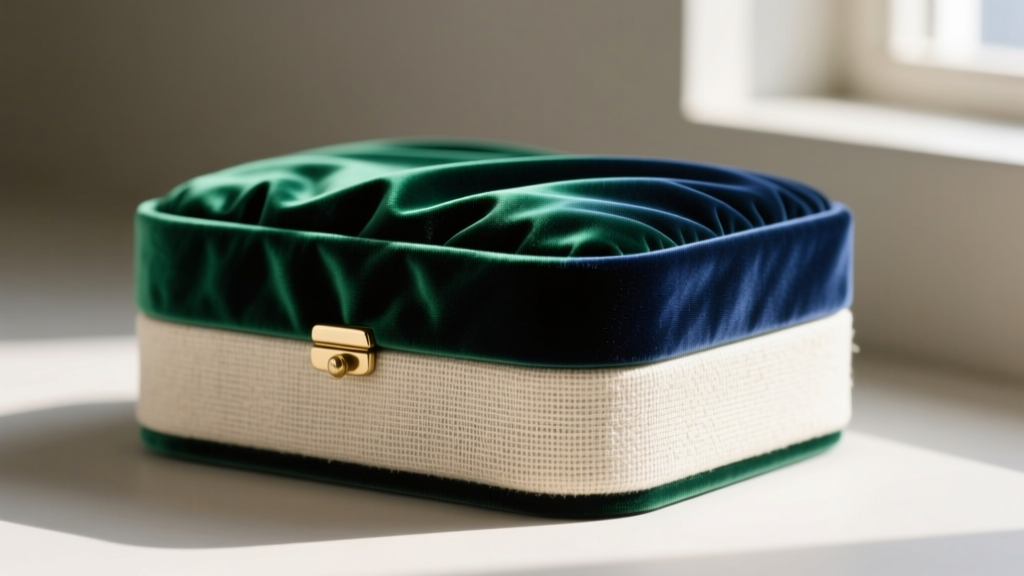
The exterior fabric of a jewelry box is not just for tactile appeal; it governs the Moisture Vapor Transmission Rate (MVTR) of the entire unit. The MVTR dictates how quickly ambient humidity penetrates the storage environment.
- Synthetic Velvet (Rayon/Polyester): While visually plush, rayon-based velvets are highly hygroscopic, meaning they absorb and trap atmospheric moisture, creating a damp micro-climate that accelerates tarnish.
- Natural Linen & Cotton: High-quality Belgian linen and tightly woven cotton offer superior breathability and structural memory. They do not trap moisture against the internal substrates, reducing the risk of mold growth in high-humidity climates.
- Silk: Though luxurious, silk is a protein-based fiber. It is highly susceptible to UV degradation and can attract textile pests if not properly treated. It is generally discouraged for long-term archival storage.
The Inner Sanctum: Anti-Tarnish Linings & Pacific Cloth
The most critical component of a fabric jewelry box is its interior lining. Silver tarnish is not a result of oxygen exposure, but rather a chemical reaction between silver and hydrogen sulfide (H2S) in the air, forming black silver sulfide (Ag2S). According to the Victoria and Albert Museum (V&A), controlling sulfur-bearing pollutants is the primary defense for silver artifacts.
Standard cotton flannel offers zero chemical protection. True archival boxes utilize specialized anti-tarnish textiles, the gold standard being Pacific Silvercloth. This material embeds thousands of microscopic silver and zinc nanoparticles directly into the cotton fibers. These embedded particles act as a sacrificial anode; they intercept and react with H2S gases before the gas can reach your jewelry. Once the embedded particles are fully saturated—which visually manifests as the cloth turning a deep copper-brown—the fabric loses its efficacy and must be replaced.
Lining Materials & Tarnish Inhibition Efficacy
| Lining Material | Anti-Tarnish Mechanism | Effective Lifespan | Archival Rating |
|---|---|---|---|
| Standard Flannel | None (Physical barrier only) | N/A | Poor |
| Treated Polyurethane Foam | Chemical scavenger (Zinc carbonate) | 1-3 Years | Moderate |
| Microfiber (Untreated) | Static dust attraction | N/A | Poor |
| Pacific Silvercloth | Sacrificial silver/zinc nanoparticles | 5-10 Years (Until saturated) | Excellent (Museum Grade) |
Structural Adhesives: The Invisible Threat
A fabric jewelry box is only as safe as the glue holding it together. The manufacturing process requires bonding the outer textile to the rigid substrate and the inner lining to the tray inserts. Budget manufacturers use solvent-based contact cements or cheap Ethylene Vinyl Acetate (EVA) hot melts. These adhesives off-gas plasticizers and sulfur compounds for months after production, creating a highly toxic environment for pearls, opals, and untreated silver.
Expert manufacturers utilize water-based, pH-neutral Polyvinyl Acetate (PVA) adhesives. PVA dries clear, remains flexible to prevent fabric warping, and is entirely chemically inert once cured. When sourcing a box for organic gems like pearls or coral—which are highly porous and easily etched by acidic vapors—verifying the use of archival PVA is non-negotiable. The American Institute for Conservation (AIC) frequently warns against the use of unverified commercial adhesives in proximity to organic heritage materials.
Climate Control: Desiccants and Micro-Environments
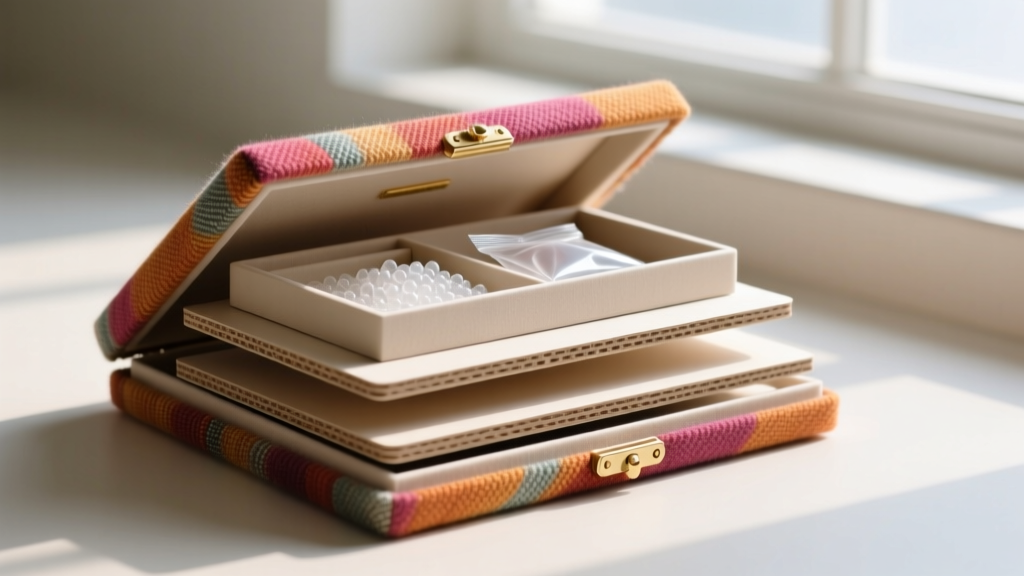
Even with anti-tarnish linings, moisture is the catalyst that accelerates all corrosive chemical reactions. High-end fabric jewelry boxes designed for humid environments incorporate hidden desiccant cassettes.
Instead of relying on loose, messy silica gel packets that can leak and scratch polished gems, archival boxes feature integrated, ventilated compartments beneath the jewelry trays. These are filled with indicating silica gel. Modern archival standards dictate the use of cobalt-free indicating silica (which shifts from orange to green when saturated), avoiding the toxic and carcinogenic cobalt chloride variants (blue to pink) used in cheap commercial desiccants. To maintain an optimal 40-50% relative humidity, the desiccant cassettes should be regenerated in an oven at 250°F (120°C) every six months.
Hardware and Hinges: Galvanic Corrosion Risks
The metal hardware on a fabric jewelry box can inadvertently cause damage through galvanic corrosion. If a box utilizes cheap, unsealed zinc-alloy hinges and clasps, these metals can oxidize and transfer corrosive salts to the interior fabric, which then transfers to your jewelry. Premium archival boxes utilize solid brass hardware that has been lacquered to prevent oxidation, or marine-grade 316L stainless steel, which is entirely impervious to atmospheric corrosion and will not leach reactive ions into the storage micro-environment.
Buyer’s Matrix: Evaluating Fabric Jewelry Boxes in 2026
When investing in a preservation-grade fabric jewelry box, use this technical checklist to separate marketing fluff from material reality:
- Demand Substrate Transparency: Ensure the core board is lignin-free and buffered to a pH of 8.5. Reject any box that smells of sharp chemicals or heavy perfume, which indicates VOC off-gassing.
- Verify the Anti-Tarnish Textile: Look for branded, verifiable anti-tarnish linings like Pacific Silvercloth. Generic "anti-tarnish velvet" claims are usually unverified and ineffective.
- Inspect the Adhesive Seams: Check the interior corners. If the fabric is stiff, overly glossy, or smells like acetone, solvent-based contact cement was used. Avoid storing organic gems inside.
- Assess the Hardware: Check the hinges for lacquered brass or stainless steel. Test the lid for smooth, dampened closure to prevent kinetic shock to fragile gemstone settings.
By understanding the material science beneath the velvet and linen, collectors can ensure their fabric jewelry box acts as a true preservation vault rather than an accelerator of chemical decay.


