How to Build Jewelry Box Storage: Archival Wood & Joinery
Learn how to build jewelry box storage using archival woods, precision joinery, and anti-tarnish linings to protect fine metals and gems.

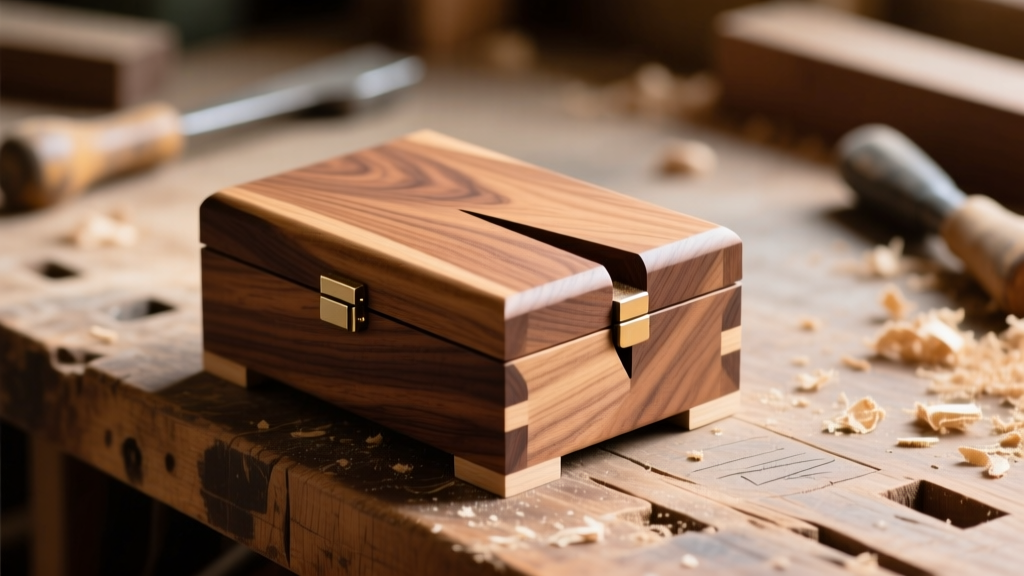
The Architecture of Archival Jewelry Storage
Building a high-end jewelry box is not merely an exercise in basic woodworking; it is the creation of a controlled micro-climate. Fine jewelry, particularly sterling silver, copper alloys, and porous gemstones like pearls or opals, are highly susceptible to environmental degradation, off-gassing, and physical abrasion. As of 2026, modern conservation standards dictate that a jewelry box must function as a chemical vault, neutralizing tarnish vectors while providing structural rigidity that prevents drawer racking and misalignment. This expert guide details how to build jewelry box storage that meets archival museum standards, focusing on dimensional stability, chemical neutrality, and precision tolerances.
According to the Gemological Institute of America (GIA), improper storage is a leading cause of micro-scratches and accelerated tarnishing in fine metals. To combat this, we must abandon generic pine or MDF constructions and instead utilize scientifically selected hardwoods, mechanical joinery, and specialized barrier sealants.
Selecting Dimensionally Stable Hardwoods
The foundational requirement for any archival jewelry box is dimensional stability. Wood is hygroscopic, meaning it absorbs and releases moisture from the surrounding environment. When a box lid warps or a carcass racks, the airtight seal is broken, allowing ambient humidity and hydrogen sulfide (the primary catalyst for silver tarnish) to infiltrate the interior.
You must select lumber with a low tangential-to-radial (T/R) shrinkage ratio. A T/R ratio close to 1:1 ensures the wood moves uniformly, preventing cupping. Quartersawn Hard Maple (Acer saccharum) and American Black Cherry (Prunus serotina) are premier choices. Conversely, you must strictly avoid Oak (Quercus) and Cedar (Thuja). Oak contains high levels of tannic and acetic acids (pH 3.5-4.5) that off-gas and cause "bronze disease" in copper alloys. Cedar emits sulfur compounds and terpenes that aggressively accelerate silver sulfide formation.
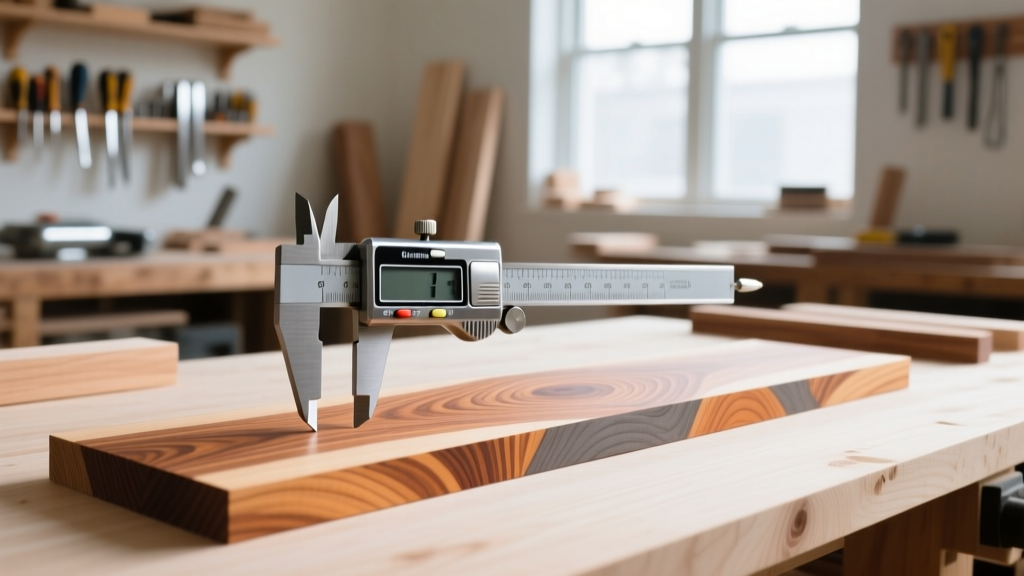
Archival Wood Species Comparison
| Wood Species | Janka Hardness | T/R Shrinkage Ratio | Archival Safety Profile |
|---|---|---|---|
| Quartersawn Hard Maple | 1,450 lbf | 1.4:1 | Excellent; low acidity, highly stable |
| American Black Cherry | 950 lbf | 1.5:1 | Very Good; mild tannins, seals well |
| Black Walnut | 1,010 lbf | 1.4:1 | Good; requires complete shellac sealing |
| Red Oak (Avoid) | 1,290 lbf | 1.8:1 | Poor; high acetic acid off-gassing |
| Western Red Cedar (Avoid) | 350 lbf | 1.6:1 | Hazardous; emits sulfur and terpenes |
Precision Joinery for Carcass and Drawers
When learning how to build jewelry box storage with archival intent, mechanical joinery is non-negotiable. Butt joints secured with screws or basic glue will eventually fail under the repetitive torque of drawer insertion and extraction. This failure leads to carcass racking, which misaligns drawers and causes them to scrape against the interior, generating microscopic wood dust that can scratch polished gemstones.
For the main carcass, utilize splined miters reinforced with solid wood splines (never MDF, which contains urea-formaldehyde). Cut the miter joints using a precision shooting board to ensure exact 90.0-degree end-grain squaring. For the drawers, half-blind dovetails are the gold standard. They provide immense mechanical tensile strength while hiding the end-grain from the front facade.
- Drawer Tolerances: Maintain exactly 0.005" to 0.010" of clearance between the drawer sides and the carcass runners. This accounts for seasonal wood expansion without causing the drawer to bind in high-humidity summer months.
- Runner Friction Reduction: Do not use paste wax on drawer runners, as wax can off-gas or transfer onto jewelry. Instead, apply 0.015" thick UHMW (Ultra-High Molecular Weight) polyethylene tape to the runners. This provides a frictionless, chemically inert glide surface that requires zero maintenance.
- Adhesive Selection: Use hot hide glue or high-quality PVA (like Titebond III). Hide glue is preferred by conservators because it remains reversible, allowing future repair without destroying the wood fibers.
Neutralizing Off-Gassing and Tarnish Vectors
Even safe hardwoods like maple contain trace organic acids and VOCs. To create a true archival environment, the entire interior of the box must be hermetically sealed. The Archival Methods conservation guidelines recommend barrier coatings that prevent acid migration.
The undisputed champion for this application is a 2-lb cut of dewaxed shellac (such as Zinsser SealCoat). Shellac is a natural, non-toxic resin that creates an impermeable barrier against acetic acid and VOCs. Apply three thin coats to all interior surfaces, sanding lightly with 400-grit sandpaper between coats. Do not use polyurethane or catalyzed lacquers, as their prolonged off-gassing can react with sensitive pearls and tortoiseshell inlays.
Sourcing Archival Hardware and Lining
The interior lining is the final point of contact between the storage vessel and the jewelry. Standard craft store felt is often made from synthetic blends or dyed with sulfur-heavy mordants. You must use 100% cotton, unbleached flannel. Before installation, the flannel must be washed in hot water without any detergent or fabric softener to strip the factory starch sizing, which can harbor corrosive chemicals.
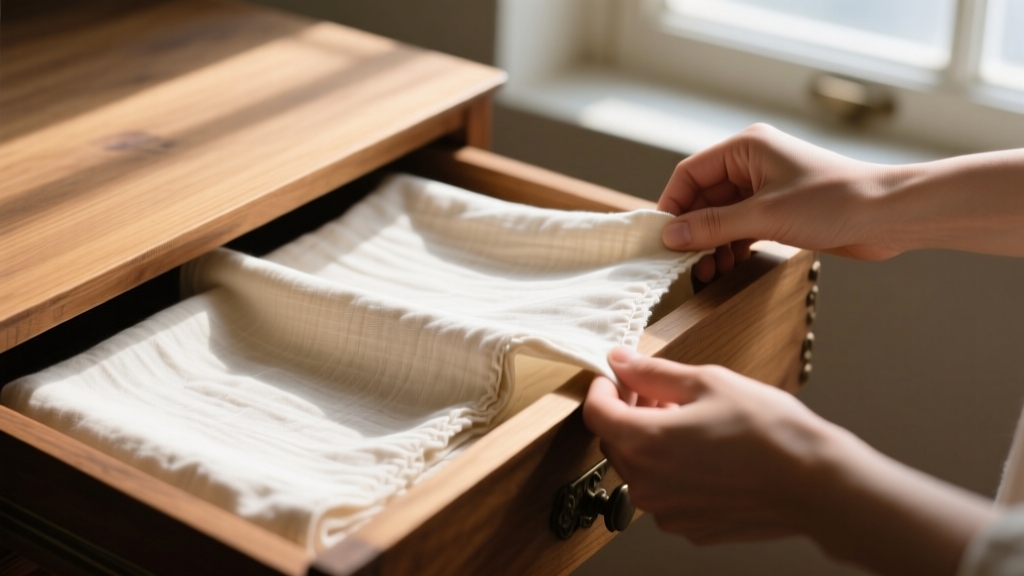
For ultimate silver protection, integrate Pacific Silvercloth into the lid or specific drawer inserts. This specialized fabric is embedded with microscopic silver particles that intercept and absorb hydrogen sulfide gas before it reaches your jewelry, effectively sacrificing itself to keep your sterling silver pristine.
Hardware Selection: Hinges and Stops
Hardware must be chemically inert and mechanically precise. Avoid cheap steel hinges that will rust and stain the wood. Instead, opt for 316-grade stainless steel or solid brass knife hinges. Brass knife hinges require exacting mortising—typically routed to a depth that leaves exactly 1/32" of the hinge barrel protruding above the carcass parting line. This ensures the lid closes flush without binding, maintaining the tight seal necessary to keep ambient pollutants at bay.
"The primary enemy of sterling silver is not oxygen, but hydrogen sulfide and acidic off-gassing. A jewelry box must be a chemical vault, not just a wooden container." — Conservation Standards for Metal Artifacts
Final Assembly and Calibration
As detailed in advanced tutorials by the Woodworkers Journal, the final assembly phase requires meticulous calibration. Once the shellac has fully cured (minimum 7 days), install the UHMW runner tapes and test the drawer glide. The drawer should close smoothly and seal with a gentle, pneumatic "whoosh" of air, indicating that the tolerances are tight enough to slow air exchange but loose enough to prevent binding.
By mastering how to build jewelry box storage with these technical specifications, you transition from simple woodworking to horological-level craftsmanship. The resulting piece will not only showcase your precision with hand tools but will actively preserve heirloom jewelry for generations, completely neutralizing the environmental threats that degrade fine metals and delicate gemstones.


