Burlwood Jewelry Box Value: Veneer vs Solid Wood Guide
Discover if a burlwood jewelry box is worth the investment. We compare veneer vs. solid builds, pricing tiers, and anti-tarnish lining value.

The Botanical Reality: What Exactly is Burlwood?
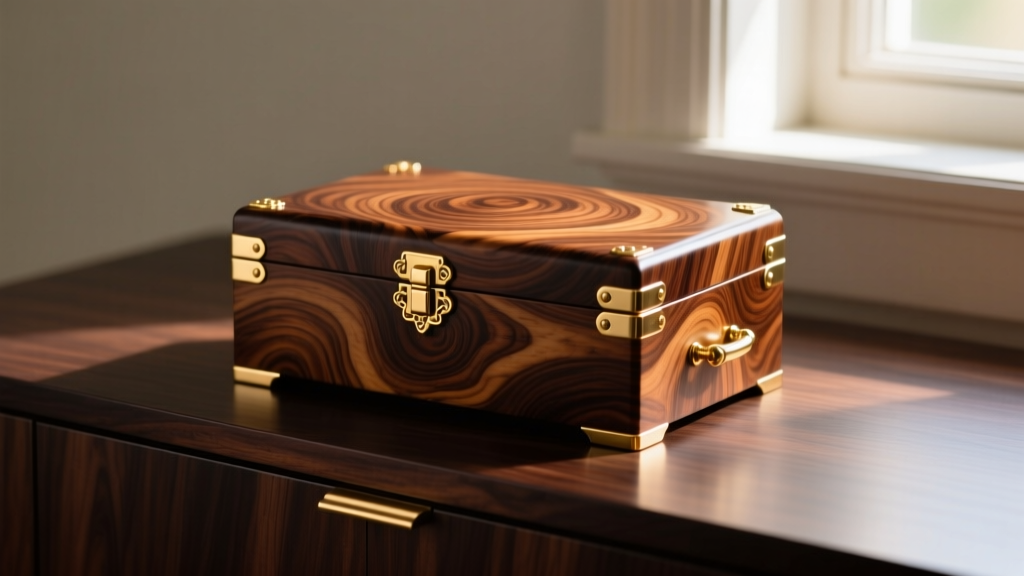
Before assessing the financial value of a burlwood jewelry box, collectors and buyers must understand the material itself. According to The Wood Database, a burl is not a distinct species of tree, but rather a deformed growth on a tree trunk or branch caused by stress, injury, or fungal infection. This stress forces the wood grain to grow in chaotic, swirling, and highly figured patterns. The most prized burls in luxury woodworking include Amboyna (deep reddish-orange), Thuya (golden brown and aromatic), and Claro Walnut (rich chocolate with dark inclusions).
Because burls are structurally compromised by their chaotic grain, they are inherently unstable. This biological reality dictates the manufacturing process of high-end jewelry storage and forms the foundation of our value assessment. When you see a beautifully figured burlwood box, you are almost certainly looking at a veneer, not a solid block of burl. Understanding the difference between marketing hype and structural necessity is the first step in determining if a specific box is worth your budget.
The Veneer vs. Solid Debate: Structural Necessity vs. Marketing Hype
A common misconception among novice buyers is that 'solid burlwood' is the ultimate mark of quality. In reality, a jewelry box carved entirely from solid burl would be a catastrophic failure mode waiting to happen. The interlocked, wild grain of solid burl expands and contracts at vastly different rates depending on the axis, guaranteeing that a solid box would warp, split, or tear its own hinges apart within a few seasonal humidity cycles.
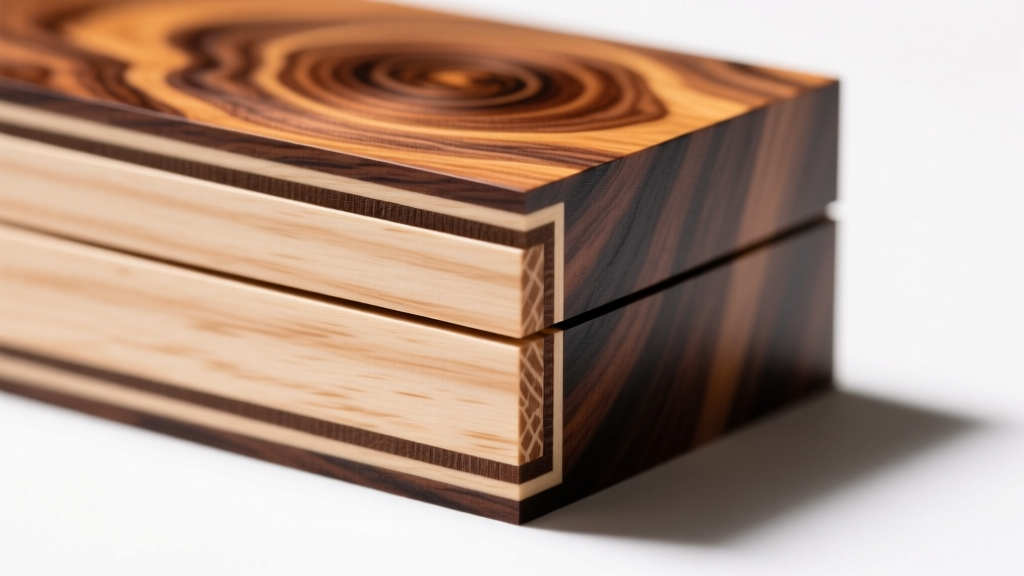
Therefore, premium manufacturers use burl as a veneer applied over a stable substrate. The value of the box depends entirely on the quality of both the veneer and the core material.
- Entry-Level (0.2mm Paper-Backed Veneer over MDF): Often found in sub-$100 boxes. The veneer is sliced microscopically thin and bonded to paper for handling, then glued to Medium Density Fiberboard. It cannot be refinished, and edge-banding is usually printed plastic rather than real wood.
- Mid-Tier (0.6mm Sliced Veneer over Plywood): The industry standard for quality commercial boxes. The substrate is usually Baltic Birch plywood, offering excellent dimensional stability. The veneer is thick enough to withstand a light polishing but not heavy sanding.
- Luxury/Artisan (1.5mm+ Sawn Veneer over Solid Poplar/Basswood): Found in $1,000+ heirloom pieces. Sawn veneers retain the deep, three-dimensional chatoyance of solid wood. The solid hardwood core allows for hand-cut dovetails and traditional joinery that plywood cannot support.
Pricing Tiers: What You Actually Get for Your Money
To conduct a proper budget and value assessment, we must map the current market pricing to the actual materials and hardware utilized. The table below breaks down what you should expect at various price points in the current market.
| Price Tier | Core Material | Veneer Grade | Hardware & Hinges | Interior Lining |
|---|---|---|---|---|
| $45 - $120 | MDF / Particleboard | 0.2mm Paper-backed or Printed Foil | Steel butt hinges, zinc-alloy locks | Standard synthetic felt (no anti-tarnish) |
| $250 - $600 | Baltic Birch Plywood | 0.6mm Genuine Sliced Veneer | Brass-plated quadrant hinges | LusterLoc or treated anti-tarnish velvet |
| $1,200 - $3,500+ | Solid Poplar / Mahogany | 1.5mm+ Sawn Amboyna or Thuya | Solid cast brass, Swiss music movements | Pacific Silvercloth, suede, hand-stitched leather |
If a retailer is charging $400 for a box with MDF construction and standard felt, the value proposition is exceptionally poor. Conversely, finding a mid-century box with 1.5mm sawn Amboyna veneer and solid brass hardware for under $800 represents a significant arbitrage opportunity for collectors.
Evaluating the Interior: Where the Real Value Hides
The exterior burlwood may catch your eye, but the interior dictates the functional value of the storage unit for your jewelry collection. The primary enemy of silver and copper alloys is hydrogen sulfide in the ambient air, which causes silver sulfide (tarnish) to form. As noted by gemological care guidelines from the Gemological Institute of America (GIA), proper storage environments are critical for preventing chemical degradation of precious metals.
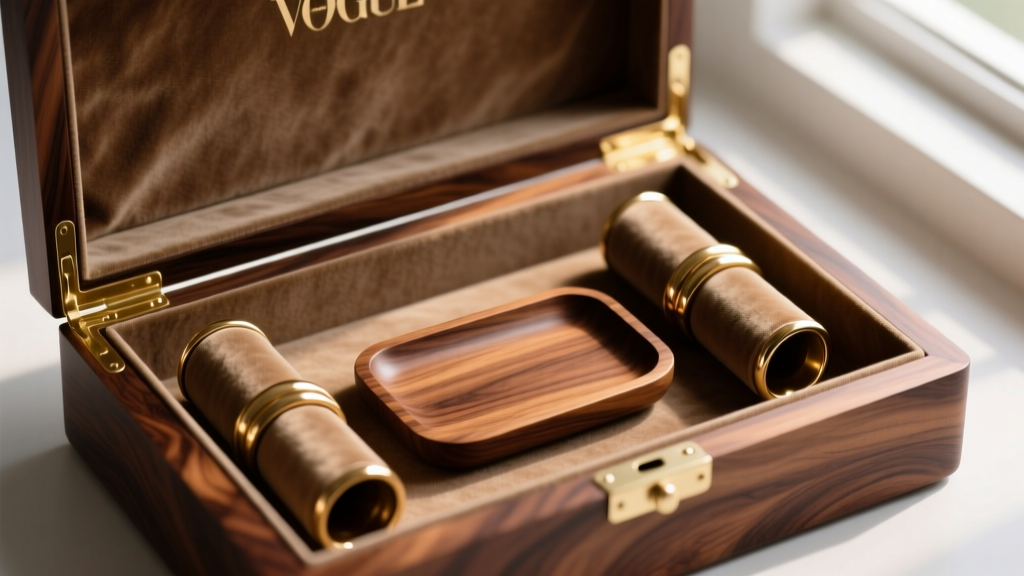
When assessing a burlwood jewelry box, inspect the lining material closely:
- Standard Felt/Rayon: Offers zero chemical protection. In fact, some cheap synthetic dyes can actually accelerate tarnishing or leave micro-scratches on high-polish gold and platinum.
- LusterLoc / Treated Velvet: These fabrics are treated with proprietary chemical compounds (often zinc-based) that act as sacrificial anodes. They absorb ambient sulfides before they reach your jewelry. This lining typically remains effective for 35 to 50 years in a closed environment.
- Pacific Silvercloth: The gold standard for high-value storage. This material embeds microscopic particles of pure silver into the cotton flannel. The embedded silver tarnishes instead of your jewelry. Unlike chemical treatments, it can be gently washed and recharged, making it a superior long-term value for heirloom storage.
Additionally, examine the hinges. Premium burlwood boxes utilize solid brass quadrant hinges or piano hinges that distribute the weight of heavy wooden lids evenly. Cheap steel hinges will inevitably rust, staining the porous burl veneer and causing the lid to bind.
Maintenance, Humidity, and Finish Preservation
Owning a high-value burlwood jewelry box requires specific environmental controls. Because the burl veneer and the stable substrate react differently to moisture, extreme humidity swings are the leading cause of veneer delamination and 'checking' (micro-cracks in the clear coat).
Expert Maintenance Tip: Never use silicone-based furniture polishes (like standard aerosol sprays) on a burlwood jewelry box. Silicone penetrates the micro-pores of the finish and creates a permanent barrier that prevents future restoration or re-lacquering. Instead, use a high-grade paste wax (like Renaissance Wax) applied sparingly with a microfiber cloth once a year to protect the finish and enhance the chatoyance of the burl grain.
For insurance purposes, if you are storing high-carat gemstones or antique jewelry, maintaining a stable relative humidity (RH) of 45% to 55% is vital. High-end collectors often integrate passive silica gel cassettes into the hidden lower drawers of their burlwood armoires to buffer against seasonal moisture spikes, a strategy highly recommended by valuables insurers like Hagerty to prevent both wood warping and organic gemstone dehydration (such as opals or pearls).
Final Verdict: Who Should Buy Burlwood?
A burlwood jewelry box is absolutely worth the investment, provided you are paying for genuine materials and functional interiors rather than a brand name. If your budget is under $150, you are better off purchasing a high-quality leather or solid walnut box, as 'burlwood' at this price point is invariably MDF with a printed or paper-thin veneer that lacks longevity.
However, if your budget allows for the $300 to $800 range, a mid-tier burlwood box with Baltic Birch construction, genuine 0.6mm veneer, and LusterLoc anti-tarnish lining offers an exceptional intersection of luxury aesthetics and practical jewelry preservation. For serious collectors with budgets exceeding $1,500, commissioning or sourcing an antique piece with sawn Amboyna veneer, solid hardwood joinery, and Pacific Silvercloth interiors provides a generational storage solution that will actively protect your assets while appreciating in value as a piece of fine woodworking.


