The Beginner’s Guide to Buying a Large Vintage Jewelry Box
Learn how to source, authenticate, and restore a large vintage jewelry box to safely store your collection without causing tarnish or damage.

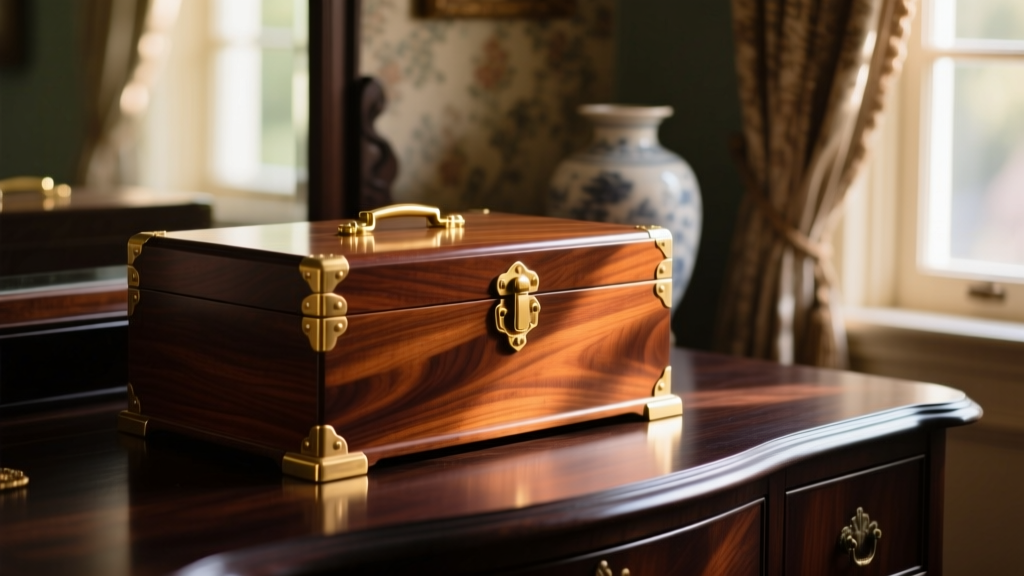
Why Choose a Large Vintage Jewelry Box?
For jewelry collectors and enthusiasts, proper storage is just as critical as the pieces themselves. While modern acrylic organizers and mass-produced velvet rolls offer convenience, they often lack the structural integrity, aesthetic charm, and historical weight of antique alternatives. A large vintage jewelry box provides a dedicated, multi-tiered sanctuary for expansive collections, combining 19th and 20th-century craftsmanship with the spatial requirements of modern jewelry wardrobes.
However, transitioning from a modern plastic organizer to an antique wooden armoire or box is not as simple as buying the first beautiful piece you see at an estate sale. Vintage storage solutions come with unique material quirks, historical manufacturing methods, and potential chemical hazards that can actively damage your precious metals and gemstones if left unaddressed. This beginner-friendly explainer will walk you through the exact specifications, material grades, and restoration techniques required to safely source and maintain a large vintage jewelry box.
Wood Types and Material Grades: What to Look For
The longevity and structural stability of a large vintage jewelry box depend heavily on the timber used in its construction. When evaluating antique boxes, you will predominantly encounter three primary hardwoods, each with distinct characteristics:
- Honduran Mahogany (Swietenia macrophylla): Highly prized in the 18th and 19th centuries, this wood boasts a Janka hardness rating of 900 lbf. It is incredibly stable, resistant to warping, and features a tight, interlocking grain that takes a mirror-like French polish beautifully.
- European Walnut (Juglans regia): Often used in Victorian and Art Deco pieces, European walnut is slightly softer (around 600 lbf) but offers spectacular burr and crotch figure patterns. Look for boxes where the burr veneer is laid over a stable secondary wood, like pine or poplar, to prevent cracking.
- Oak (Quercus robur): While incredibly durable (1,120 lbf), oak contains high levels of tannins and naturally off-gasses acetic acid. If you choose an oak box, it must be properly sealed and lined, as the acidic vapors will rapidly corrode silver and copper alloys.
Beyond the wood species, inspect the joinery. High-quality vintage boxes will feature hand-cut dovetail joints at the corners of the drawers. Dovetails provide mechanical locking strength that outlasts the glue holding them together. Conversely, avoid boxes with simple butt joints or early 20th-century finger joints, which are prone to separation when the original hide glue degrades.
The Hidden Dangers: Acidic Linings and Tarnish Traps
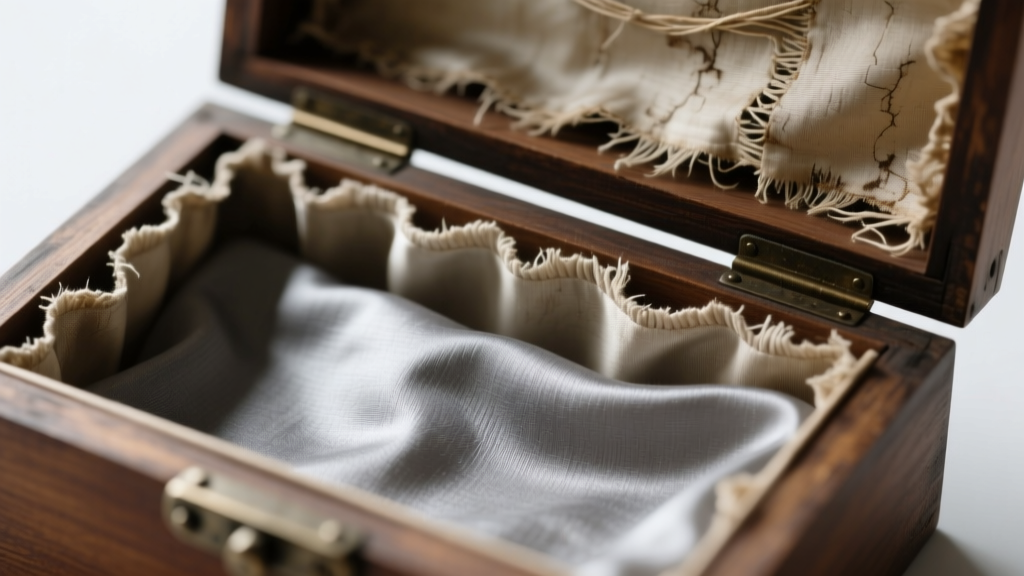
The most common mistake beginners make when purchasing a large vintage jewelry box is assuming the original interior lining is safe for modern storage. In reality, antique textiles are often the primary culprits behind accelerated jewelry degradation.
The Chemistry of Vintage Tarnish
Silver tarnish is primarily silver sulfide, a chemical reaction that occurs when silver is exposed to hydrogen sulfide in the air. According to the Canadian Conservation Institute, certain materials drastically accelerate this process. Many 19th and early 20th-century silk and velvet linings were dyed using sulfur-based mordants. Over decades, these dyes break down, releasing sulfur gases directly into the enclosed microclimate of the jewelry box.
Furthermore, vintage linings were often adhered using animal-based glues or early synthetic adhesives that become highly acidic as they cross-link and degrade. This acidity can etch soft gemstones like pearls and opals, and cause irreversible pitting in low-karat gold alloys. Finally, if the box was refinished in the 1970s or 1980s, the interior wood may have been sealed with polyurethane or lacquer that continues to off-gass volatile organic compounds (VOCs), which can cause pearls to yellow and degrade.
Step-by-Step Restoration for Safe Storage
To make a large vintage jewelry box safe for your collection, you must strip the compromised interior and replace it with archival-grade materials. Here is a professional restoration framework:
- Remove the Old Lining: Use a micro-spatula and a 50/50 solution of denatured alcohol and distilled water to soften the original hide glue. Never use harsh chemical paint strippers inside the box, as the fumes will penetrate the wood grain and off-gass onto your jewelry for years.
- Neutralize the Wood: Once the lining and glue are removed, wipe the bare interior wood with a slightly damp cloth containing a mild solution of baking soda and water to neutralize any residual acidic compounds. Allow the wood to dry completely for at least 48 hours in a well-ventilated area.
- Apply an Archival Barrier: Before adding new fabric, line the wooden compartments with an acid-free barrier paper or Tyvek sheet. This prevents any remaining tannins or VOCs in the wood from migrating to your jewelry.
- Install Anti-Tarnish Textiles: Replace the old velvet with modern anti-tarnish materials. The Victoria and Albert Museum recommends using unbleached, undyed cotton or specialized archival silvercloths. Pacific Silvercloth, for example, is embedded with microscopic silver particles that intercept and absorb sulfur gases before they can reach your jewelry. Secure the new fabric using archival-grade double-sided tape (like 3M 415) or wheat starch paste, avoiding modern PVA glues which can trap moisture.
Price Guide: What You Should Actually Pay
Pricing for a large vintage jewelry box varies wildly based on era, wood quality, and hardware completeness. Use this framework to ensure you are paying fair market value and not overpaying for a piece that requires extensive, costly restoration.
| Condition & Era | Typical Price Range (USD) | Restoration Needs |
|---|---|---|
| Victorian Mahogany (Needs full reline, missing keys) | $150 - $350 | High: Interior stripping, lock repair, French polish touch-up. |
| Art Deco Burr Walnut (Good condition, original lining) | $400 - $800 | Medium: Lining must be removed for safety, minor veneer stabilization. |
| Mid-Century Teak Armoire (Excellent, modernized interior) | $600 - $1,200 | Low: Check for mid-century polyurethane off-gassing, otherwise ready. |
| Fully Restored Antique (Archival lined, museum quality) | $1,500 - $3,500+ | None: Professionally restored with conservation-grade materials. |
Final Tips for Sourcing Antique Armoires
When hunting for a large vintage jewelry box at estate sales, auction houses, or antique malls, bring a small flashlight and a jeweler's loupe. Shine the light along the drawer runners and the interior corners of the box. You are looking for the patina of use—smooth, darkened wood where decades of hands have pulled the drawers. If the drawer runners look brand new or the interior corners are perfectly sharp and light, the piece may be a modern reproduction artificially distressed to look old.
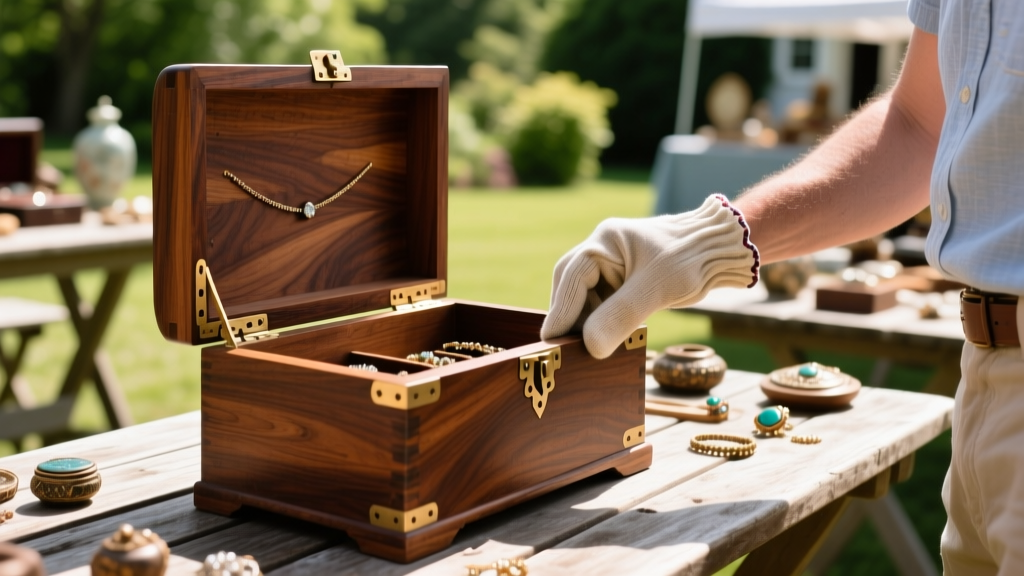
Additionally, check the hardware. Original brass escutcheons (keyhole covers) and hinges should have a consistent, unpolished patina. If the screws holding the hinges have perfectly sharp, machine-cut slots and show no signs of rust or paint, they have likely been replaced. While replaced hardware isn't a dealbreaker, it is a vital negotiating point that can lower the price by 20% to 30%, giving you the budget needed to properly reline the interior with archival materials.
Conclusion
Investing in a large vintage jewelry box is an investment in both the preservation of your collection and the history of decorative arts. By understanding the specific wood types, recognizing the hidden chemical dangers of antique linings, and employing proper conservation-grade restoration techniques, you can transform a beautiful but hazardous antique into a safe, functional, and stunning home for your most prized jewelry pieces. Take your time during the sourcing process, prioritize structural integrity over superficial shine, and always err on the side of caution when it comes to interior textiles.


