Clay Jewelry Holder Care: Cleaning & Maintenance Tips
Learn how to properly clean, seal, and maintain your clay jewelry holder to prevent tarnish and protect your precious metals and gemstones.

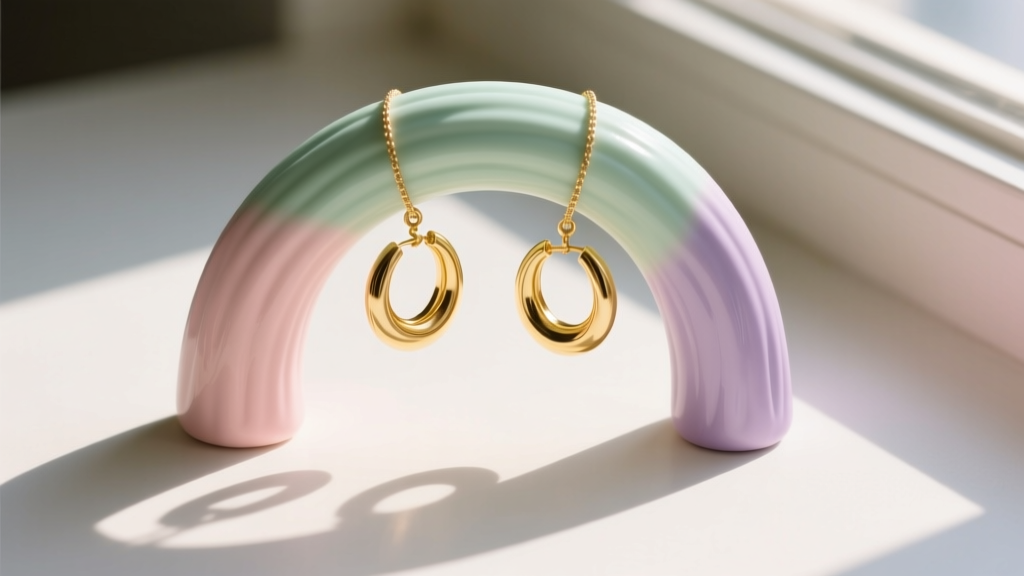
The Hidden Risks of Unsealed Clay Organizers
Clay jewelry holders have surged in popularity due to their artisanal charm and customizability. However, from a metallurgical and gemological perspective, storing precious metals and porous gemstones on raw or improperly sealed clay presents significant risks. Unlike inert materials like glass or acrylic, clay is inherently reactive. Unsealed air-dry and terracotta clays are highly porous, meaning they absorb ambient humidity, hand creams, and perfumes. This trapped moisture creates a microclimate that accelerates the oxidation of silver and the corrosion of copper alloys.
"Moisture and sulfur-bearing compounds are the primary catalysts for silver sulfide formation, commonly known as tarnish. Storing silver in high-humidity, porous environments drastically reduces the time it takes for visible blackening to occur." — Intercept Technology Tarnish Science
Furthermore, certain pigments used in handmade polymer clay organizers can contain trace sulfur or acidic compounds that may transfer to soft metals like 24k gold or high-purity silver. To maintain both your display piece and your jewelry collection, a rigorous, material-specific maintenance routine is non-negotiable.
Material Breakdown: Polymer vs. Air-Dry vs. Ceramic
Before applying any cleaning solvent or sealant, you must correctly identify the type of clay used for your holder. Applying the wrong chemical can permanently ruin the structural integrity of the piece.
| Clay Type | Composition | Porosity | Safe Cleaning Agents | Agents to Avoid |
|---|---|---|---|---|
| Polymer Clay | PVC resin & plasticizers | Non-porous (if cured) | Mild soap, water, mineral oil | Isopropyl alcohol, acetone, bleach |
| Air-Dry Clay | Cellulose, earth, water | Highly porous | Dry brushing, slightly damp cloth (if sealed) | Soaking, harsh chemicals, alcohol |
| Ceramic / Terracotta | Kiln-fired natural clay | Varies (Glazed vs. Unglazed) | Warm soapy water, diluted vinegar (glazed only) | Abrasive scouring pads, hydrofluoric acid |
Step-by-Step Cleaning Guide for Clay Holders
Proper cleaning removes the invisible layers of sebum, cosmetic fallout, and environmental dust that act as a bridge for tarnish-causing compounds to reach your jewelry.
Routine Dusting and Debris Removal
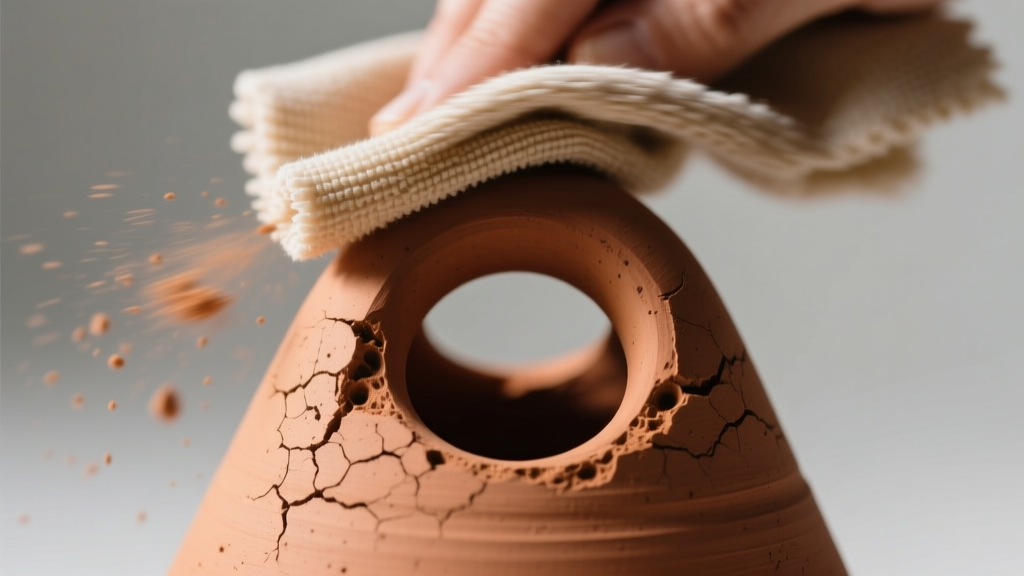
For weekly maintenance, avoid wet cleaning altogether. Use a soft-bristled makeup brush (like a clean kabuki or blush brush) to sweep dust out of the crevices of ring cones and earring trees. Microfiber cloths are excellent for wiping down flat base plates. This mechanical removal prevents dust from mixing with ambient humidity to form a mild abrasive paste that can scratch soft metals like high-karat gold or pearls resting on the surface.
Deep Cleaning Stubborn Makeup and Tarnish Transfer
When foundation, setting spray, or metal tarnish transfers onto your clay holder, a deeper clean is required. According to the experts at Sculpey's official tutorial hub, polymer clay requires specific care because it is essentially a plastic. Isopropyl alcohol and acetone will break down the plasticizers in polymer clay, leaving a permanently sticky, degraded surface.
- For Sealed Polymer & Glazed Ceramic: Mix a few drops of pH-neutral dish soap (like Dawn) into lukewarm water. Dampen a microfiber cloth—do not soak it—and gently wipe the affected area. Dry immediately with a separate lint-free towel.
- For Unglazed Terracotta & Air-Dry Clay: Never use liquid. Instead, use a melamine sponge (Magic Eraser) completely dry to gently lift surface stains via micro-abrasion. If the stain has penetrated the pores, the clay must be lightly sanded with 400-grit sandpaper and resealed.
Sealing and Resealing: Protecting Your Metals
If your clay jewelry holder is unsealed, it is actively posing a risk to your jewelry. Sealing creates an inert barrier that prevents moisture retention and chemical transfer. Here is a decision framework for selecting the right sealant based on your holder's material and usage:
Water-Based Polyurethane (e.g., Varathane)
Best for: Air-dry clay and painted ceramic.
Pros: Non-yellowing, flexible, does not react with polymer clay plasticizers. Provides a durable, water-resistant shell.
Cons: Requires 3-4 thin coats with light sanding in between for a glass-like finish.
UV Epoxy Resin
Best for: High-wear areas like ring cones and earring posts.
Pros: Cures in minutes under a UV lamp, creates a thick, impermeable, glass-like barrier that completely locks out moisture.
Cons: Can yellow over time if exposed to direct sunlight; requires careful application to avoid drips.
Renaissance Wax
Best for: Maintaining a natural, matte clay texture while providing mild moisture resistance.
Pros: Museum-grade microcrystalline wax used by the Gemological Institute of America (GIA) and conservators to protect metals and organic materials. It will not alter the tactile feel of raw terracotta.
Cons: Needs reapplication every 3-6 months; does not provide a waterproof seal against liquid spills.
Preventing Jewelry Tarnish on Clay Surfaces
Even with a sealed clay holder, the immediate environment dictates how quickly your silver and copper jewelry will tarnish. Implement these environmental controls to maximize the time between jewelry polishing sessions.
The Moisture and Sulfur Factor
Keep your clay organizers out of bathrooms and away from humidifiers. The combination of steam and sulfur compounds found in many personal care products (like keratin-based hair treatments) will rapidly tarnish sterling silver. Place a small, discreet silica gel desiccant packet behind the base of your clay holder to absorb localized ambient moisture. For high-value silver pieces, consider lining the base of the clay tray with a Pacific Silvercloth or placing an Intercept Technology anti-tarnish tab underneath the display.
Troubleshooting Common Clay Holder Issues
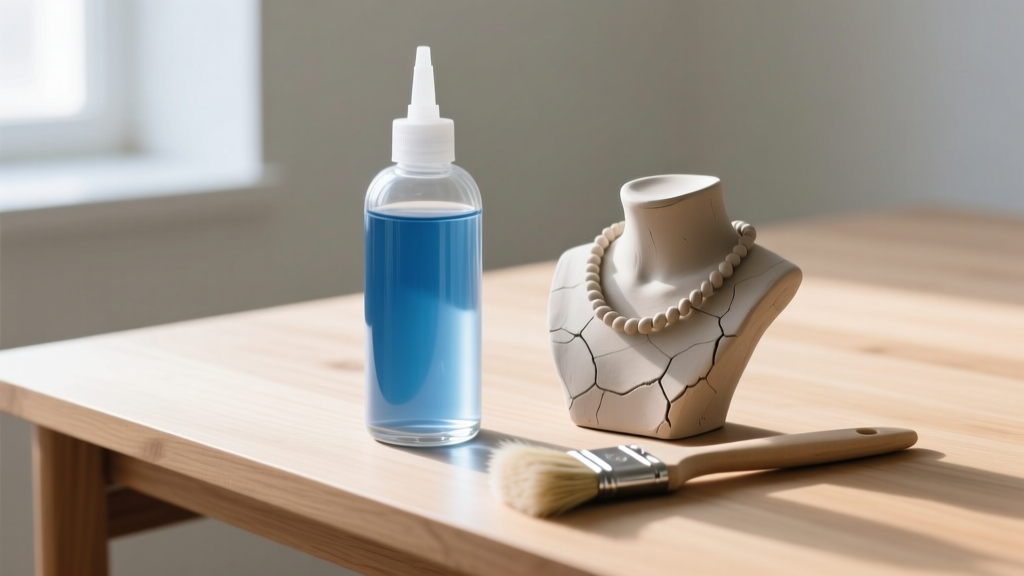
When maintenance fails, specific remediation techniques are required to salvage both the organizer and the jewelry resting upon it.
- Sticky Residue on Polymer Clay: If your polymer clay holder feels tacky, it has likely been exposed to alcohol-based perfumes or hand sanitizers, which have begun dissolving the surface plasticizers. Wipe the surface with a cloth lightly dampened with mineral oil to neutralize the stickiness, then wash with mild soap and water. Once fully dry, seal with a water-based polyurethane to lock the surface.
- Chipping on Air-Dry Clay Edges: Air-dry clay is notoriously brittle. If a ring cone chips, mix a small amount of fresh air-dry clay with a drop of PVA glue to create a filler paste. Press it into the chip, let it cure for 24 hours, sand it flush with 600-grit paper, and repaint/reseal the area.
- Color Bleeding onto Metals: If you notice dye from a painted clay holder transferring to porous gemstones (like turquoise or malachite) or light metals, the sealant has failed. Immediately remove the jewelry. Clean the jewelry with a gem-safe ultrasonic solution, strip the clay holder's sealant using a chemical paint stripper (in a well-ventilated area), and reseal using a high-grade UV resin for maximum encapsulation.
Final Thoughts on Clay Storage Care
A clay jewelry holder is a beautiful, functional piece of art, but it requires a higher baseline of maintenance than standard acrylic or velvet-lined wooden boxes. By understanding the specific chemical composition of your clay—whether PVC-based polymer, porous air-dry, or kiln-fired ceramic—you can tailor your cleaning and sealing regimen to ensure it remains a safe, inert haven for your most cherished accessories. Regular dusting, strict moisture control, and the application of the correct barrier sealant will guarantee that your display enhances your jewelry without compromising its metallurgical integrity.


