How to Fix a Huge Jewelry Armoire: Drawer Jams, Sagging & Tarnish
Learn how to troubleshoot and fix a huge jewelry armoire. Expert solutions for drawer jams, structural sagging, velvet peeling, and deep-drawer tarnish.

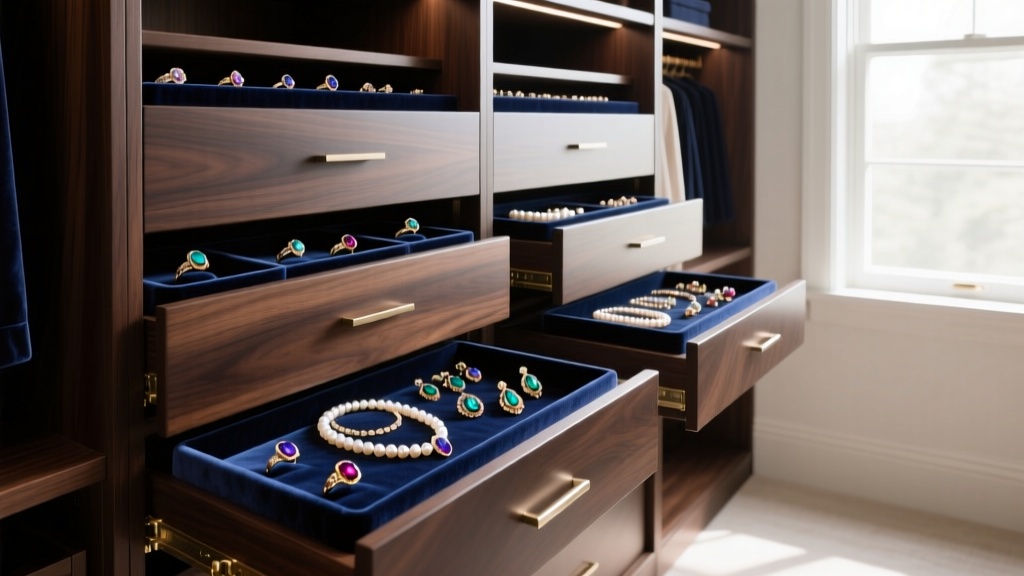
Investing in a huge jewelry armoire is a dream for serious collectors, offering unparalleled capacity for necklaces, rings, and horological pieces. However, the sheer scale and weight of these oversized storage units introduce unique mechanical and environmental challenges. From drawer tracks buckling under the weight of heavy metal bangles to deep, unventilated compartments creating microclimates that accelerate silver tarnish, large-scale armoires require specialized maintenance.
As we navigate the evolving standards of furniture engineering and jewelry preservation in 2026, understanding the structural anatomy of your armoire is critical. This guide dives deep into the exact failure modes of oversized jewelry storage and provides actionable, professional-grade troubleshooting steps to restore your piece to pristine condition.
The Physics of Failure: Why Oversized Armoires Sag
The most common complaint among owners of a huge jewelry armoire is structural sagging, particularly in the lower carcase and the center mullions between drawer banks. This is almost entirely driven by material composition and load distribution.
Most mid-tier armoires (priced between $300 and $800) are constructed from Medium-Density Fiberboard (MDF) with a wood veneer. While MDF provides a smooth surface for painting, it has notoriously poor screw-holding strength and high creep deflection. When you load a wide, 30-inch MDF drawer with heavy items like silver cuff bracelets or dense gemstone strands, the bottom panel bows. Over time, the cam locks connecting the drawer front to the side panels loosen, causing the drawer to rack (twist out of square) and jam.
According to material stability guidelines from Wood Magazine, solid hardwoods and high-grade Baltic birch plywood offer vastly superior dimensional stability. If your armoire is sagging, the immediate fix is to reinforce the drawer bottoms. Cut 1/8-inch birch plywood to the exact interior dimensions of the drawer box and secure it with wood glue and 1-inch brad nails along the underside of the drawer base. This creates a composite floor that can support upwards of 40 pounds of jewelry without deflection.
Troubleshooting Drawer Jams and Misaligned Tracks
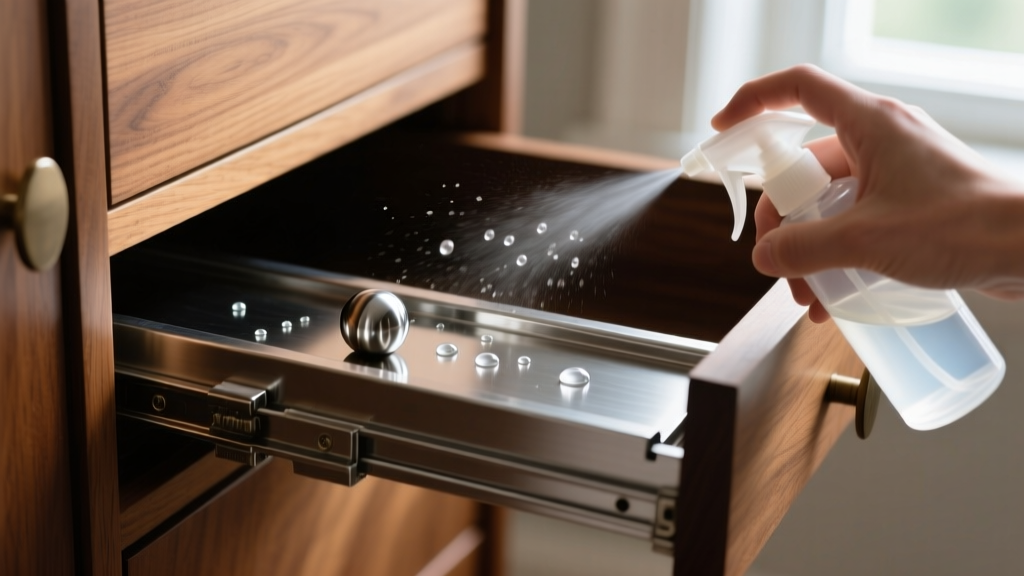
When a drawer in a massive armoire refuses to open smoothly, the culprit is rarely the wood itself; it is the drawer slide hardware. Standard epoxy-coated euro-slides (often found in budget armoires) are rated for a mere 35-pound dynamic load. Once exceeded, the plastic rollers flatten, creating immense friction.
Upgrading to Heavy-Duty Ball-Bearing Slides
To permanently solve drawer jams, you must upgrade the hardware. Remove the existing slides and install 14-inch or 16-inch side-mount ball-bearing drawer slides, such as the Knape & Vogt 8400 series or Liberty 941405. These steel slides are rated for 100 pounds and feature a soft-close dampener that prevents the heavy drawer from slamming shut and rattling delicate gemstone settings.
- Step 1: Empty the drawer and remove it from the carcase.
- Step 2: Unscrew the old tracks. Fill the old screw holes with a two-part wood epoxy (like System Three RotFix) to provide fresh, solid material for new screws.
- Step 3: Mount the new cabinet-member tracks perfectly level using a laser level. Even a 2-degree tilt will cause a heavy drawer to bind.
- Step 4: Apply a dry PTFE (Teflon) lubricant to the ball bearings. Avoid wet oils or WD-40, which attract dust and create an abrasive paste over time.
The Deep Compartment Tarnish Trap
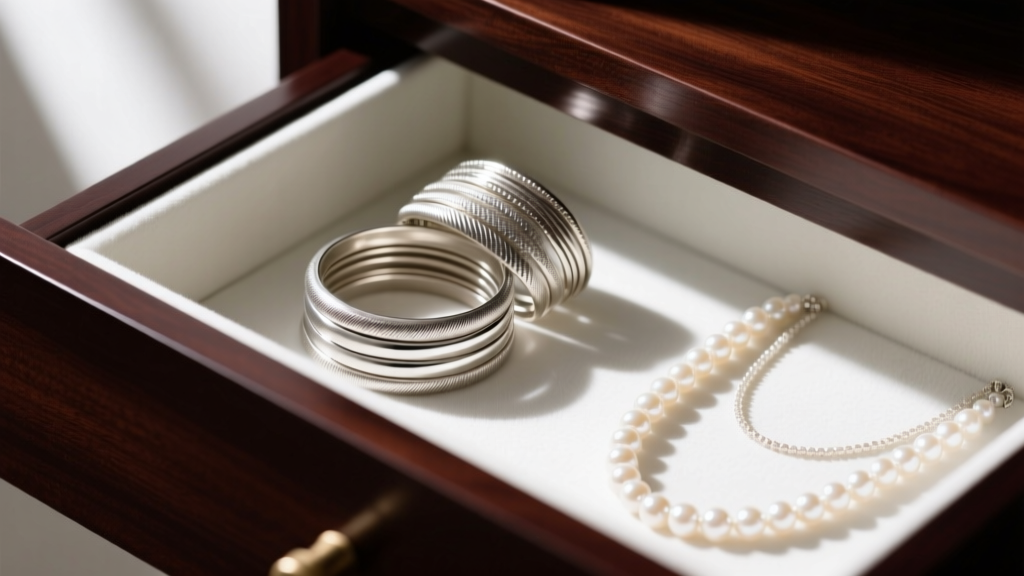
A huge jewelry armoire often features deep, cavernous bottom drawers or tall swing-out doors. While excellent for storing long opera-length necklaces, these deep compartments create stagnant air pockets. Without proper airflow, ambient humidity becomes trapped, and off-gassing from cheap wood glues accelerates the oxidation of silver and copper alloys.
The Gemological Institute of America (GIA) notes that porous gems like pearls, opals, and turquoise are highly sensitive to the acidic microclimates that can develop in poorly ventilated wooden enclosures. To troubleshoot this, you must actively manage the drawer's atmosphere.
Implementing Active Climate Control
Do not rely on generic desiccant packets, which saturate quickly and can leak corrosive silica dust if crushed. Instead, line the back walls of deep compartments with Pacific Silvercloth, a specialized flannel embedded with microscopic silver particles that intercept and neutralize hydrogen sulfide gases before they reach your jewelry. Supplement this with 3M Anti-Tarnish strips, replacing them every six months. For armoires kept in humid climates (above 60% relative humidity), install a low-voltage, USB-powered dehumidifier rod at the base of the armoire to create a gentle convection current that pulls moisture out of the deep compartments.
Repairing Peeling Velvet and Failing Flocking
The interior lining of a jewelry armoire takes a beating from sharp prongs, metal clasps, and the natural oils transferred from your hands. In large armoires, the sheer surface area means that adhesive failure is a common issue. If your velvet is peeling or the flocking is rubbing off onto your gold chains, it poses a chemical risk: many cheap, solvent-based spray adhesives used in factory flocking become acidic as they degrade, which can etch the nacre off your pearls.
The Fix: Carefully peel away the failing fabric. Sand the bare MDF or plywood lightly with 220-grit sandpaper to create a mechanical tooth. Instead of using aerosol sprays, apply a bead of Beacon Fabri-Tac or a pH-neutral PVA adhesive like Lineco Neutral pH Adhesive. Stretch an acid-free, non-woven suedette fabric (available from archival supply companies) over the surface, pressing from the center outward to eliminate air bubbles. Suedette provides superior grip for heavy brooches and will not shed fibers onto intricate filigree work.
Troubleshooting Quick-Reference Chart
| Problem Symptom | Root Cause Analysis | Exact Professional Fix | Est. Cost |
|---|---|---|---|
| Drawer bottom bowing | MDF panel overload & creep deflection | Install 1/8" birch plywood sub-floor with brad nails | $15 - $25 |
| Tracks grinding/jamming | Euro-roller flattening under >35lb load | Retrofit with KV 8400 100lb ball-bearing slides | $30 - $50 |
| Silver tarnishing rapidly | Stagnant deep-drawer microclimate & glue off-gassing | Line with Pacific Silvercloth; add 3M tarnish strips | $40 - $60 |
| Velvet lining lifting | Solvent-based adhesive breakdown & humidity | Re-line with acid-free suedette using Lineco PVA | $25 - $45 |
| Door hinges sagging | Brass hinge pin stretching from heavy mirrored doors | Replace with heavy-duty ball-tip cabinet hinges | $20 - $35 |
Relocating Without Catastrophic Base Failure
Moving a fully loaded, 60-inch-tall jewelry armoire is a recipe for disaster. The base rails of most armoires are joined with simple dowels or short cam bolts. Tilting a 150-pound unit to slide it across a floor applies immense shear force to these joints, often snapping the MDF base cleanly off the side panels.
Protocol for Moving: Never move the armoire intact. First, remove every single drawer and shelf, labeling them with painter's tape to ensure proper weight distribution upon reassembly. Next, detach the crown molding and any exterior mirrors. When moving the empty carcase, always lift from the reinforced corner blocks at the very bottom—never drag it. If you must transport the armoire in a vehicle, lay it flat on its back (never on its side, which can warp the vertical panels) and place a rigid sheet of 3/4-inch plywood underneath to distribute the suspension vibrations evenly across the frame.
Expert Insight: A huge jewelry armoire is an investment in your collection's longevity. Treat its mechanical hardware and interior climate with the same rigor you apply to your high-end timepieces and gemstones. Proactive maintenance of the slides and climate seals will ensure the piece outlasts the jewelry it holds.


