Expert Guide to Cleaning Your Fine China Jewelry Box
Learn expert techniques to clean, polish, and protect your fine china jewelry box from crazing, chips, and tarnish without damaging the glaze.

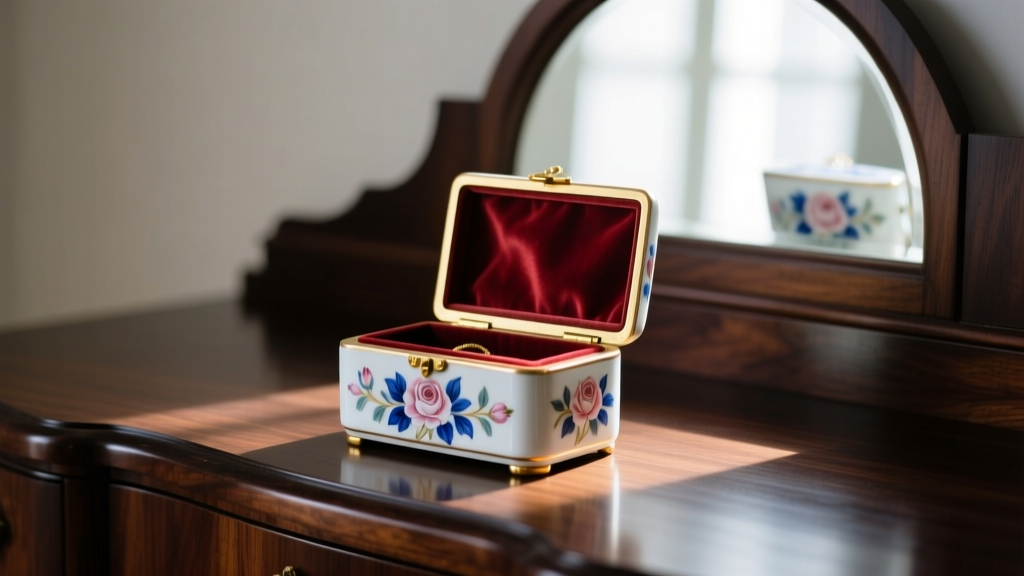
Fine china and porcelain jewelry boxes—ranging from hand-painted Limoges trinket boxes to delicate Staffordshire bone china caskets—are among the most exquisite and fragile pieces in any jewelry storage collection. Unlike standard wood or leather organizers, a china jewelry box requires a highly specific approach to care, maintenance, and cleaning. The glass-like glaze, the porous ceramic body beneath, and the often-oxidizing metal hinges all react differently to environmental stressors and cleaning agents.
Whether you are maintaining a modern porcelain piece or restoring a 19th-century heirloom, understanding the material science behind your storage vessel is critical. This guide provides a conservation-grade protocol for cleaning and preserving your fine china jewelry box, ensuring it remains a pristine sanctuary for your most valued gems and metals.
Understanding Porcelain and Bone China Vulnerabilities
Before applying any cleaner, it is essential to understand what your box is made of. True hard-paste porcelain is composed of kaolin clay, feldspar, and quartz, fired at extreme temperatures (up to 1400°C). Bone china, popularized in England, incorporates bone ash, resulting in a translucent, highly durable body but a glaze that is notably softer and more susceptible to micro-scratching.
The primary vulnerability of any china jewelry box lies in the coefficient of thermal expansion (CTE). The ceramic body and the silica-based glaze expand and contract at different rates when exposed to temperature fluctuations. Furthermore, the metallic fittings (usually brass, silver-plate, or pot metal) are prone to galvanic corrosion if moisture becomes trapped in the microscopic pores of the ceramic. Using the wrong cleaning chemicals can lead to 'crazing'—a network of fine, irreversible cracks in the glaze that traps dirt and destroys the box's structural integrity.
The Step-by-Step Conservation Cleaning Protocol
According to guidelines from the Victoria and Albert Museum, ceramic objects should always be cleaned using the least invasive method possible. Never submerge a vintage china jewelry box in water, as the unglazed ceramic foot can absorb moisture, leading to internal staining or hinge rust.
Phase 1: Dry Dusting and Surface Preparation
Always begin with dry cleaning. Use a soft, natural-hair sable brush or a conservation-grade microfiber duster to gently remove loose particulate matter. Dust acts as an abrasive; if you wipe a dusty box with a wet cloth, you risk dragging silica particles across the glaze, causing permanent micro-scratches. Pay special attention to the crevices around the hinges and the interior seams where skin cells and cosmetic powders accumulate.
Phase 2: Aqueous Spot Cleaning
For stubborn grime, fingerprints, or cosmetic residue, prepare a mild aqueous solution. Mix distilled water with a few drops of a pH-neutral, non-ionic surfactant (such as Orvus WA Paste or a mild, dye-free dish soap).
- Dampen a cotton swab or a soft, lint-free cloth in the solution. Never apply liquid directly to the box.
- Gently roll the swab over the soiled area. Do not scrub.
- Immediately follow with a second swab dampened only with pure distilled water to rinse away any surfactant residue.
Phase 3: Drying and Metal Fitting Care
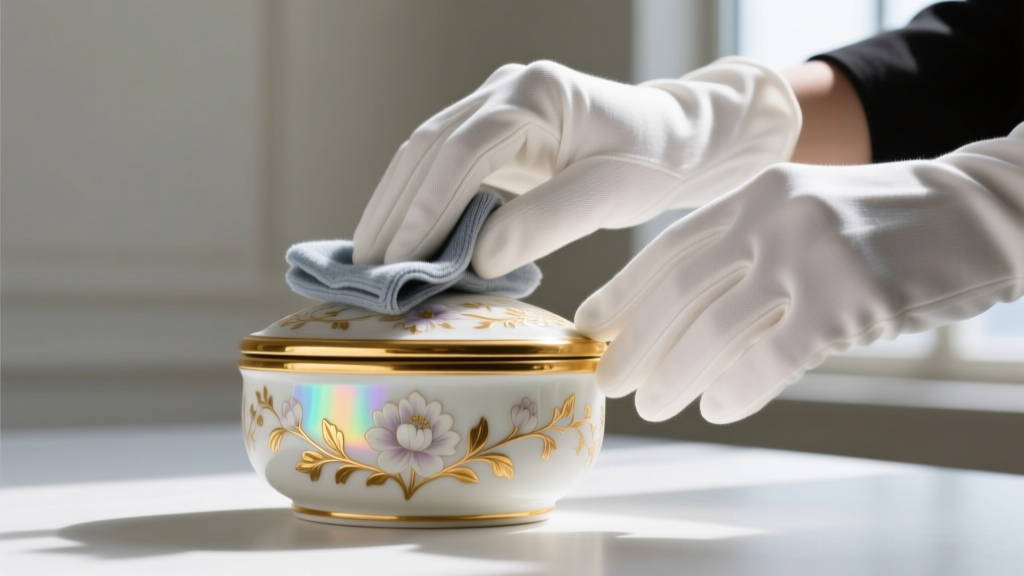
Dry the surface immediately with a lint-free microfiber towel. If your china jewelry box features brass or silver-plated hinges and clasps, do not use standard metal polishes like Brasso. These contain harsh abrasives and ammonia that will permanently strip the delicate gold-gilt or silver overglaze decorations often found on Limoges and Meissen boxes. Instead, use a micro-crystalline wax (such as Renaissance Wax) applied with a cotton swab to protect the metal fittings from oxidation without harming the adjacent ceramic glaze.
Preventing Crazing and Glaze Degradation
Crazing is the bane of ceramic collectors. It appears as a spiderweb of fine lines across the surface of the glaze. While sometimes intentional in modern pottery, in a fine china jewelry box, it is a sign of structural stress and degradation. Once crazed, the glaze can no longer protect the porous clay body beneath, making the box highly susceptible to staining from perfumes, lotions, and tarnished silver.
To prevent crazing, you must control the storage environment. The Smithsonian Institution recommends maintaining a stable relative humidity (RH) between 45% and 55%, and avoiding rapid temperature changes. Never store your china jewelry box on a windowsill in direct sunlight, near a radiator, or in a humid bathroom environment.
Cleaning Agents and Glaze Compatibility
Choosing the wrong chemical cleaner can instantly destroy the overglaze enamels and gilding on your box. Refer to this compatibility chart before attempting any deep cleaning:
| Cleaning Agent | Chemical Profile | Safety for China Glaze |
|---|---|---|
| Distilled Water | Neutral (pH 7.0) | Safe (Primary Solvent) |
| Orvus WA Paste | Neutral Surfactant | Safe (Conservation Grade) |
| Baking Soda | Mild Alkaline / Abrasive | Risk (Causes Micro-scratching) |
| Ammonia | Highly Alkaline | Danger (Etches Glaze & Gilding) |
| Bleach | Oxidizing Agent | Danger (Destroys Overglaze Enamels) |
| Rubbing Alcohol | Solvent | Risk (Can dissolve cold-paint details) |
Interior Lining Maintenance and Tarnish Prevention
The exterior of a china jewelry box may be pristine, but the interior requires equal attention. Vintage boxes are often lined with silk, velvet, or satin. Over decades, these natural and synthetic fibers degrade, becoming acidic. This acidity can transfer to your jewelry, accelerating the tarnishing of sterling silver and degrading the finishes on costume jewelry.
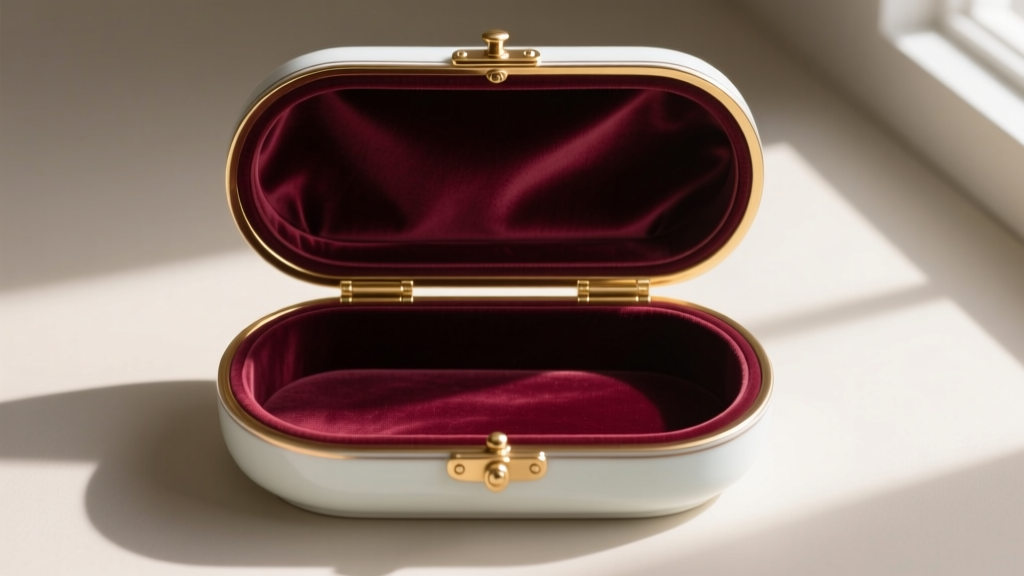
If the original lining is intact but aging, do not attempt to rip it out, as the adhesives used in the 19th and 20th centuries (often hide glue or early rubber cements) can pull the fragile ceramic body apart. Instead, line the interior with acid-free, unbuffered tissue paper or custom-cut pieces of Pacific Silvercloth. This provides a physical barrier between your jewelry and the degrading vintage fabric, while actively absorbing airborne sulfur compounds that cause tarnish.
If the lining is completely ruined and must be replaced, use a conservation-grade, pH-neutral adhesive like Jade 403 PVA. Never use rubber-based glues or double-sided tape, as these off-gas volatile organic compounds (VOCs) that will permanently stain the porous ceramic interior and aggressively tarnish any silver stored inside.
Structural Repairs: Handling Chips and Cracks
Accidents happen. If your china jewelry box suffers a chip or a cracked lid, your immediate instinct might be to reach for super glue. Do not use cyanoacrylate (Super Glue). Cyanoacrylate degrades over time, turning a brittle, opaque yellow that is nearly impossible to remove from porous ceramic without using harsh solvents that will destroy the box's painted motifs.
For temporary stabilization of a clean break, professional conservators use Paraloid B-72, an acrylic resin that remains stable, clear, and fully reversible in acetone. However, because a jewelry box is a functional object subject to the mechanical stress of opening and closing lids, structural repairs require precise alignment and clamping. If a hinge mount has chipped away from the ceramic body, the piece should be evaluated by a professional objects conservator to ensure the mechanical load of the metal hinge does not cause further catastrophic failure of the clay body.
Conclusion
A fine china jewelry box is far more than a simple storage container; it is a masterclass in ceramic artistry and historical craftsmanship. By abandoning harsh household cleaners in favor of conservation-grade surfactants, controlling the ambient humidity to prevent crazing, and utilizing anti-tarnish barriers within the interior, you ensure that both the box and the treasures it holds remain flawless for generations to come.


