Restore & Clean Your Home Goods Jewelry Box: Expert Guide
Learn how to properly clean, maintain, and restore a home goods jewelry box. Expert tips for faux leather, velvet interiors, and hardware.

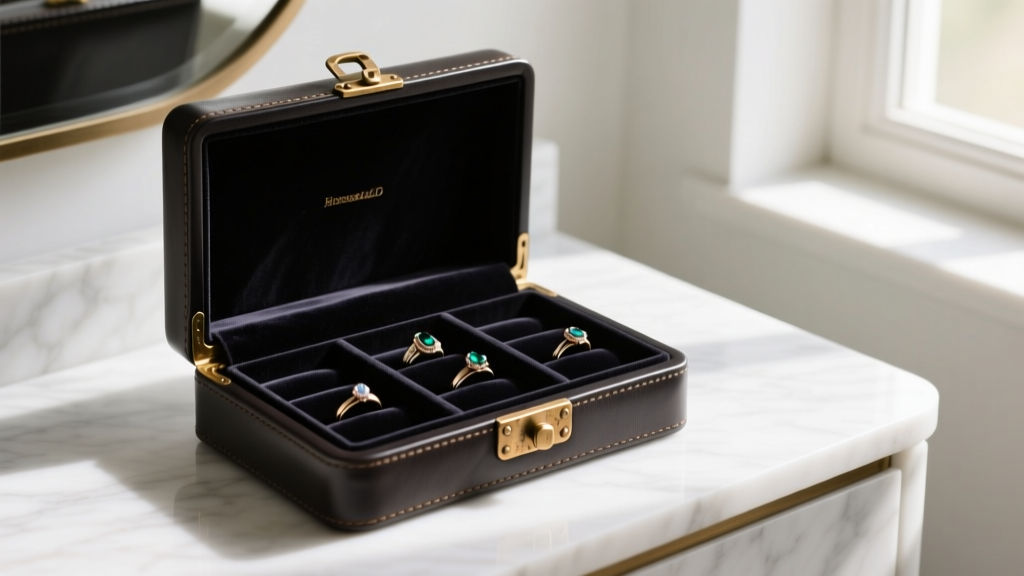
Off-price retailers like HomeGoods, Marshalls, and TJ Maxx are treasure troves for affordable, stylish organization. However, a typical home goods jewelry box is constructed very differently from luxury, solid-wood heirloom pieces. Most mass-market boxes utilize Medium-Density Fiberboard (MDF) substrates, polyurethane (PU) faux leather, zinc-alloy hardware, and synthetic crushed velvet linings. While beautiful on the outside, these specific materials require a highly targeted care regimen to prevent peeling, warping, and hardware failure.
As of 2026, manufacturing standards for water-based PU coatings have improved, but the fundamental vulnerability of these materials to moisture and harsh chemicals remains. In this comprehensive guide, we break down the exact chemistry and mechanics of maintaining your big-box jewelry storage, ensuring it protects your precious metals and gemstones for years to come.
The Anatomy of a Big-Box Jewelry Box: Why Material Matters
Before applying any cleaner, you must identify the materials of your specific box. Using a standard wood polish on a PU-wrapped MDF box will cause irreversible clouding and eventual peeling. Here is what you are likely working with:
- Polyurethane (PU) Faux Leather: Prone to hydrolysis (chemical breakdown from moisture and humidity), which causes the surface to flake and peel after 3 to 5 years.
- MDF Substrate: Highly susceptible to water swelling. If liquid seeps past the PU or veneer layer, the fiberboard will expand and crack the exterior finish.
- Zinc-Alloy Hardware: Lightweight and cost-effective, but highly prone to oxidation and seizing if exposed to aerosolized cleaners or high humidity.
- Cardboard-Backed Velvet: The interior lining is usually glued to a thin cardboard frame. Liquid cleaners will dissolve the adhesive, causing the velvet to sag and bunch.
Step-by-Step Exterior Cleaning Guide
The exterior of your home goods jewelry box takes the brunt of environmental abuse, accumulating skin oils, dust, and airborne pollutants. The cleaning approach depends entirely on the exterior finish.
Caring for Faux Leather and Polyurethane Surfaces
Never use alcohol-based cleaners, bleach, or glass cleaners on PU leather. These solvents strip the plasticizers from the polyurethane, accelerating the peeling process. Instead, create a gentle, pH-neutral cleaning solution.
- Mix one cup of distilled water with a single drop of liquid Castile soap.
- Dampen a high-quality microfiber cloth in the solution and wring it out until it is barely moist.
- Wipe the exterior in gentle, overlapping circular motions.
- Immediately dry the surface with a separate, bone-dry microfiber cloth to prevent moisture from seeping into the seams.
Maintaining Wood Veneer and Lacquered Finishes
Some boxes feature a thin wood veneer over MDF, sealed with a high-gloss lacquer. Avoid silicone-based polishes (like standard Pledge), which can build up and create a hazy film over time. Use a lightly dampened cloth to remove dust, followed by a tiny amount of carnauba-based paste wax applied with a soft cotton pad. Buff it out after 10 minutes to restore a deep, protective shine without suffocating the finish.
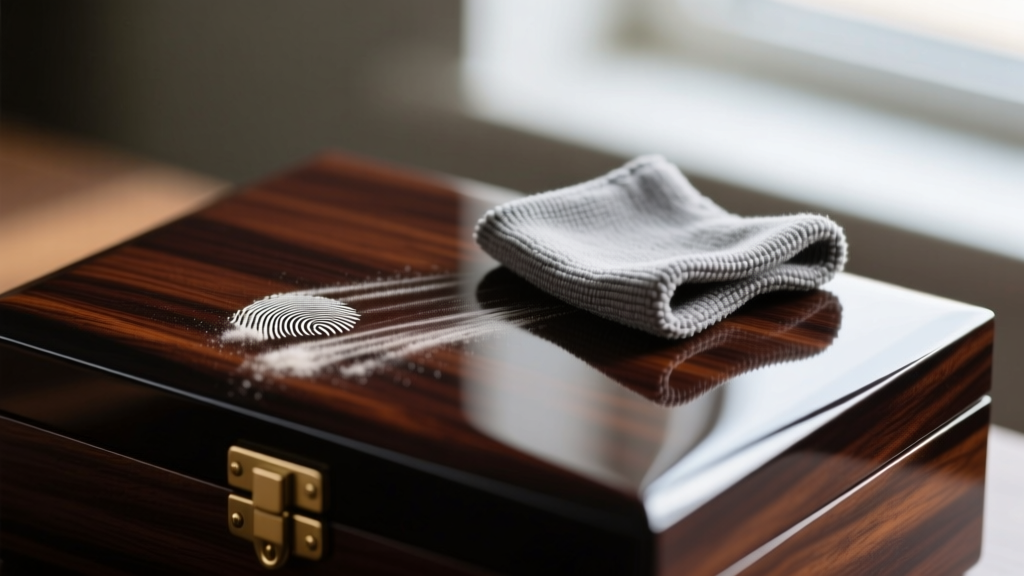
Revitalizing the Interior: Velvet and Anti-Tarnish Linings
The interior environment of your jewelry box dictates the tarnish rate of your silver and the scratch-resistance for your gold. Crushed velvet acts as a dust magnet, while failing anti-tarnish treatments can actually accelerate oxidation.
The Dry-Clean Only Rule
Because the velvet is adhered to a cardboard and MDF framework, introducing liquid is a recipe for disaster. To clean the interior:
- Use a soft-bristle suede brush or a clean, dry makeup blending brush to gently agitate the velvet nap and lift trapped dust and dead skin cells.
- Use a vacuum cleaner with an upholstery attachment on the lowest possible suction setting to extract the loosened debris.
- For localized stains, use a dry-cleaning sponge (vulcanized rubber) to gently lift oils without moisture.
The Truth About "Anti-Tarnish" Linings
Many mass-market boxes advertise "anti-tarnish velvet." In reality, this is often just flannel treated with a mild chemical inhibitor that loses its efficacy within 6 to 12 months. According to the Gemological Institute of America (GIA), proper silver storage requires a sealed environment with active tarnish-inhibiting strips. We recommend slipping a 3M anti-tarnish strip into the main compartment of your box, replacing it every six months to guarantee protection.
| Material | Safe Cleaners | Dangerous Cleaners (Avoid) |
|---|---|---|
| PU Faux Leather | Diluted Castile soap, distilled water | Rubbing alcohol, bleach, ammonia |
| Wood Veneer | Damp microfiber, carnauba wax | Silicone aerosols, soaking water |
| Crushed Velvet | Suede brush, dry-cleaning sponge | Spot removers, water, steam |
| Zinc-Alloy Hinges | Dry PTFE lubricant, mineral oil | WD-40, water-based degreasers |
Hardware Maintenance: Fixing Sticky Hinges and Stripped Screws
The hardware on a home goods jewelry box is typically made from cast zinc alloy. Over time, these hinges can become stiff, squeaky, or entirely seized due to oxidation and dust accumulation. Furthermore, the screws holding these hinges are often driven directly into MDF, which strips easily.
Lubricating Seized Hinges
The most common mistake consumers make is reaching for WD-40. Standard WD-40 is a solvent and water-displacer, not a long-term lubricant. It will attract dust, gum up the hinge mechanism, and its chemical propellants can melt the PU coating or synthetic velvet nearby. Instead, use a dry PTFE (Teflon) lubricant or a tiny drop of synthetic mineral oil applied via a cotton swab directly to the hinge knuckle. Wipe away any excess immediately.
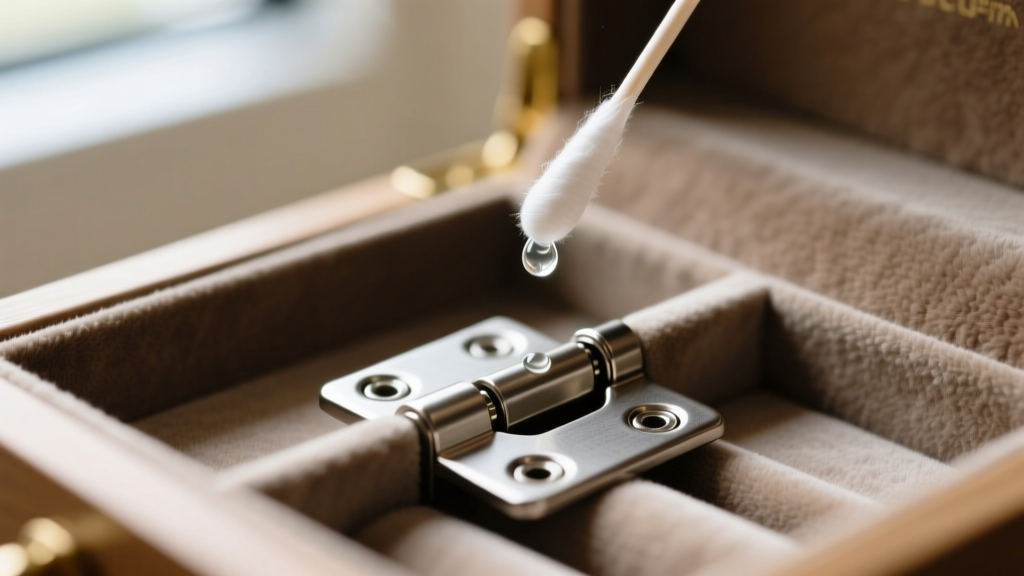
The E-E-A-T Trick for Stripped MDF Screw Holes
If a hinge screw spins endlessly and won't tighten, the MDF hole is stripped. Standard wood filler lacks the structural integrity to hold a tiny screw under the tension of a heavy jewelry drawer. Here is the professional conservator's fix:
- Remove the loose screw and clear out any dust from the hole.
- Fill the stripped hole with a mixture of cyanoacrylate (superglue) and a pinch of baking soda. This creates an instant, rock-hard acrylic plug.
- Allow it to cure for 10 minutes.
- Using a 1mm drill bit (or a thick sewing needle), carefully bore a new pilot hole directly into the hardened plug.
- Re-insert the original screw. It will bite into the new material with factory-level grip.
Environmental Control: Where You Place Your Box
Where you keep your home goods jewelry box is just as critical as how you clean it. Because MDF and PU leather are highly reactive to humidity fluctuations, placement is key to preventing structural failure.
"Jewelry storage should never be placed in a bathroom or directly beneath an HVAC vent. The rapid cycling of heat and moisture will accelerate the hydrolysis of synthetic leathers and cause wood veneers to delaminate from their substrates."
— Adapted from guidelines by the Jewelers of America
Keep your box in a climate-controlled bedroom or dressing area, ideally maintaining a relative humidity between 40% and 50%. If you live in a highly humid climate, place two small silica gel desiccant packets inside the main compartment of the box to absorb ambient moisture, replacing them every three months.
Final Thoughts on Long-Term Care
A home goods jewelry box offers incredible aesthetic value and functional organization at a fraction of the cost of luxury alternatives. By understanding the specific material limitations of PU leather, MDF, and zinc alloys, you can adapt your cleaning and maintenance routines to drastically extend the lifespan of your storage. Treat the exterior with pH-neutral care, keep the interior bone-dry, and reinforce the hardware with the right lubricants. With these expert techniques, your affordable jewelry box will continue to protect and display your collection beautifully for years to come.


