How to Clean a Plastic Jewelry Organizer Without Scratching
Learn how to safely clean a plastic jewelry organizer without scratching or yellowing the acrylic. Expert maintenance tips for lasting clarity.

The Hidden Vulnerability of Clear Plastic Organizers
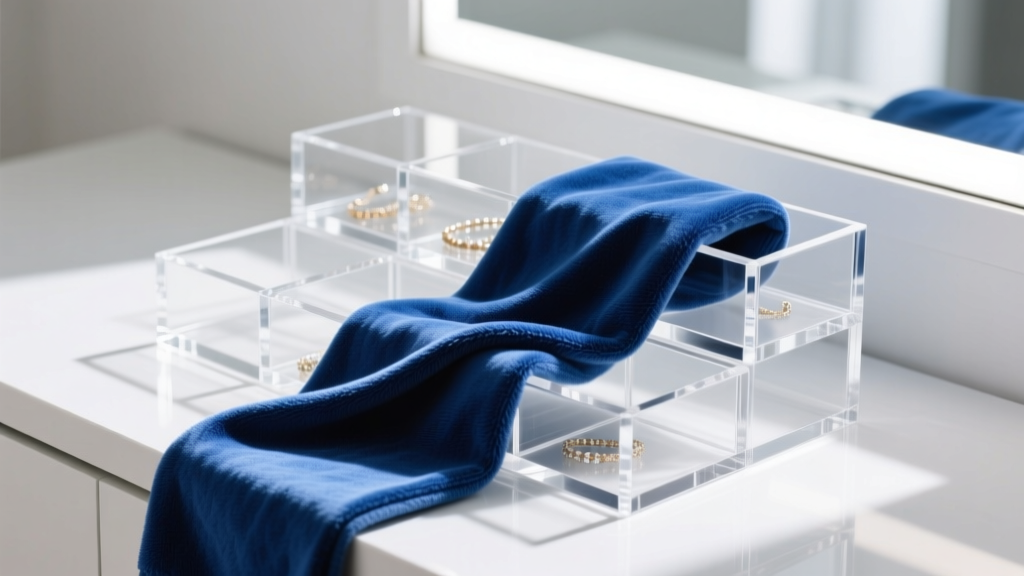
Clear plastic jewelry organizers—typically crafted from Polymethyl Methacrylate (PMMA, commonly known as acrylic), Polyethylene Terephthalate Glycol (PETG), or Polystyrene (PS)—have become a staple for collectors and minimalists alike. They offer unmatched visibility and modularity. However, from a materials science perspective, these polymers are highly susceptible to surface degradation, micro-scratching, and chemical crazing if maintained improperly. Many enthusiasts inadvertently ruin their acrylic displays by treating them like glass. Understanding the specific physical properties of your plastic jewelry organizer is the first step toward preserving its optical clarity and structural integrity for years to come.
The Mohs Scale Problem: Why Dust is Your Enemy
The most common way jewelry owners scratch their plastic organizers is by wiping them with a dry cloth. Acrylic sits at roughly a 3 to 4 on the Mohs hardness scale. Household dust, however, contains microscopic particles of quartz and silica, which rank at a 7 on the Mohs scale. When you drag a dry microfiber or cotton cloth across an acrylic surface, you are essentially grinding quartz into the plastic, creating a network of micro-scratches that permanently cloud the material. According to the Smithsonian Institution's guidelines on plastic conservation, mechanical abrasion from improper dusting is the leading cause of optical degradation in museum-grade acrylic displays. The golden rule of plastic maintenance is never to wipe a dry surface.
The Do-Not-Use List: Chemicals That Destroy Polymers
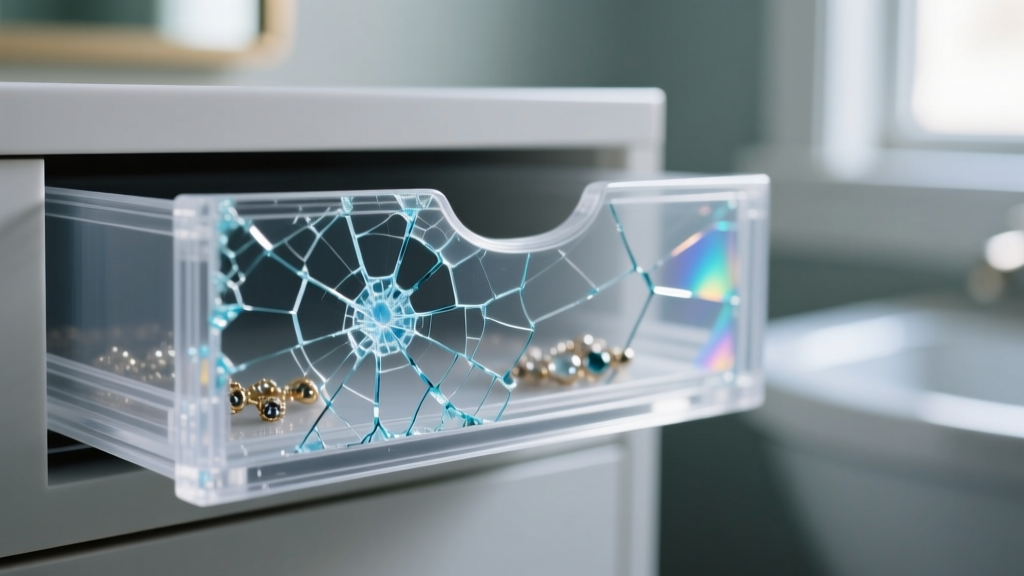
Plastic is not glass. Many common household cleaners contain solvents that react violently with the polymer chains in acrylic and PETG, causing a phenomenon known as "crazing." Crazing manifests as a spiderweb of microscopic internal cracks that weaken the structure and scatter light, making the organizer look permanently foggy.
| Cleaning Agent | Active Chemical | Effect on Acrylic / PETG | Verdict |
|---|---|---|---|
| Window Cleaners (e.g., Windex) | Ammonia / Alcohols | Strips UV coatings, causes surface etching and clouding | AVOID |
| Rubbing Alcohol | Isopropanol | Induces severe stress crazing and micro-cracking | AVOID |
| Nail Polish Remover | Acetone | Completely dissolves and melts acrylic surfaces | AVOID |
| pH-Neutral Dish Soap | Mild Surfactants | Lifts oils and dirt without attacking polymer chains | SAFE |
| Plastic Polish (e.g., Novus No. 1) | Proprietary Surfactants | Cleans, leaves anti-static barrier, safe for PMMA | RECOMMENDED |
Step-by-Step Guide to Deep Cleaning Your Organizer
To restore and maintain the crystal-clear finish of your plastic jewelry organizer, follow this conservation-grade cleaning protocol. This method ensures that oils, skin acids, and environmental grime are removed without introducing new abrasions.
- Empty and Disassemble: Remove all jewelry. If your organizer is modular, take it apart. This prevents tarnish-causing moisture from getting trapped in the seams.
- Rinse with Distilled Water: Rinse the plastic components under a gentle stream of lukewarm distilled water. Avoid tap water, as dissolved minerals like calcium and magnesium will leave hard water spots that are difficult to remove without abrasive scrubbing.
- Apply Cleaning Solution: Mix a few drops of pH-neutral dish soap (like Dawn) into a spray bottle filled with distilled water. Mist the organizer generously. Alternatively, use a dedicated plastic cleaner like Novus No. 1.
- Wipe with High-GSM Microfiber: Using a clean, plush microfiber cloth (minimum 300 GSM), gently wipe the plastic in straight, overlapping lines. Avoid circular motions, which can create visible swirl marks under direct light.
- Air Dry or Pat Dry: Allow the organizer to air dry in a dust-free environment, or gently pat it dry with a second, completely dry microfiber towel. Never use paper towels, as they are made of wood pulp and will severely scratch acrylic.
Combating the Triboelectric Effect: Static and Dust
One of the most frustrating aspects of owning a plastic jewelry organizer is how quickly it attracts dust immediately after cleaning. This is due to the triboelectric effect. Plastics are highly insulative and easily build up a static electrical charge when wiped, acting like a magnet for airborne dust and pet dander. To combat this, integrate an anti-static ionizing brush into your maintenance routine. These brushes emit a small electrical charge that neutralizes the static field on the plastic's surface. Alternatively, applying a dedicated acrylic anti-static spray will create a microscopic conductive layer that repels dust for weeks, drastically reducing the frequency of required cleanings.
Managing Tarnish Transfer and Interior Staining
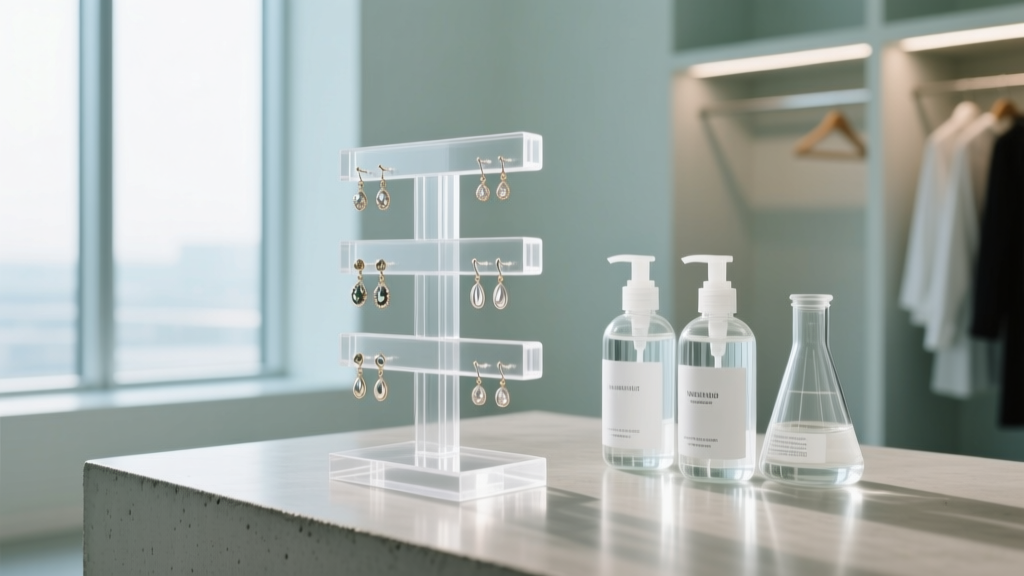
While plastic itself does not tarnish, it is slightly porous at a microscopic level, especially when micro-scratched. When sterling silver jewelry oxidizes, it forms silver sulfide—a black, powdery compound. If left resting in a scratched plastic compartment, this tarnish can transfer and embed itself into the plastic's surface imperfections, leaving stubborn grey or black stains.
Removing Embedded Tarnish Stains
If tarnish transfer has occurred, do not use abrasive baking soda pastes, as they will scour the acrylic. Instead, create a soaking bath using warm distilled water and a specialized jewelry cleaning solution that is safe for porous materials. Let the plastic compartment soak for 15 to 20 minutes to loosen the silver sulfide bonds, then gently agitate with a soft-bristled, baby-hair brush. For persistent stains, a melamine foam (Magic Eraser) can be used with extreme caution, but be aware that melamine acts as a micro-abrasive and will require a subsequent polishing step with a plastic restorer to regain optical clarity.
Long-Term Maintenance and UV Protection
Finally, consider the environmental placement of your plastic jewelry organizer. Prolonged exposure to ultraviolet (UV) light causes photo-degradation in polymers, breaking down the chemical bonds and resulting in irreversible yellowing and brittleness. While high-end cast acrylics often include UV stabilizers, cheaper extruded plastics and PETG do not. To maximize the lifespan of your storage solutions, keep them out of direct sunlight. If your vanity is near a south-facing window, consider applying a clear UV-blocking window film to the glass, or invest in organizers specifically manufactured from UV-stabilized museum-grade acrylic. By combining mindful placement with chemical-safe cleaning protocols, your plastic organizers will remain a pristine, invisible stage for your jewelry collection for decades. For more information on how environmental factors affect jewelry and storage materials, consult the Gemological Institute of America (GIA) Jewelry Care guidelines.


