How to Choose the Perfect Crochet Jewelry Holder in 2026
Discover what to look for in a crochet jewelry holder. Learn about fiber safety for silver, structural armatures, and earring gauge spacing.

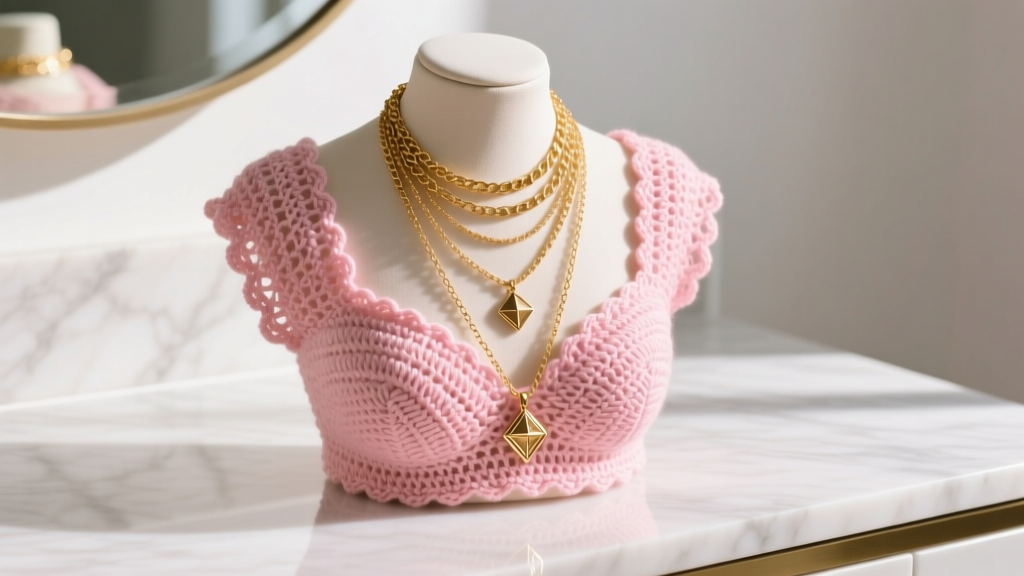
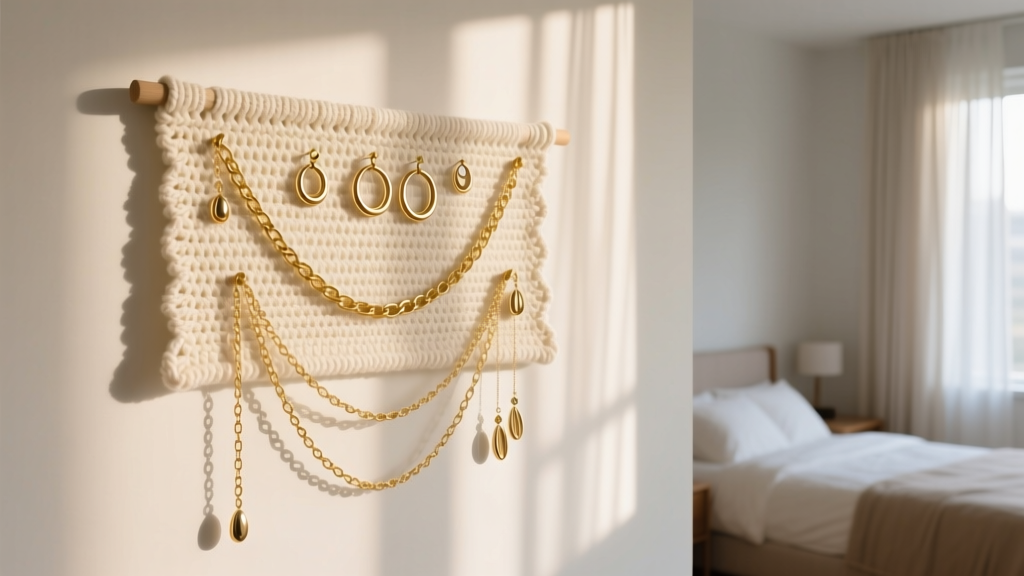
Crochet jewelry holders have evolved far beyond simple craft fair trinkets. In 2026, they represent a sophisticated intersection of artisanal textile craft and functional luxury organization. Whether you are looking for an amigurumi-style display bust, a delicate lace earring card, or a macrame-inspired wall hanging, a well-crafted crochet organizer can elevate your vanity. However, not all yarns and structural methods are safe for fine jewelry. As a buyer, you must look past the aesthetic appeal and evaluate the chemical properties of the fibers, the internal armature, and the precise gauge spacing required for your specific collection.
The Hidden Danger: Fiber Types and Silver Tarnish
The most critical factor when purchasing a crochet jewelry holder is the fiber content of the yarn. While animal-based fibers like wool, alpaca, and mohair offer beautiful textures, they pose a severe chemical threat to sterling silver and copper jewelry. According to metal care guidelines from the Gemological Institute of America (GIA), porous materials that emit sulfur gases will rapidly accelerate the tarnishing process of reactive metals.
The Sulfur Problem in Animal Fibers
Wool and other animal hairs contain sulfur-rich amino acids, specifically cysteine and methionine. As these natural fibers age, break down, or are exposed to ambient humidity, they off-gas trace amounts of hydrogen sulfide. When this gas comes into contact with the copper alloy in sterling silver, it triggers a chemical reaction that forms silver sulfide—the black tarnish that plagues jewelry collectors. If you are storing silver chains, ear wires, or gemstone pieces set in silver, you must strictly avoid wool-based crochet holders.
Instead, seek out holders crafted from plant-based cellulose fibers. Mercerized cotton, linen, and bamboo blends are inherently sulfur-free. Mercerization is a chemical treatment that swells the cotton fibers, increasing their luster, strength, and resistance to pilling. A mercerized cotton crochet bust will provide a smooth, slightly cool surface that mimics the feel of polished fabric, ensuring your silver remains bright and your delicate chains do not catch on microscopic yarn barbs.
Structural Integrity: Wire Armatures vs. Poly-Fill
A beautiful crochet exterior is useless if the underlying structure collapses under the weight of your jewelry. A heavy brass statement necklace or a strand of large turquoise beads can easily weigh between 150 and 250 grams. Many mass-produced, budget-friendly crochet busts rely solely on polyester poly-fill stuffing. While poly-fill creates a soft, plush shape, it compresses over time, leading to a sagging neckline that causes layered necklaces to tangle and slide off the display.
For heavy jewelry, you must look for crochet organizers that feature an internal wire armature. High-quality artisans wrap 14-gauge or 16-gauge aluminum wire around a central wooden or acrylic spine before crocheting the exterior shell. Aluminum is preferred because it is rust-proof, lightweight, and malleable enough to allow you to gently bend the bust's "shoulders" to accommodate different necklace lengths, yet rigid enough to support substantial weight without permanent deformation. When reviewing product specifications or asking a maker, always inquire about the presence and gauge of the internal wire skeleton.
Earring Cards vs. Display Busts: Gauge and Spacing
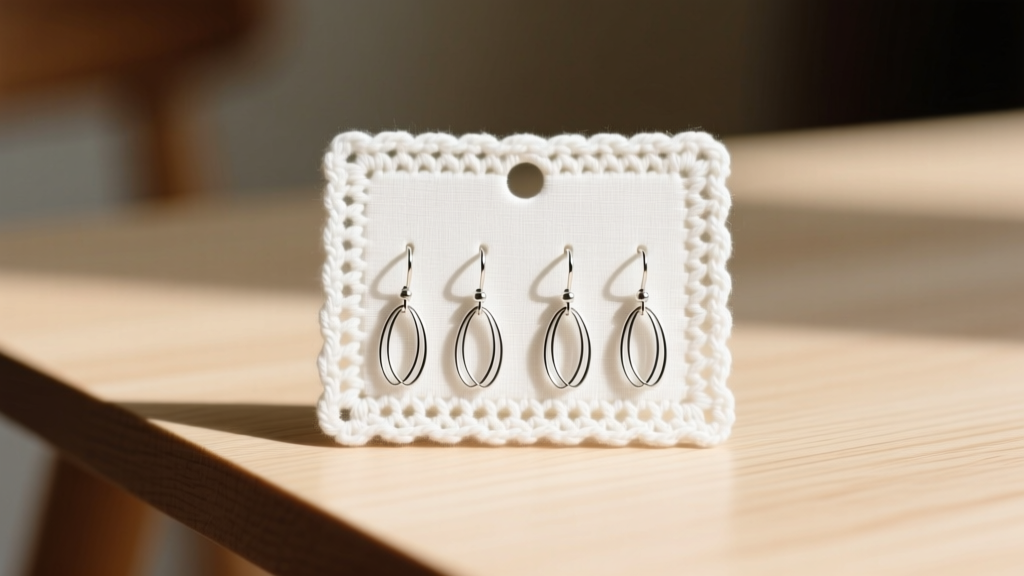
When purchasing a flat crochet lace earring card or a hanging organizer, the spacing and size of the decorative holes are paramount. Jewelry findings follow strict standardized measurements, and your organizer must accommodate them without causing friction. As noted by jewelry supply experts at Rio Grande, standard ear wires and French hooks are typically crafted from 20-gauge (0.81mm) or 18-gauge (1.02mm) wire.
If the crochet holes are too tight, forcing the ear wire through will stretch and permanently distort the yarn, while also risking micro-scratches on the metal or damage to delicate gemstone drops. The ideal crochet earring holder should feature reinforced eyelets—either crocheted with a tighter tension ring or fitted with tiny brass grommets—with a minimum clear diameter of 2.5mm to 3mm. Furthermore, the spacing between holes should be at least 1.5 inches to prevent dangling earrings from tangling with one another when the card is stored in a drawer or travel pouch.
| Fiber Material | Tarnish Risk (Silver/Copper) | Snag Factor | Best Application |
|---|---|---|---|
| Wool / Alpaca | High (Sulfur off-gassing) | High (Scaly fibers) | Costume jewelry, chunky resin pieces |
| Acrylic / Nylon | None | Medium (Static cling) | Everyday wear, travel organizers |
| Mercerized Cotton | None | Very Low (Smooth finish) | Fine silver, delicate gold chains, pearls |
| Bamboo / Linen | None | Low (Slight drape) | Heavy statement necklaces, wall hangings |
The 2026 Buyer’s Checklist for Crochet Organizers
To ensure you are investing in a high-quality, jewelry-safe crochet holder, run through this practical checklist before making a purchase:
- Fiber Verification: Confirm the yarn is 100% plant-based (cotton, linen, hemp) or a high-grade synthetic if you plan to store sterling silver or copper.
- Armature Check: For necklace busts, verify the inclusion of a rust-proof aluminum wire core (14g or 16g) rather than just soft stuffing.
- Hardware Quality: Inspect the hanging hardware. D-rings, jump rings, and wall hooks should be made of stainless steel or solid brass to prevent rust stains from bleeding onto the yarn.
- Yarn Weight Appropriateness: Look for DK (Double Knit) or Worsted weight yarns for structural pieces, and fine Thread or Fingering weight yarns for intricate lace earring cards.
- Base Stability: If purchasing a freestanding bust, ensure it has a weighted base—such as a solid oak disc or a resin-filled bottom—to prevent it from tipping forward when loaded with heavy chains.
Care, Maintenance, and Anti-Snag Protocols
Even the highest quality crochet jewelry holder will accumulate dust, skin oils, and ambient humidity over time. Proper maintenance is essential to preserve both the organizer and the jewelry it holds. The Craft Yarn Council provides extensive guidelines on fiber care, which translate directly to maintaining your jewelry displays.
For cotton and linen organizers, spot cleaning with a mild, pH-neutral detergent and a soft microfiber cloth is usually sufficient. If a deeper clean is required, hand-wash the item in cool water. Never machine-wash a crochet jewelry bust, as the agitation will cause the yarn to pill, creating microscopic fuzzy snags that can catch on delicate necklace clasps and prong-set gemstones. After washing, reshape the organizer and allow it to air dry completely in a well-ventilated area away from direct sunlight, which can fade dyed yarns and weaken natural fibers over time.
Pro-Tip: If you notice a small snag or pulled loop in your crochet organizer, never cut the yarn. Use a fine crochet hook or a specialized snag-repair needle to gently pull the loop back to the inside (wrong side) of the work, and secure it with a tiny drop of flexible fabric glue to prevent unraveling.
Final Thoughts
A crochet jewelry holder is more than just a decorative accessory; it is a functional tool that interacts directly with your most prized possessions. By prioritizing sulfur-free fibers like mercerized cotton, demanding robust internal armatures, and paying close attention to gauge-compatible hole spacing, you can select an organizer that not only showcases your collection beautifully but actively protects it from environmental and structural damage. Approach your purchase with a discerning eye for textile chemistry and structural engineering, and your artisanal organizer will serve your jewelry collection flawlessly for years to come.


