Dollar Tree Jewelry Organizer DIY: Material Safety Guide
Learn how to safely build a dollar tree jewelry organizer DIY. We compare material properties, prevent tarnish, and seal toxic off-gassing surfaces.

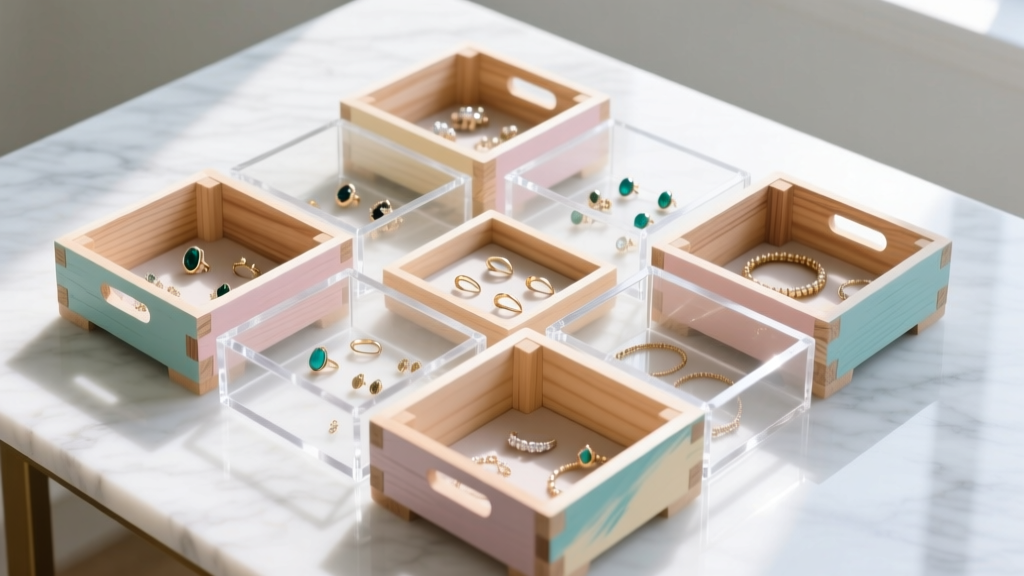
The internet is flooded with brilliant, budget-friendly storage hacks, but when it comes to storing fine metals and delicate gemstones, not all DIY projects are created equal. As we navigate the upcycling and DIY storage trends of 2026, the dollar tree jewelry organizer diy remains a massively popular search term. However, transforming cheap retail items into functional jewelry storage requires a deep understanding of material science. What looks like a clever hack on social media can quickly turn into a nightmare of tarnished silver, scratched gold, and degraded pearls if you ignore the chemical properties of budget materials.
In this comprehensive guide, we will break down the exact materials used in dollar store organizers, analyze their chemical risks, and provide professional-grade upgrade paths to ensure your jewelry remains pristine.
The Hidden Risks of Budget DIY Storage Materials
When you purchase a $1.25 organizer, you are paying for the absolute minimum viable material. This often means high levels of volatile organic compounds (VOCs), acidic adhesives, and porous surfaces that trap moisture. Fine jewelry, particularly sterling silver and copper alloys, is highly reactive to sulfur compounds and acidic environments. Furthermore, organic gems like pearls, coral, and amber are incredibly sensitive to the off-gassing of cheap plastics and the formaldehyde resins found in composite woods.
According to the EPA's guidelines on composite wood products, untreated MDF and particleboard continuously emit urea-formaldehyde gas. When trapped in an enclosed DIY jewelry box, these gases create a micro-environment that accelerates metal oxidation and degrades the nacre on pearls. Before you glue, paint, or stack your dollar store finds, you must identify and neutralize these hidden threats.
Material Breakdown: What You Are Actually Buying
To build a safe dollar tree jewelry organizer diy, you must first audit your materials. Here is a metallurgical and chemical breakdown of the most common budget storage components.
Acrylic (PMMA) vs. Polystyrene (PS) Plastics
Many dollar store clear organizers are marketed as 'acrylic,' but they are frequently molded from Polystyrene (PS) or Polyvinyl Chloride (PVC) to cut costs. True acrylic (Polymethyl Methacrylate, or PMMA) is chemically stable, inert, and perfectly safe for jewelry storage. Polystyrene, however, can off-gas styrene monomers, while PVC off-gasses plasticizers and hydrogen chloride over time. The Canadian Conservation Institute notes in their plastic identification guidelines that degrading PVC creates an acidic environment that will aggressively tarnish silver and pit copper. You can identify PS by its brittle snap and the hollow, high-pitched sound it makes when tapped, whereas PMMA has a denser, duller thud.
MDF and Particleboard
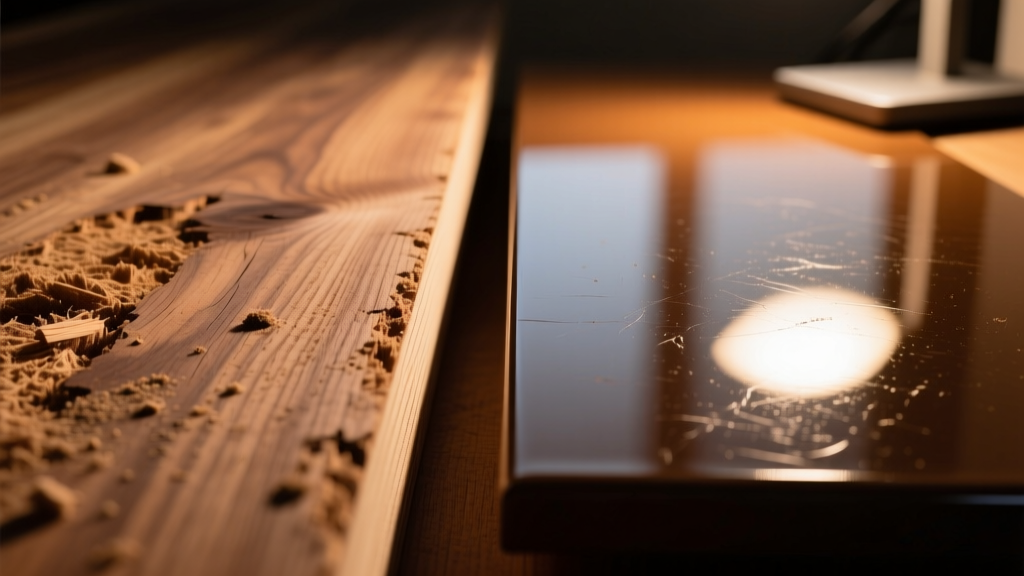
Small wooden crates, drawer units, and easels from the dollar store are almost exclusively made from unsealed Medium-Density Fiberboard (MDF). MDF is highly hygroscopic, meaning it absorbs ambient humidity and holds it against your jewelry. Worse, the lignin and urea-formaldehyde binders in MDF are naturally acidic. Storing sterling silver directly on raw MDF will cause rapid, deep tarnishing that requires aggressive polishing, eventually wearing away the silver plating on vermeil pieces.
Polyester Felt and Foam Inserts
The soft lining in cheap jewelry boxes is rarely pure wool felt; it is usually a polyester blend. While polyester itself is relatively inert, the industrial adhesives used to bind the felt to the cardboard or plastic backing are highly acidic. Over time, these adhesives break down, releasing acetic acid vapors that cause 'vinegar syndrome' in enclosed spaces, leading to severe silver sulfide tarnish.
The Tarnish & Degradation Matrix
Use this comparison chart to evaluate the safety of your dollar store finds before beginning your dollar tree jewelry organizer diy project.
| Material | Off-Gassing Risk | Moisture Resistance | Direct Contact Safety | Required Upgrade |
|---|---|---|---|---|
| Raw MDF / Particleboard | High (Formaldehyde) | Very Poor | Unsafe (Causes Tarnish) | Seal with Shellac or Water-based Poly |
| True Acrylic (PMMA) | None | Excellent | Safe | None (Add anti-tarnish strips) |
| Polystyrene (PS) | Moderate (Styrene) | Good | Conditionally Safe | Line with acid-free tissue |
| PVC / Vinyl | High (Plasticizers) | Excellent | Unsafe (Causes Pitting) | Avoid entirely for fine metals |
| Epoxy-Coated Wire | Low | Poor (Chips easily) | Unsafe (Scratches & Rusts) | Wrap in silicone tubing or velvet |
How to Neutralize and Upgrade Dollar Tree Finds
You do not need to abandon your budget DIY project; you simply need to apply professional conservation techniques to stabilize the materials. The Gemological Institute of America (GIA) emphasizes that preventing environmental exposure is the best method for silver care. Here is how to seal and upgrade your materials.
Sealing Wood and MDF
Never use standard acrylic craft paints to seal MDF. Craft paints remain slightly porous and do not block formaldehyde or acidic tannins. Instead, use a barrier primer. Zinsser B-I-N (a shellac-based primer) is the gold standard for sealing composite woods. Apply two thin coats with a foam brush, allowing 45 minutes of drying time between coats. Shellac completely encapsulates the wood fibers, locking in VOCs and creating a chemically inert surface. Once cured, you can safely paint over it with your desired decorative colors or leave it natural.
Lining Plastics and Metal Wire
Dollar store wire racks and grid panels are excellent for hanging necklaces, but the thin epoxy or PVC coating chips easily, exposing low-carbon steel to humidity. This leads to rust, which will permanently stain porous gemstones like turquoise and opals. Furthermore, the hard wire can scratch high-polish gold. To fix this, purchase 1/4-inch inner-diameter clear silicone tubing from a hardware store. Slit the tubing lengthwise with an X-Acto knife and slip it over the wire prongs. Silicone is completely inert, provides a high-friction grip to prevent necklaces from slipping, and offers a soft cushion that protects metal finishes.
Step-by-Step: Building a Safe Dollar Tree Jewelry Organizer DIY
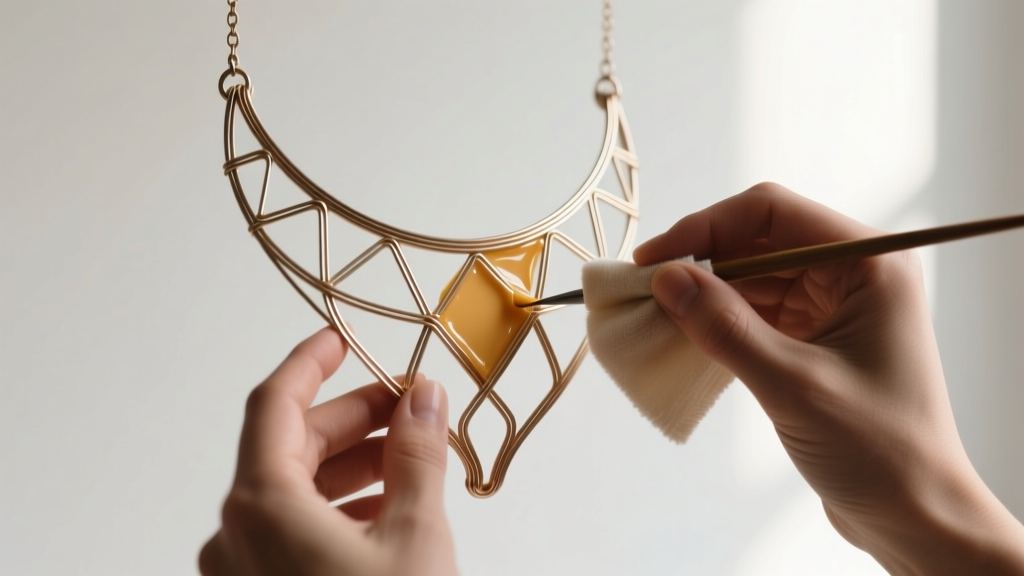
Let us put this material science into practice. Here is a blueprint for building a multi-tiered necklace and earring stand that is chemically safe for fine jewelry.
- The Base: Purchase two wooden dollar store spice racks or shallow crates. Sand them lightly with 220-grit sandpaper to remove rough splinters. Seal all surfaces, including the bottom, with two coats of Zinsser B-I-N shellac primer. This prevents moisture wicking from your vanity table.
- The Uprights: Use wooden dowels or acrylic rods (ensure they are PMMA, not PS) to connect the tiers. If using wood, seal them identically to the base. Avoid using hot glue, which can melt cheap plastics and release acidic vapors. Use a neutral-cure silicone adhesive or mechanical screws instead.
- The Hanging Mechanism: Instead of hammering cheap steel nails into the wood (which will eventually rust and stain the wood), screw in small, stainless steel cup hooks. Stainless steel (specifically 304 or 316 grade) contains chromium and nickel, making it highly resistant to oxidation and completely safe for jewelry contact.
- The Tarnish Defense: Adhere 3M Anti-Tarnish Strips to the underside of each shelf tier using double-sided tape. These strips utilize a copper-based polymer that absorbs airborne sulfur compounds before they can react with your silver. Replace these strips every 6 months for optimal protection.
- The Earring Display: Stretch a piece of undyed, unbleached linen or 100% cotton canvas over a wooden frame insert. Avoid synthetic meshes, which can generate static electricity that attracts dust and abrasive micro-particles to your jewelry. Punch precise holes for earring posts using a leather awl.
Final Thoughts on Material Integrity
A successful dollar tree jewelry organizer diy is not just about aesthetics; it is about creating a micro-climate that preserves the metallurgical and gemological integrity of your collection. By understanding the difference between stable PMMA and degrading PVC, sealing hygroscopic MDF, and utilizing inert hardware like stainless steel and silicone, you can elevate a $5 investment into a museum-grade storage solution. Always prioritize material safety over visual trends, and your jewelry will remain as brilliant as the day you acquired it.


