Mahogany Jewelry Box Care: Cleaning, Polishing & Restoration
Learn expert techniques to clean, polish, and restore your mahogany jewelry box. Protect the wood finish and keep your stored gems safe from damage.

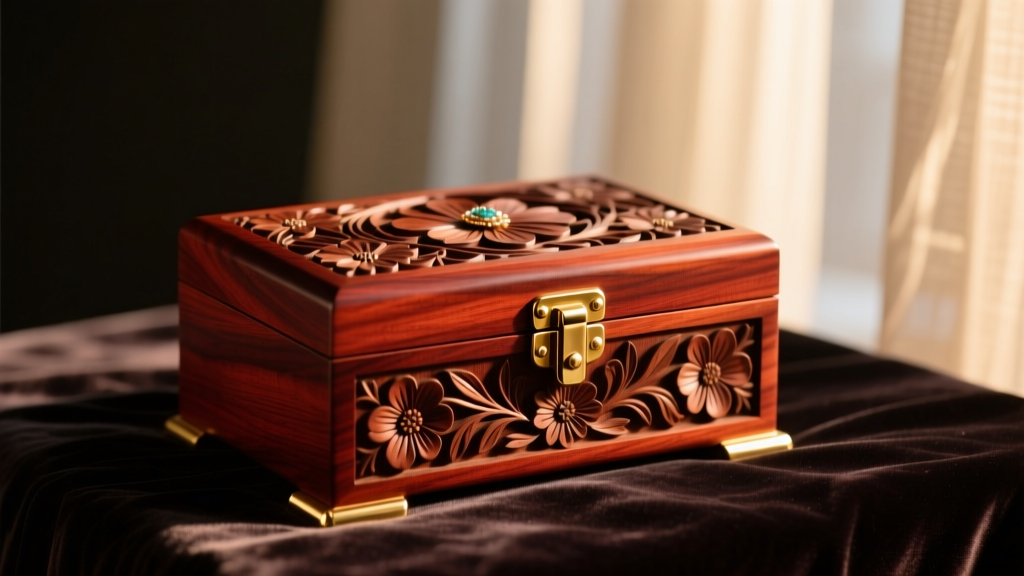
A genuine mahogany jewelry box is more than just a storage vessel; it is a functional heirloom. Whether you own a mid-century modern piece, a Victorian-era antique, or a contemporary handcrafted box, mahogany offers unparalleled stability and a rich, reddish-brown luster. However, the very organic properties that make this wood so beautiful also make it susceptible to environmental damage, improper cleaning agents, and neglect. In this comprehensive guide, we break down the exact methodologies used by conservators to clean, maintain, and restore mahogany wood, ensuring your jewelry remains housed in a safe, pristine environment.
The Anatomy of Mahogany: Why It Needs Specific Care
To properly care for your storage box, you must first understand the material. Genuine Honduran mahogany (Swietenia macrophylla) is prized for its interlocked grain and exceptional dimensional stability. According to The Wood Database, Honduran mahogany boasts a Janka hardness rating of 900 lbf, making it hard enough to resist minor dents but soft enough to carve into intricate jewelry compartments.
Unlike dense, closed-pore woods like maple, mahogany features an open-pore structure. These microscopic pores easily trap dust, skin oils, and airborne pollutants over time. Furthermore, antique mahogany boxes are often finished with traditional shellac or French polish, which is highly reactive to alcohol, ammonia, and modern silicone-based aerosol sprays. Using the wrong cleaner will instantly cloud the patina and degrade the protective topcoat, leaving your jewelry box vulnerable to moisture intrusion.
Essential Cleaning Supplies for Mahogany Wood
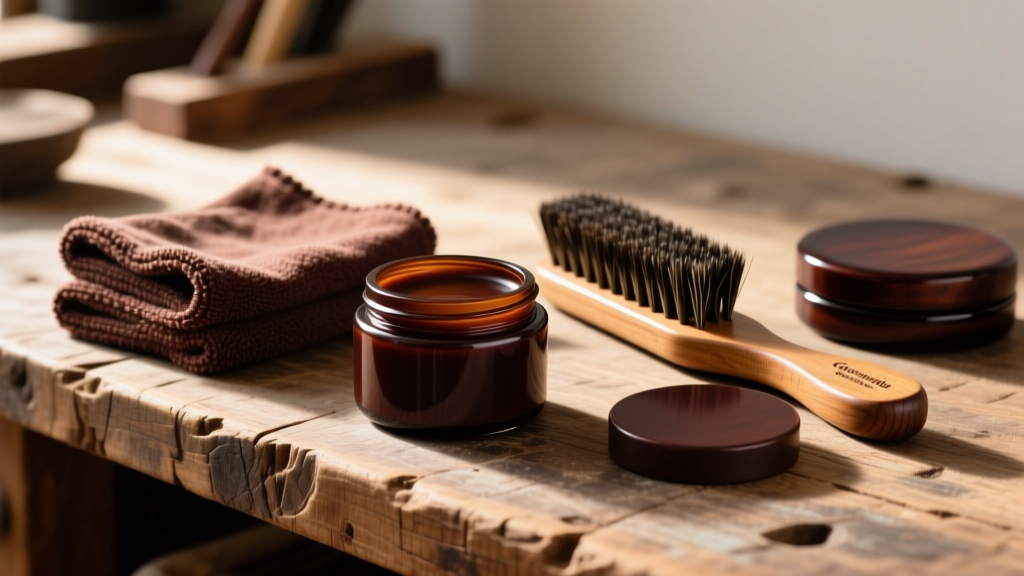
Ditch the generic household cleaners. To maintain the structural integrity and aesthetic value of your box, curate a specialized toolkit:
- Microcrystalline Wax: Products like Renaissance Wax (originally formulated for the British Museum) provide a hard, non-yellowing barrier that will not bloom or turn white in humid environments.
- Naphtha or Mineral Spirits: A mild, fast-evaporating solvent for cutting through decades of wax buildup and grime without raising the wood grain.
- Horsehair Detailing Brushes: Soft enough to prevent micro-scratches but stiff enough to dislodge dust from carved fluting and dovetail joints.
- Untreated Cotton Cloths: Avoid synthetic microfiber on antique shellac finishes, as it can sometimes be too abrasive or generate static.
Step-by-Step Guide to Cleaning the Exterior
Follow this precise sequence to safely clean the exterior of your mahogany jewelry box without damaging the finish or the wood fibers beneath.
1. Dry Dusting and Pore Extraction
Never apply liquid to a dusty surface; you will simply create mud that gets pushed deeper into the mahogany's open pores. Use a horsehair brush to gently agitate dust out of carved details, corners, and brass escutcheons. Wipe the flat surfaces with a dry, lint-free cotton cloth, always moving in the direction of the grain.
2. Solvent Cleaning for Heavy Buildup
If the box feels tacky or has a cloudy, opaque layer of old wax, dampen a small section of your cotton cloth with naphtha. Test an inconspicuous area (like the bottom or back panel) first. Gently rub the surface to dissolve the oxidized wax and grime. As detailed by experts at Popular Woodworking, naphtha evaporates rapidly and will not swell the wood fibers like water-based soaps do.
3. Applying the Protective Wax Coat
Once the surface is completely dry and matte, apply a microcrystalline or high-grade carnauba paste wax. Use a circular motion to work the wax into the open pores. Allow it to haze for 15 to 20 minutes, then buff it vigorously with a clean cotton cloth. This friction-generated heat melts the wax slightly, creating a frictionless, moisture-resistant seal that will keep your stored jewelry safe from ambient humidity.
Interior Maintenance: Protecting Linings and Hardware
The inside of a mahogany jewelry box requires a completely different approach. The primary goal here is preventing chemical reactions that damage your jewelry.
Addressing Acidic Linings
Vintage mahogany boxes often feature silk or synthetic velvet linings. Over decades, these fabrics degrade, release sulfur gases, and become highly acidic. This off-gassing is the primary culprit behind severe silver tarnish and the corrosion of copper-alloy jewelry stored inside. If your lining is crumbling or smells musty, carefully remove it using a plastic putty knife. Replace it with modern, acid-free, unbleached cotton flannel or specialized anti-tarnish felt impregnated with silver-tarnish inhibitors.
Hardware and Hinge Conservation
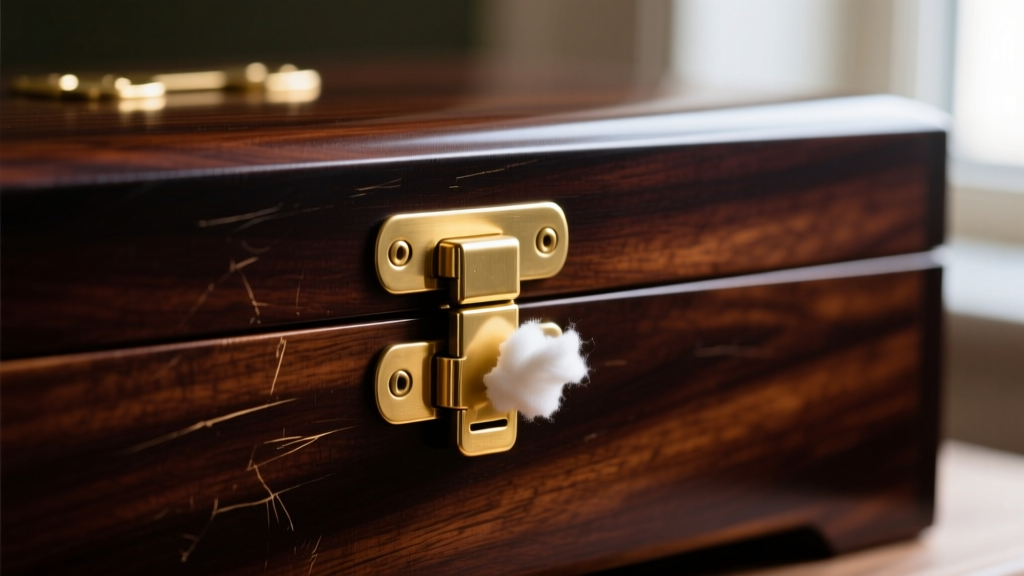
Most quality mahogany boxes feature solid brass or brass-plated steel hinges and clasps. Before polishing, determine if the brass is lacquered. If it is, do not use abrasive metal polishes, as they will strip the protective clear coat. For unlacquered solid brass, apply a tiny amount of Wenol or Brasso using a cotton swab to avoid getting the chemicals on the surrounding mahogany, which can cause dark, irreversible stains. Wipe away all residue immediately.
Cleaning Agents: What to Use vs. What to Avoid
Choosing the wrong chemical can permanently ruin a mahogany finish. Refer to this quick-reference table before treating your box.
| Agent Type | Examples | Verdict | Reasoning |
|---|---|---|---|
| Silicone Aerosols | Pledge, Old English | Avoid | Silicone penetrates pores, preventing future refinishing and creating a greasy trap for dust. |
| Ammonia / Alcohol | Windex, Rubbing Alcohol | Avoid | Instantly dissolves traditional shellac and French polish finishes, leaving white, cloudy rings. |
| Water-Based Soaps | Murphy's Oil Soap | Use with Caution | Can raise the wood grain and damage water-sensitive antique finishes if over-saturated. |
| Aliphatic Solvents | Naphtha, Mineral Spirits | Highly Recommended | Cuts through grime and old wax without harming cured varnishes or swelling the wood. |
| Microcrystalline Wax | Renaissance Wax | Highly Recommended | Provides a stable, non-acidic, UV-resistant barrier ideal for antique wood conservation. |
Climate Control: Humidity and Sunlight Protection
Mahogany is highly stable compared to oak or walnut, but it is still a hygroscopic material. It absorbs and releases moisture based on the surrounding environment. When a mahogany jewelry box experiences rapid fluctuations in relative humidity (RH), the wood expands and contracts across the grain (tangential shrinkage). This mechanical stress is what causes antique panels to crack and dovetail joints to pull apart.
Keep your jewelry box in a room where the RH is maintained between 40% and 50%. Use a digital hygrometer inside the main compartment to monitor the microclimate. If you live in a dry climate, place a small, sealed silica gel packet (buffered to 45% RH) inside the drawer to stabilize the environment. Furthermore, keep the box out of direct sunlight. UV radiation photo-oxidizes the lignin in mahogany, bleaching the rich red tones into a dull, grayish-brown hue over time.
Restoring Scratches and Water Rings
Minor surface imperfections are inevitable, but they can often be remedied without a full strip-and-refinish.
- White Water Rings: These indicate moisture trapped inside the wax or shellac layer, not the wood itself. Gently rub the ring with a soft cloth dampened with a 50/50 mix of denatured alcohol and linseed oil, or use a specialized ring remover. The mild solvent re-amalgamates the finish, allowing the moisture to escape.
- Light Surface Scratches: For shallow scratches that haven't penetrated the stain, rub the meat of a raw walnut over the mark. The natural oils and tannins in the walnut will darken the scratch and blend it seamlessly into the surrounding mahogany grain.
- Deep Gouges: Use a burn-in stick (shellac stick) matched to the mahogany's hue. Melt it into the gouge with a heated spatula, scrape it flush with a sharp cabinet scraper, and top it with paste wax.
Conservator's Note: Never attempt to sand a mahogany jewelry box to remove scratches unless you are prepared to completely strip and refinish the piece. Mahogany's interlocked grain can tear out unpredictably when sanded with standard orbital sanders, and sanding will permanently destroy the historical patina and reduce the antique value of the box.
By adhering to these meticulous care and maintenance protocols, your mahogany jewelry box will continue to provide a stable, beautiful, and chemically safe haven for your most precious jewelry collections for generations to come.


