Elsa Jewelry Box Material Guide: Shells, Linings & Hardware
Compare shell, lining, and hardware materials in an Elsa jewelry box. Discover which anti-tarnish fabrics and hard-shell exteriors protect fine gems.

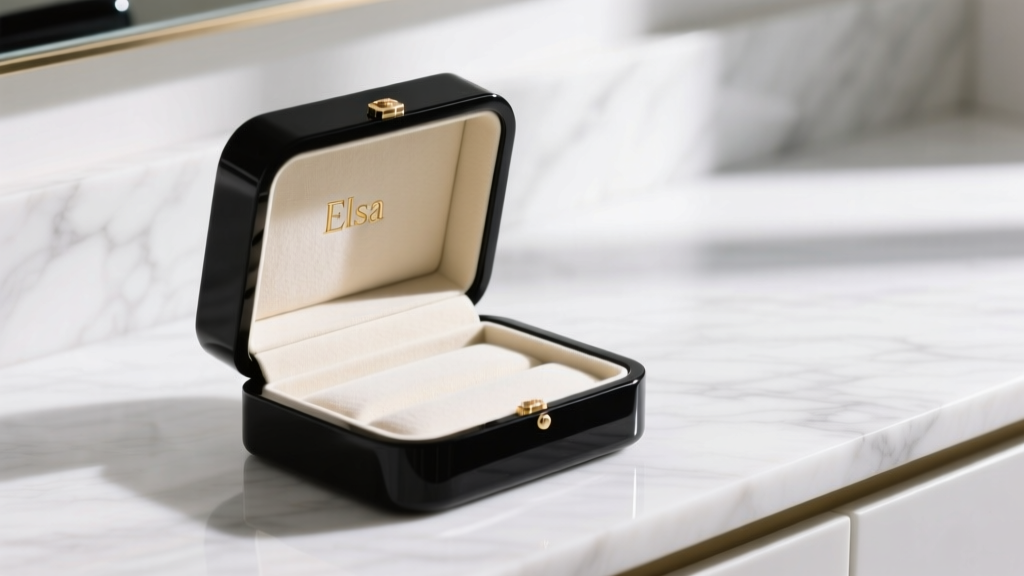
When collectors, horologists, and fine jewelry enthusiasts refer to an Elsa jewelry box, they are rarely talking about a single, monolithic brand. Instead, "Elsa" has become the industry shorthand for a specific structural archetype: a hard-shell, multi-tiered, modular organizer featuring a clamshell lid, integrated ring rolls, and segmented, velvet-lined compartments. While the aesthetic of the Elsa design is universally praised for its sleek, minimalist vanity appeal, the material composition beneath the surface dictates whether it will protect your heirlooms or accelerate their degradation.
In the realm of luxury storage, a beautiful exterior means nothing if the interior microclimate promotes oxidation, or if the structural shell warps under ambient humidity. According to the Gemological Institute of America (GIA), improper storage is one of the leading causes of premature gemstone dulling and metal tarnishing. This comprehensive material guide dissects the exact plastics, textiles, and alloys used in modern Elsa-style jewelry boxes, providing you with the technical specifications needed to separate premium archival storage from cheap, damaging knockoffs.
The Anatomy of the Elsa Archetype
Before comparing materials, it is crucial to understand the structural demands placed on an Elsa jewelry box. Unlike soft travel pouches or open acrylic display stands, the Elsa design relies on a rigid exoskeleton to protect delicate prongs and chains from crushing forces. The lid must maintain a perfect seal to limit airflow, while the interior dividers must withstand repeated friction without shedding microfibers onto soft metals like high-karat gold or polished silver. The three critical material zones we must evaluate are the exterior shell, the interior lining, and the mechanical hardware.
Exterior Shell Materials: The First Line of Defense
The hard shell of an Elsa jewelry box serves two purposes: impact resistance during travel and structural rigidity to prevent the interior compartments from buckling. Manufacturers typically rely on one of three materials for the outer exoskeleton, each with vastly different chemical and physical properties.
ABS Plastic vs. Polycarbonate (PC)
Budget-tier Elsa boxes are almost universally constructed from ABS (Acrylonitrile Butadiene Styrene). ABS is cheap to injection-mold and can be finished with a high-gloss or matte texture. However, ABS has a low glass transition temperature and is highly susceptible to UV degradation. If left on a sunlit vanity, an ABS shell will undergo photo-oxidation, turning yellow and becoming incredibly brittle within 18 to 24 months. Furthermore, budget ABS shells are often molded at a mere 1.5mm thickness, offering minimal crush resistance if a heavy object is placed on top.
Premium Elsa configurations utilize Polycarbonate (PC). Polycarbonate is the same thermoplastic used in bulletproof glass and aerospace visors. A 2.5mm to 3.0mm PC shell offers immense impact resistance and is inherently UV-stable, meaning it will not yellow or degrade when exposed to sunlight. PC also possesses a higher thermal tolerance, ensuring the box will not warp in fluctuating room temperatures, which is vital for maintaining the airtight seal of the clamshell lid.
MDF with Polyurethane (PU) Leather Wrapping
Mid-range Elsa boxes often abandon plastics entirely in favor of Medium-Density Fiberboard (MDF) wrapped in PU leather. While this offers a more traditional, luxurious tactile feel, MDF is essentially compressed wood dust held together by resin. If the edge sealing is inadequate, ambient humidity will cause the MDF core to swell, leading to warped lids that no longer close flush. When evaluating an MDF-based Elsa box, always inspect the interior seams for tight, gap-free vinyl wrapping to ensure moisture ingress is blocked.
| Shell Material | Average Thickness | UV Stability | Impact Resistance | Moisture Vulnerability |
|---|---|---|---|---|
| ABS Plastic | 1.5mm | Poor (Yellows/Brittles) | Low (Cracks under torque) | Low |
| Polycarbonate (PC) | 2.5mm - 3.0mm | Excellent | High (Shatterproof) | None |
| MDF + PU Leather | 5.0mm+ | Moderate | Medium (Dents/Scratches) | High (Swells if unsealed) |
Interior Linings: The Microclimate Factor
The interior lining of your Elsa jewelry box is arguably the most critical material decision you will make. The lining dictates the chemical microclimate surrounding your metals and gemstones. The Jewelers of America organization consistently warns against storing fine jewelry in environments that trap moisture or off-gas volatile organic compounds (VOCs).
Standard Microfiber and Polyester Blends
Most entry-level organizers use standard polyester microfiber. While soft to the touch, untreated polyester is mildly hygroscopic, meaning it absorbs and traps ambient moisture from the air. When you close the lid of an Elsa box lined with standard microfiber, you effectively create a humid terrarium. This trapped moisture accelerates the oxidation of copper alloys and the tarnishing of sterling silver. Furthermore, cheap polyester dyes can sometimes bleed onto porous gemstones like pearls, turquoise, or untreated opals, causing irreversible staining.
Pacific Silvercloth and Treated Flannels
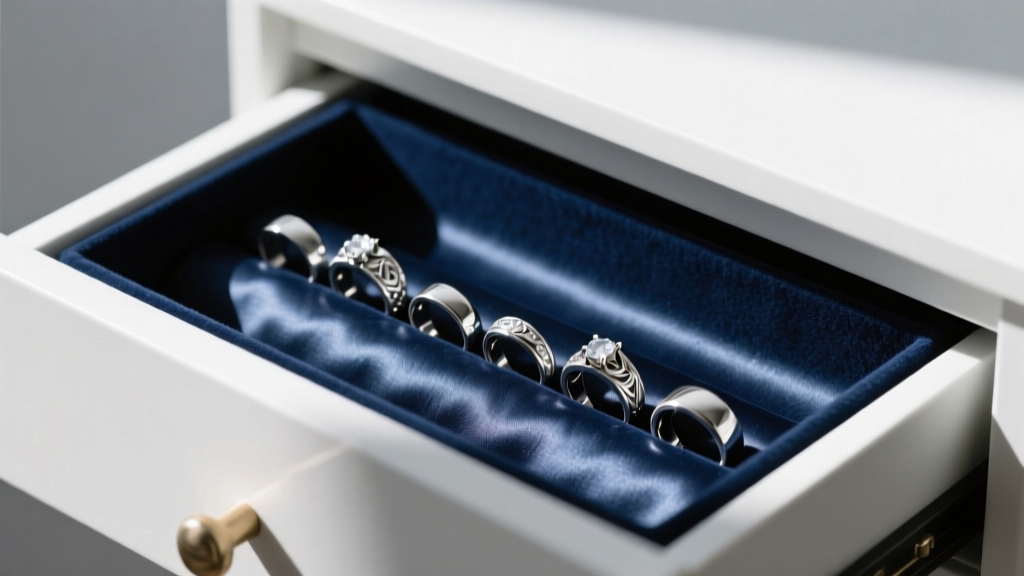
High-end Elsa boxes upgrade the lining to Pacific Silvercloth or chemically treated anti-tarnish flannels. Pacific Silvercloth is a patented material that embeds microscopic silver particles directly into the cotton flannel fibers. These embedded silver particles act as a sacrificial anode; they intercept and react with hydrogen sulfide (H2S) gas in the ambient air before the gas can reach your actual jewelry. This chemical interception prevents the formation of silver sulfide (the black crust known as tarnish) on your sterling silver and white gold pieces.
Silicone-Infused Suede
Another premium option is silicone-infused vegan suede. The silicone treatment creates a hydrophobic barrier that repels moisture and prevents the fabric from holding humidity. However, buyers must ensure the silicone used is pH-neutral. Acidic off-gassing from low-grade silicone treatments can etch the surface of soft, calcium-based gems like pearls and coral over prolonged periods of storage.
The Chemistry of Tarnish and H2S Interception
To truly understand why lining materials matter, one must understand the enemy: Hydrogen Sulfide (H2S). Tarnish is not caused by oxygen; it is a chemical reaction between the copper or silver in your jewelry alloys and sulfur compounds present in the air, human sweat, and even certain household paints. When an Elsa jewelry box features a true anti-tarnish lining, it is actively filtering H2S out of the enclosed air. If your box uses standard velvet or untreated suede, the sulfur compounds will freely circulate inside the closed box, turning your silver black within weeks, especially in high-humidity climates.
"The most common mistake collectors make is assuming that a closed box inherently protects against tarnish. Without an active H2S-intercepting lining like treated flannel, a sealed box simply traps the corrosive gases inside with the jewelry."
Hardware and Hinges: The Mechanical Failure Point
The structural integrity of an Elsa jewelry box is entirely dependent on its hinges and clasps. Because the Elsa design relies on a heavy, multi-tiered clamshell lid, the hinges bear significant mechanical stress every time the box is opened.
Zinc Alloy (Zamak) vs. Solid Brass
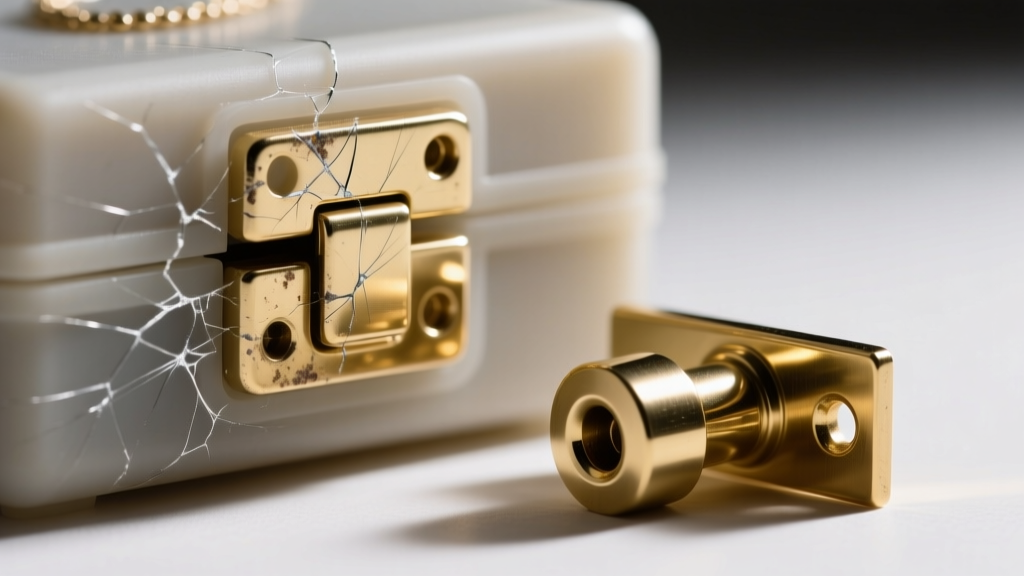
Budget manufacturers use Zamak, a zinc-aluminum-magnesium-copper alloy often referred to as "pot metal." Zamak is cheap to die-cast but suffers from severe fatigue and intergranular corrosion. In an Elsa box, Zamak hinges typically suffer catastrophic failure—snapping cleanly at the pivot point—between the 1,500 and 2,000 open/close cycle mark. Once a Zamak hinge snaps on a clamshell box, the entire structural tension is compromised, often rendering the box unusable.
Premium Elsa boxes utilize Solid Brass or 304 Stainless Steel hinges, often finished with a PVD (Physical Vapor Deposition) coating to match the exterior hardware color. PVD-coated brass hinges can easily withstand 15,000+ cycles without warping or snapping. Furthermore, solid brass will not rust in humid bathroom environments, whereas cheap zinc alloys will develop a white, powdery corrosion (zinc oxide) that can flake off onto your jewelry.
Final Verdict: Building Your Ideal Configuration
When shopping for an Elsa jewelry box, do not be swayed solely by the exterior colorway or the brand name. Turn the box over, inspect the seams, and ask the retailer for the specific material breakdown. To ensure your fine jewelry remains pristine for decades, use this technical checklist before making your purchase:
- Shell: Demand Polycarbonate (PC) for travel and durability, or heavily sealed MDF for stationary vanity use. Avoid thin ABS plastic.
- Lining: Verify the presence of Pacific Silvercloth or a certified anti-tarnish treated flannel, especially for the ring rolls and silver compartments.
- Hardware: Inspect the hinge pins. If they look like dull, cast pot metal (Zamak), walk away. Look for machined brass or stainless steel with smooth, gap-free articulation.
- Adhesives: Ensure the interior lining is heat-bonded or stitched, rather than glued with high-VOC industrial adhesives that can off-gas and damage porous gemstones.
By prioritizing material science over superficial aesthetics, you transform your Elsa jewelry box from a simple decorative accessory into a true archival vault, capable of preserving the brilliance and structural integrity of your most prized possessions.


