Expert Jewelry Organizer IKEA Hacks: A Technical Guide
Master the chemistry and structural engineering behind the best jewelry organizer IKEA hacks. Learn about wood acidity, archival linings, and hardware.

The Chemistry of Raw Wood: Tannins, pH, and Tarnish
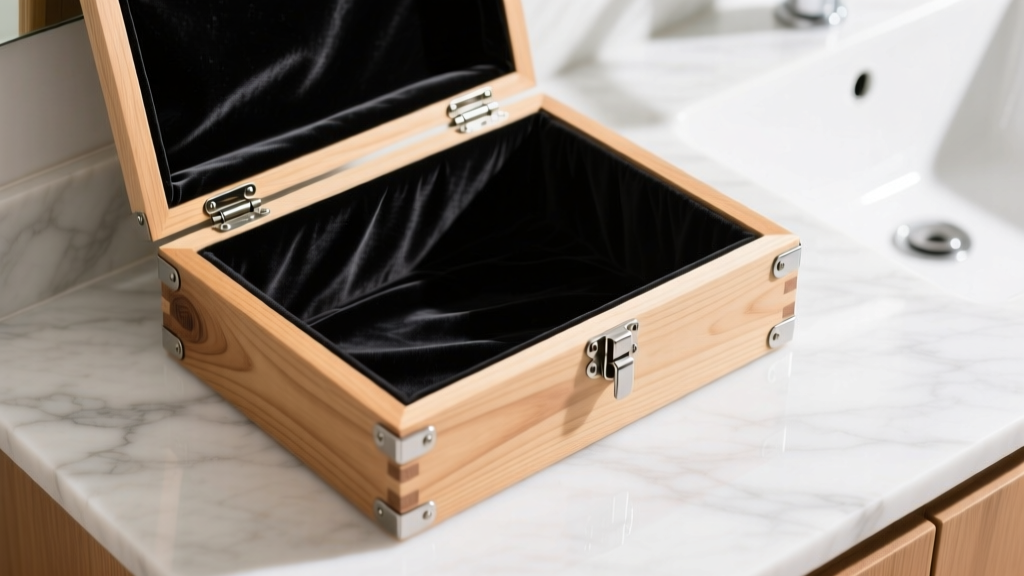
When searching for the perfect jewelry organizer IKEA hacks often dominate the conversation, but most DIY tutorials completely ignore the chemical realities of cheap wood and composite materials. Storing precious metals and organic gems in raw or improperly sealed wood is a recipe for accelerated degradation. Take the popular IKEA KNAGGLIG pine box, for example. Pine is a softwood with a naturally acidic pH, typically ranging between 4.0 and 5.5. This acidity, combined with the release of volatile organic compounds (VOCs) and tannins, creates a micro-environment that actively promotes the corrosion of copper alloys (like brass and bronze) and degrades the nacre of organic pearls over time.
Furthermore, hydrogen sulfide gas—which naturally occurs in ambient indoor air—reacts with silver to form silver sulfide (tarnish). Raw wood is porous and can trap sulfur-bearing dust and moisture, accelerating this reaction. To safely use raw pine or acacia wood for jewelry storage, you must create an impermeable vapor barrier. Standard water-based polyurethanes often fail to completely block acidic off-gassing. Instead, professional archivists recommend sealing the interior with a shellac-based primer like Zinsser B-I-N. Shellac is a natural resin that creates a non-permeable barrier against both tannins and acids, rendering the wood chemically inert for jewelry storage. According to the National Archives preservation guidelines, sealing porous organic materials is a mandatory step before introducing sensitive metals or organic artifacts to any wooden enclosure.
Evaluating Base Units: A Structural & Material Matrix
Not all IKEA products are created equal when it comes to material science. Particleboard, MDF, solid pine, and bamboo all possess different structural load limits and off-gassing profiles. Below is a technical comparison of the most commonly hacked IKEA units for jewelry storage.
| IKEA Model | Material Composition | Tarnish / Acid Risk | Max Load Capacity | Best Application |
|---|---|---|---|---|
| KNAGGLIG | Raw Pine | High (Requires Shellac Seal) | 15 kg (33 lbs) | Stackable drawer inserts |
| MOSSLANDA | Particleboard / Foil | Low (Inert Foil Surface) | 5 kg (11 lbs) per ledge | Wall-mounted necklace displays |
| SKÅDIS | Wood Fiber / Acrylic Paint | Medium (Paint can chip) | 4 kg (8.8 lbs) | Modular pegboard earring grids |
| RÄKENS | Bamboo / Clear Lacquer | Low (Factory Sealed) | 3 kg (6.6 lbs) | Countertop ring and watch trays |
| ALEX | Particleboard / Melamine | Very Low (Inert Melamine) | 10 kg (22 lbs) per drawer | Heavy statement piece storage |
Notice that bamboo (RÄKENS) and melamine-faced particleboard (ALEX) score highest for chemical safety out-of-the-box. Bamboo is technically a grass and contains far fewer tannins than pine, and IKEA’s factory-applied clear acrylic lacquer provides an adequate baseline vapor barrier. However, if you are modifying the ALEX drawers by drilling new holes for custom acrylic dividers, you expose the raw MDF core. Any exposed MDF must be immediately sealed with an acrylic edge-banding tape or a dab of cyanoacrylate (superglue) to prevent formaldehyde off-gassing and moisture ingress.
Archival Lining & Metallurgy Upgrades
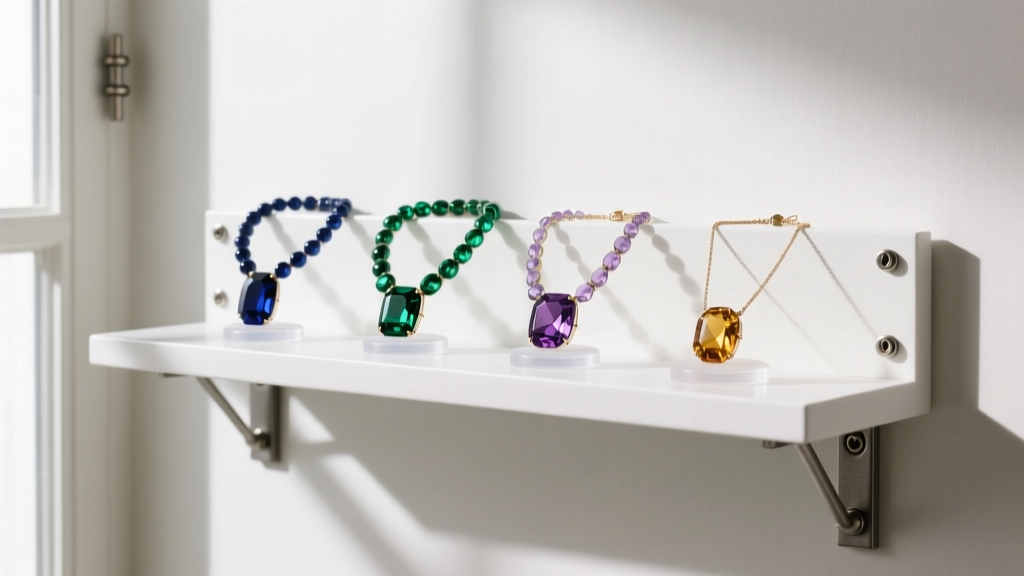
The felt and velvet sold in standard craft stores are often dyed with sulfur-based mordants and backed with PVC (polyvinyl chloride) adhesives. PVC degrades over time, releasing hydrochloric acid that will aggressively pit and pit silver and gold alloys. If you are building a high-end jewelry organizer IKEA hack, you must upgrade the interior lining to archival-grade materials.
The Polyethylene Standard
For rigid inserts and drawer dividers, replace standard craft foam with closed-cell polyethylene foam (often sold under the brand name Ethafoam). Polyethylene is chemically stable, non-abrasive, and passes the Oddy Test (the standard accelerated aging test used by museum conservators to determine if a material is safe for long-term artifact storage). It will not off-gas plasticizers that could cloud the surface of soft gemstones like opals or turquoise.
Anti-Tarnish Textiles
For soft lining, utilize Pacific Silvercloth or untreated 100% cotton flannel. Pacific Silvercloth is embedded with microscopic silver particles that act as a sacrificial anode; the airborne hydrogen sulfide reacts with the embedded silver rather than your jewelry. When lining an IKEA drawer, never use hot glue or standard spray adhesives, as the heat and solvents can melt synthetic backings and release corrosive VOCs. Instead, use an acid-free PVA (polyvinyl acetate) adhesive or double-sided archival mounting tape to secure the fabric to the sealed wood or melamine base.
Hardware Metallurgy: Zinc vs. Stainless Steel
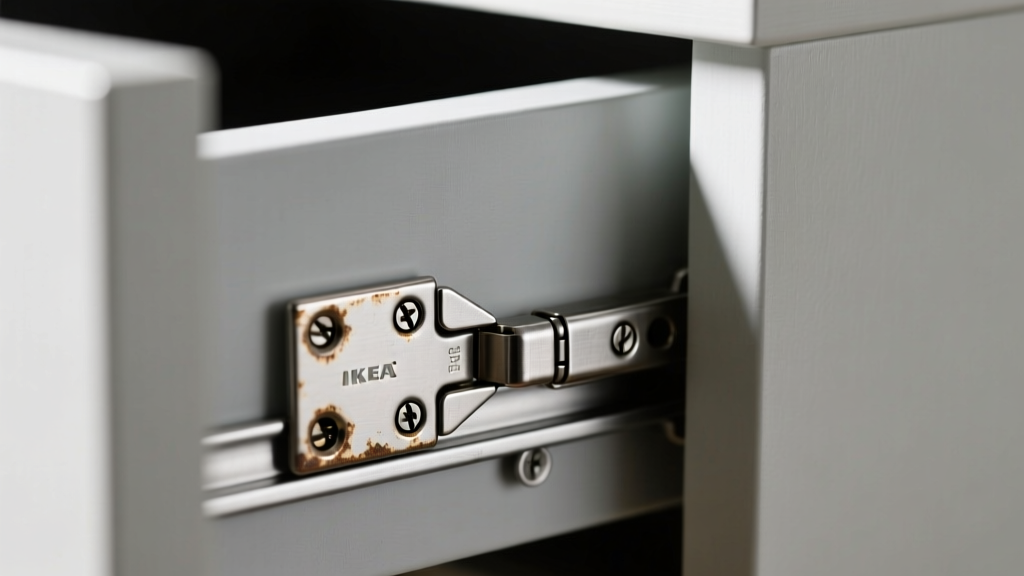
If your custom build involves adding lids or hinges to boxes like the KNAGGLIG, discard the cheap hardware store hinges. Standard budget hinges are made from zinc-plated steel. In environments with fluctuating humidity (like a bedroom or bathroom), the zinc plating quickly succumbs to galvanic corrosion, resulting in flash rust that can stain your archival lining and ruin your jewelry. Upgrade to 304 or 316 stainless steel butt hinges. While they cost slightly more, 304 stainless steel contains chromium and nickel, forming a passive oxide layer that makes it entirely immune to standard indoor atmospheric corrosion.
Load-Bearing Physics for Wall-Mounted Displays
Using the IKEA MOSSLANDA picture ledge as a tiered necklace display is a brilliant jewelry organizer IKEA hack, but it frequently fails due to improper load distribution and wall anchoring. Heavy statement necklaces—particularly those featuring large natural stones, glass beads, or dense brass links—can easily exceed 1.5 kg (3.3 lbs) per piece. If you drape three or four of these across a single ledge, you are approaching the 5 kg structural limit of the particleboard shelf, risking catastrophic shear failure at the mounting brackets.
To engineer a safe wall-mounted display, you must look beyond the plastic expansion anchors included in the IKEA box. Plastic anchors rely on friction against the drywall and are highly susceptible to creep (slow deformation under constant load) and shear stress. For a permanent, heavy-load jewelry ledge, use 1/8-inch or 3/16-inch Snaptoggle bolts. These metal toggle bolts deploy behind the drywall, distributing the shear force across a wide area of the wall cavity. A single 1/8-inch Snaptoggle can hold over 200 lbs in standard 1/2-inch drywall, effectively rendering the wall mount indestructible under the weight of jewelry.
Furthermore, to prevent heavy necklaces from sliding off the MOSSLANDA ledge when bumped, apply a thin strip of clear, museum-grade silicone gel (like QuakeHold or Museum Putty) along the back lip of the shelf. This increases the coefficient of friction without leaving permanent adhesive residue on the jewelry chains or the laminate surface.
Long-Term Maintenance and Environmental Control
Even with the best chemical seals and archival linings, the macro-environment of your room dictates the longevity of your stored pieces. The Gemological Institute of America (GIA) emphasizes that extreme temperature fluctuations and high humidity are the primary enemies of both metals and organic gems. Keep your customized IKEA organizers out of direct sunlight to prevent UV degradation of any fabric linings and to protect light-sensitive stones like amethyst and kunzite from fading. Maintain your storage area at a stable 45-55% relative humidity. By combining material science, structural engineering, and archival conservation techniques, you can transform budget-friendly IKEA furniture into a museum-grade jewelry vault that protects your collection for decades.