Solve Jewelry Tray Organizer Problems: Tarnish & Scratches
Troubleshoot common jewelry tray organizer issues. Learn how to stop tarnish, prevent scratches, fix sticking drawers, and protect fine metals.

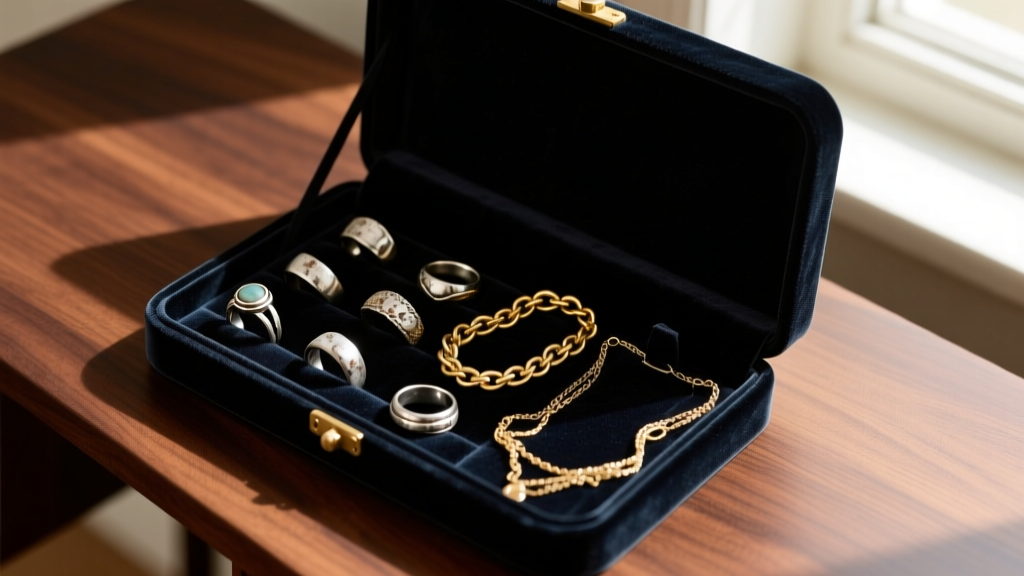
A high-quality jewelry tray organizer is supposed to be a sanctuary for your most prized possessions. Yet, many collectors and everyday wearers eventually discover a frustrating reality: the very storage solution they purchased is actively damaging their pieces. From mysterious silver oxidation and micro-scratches on gold bands to mechanical failures like sticking drawers and warped stackable trays, the problems are as common as they are preventable.
As a jewelry storage specialist, I frequently troubleshoot compromised collections. The root causes almost always trace back to material incompatibilities, environmental factors, and poor mechanical maintenance. This guide bypasses generic storage advice and dives straight into the chemistry, physics, and mechanics of troubleshooting your jewelry tray organizer, providing actionable, professional-grade solutions to restore and protect your collection.
The Hidden Chemistry of Tarnish in Storage Trays
If your sterling silver is emerging from your jewelry tray organizer with a yellowish or blackened film, your storage environment is actively off-gassing. Tarnish is not merely a function of time; it is a chemical reaction between silver and sulfur compounds or ozone in the air. Many mass-produced organizers are unwitting accelerants of this process.
Identifying the Culprits: MDF and Acidic Dyes
The structural core of most mid-tier jewelry trays is Medium-Density Fiberboard (MDF). While affordable, MDF is bound together using urea-formaldehyde resins. As these resins degrade, they off-gas volatile organic compounds (VOCs) and acidic vapors that drastically accelerate the oxidation of silver and copper alloys. Furthermore, the synthetic velvet or flocking used to line these trays is often dyed using sulfur-based mordants to achieve deep, rich colors like navy or burgundy.
"Silver tarnishes when exposed to sulfur compounds, which can be found in certain woods, rubbers, and even some textiles. Proper storage requires barrier materials that neutralize or block these gases." — Canadian Conservation Institute
The Professional Fix: Neutralization and Barrier Creation
You do not necessarily need to throw away your organizer, but you must neutralize the internal environment.
- Replace the Lining: If you are handy, peel back the synthetic velvet and replace it with 3M Pacific Silvercloth. This material is embedded with microscopic silver particles that act as a sacrificial anode, capturing sulfur gases before they reach your jewelry.
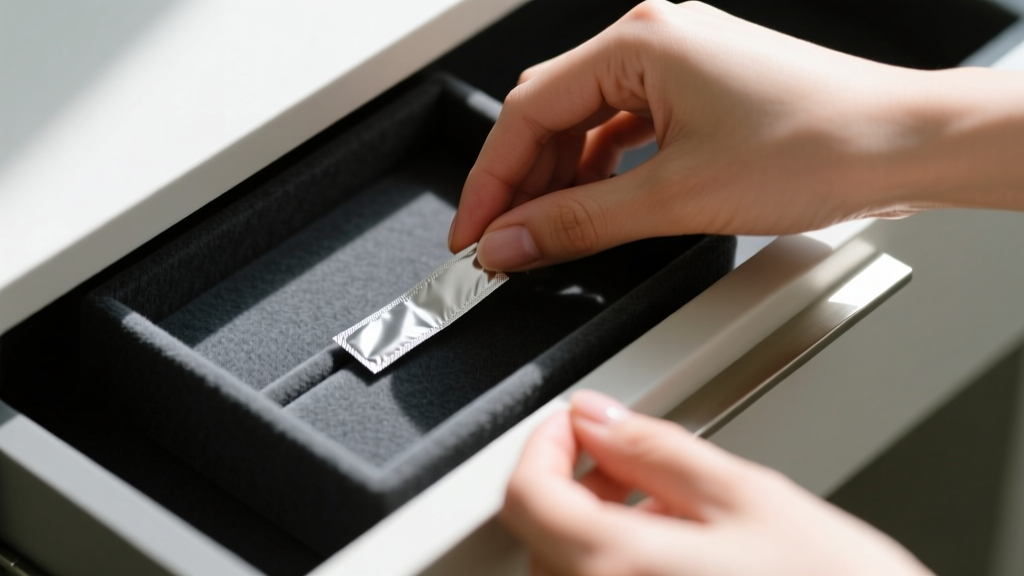
- Deploy Anti-Tarnish Strips: Place 3M or Hagerty anti-tarnish strips in every compartment. These strips utilize activated carbon and copper-based compounds to absorb ambient hydrogen sulfide. Replace them strictly every 6 months.
- Seal the MDF: If the wood itself is exposed on the drawer runners or back panels, seal it with a water-based polyurethane to trap formaldehyde off-gassing.
Micro-Scratches and Gemstone Abrasion Dynamics
Velvet and standard nylon flocking feel soft to human skin, but they offer zero structural resistance to gemstones. When you place a diamond solitaire ring into a shared compartment with a high-polish 18k gold band, you are introducing a severe abrasion hazard.
The Mohs Hardness Mismatch
To understand why your jewelry tray organizer is causing micro-scratches, you must look at the Mohs Hardness Scale. Diamonds sit at a 10, sapphires and rubies at a 9. In contrast, pure 24k gold is roughly a 2.5, and even alloyed 14k or 18k gold rarely exceeds a 3.5. When a drawer is pulled open or closed, the kinetic energy causes the pieces to shift. A diamond will act like a diamond-tipped engraving tool against the softer gold or platinum resting next to it.
| Material | Mohs Hardness | Risk Level in Shared Tray | Recommended Storage Protocol |
|---|---|---|---|
| Diamond | 10 | Extreme (Scratches all metals) | Individual silicone or hard-felt pouches |
| Sapphire/Ruby | 9 | High (Scratches gold/silver) | Separate soft-lined compartments |
| Opal/Pearl | 5.5 - 6.5 | Vulnerable (Easily scratched) | Isolated, climate-controlled zones |
| 18k Yellow Gold | ~3.0 | Vulnerable | Keep away from all crystalline gems |
Troubleshooting the Scratch Hazard
To retrofit your existing jewelry tray organizer for hard stones, abandon the idea of loose compartment storage for gem-heavy pieces. Purchase 100% silicone ring bands or individual microfiber drawstring pouches. Silicone provides a high-friction, shock-absorbent barrier that prevents pieces from sliding during drawer movement, effectively eliminating kinetic abrasion.
Mechanical Failures: Sticking Drawers and Warping
Stackable jewelry tray organizers are incredibly popular, but they are prone to severe mechanical failures, primarily sticking drawers and warped frames. This is almost exclusively a humidity and friction problem.
The Humidity Swelling Effect
As noted in woodworking literature regarding MDF and composite woods, these materials act like sponges when exposed to high relative humidity (RH). If your jewelry is stored in a bathroom or a non-climate-controlled bedroom where RH regularly exceeds 65%, the MDF drawer runners will absorb moisture, swell, and create immense friction against the outer frame.
Restoring Smooth Drawer Mechanics
Do not reach for WD-40 or liquid silicone sprays. These petroleum-based lubricants will inevitably migrate, stain your velvet lining, and attract dust, creating a gritty paste that will permanently ruin the drawer tracks.
- Dehydrate the Wood: Remove the drawers and place them in a room with a dehumidifier set to 45% RH for 48 hours. This will draw out the absorbed moisture and shrink the MDF back to its original tolerances.
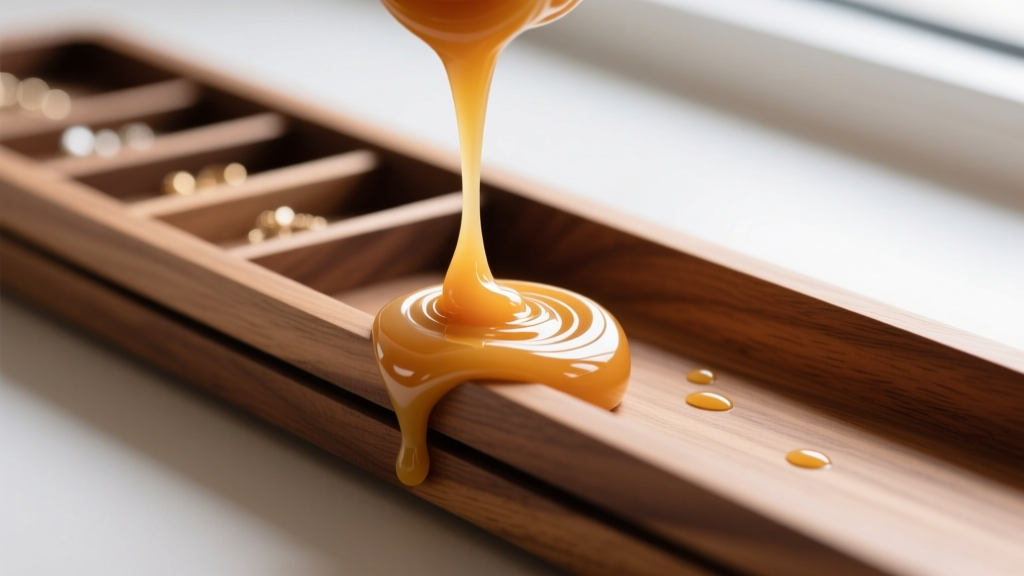
- Apply Dry Lubrication: Rub a block of pure paraffin wax or beeswax directly onto the wooden runners and the contact points of the drawer frame. Paraffin provides a slick, dry barrier that reduces the coefficient of friction without risking chemical damage to your jewelry.
- Install Felt Glides: If the wood is severely pitted, apply thin strips of high-density Teflon or felt furniture glides to the bottom edges of the drawer to bypass the damaged wood entirely.
The Ring Roll and Necklace Tangle Dilemma
Many organizers feature dedicated 'ring rolls' (cylindrical fabric tubes) and shallow, open-top necklace zones. While visually appealing in the showroom, these designs frequently fail in practice. Ring rolls often stretch out, causing heavy signet rings to fall out, while shallow necklace zones guarantee chain tangling due to static electricity and lack of tension.
Fixing Ring Roll Tension
If your ring rolls have lost their grip, the internal foam or batting has compressed. You can restore tension by injecting a small amount of expandable polyurethane foam sealant into the base of the roll (use sparingly, as it expands significantly) or, for a cleaner fix, by wrapping the existing rolls in a thin layer of wool felt before reinserting your rings. Wool provides natural grip and resists static buildup.
Eliminating Static-Induced Tangles
Synthetic velvet linings generate static electricity when drawers are opened and closed in dry environments. This static causes delicate chains (like snake or box chains) to repel each other and knot. To troubleshoot this, lightly mist a microfiber cloth with an anti-static laundry spray and wipe down the interior lining of the necklace zone. Alternatively, lay a piece of raw, unbleached muslin fabric over the necklace hooks to ground the static charge and provide a high-friction surface that keeps chains anchored.
Troubleshooting Quick-Reference Matrix
Keep this diagnostic matrix handy to quickly identify and resolve the most common jewelry tray organizer failures without resorting to trial and error.
| Symptom | Root Cause | Immediate Action | Long-Term Solution |
|---|---|---|---|
| Yellow/Black film on silver | Sulfur off-gassing from dyes/MDF | Polish with Hagerty Silver Foam | Install Pacific Silvercloth lining |
| Micro-scratches on gold bands | Mohs hardness mismatch in shared bins | Buff with jeweler's rouge | Isolate gems in silicone pouches |
| Drawers sticking/jamming | MDF swelling from >65% humidity | Dehumidify room for 48 hours | Wax runners with pure paraffin |
| Chains tangling in shallow trays | Static electricity from synthetic velvet | Wipe with anti-static microfiber | Line trays with raw muslin fabric |
Conclusion: Proactive Maintenance Over Replacement
A jewelry tray organizer is not a 'set it and forget it' appliance; it is an active micro-environment that requires basic maintenance. By understanding the chemical reactions that cause tarnish, respecting the physical hardness of your gemstones, and managing the humidity around composite wood frames, you can transform a problematic storage unit into a highly effective, archival-grade vault. Implement these targeted fixes, and your organizer will finally serve its true purpose: preserving the structural and aesthetic integrity of your collection for decades to come.


