Fix Scratches & Fading: Sleeping Beauty Jewelry Box Guide
Troubleshoot common storage issues with your Sleeping Beauty jewelry box. Learn how to prevent turquoise fading, scratching, and moisture damage.


The Unique Vulnerabilities of Sleeping Beauty Turquoise
Sleeping Beauty turquoise is renowned for its pure, robin's egg blue color and lack of matrix (the host rock veining). Sourced from the now-closed Sleeping Beauty mine in Globe, Arizona, this gemstone is highly coveted, with natural, untreated pieces commanding anywhere from $50 to over $200 per carat, while stabilized versions range from $2 to $15 per carat. However, configuring a proper sleeping beauty jewelry box requires an understanding of the stone's physical limitations. With a Mohs hardness of 5.5 to 6.0 and a specific gravity of 2.60 to 2.85, turquoise is significantly softer and more porous than diamonds or sapphires.
Because of its porosity, turquoise acts like a microscopic sponge. It readily absorbs oils, cosmetics, and environmental pollutants. Furthermore, many vintage and modern pieces feature silver settings, which complicates storage: the chemical treatments used to prevent silver tarnish can inadvertently damage the turquoise. According to the Gemological Institute of America (GIA), improper storage is the leading cause of color alteration and surface degradation in porous gemstones. If your current storage setup is failing, it is time to troubleshoot the specific environmental hazards inside your jewelry box.
Troubleshooting Common Storage Failures
When collectors and enthusiasts notice their prized turquoise losing its luster or developing surface defects, the culprit is almost always the storage environment. Here is how to diagnose and fix the three most common failure modes.
Issue 1: Surface Micro-Scratching and Abrasion
The Symptom: A dull, cloudy appearance on the surface of the cabochon, visible under direct light.
The Cause: Standard jewelry boxes often use synthetic velvet, felt, or low-grade satin linings. These materials can trap microscopic dust particles (which often contain quartz, Mohs 7) that act as an abrasive. Additionally, tossing multiple pieces into a single compartment causes the silver settings to scratch the softer turquoise.

The Fix: Upgrade your sleeping beauty jewelry box lining to archival-grade, unbleached cotton muslin or acid-free tissue paper. For rigid compartments, use closed-cell polyethylene foam (such as Ethafoam), which does not shed fibers or trap abrasive dust. Always store turquoise pieces individually to prevent metal-to-stone contact.
Issue 2: Chemical Burns and Color Alteration
The Symptom: The vibrant blue hue shifts to a sickly green or yellowish tint, or the polish appears 'burned' or etched.
The Cause: Many users place commercial anti-tarnish strips (which often emit hydrogen sulfide or other reactive gases to neutralize sulfur in the air) directly next to their turquoise. Turquoise contains copper, which gives it its blue color. Reactive gases can interact with the copper or the epoxy resins used in stabilized stones. Furthermore, off-gassing from PVC plastics or polyurethane foams in cheap organizers can cause severe chemical burns.
The Fix: Remove all chemical anti-tarnish strips from the immediate vicinity of the turquoise. If you must store silver and turquoise together, rely on Pacific Silvercloth or specially treated, non-off-gassing anti-tarnish flannel bags that physically trap sulfur rather than emitting neutralizing gases.
Issue 3: Moisture Trapping and 'Chalkiness'
The Symptom: The stone develops a chalky, opaque, or white-spotted appearance, and stabilized stones may show signs of 'blooming' (where the epoxy resin begins to separate and cloud).
The Cause: Storing turquoise in completely airtight plastic containers or ziplock bags traps ambient humidity. As temperatures fluctuate, condensation forms inside the bag, slowly infiltrating the porous stone.
The Fix: Your sleeping beauty jewelry box must 'breathe.' Use wooden boxes (like cedar or mahogany) with slight ventilation, or store pieces in breathable cotton pouches inside the box. Include silica gel desiccant packets in the drawer, but ensure they are wrapped in a secondary cotton barrier so they do not directly touch and overly desiccate the stone.
Expert Insight: Never use ultrasonic cleaners or steam to clean your turquoise before storage. These methods can shatter the stone or melt the stabilization resin. A simple wipe with a dry, lint-free microfiber cloth is all that is required before placing the piece back in its organizer.
Material Compatibility Chart for Turquoise Storage
Not all organizer materials are safe for porous gemstones. Use this chart to audit the materials currently inside your sleeping beauty jewelry box.
| Material | Pros | Cons | Verdict |
|---|---|---|---|
| Synthetic Velvet | Soft feel, inexpensive | Traps dust, sheds micro-fibers, generates static | Avoid |
| Unbleached Muslin | Breathable, pH neutral, washable | Can wrinkle, lacks rigid protection | Highly Recommended |
| Polyethylene Foam | Inert, non-abrasive, custom-cuttable | More expensive, less 'luxurious' aesthetic | Highly Recommended |
| PVC / Vinyl Plastics | Waterproof, cheap | Off-gasses plasticizers that ruin stone polish | Strictly Avoid |
| Cedar Wood | Natural pest repellent, regulates moisture | Raw wood oils can transfer if unsealed | Good (if sealed) |
| Anti-Tarnish Strips | Protects silver settings | Chemical off-gassing damages turquoise copper | Keep Away from Stones |
Step-by-Step Box Retrofitting Guide
You do not necessarily need to buy a brand-new luxury safe to protect your collection. You can retrofit an existing drawer or box using the American Gem Society's recommended handling protocols.
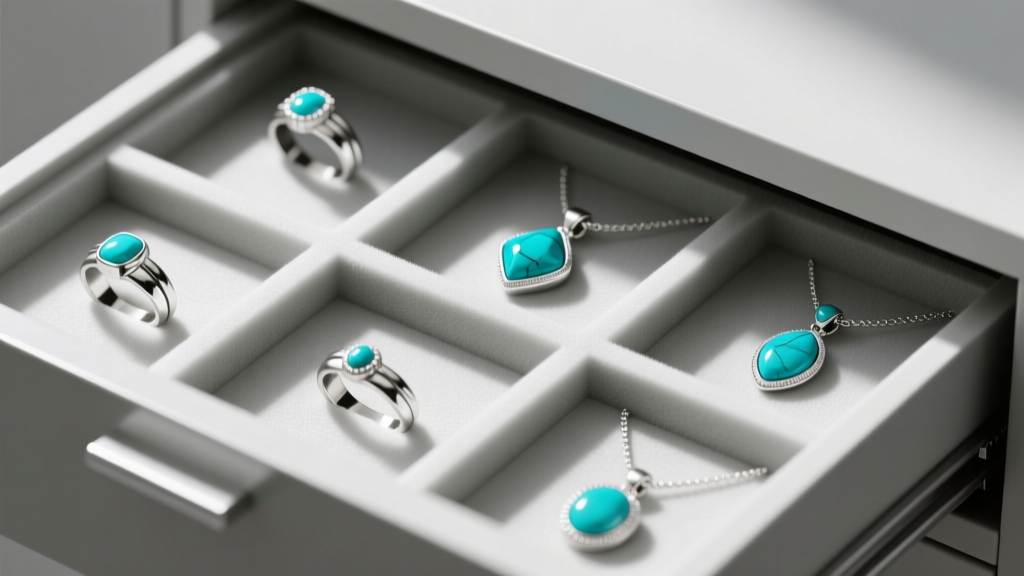
- Empty and Vacuum: Remove all jewelry. Use a HEPA-filter vacuum with a brush attachment to remove trapped dust and skin cells from the corners of the box.
- Line the Base: If the current lining is PVC or degrading velvet, cover it entirely with a layer of acid-free, lignin-free archival paper or unbleached cotton batting.
- Create Individual Cells: Purchase 1-inch thick archival polyethylene foam. Use a sharp craft knife to cut custom slots for each turquoise piece. The goal is zero movement when the drawer is opened or closed.
- Isolate Silver: If storing turquoise set in sterling silver, wrap the silver components in Pacific Silvercloth, leaving the turquoise stone exposed to the breathable cotton environment. This protects the metal without exposing the stone to chemical vapors.
- Climate Control: Place two small, fabric-wrapped silica gel packets in opposite corners of the drawer to maintain a stable relative humidity of around 40-50%.
Maintenance and Inspection Routines
A well-designed sleeping beauty jewelry box is not a 'set it and forget it' solution. To ensure the longevity of your investment, implement a bi-annual inspection routine.
- Every 6 Months: Remove each piece and inspect the surface under a 10x jeweler's loupe. Look for early signs of micro-pitting or resin blooming.
- Annually: Replace the silica gel desiccant packets. You can recharge standard silica beads by baking them at 250°F (120°C) for two hours, but indicator silica (which changes color when saturated) is easier for most collectors to manage.
- As Needed: Gently wipe the stones with a clean, dry microfiber cloth to remove any ambient oils that may have settled on the surface while in storage. Never apply jewelry dips, oils, or waxes to 'restore' the shine, as these will permanently alter the stone's optical properties.
By understanding the unique chemical and physical properties of Sleeping Beauty turquoise, you can transform a standard storage container into a highly specialized preservation environment. Troubleshooting these common storage failures ensures that the pure, matrix-free blue of your collection remains as vibrant as the day it was mined.


