Beginner Guide: Choosing a Full Length Mirror With Jewelry Storage
Discover how to choose and organize a full length mirror with jewelry storage. Our beginner guide covers anti-tarnish features, sizing, and installation.

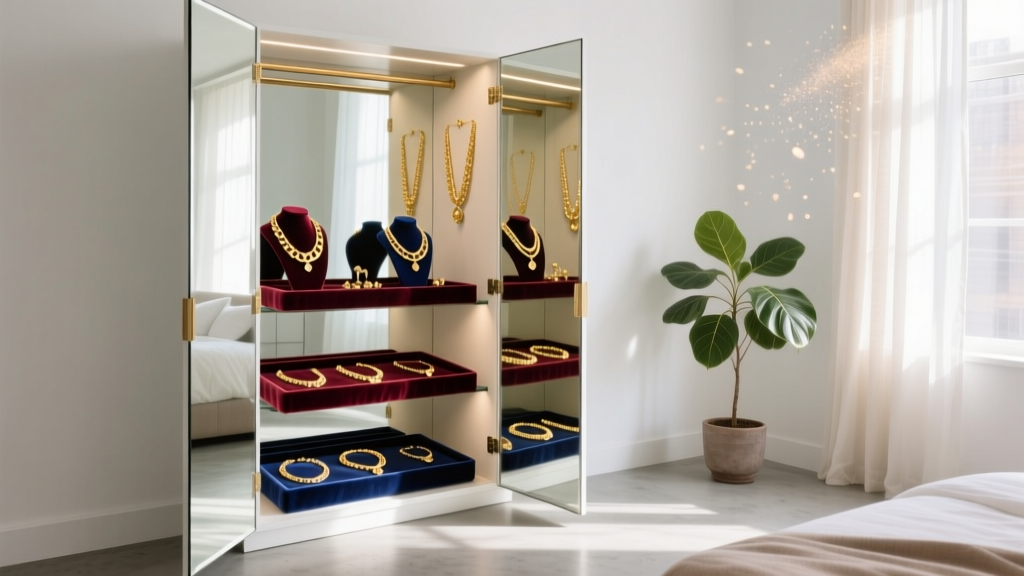
Why a Full Length Mirror With Jewelry Storage is a Game-Changer
For jewelry collectors and beginners alike, the struggle of tangled necklaces, lost earring backs, and tarnished silver is a daily frustration. A full length mirror with jewelry storage solves two major bedroom dilemmas at once: it provides a dedicated space to check your outfit from head to toe while simultaneously concealing a high-capacity, organized jewelry vault. Instead of sacrificing dresser space or dealing with flimsy acrylic organizers that accumulate dust, a mirrored cabinet utilizes vertical, unused wall or door space.
From an organizational standpoint, these cabinets offer a bird’s-eye view of your entire collection. You can easily coordinate metals and gemstones with your daily wardrobe without digging through stacked velvet pouches. However, not all mirrored cabinets are created equal. Cheaply constructed models suffer from warped doors, inadequate hook spacing, and linings that actually accelerate tarnishing. This guide will walk you through the exact specifications, material grades, and installation techniques required to choose a piece that protects your investment.
Anatomy of a Quality Jewelry Mirror Cabinet
When shopping for your first mirrored jewelry armoire, look past the exterior aesthetics and focus on the interior engineering. The internal environment dictates the longevity of your metals and gemstones.
Anti-Tarnish Lining and Material Grades
Sterling silver and copper alloys react with hydrogen sulfide and moisture in the air, leading to unsightly black tarnish. A high-quality cabinet will feature an interior lined with Pacific anti-tarnish cloth or treated flannel. These fabrics are embedded with microscopic silver particles or zinc that intercept and absorb corrosive gases before they reach your jewelry. Avoid cabinets lined with standard, untreated felt or cheap synthetic velvet, as these can trap humidity and release acidic off-gassing from the adhesives used to bind the fabric to the MDF (Medium-Density Fiberboard) backing.
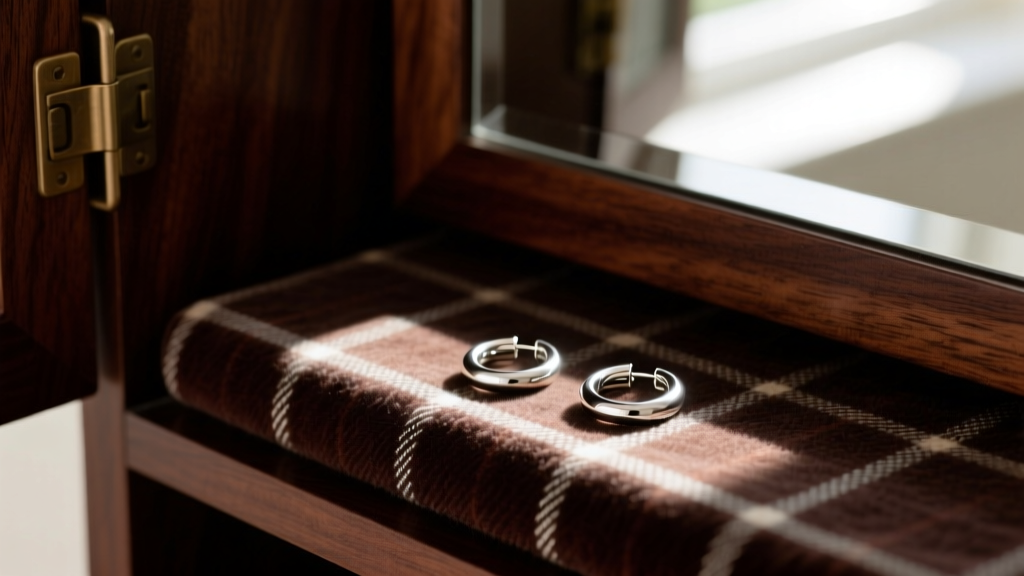
According to the Gemological Institute of America (GIA), proper storage is the first line of defense against gemstone damage and metal degradation. Ensuring your cabinet lining is chemically neutral or actively anti-tarnish is non-negotiable for preserving soft stones like pearls and opals, which require specific humidity levels and should never be stored in airtight plastic baggies inside the cabinet.
LED Lighting: CRI and Color Temperature
If you opt for a cabinet with built-in illumination, pay close attention to the LED specifications. You need a Color Rendering Index (CRI) of 90 or higher. A low CRI will distort the true color of gemstones, making rubies look brownish and sapphires look dull. Furthermore, aim for a color temperature around 4000K (neutral white). Warm light (2700K) will artificially enhance yellow gold but wash out platinum and diamonds, while cool daylight (5000K+) can make silver look overly harsh and clinical.
Hook Spacing and Weight Distribution
Beginners often overlook hook spacing, leading to a tangled mess. For standard chains and pendants, hooks should be spaced at least 3 to 4 inches apart vertically and horizontally to allow for the natural drape of a 16-to-18-inch necklace. Earring posts require tightly woven fabric strips or precisely drilled holes spaced 1.5 inches apart. If you own heavy statement pieces or chunky chainmaille, ensure the cabinet includes reinforced bottom trays or velvet rolls; hanging heavy items on the door hinges can cause the cabinet frame to warp and pull away from the wall over time.
Comparing Mounting Styles: Which is Right for You?
The way your full length mirror with jewelry storage is mounted dictates its stability, footprint, and weight capacity. Here is a breakdown of the three primary mounting styles available on the market.
| Mounting Style | Best For | Average Price Range | Weight Limit & Failure Risks |
|---|---|---|---|
| Over-the-Door | Renters, dorms, and small bedrooms with limited wall space. | $80 - $150 | 30-40 lbs. Risk: Hinges pulling away from hollow-core doors if overloaded. |
| Wall-Mounted | Homeowners, large collections, and heavy statement pieces. | $120 - $250 | 60-80 lbs. Risk: Drywall failure if not anchored directly into wooden studs. |
| Freestanding | Spacious rooms, walk-in closets, and flexible floor plans. | $150 - $300 | 70+ lbs. Risk: Tipping forward when fully loaded and the door is open. |
For beginners with a growing collection of everyday essentials, an over-the-door model is the most accessible entry point. However, if you collect heavy vintage pieces or solid gold chains, a wall-mounted or freestanding unit is mandatory to prevent structural failure.
Strategic Organization: How to Load Your Cabinet
Simply throwing your jewelry into a new cabinet won’t solve your organization woes. You must organize by weight, material, and frequency of use to maintain the cabinet’s balance and protect delicate items.
- Top Section (Eye Level): Reserve the upper hooks for your most frequently worn pieces—stud earrings, delicate layering chains, and everyday hoop earrings. This prevents unnecessary bending and reaching.
- Middle Section (Waist Level): Store longer pendant necklaces, charm bracelets, and rings in the velvet-lined slots. Keep pearls and opals in the designated soft pouches here, away from direct LED heat sources.
- Bottom Section (Lower Level): Place heavy, oversized statement necklaces, bangles, and watches on the bottom shelves or velvet rolls. Keeping the heaviest items at the bottom lowers the cabinet’s center of gravity, reducing stress on wall anchors or door hinges.
- Door Interior (If Applicable): Use the inside of the mirror door for lightweight items only, such as hairpins, safety pins, and thin chain bracelets. Overloading the door will cause the hinges to sag, preventing the mirror from closing flush.
Installation and Safety: Preventing Catastrophic Failures
A fully loaded jewelry mirror cabinet can easily weigh between 40 and 70 pounds. Relying on the small plastic expansion anchors that come in the box is a recipe for a shattered mirror and damaged drywall. As highlighted by home improvement experts at Bob Vila, choosing the correct drywall anchor is critical for heavy, dynamic loads (loads that move when you open and close the door).
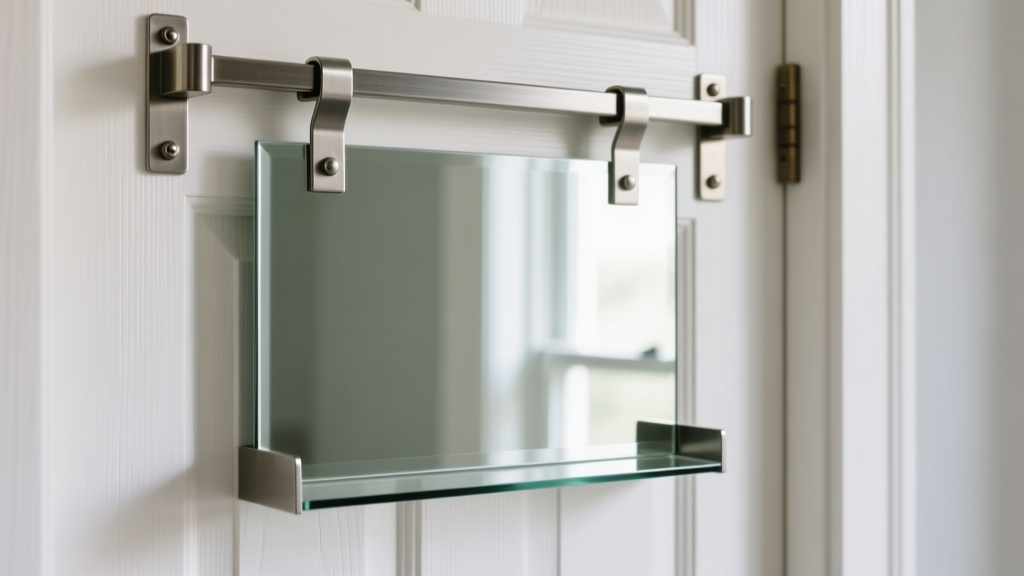
If you are wall-mounting your full length mirror with jewelry storage, always try to secure at least one side directly into a wooden wall stud using 2.5-inch wood screws. If stud placement is impossible due to the cabinet’s width, you must use toggle bolts or strap toggles rated for a minimum of 100 pounds per anchor. These metal wings expand behind the drywall, distributing the weight across a wider surface area and preventing the cabinet from ripping out of the wall when you pull the door open.
For over-the-door models, ensure your door thickness matches the bracket specifications (usually 1.375 to 1.75 inches). Use the provided adhesive foam pads on the back of the brackets to prevent the metal from scratching your door’s paint and to reduce rattling when the cabinet door is closed.
Maintenance: Keeping the Glass and Jewelry Pristine
Maintaining a mirrored jewelry cabinet requires a two-pronged approach: caring for the mirror glass and maintaining the internal environment.
Never spray glass cleaner directly onto the mirror surface. Aerosolized chemicals can easily drift into the cabinet’s interior, settling on your jewelry and degrading the anti-tarnish lining. Instead, spray a microfiber cloth with an ammonia-free glass cleaner and wipe the mirror gently. For the interior, use a handheld vacuum with a soft brush attachment every three months to remove dust, dead skin cells, and microscopic debris that accumulate in the velvet ring rolls and earring slots.
Finally, replace the silica gel packets tucked into the corners of the cabinet every six months. These packets absorb ambient moisture that enters the cabinet every time you open the door, providing an extra layer of protection against humidity-induced tarnish and gemstone clouding. By following these expert guidelines, your full length mirror with jewelry storage will remain a functional, beautiful sanctuary for your collection for years to come.


