Piano Jewelry Box Trends 2026: Heirloom Storage Revival
Discover how the piano jewelry box evolved from novelty to heirloom in 2026. Explore wood finishes, anti-tarnish tech, and luxury storage trends.

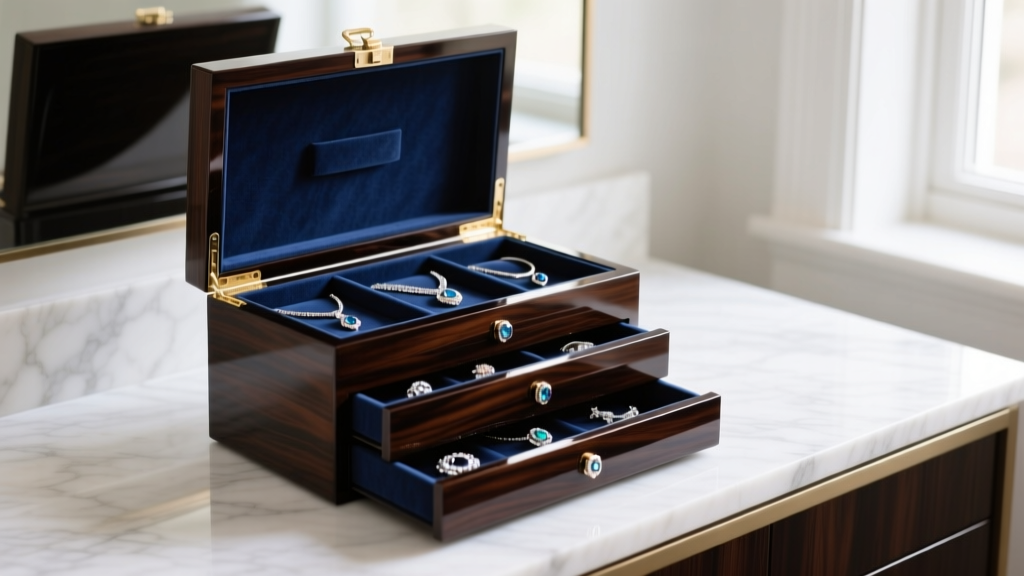
The Resurgence of the Piano Jewelry Box in 2026 Interiors
For decades, the term 'piano jewelry box' conjured images of kitschy, plastic music boxes featuring spinning ballerinas and tinny, wind-up melodies. However, as we navigate the interior design landscape of 2026, the concept has undergone a radical, high-end metamorphosis. Driven by the 'Quiet Luxury' and 'Dark Academia' aesthetics, today's piano jewelry box is a serious architectural storage solution. These pieces borrow the structural integrity, acoustic woodworking techniques, and flawless finishing processes of concert grand pianos, transforming them into heirloom-quality vaults for fine jewelry.
According to recent market analyses from 1stDibs, search volumes for instrument-inspired and piano-finish luxury casework have surged by over 40% since late 2024. Collectors and jewelry enthusiasts are no longer satisfied with mass-produced, faux-leather valet trays. They demand heavy, resonant, and meticulously crafted wooden chests that protect their investments while serving as striking sculptural elements on a vanity or dresser. This guide deconstructs the anatomy, material science, and preservation technology defining the modern piano jewelry box.
Material & Finish Analysis: Beyond High-Gloss Black
The hallmark of a true piano-finish jewelry box is its lacquer. While entry-level models rely on thin polyurethane sprays, luxury 2026 iterations utilize a rigorous 12-to-15-coat catalyzed polyester or traditional French polish process. This creates a mirror-like, glass-smooth surface that is highly resistant to micro-scratches and UV yellowing.
Exotic Veneers and Solid Cores
To achieve the necessary weight and acoustic dampening—which prevents vibrations from rattling delicate gemstone settings against each other—master craftsmen use 18mm to 22mm MDF (Medium-Density Fiberboard) cores wrapped in exotic veneers. The most sought-after veneers in the 2026 market include:
- Macassar Ebony: Prized for its dramatic, zebra-like dark brown and black striping, offering a moody, sophisticated contrast to polished brass hardware.
- Amboyna Burl: A highly figured, swirling reddish-brown wood that mimics the marbling of fine stone. It is exceptionally rare and typically reserved for limited-edition artisan runs.
- East Indian Rosewood: Offering deep, purplish-brown hues with tight, interlocking grains, often finished in a matte, open-pore style to highlight the natural wood texture.
Hardware and Hinge Mechanics
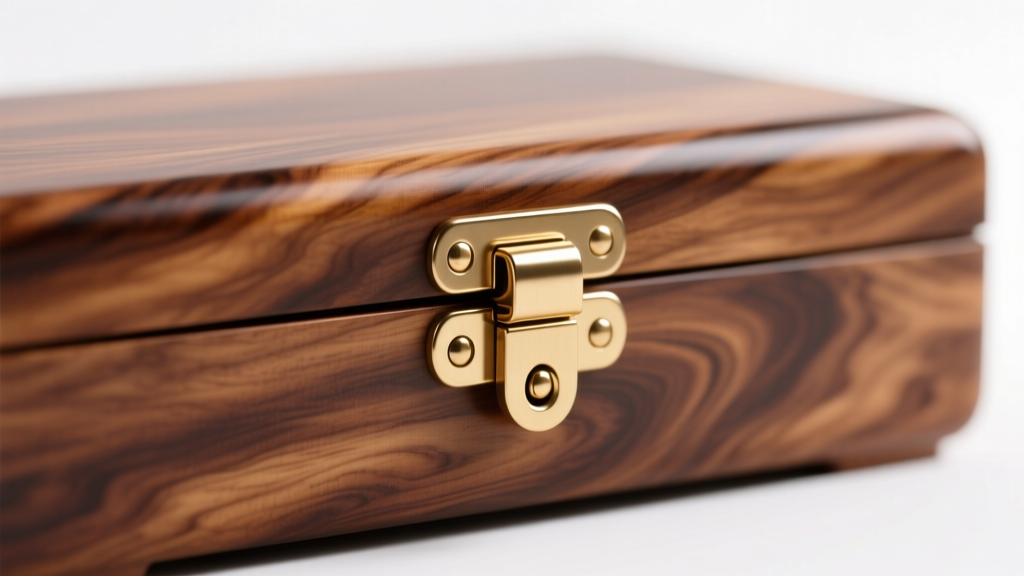
The namesake of the box is also its most critical structural component: the continuous piano hinge. Unlike standard butt hinges that place stress on two isolated points, a solid brass continuous hinge runs the entire length of the lid. This distributes torque evenly, preventing the lid from warping or sagging over decades of use. In 2026, luxury brands are pairing these hinges with solid brass quadrant stays, engineered to hold the heavy lids open at precise 45-degree and 90-degree angles without the need for flimsy fabric ribbons.
The 2026 Interior Integration Matrix
Integrating a high-gloss or exotic wood piano jewelry box into your bedroom or dressing room requires an understanding of spatial design and material contrast. Below is a strategic matrix for styling these pieces within current 2026 interior design frameworks.
| Design Aesthetic | Recommended Wood/Finish | Hardware Accent | Ideal Placement & Contrast |
|---|---|---|---|
| Quiet Luxury | Matte Open-Pore Walnut | Brushed Champagne Bronze | Atop a honed travertine console; relies on subtle textural contrast rather than high shine. |
| Neo-Victorian / Dark Academia | High-Gloss Macassar Ebony | Antique Patinated Brass | On a dark mahogany vanity surrounded by leather-bound books and moody, low-kelvin lighting. |
| Mid-Century Revival | Satin-Finish Amboyna Burl | Polished Nickel | Elevated on a sleek, tapered-leg credenza to emphasize the organic, swirling grain patterns. |
Anti-Tarnish Technology Inside the Music
A beautiful exterior is meaningless if the interior environment destroys the jewelry it houses. Silver and copper alloys react with hydrogen sulfide in the ambient air to form silver sulfide—the black tarnish that ruins polished pieces. The American Institute for Conservation (AIC) emphasizes that micro-climate control is essential for preserving metals outside of museum-grade vitrines.
The 2026 generation of piano jewelry boxes addresses this with advanced, multi-layered interior linings:
- Pacific Silvercloth: This is the gold standard for high-end boxes. The fabric is embedded with microscopic particles of silver and zinc. These sacrificial metals absorb and neutralize tarnishing gases before they can reach your jewelry, effectively acting as a chemical shield.
- Luster-Loc Microsuede: A synthetic, non-abrasive lining that is chemically inert. Unlike traditional velvet, which can trap moisture and emit acidic off-gassing from cotton dyes, Luster-Loc provides a pH-neutral, ultra-soft cradle for soft gemstones like opals and pearls.
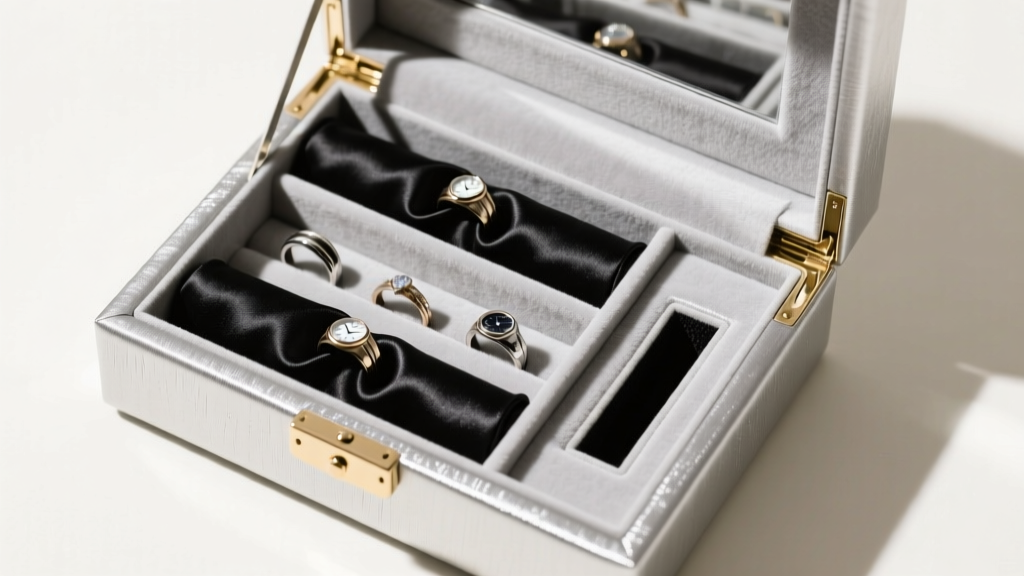
- Argon-Sealed Watch Winders: For piano boxes that double as horological storage, the highest tier features hermetically sealed watch winding modules flushed with argon gas, completely eliminating oxygen and moisture to prevent dial oxidation and movement degradation.
Compartmentalization and Ergonomics
Modern luxury storage rejects the 'dump-and-search' approach. The interior architecture of a premium piano jewelry box is highly modular. Expect to find specialized zones engineered for specific jewelry categories. Ring rolls are now spaced at 1.5-inch intervals to prevent large cocktail rings from crushing against one another. Necklace hooks are mounted on the interior lid with a 12-inch drop clearance, accompanied by elasticized catch-pockets at the base to prevent chains from tangling during transit or drawer closure.
Furthermore, hidden, push-to-release drawers are a staple of the 2026 designs. These shallow, felt-lined compartments operate on silent, soft-close hydraulic slides, providing a secure, concealed space for high-value items like diamond tennis bracelets or heirloom brooches, keeping them out of sight from casual observers.
Investment Tiers: What to Expect in the Current Market
When shopping for a piano jewelry box, understanding the pricing tiers helps separate genuine craftsmanship from superficial marketing. Here is a breakdown of what your budget secures in the current market:
- Entry-Level ($150 - $350): Features an MDF core with photographic wood-grain veneers, a 3-to-5 coat polyurethane finish, and standard velvet lining. Hinges are usually plated steel. Suitable for fashion jewelry, but lacks archival preservation qualities.
- Mid-Tier ($400 - $950): Introduces genuine wood veneers (like walnut or cherry), a thick polyester lacquer finish, and solid brass continuous hinges. Linings upgrade to anti-tarnish treated flannel or basic microsuede. Excellent for everyday fine jewelry storage.
- Heirloom / Artisan ($1,500 - $4,000+): Hand-rubbed French polish or 15-coat catalyzed polyester on exotic burls. Features Pacific Silvercloth, hidden hydraulic drawers, and custom-cast hardware. These are generational pieces that appreciate in value and offer museum-grade protection for high-carat and antique collections.
"A true piano-finish jewelry box is not just a container; it is a micro-environment. The investment in proper continuous hinges and chemically inert linings is what separates a disposable accessory from a multi-generational heirloom." — Master Casework Artisan, 2026 Guild of Woodworkers Symposium
Final Thoughts on the Revival
The piano jewelry box has successfully shed its novelty past, emerging in 2026 as a pinnacle of functional art and jewelry preservation. By prioritizing exotic materials, continuous hardware mechanics, and advanced anti-tarnish textiles, these boxes offer a sophisticated sanctuary for your most prized possessions. Whether you opt for the moody elegance of Macassar ebony or the organic warmth of Amboyna burl, investing in a piano-finish chest ensures your collection remains as pristine and striking as the day it was acquired.


