Glass Top Jewelry Box Value: Budget vs Premium Assessment
We assess the true value of a glass top jewelry box, comparing budget MDF frames to premium solid wood, and analyzing hidden tarnish risks.

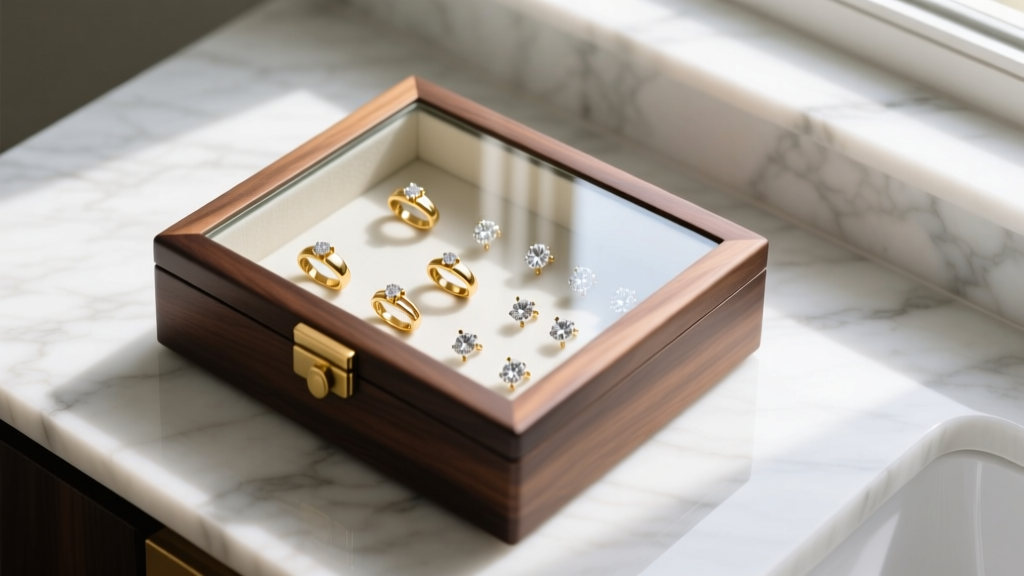
The appeal of a glass top jewelry box is undeniable. It transforms your collection from hidden inventory into a daily visual display, allowing you to curate your accessories like a museum exhibit. However, as we navigate the 2026 market, the price disparity between a $25 big-box store display and a $250 artisan-crafted case is staggering. For consumers focused on budget and value assessment, the critical question is not just about aesthetics—it is about material chemistry, structural longevity, and the hidden costs of jewelry degradation.
When evaluating the true return on investment for a glass top jewelry box, you must look past the transparent lid and examine the frame composition, the lining materials, and the hardware. A budget-friendly box might save you money upfront, but it can silently destroy your silver and porous gemstones through chemical off-gassing and UV exposure. This guide breaks down the exact material grades, pricing tiers, and failure modes to help you determine which tier actually offers the best long-term value.
The Anatomy of a Glass Top Jewelry Box: Where the Money Goes
To assess value, we first need to dissect the three primary cost drivers in display box manufacturing: the glazing, the carcase (frame), and the interior lining.
1. The Glazing: Annealed vs. Tempered vs. Museum Acrylic
Budget boxes ($20–$45) universally use standard annealed glass, typically 2mm thick. It is heavy, prone to scratching, and shatters into dangerous, jagged shards if dropped. Mid-range options ($60–$120) often upgrade to 4mm tempered glass, which is safer and more scratch-resistant. However, the premium tier ($150+) has largely shifted away from glass entirely, opting for Optium Museum Acrylic. This material is lightweight, shatterproof, anti-static (so it does not attract dust to your gems), and features built-in UV filtering—a critical feature for preserving light-sensitive stones.
2. The Carcase: MDF vs. Solid Hardwoods
The frame dictates the structural lifespan and the chemical safety of the box. Budget models rely on Medium-Density Fiberboard (MDF) wrapped in a synthetic veneer. Premium models use kiln-dried solid hardwoods like walnut, oak, or mahogany, joined with traditional dovetail or mortise-and-tenon techniques that prevent warping over decades of use.
3. The Lining: Polyurethane vs. Treated Flannel
Cheap boxes use standard polyurethane foam or untreated polyester, which trap ambient moisture against your metals. High-value boxes utilize Luster Lok, Pacific Silvercloth, or chemically treated flannel that actively intercepts corrosive gases before they reach your jewelry.
Price Tier Breakdown: Budget vs. Mid-Range vs. Premium
The following matrix illustrates what you are actually paying for at each price point in the current market.
| Feature | Budget ($20 - $45) | Mid-Range ($60 - $120) | Premium ($150 - $300+) |
|---|---|---|---|
| Glazing | 2mm Annealed Glass | 4mm Tempered Glass | UV-Filtering Museum Acrylic |
| Frame Material | MDF with PVC Veneer | Engineered Wood / Softwood | Solid Walnut, Oak, or Cherry |
| Interior Lining | Untreated Polyurethane Foam | Standard Velvet / Microfiber | Treated Anti-Tarnish Flannel |
| Hardware | Pot Metal Hinges (Glued) | Stamped Brass Hinges | Solid Cast Brass with Steel Pins |
| Estimated Lifespan | 1 - 3 Years | 5 - 8 Years | 20+ Years (Heirloom) |
The Hidden Tarnish Trap: MDF Off-Gassing and UV Exposure
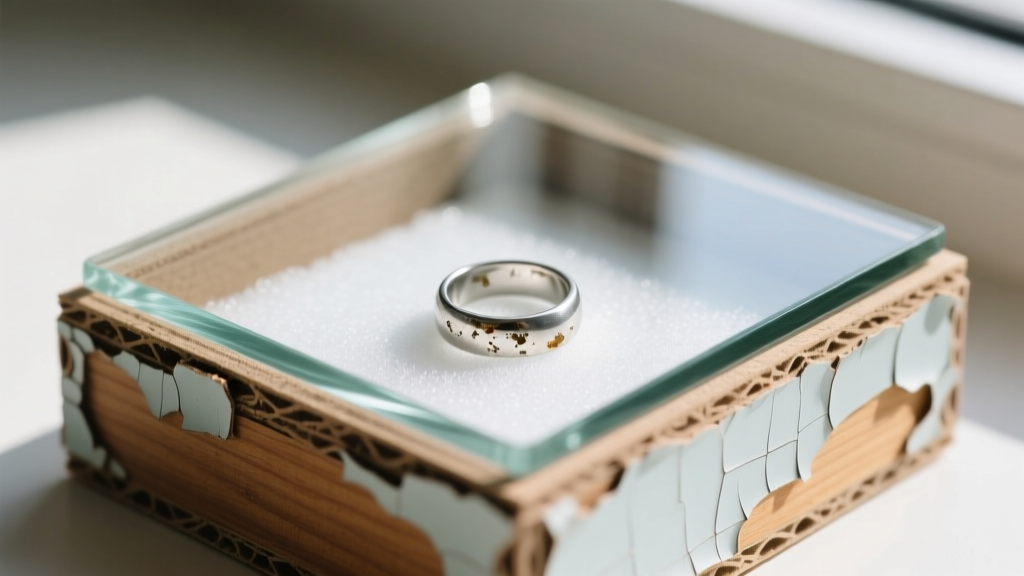
The most significant hidden cost of a budget glass top jewelry box is the accelerated degradation of your collection. This occurs through two primary vectors: chemical off-gassing and ultraviolet light exposure.
The MDF Formaldehyde Problem
Medium-Density Fiberboard (MDF) is manufactured using urea-formaldehyde resins. According to the Smithsonian Museum Conservation Institute, wood products and certain adhesives off-gas volatile organic compounds (VOCs), including formaldehyde and organic acids. When these gases are trapped inside the enclosed micro-climate of a jewelry box, they react with the copper alloys in sterling silver, causing rapid, severe tarnishing. If you store silver in a budget MDF box, you will find yourself spending more time and money on chemical polishing—which strips microscopic layers of silver—than you saved by buying the cheap box.
UV Fading in Light-Sensitive Gemstones
The primary selling point of a glass top box is visibility, but standard glass does not block UVA rays. Prolonged exposure to ambient room light or direct sunlight can cause irreversible fading in several precious and semi-precious stones. The Gemological Institute of America (GIA) explicitly warns that stones like kunzite, amethyst, rose quartz, and certain irradiated topazes will lose their color saturation when subjected to continuous light exposure. Furthermore, organic gems like pearls and amber can dry out, crack, or yellow when exposed to the heat and UV radiation that penetrates standard glass lids.
Strategic Mitigation for Glass-Top Owners
If you already own a standard glass top jewelry box or are committed to the aesthetic of real glass over acrylic, you must implement active mitigation strategies to protect your investment:
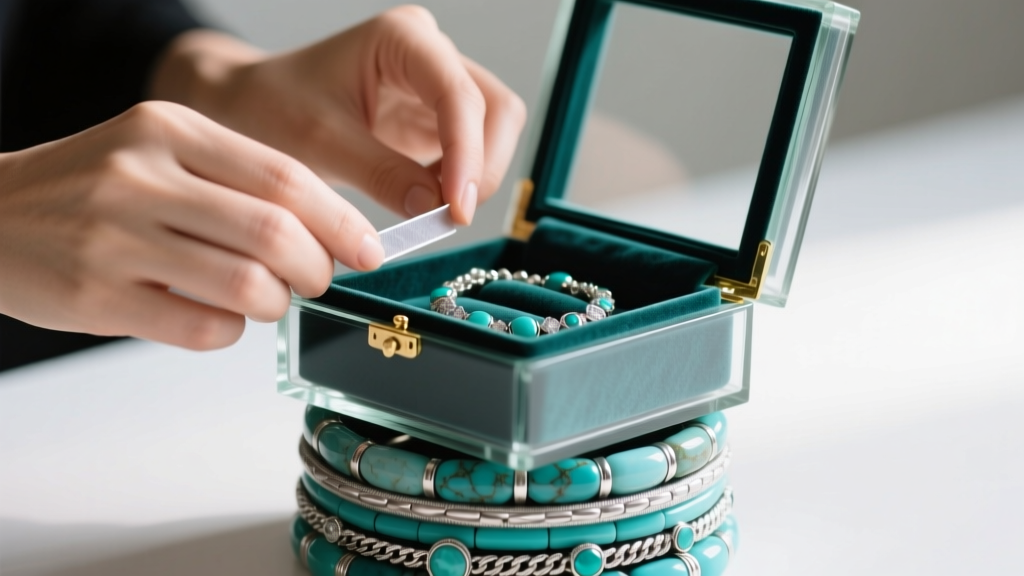
- Anti-Tarnish Strips: Place 3M anti-tarnish strips in the corners of the box. These contain activated carbon and copper particles that absorb corrosive gases. Replace them every 6 months.
- UV Window Film: Apply a clear, UV-blocking window film (rated for 99% UV rejection) to the underside of the glass lid. This is a $15 DIY fix that saves thousands in gemstone degradation.
- Pacific Silvercloth: Line the bottom of the box with Pacific Silvercloth, a specialized cotton fabric embedded with microscopic silver particles that capture sulfur and chlorine before they reach your jewelry.
Hardware and Hinges: The Silent Failure Points
When conducting a value assessment, consumers rarely inspect the hinges, yet this is where 90% of physical failures occur. A glass lid is incredibly heavy relative to the size of the box. In budget models, manufacturers use cheap 'pot metal' (zinc alloy) hinges that are often glued or pinned into the MDF frame. Within a year of daily opening and closing, the screws strip out of the soft MDF, the pot metal bends under the weight of the glass, and the lid slams shut—posing a severe crush risk to both your fingers and the jewelry inside.
Mid-range and premium boxes utilize solid brass or stainless steel hinges with steel pivot pins. More importantly, they feature mechanical screw retention or threaded brass inserts driven into solid hardwood, ensuring the hinge will never pull out. Premium boxes also include soft-close pneumatic struts or friction stays, allowing the heavy glass lid to remain open at a 90-degree angle without requiring a prop rod, which is a massive functional upgrade for daily use.
Expert Sourcing Tip: When shopping online, zoom in on the hinge photos. If the hinge looks like stamped, shiny, featureless metal with visible glue residue around the mounting plate, it is a budget failure point waiting to happen. Look for multi-knuckle solid brass hinges with visible, recessed wood screws.
Final Verdict: Is the Glass Top Jewelry Box Worth Your Budget?
The value of a glass top jewelry box is entirely dependent on the composition of your collection and your environmental control. If your collection consists primarily of stainless steel, solid 14k/18k yellow gold, and diamonds or sapphires, a mid-range ($60–$120) tempered glass box offers excellent visual utility and sufficient structural longevity. Gold and diamonds are highly resistant to the off-gassing and UV issues that plague other materials.
However, if your collection features sterling silver, antique oxidized metals, or light-sensitive gems (amethyst, opal, turquoise, pearls), a budget MDF glass box is a liability. The cost of replacing ruined gemstones and constantly polishing silver far outweighs the initial savings. For these collections, the premium tier ($150+) featuring solid hardwood frames, UV-filtering museum acrylic, and treated flannel linings is not a luxury—it is a mandatory preservation requirement. Ultimately, true value in jewelry storage is measured not by the price of the box, but by the pristine condition of the treasures it holds a decade from now.


