Gray Jewelry Armoire Value: 2026 Budget Buying Guide
Assess the true value of a gray jewelry armoire in 2026. We break down materials, anti-tarnish linings, and hardware to help you budget wisely.

The Allure and the Reality of the Gray Jewelry Armoire
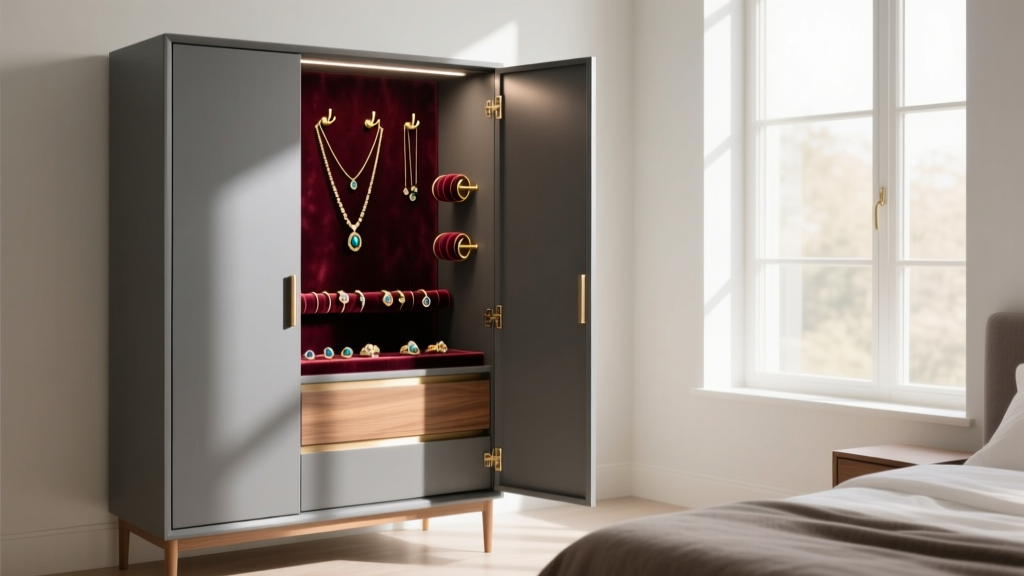
Gray has cemented its place as a dominant neutral in 2026 interior design, bridging the gap between warm wood tones and stark modernism. When shopping for a gray jewelry armoire, buyers are often drawn to the sophisticated aesthetic—whether it is a distressed ash gray, a sleek matte charcoal, or a mirrored 'greige' finish. However, the exterior finish often masks severe compromises in structural engineering and jewelry preservation. As a significant investment piece meant to protect thousands of dollars worth of precious metals and gemstones, evaluating the true value of a jewelry armoire requires looking far beyond the paint job. This guide deconstructs the budget, mid-range, and premium tiers of gray armoires to help you determine where your money is best spent.
Decoding the Price Tiers: What Are You Actually Paying For?
The market for freestanding jewelry cabinets is heavily segmented. Understanding these tiers is the first step in assessing value. Budget options, typically priced between $60 and $130, are almost exclusively manufactured from engineered woods and feature basic synthetic interiors. Mid-range armoires ($150 to $290) introduce better hardware and treated linings, while premium models ($350 to $800+) utilize solid hardwoods, specialized anti-tarnish fabrics, and architectural-grade joinery. The danger for consumers lies in the mid-range tier, where a high-quality gray veneer is frequently used to disguise subpar internal construction.
Structural Integrity: MDF vs. Solid Wood Under Load
A fully loaded 60-inch jewelry armoire is surprisingly heavy. Between the glass perfume bottles stored on top, the metal bangles in the lower drawers, and the dense concentration of silver and gold, the total weight can easily exceed 80 pounds.
The Shear Stress Problem in Budget Models
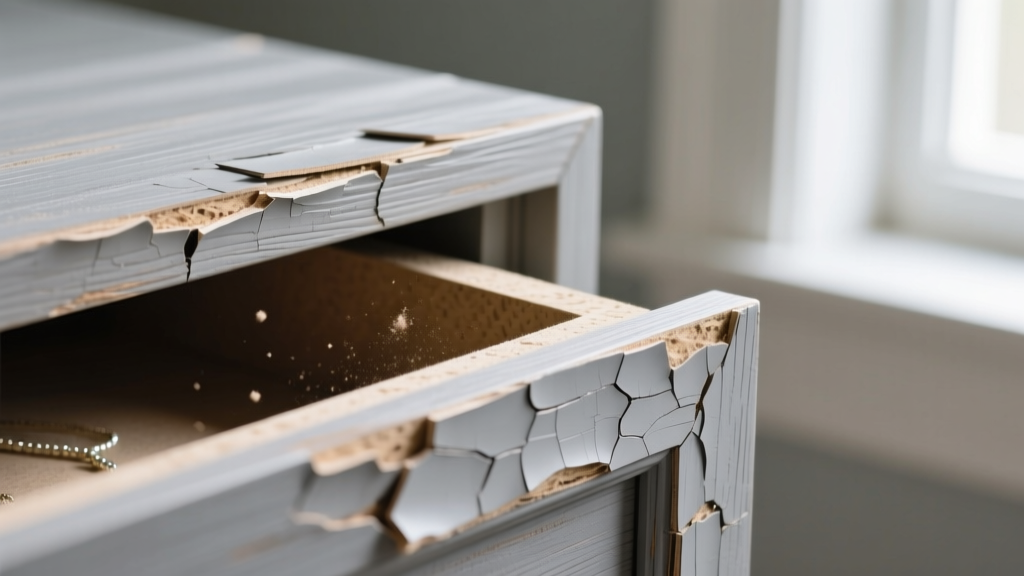
Budget gray armoires are constructed from Medium-Density Fiberboard (MDF) or particleboard, held together by metal cam-locks and wooden dowels. While MDF is heavy and provides a smooth surface for gray paint or veneer, it lacks tensile strength. Over 12 to 18 months of daily use, the repeated pulling of drawers and the shifting weight of the jewelry create shear stress on the cam-lock joints. This leads to 'racking,' a structural failure where the cabinet begins to lean, causing the doors to misalign and the mirrors to crack.
In contrast, premium armoires utilize solid rubberwood, ash, or pine, joined with mortise-and-tenon or corner-blocked dowel joinery. If you are buying a gray armoire taller than 50 inches, solid wood or high-grade plywood with structural corner blocks is non-negotiable for long-term value.
The Interior Climate: Anti-Tarnish Linings Explained
The most critical failure point in budget jewelry storage is the interior lining. Tarnish is a chemical reaction—specifically, hydrogen sulfide in the ambient air reacting with the copper alloys in sterling silver and gold to form silver sulfide. The lining of your armoire is the first line of defense against this reaction.
The Felt vs. Flannel Dilemma
According to the Gemological Institute of America (GIA), porous materials that trap moisture and ambient pollutants are highly detrimental to both metals and delicate gemstones like pearls. Budget armoires use cheap, glued-down polyester felt. This material traps humidity and the volatile organic compounds (VOCs) from the glue can actually accelerate tarnishing and degrade organic gems.
Mid-tier armoires upgrade to polyurethane-treated flannel, which offers moderate moisture resistance. However, the gold standard for value and preservation is Pacific Silvercloth, found in premium models. This specialized cotton flannel is embedded with microscopic silver particles that intercept and absorb sulfides before they can reach your jewelry. While an armoire with genuine Silvercloth lining costs more upfront, it eliminates the need for harsh chemical polishing, preserving the millimeter-thick rhodium plating on your white gold pieces and extending the life of your collection.
Hardware and Hinges: The Hidden Failure Points
The tactile experience of a jewelry armoire is dictated by its hardware. Drawers that stick or doors that sag ruin the utility of the piece.
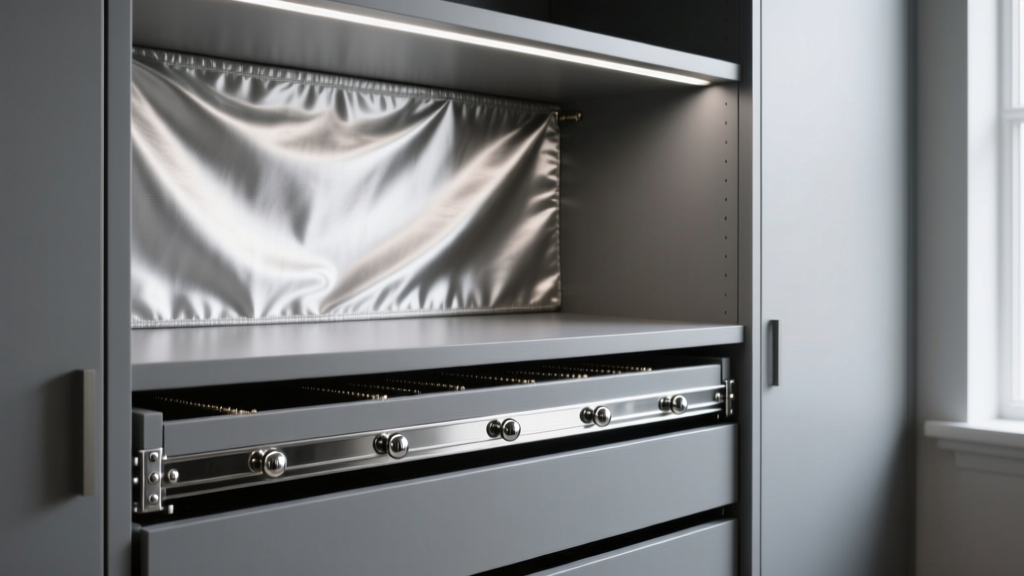
- Drawer Slides: Budget models use side-mounted friction glides made of plastic or thin stamped metal. These warp under the weight of heavy bead and bangle drawers. Look for steel ball-bearing drawer slides, which support up to 45 lbs per drawer and ensure smooth operation for decades.
- Door Hinges: Many gray armoires feature mirrored cabinet doors. Budget models use surface-mounted butt hinges that loosen over time, causing the heavy mirror to sag and strike the frame. Premium models use concealed, adjustable Euro-hinges with soft-close dampening.
- Mirror Safety Backing: If your gray armoire includes a full-length mirror, ensure it features a safety backing film. This prevents the glass from shattering into dangerous shards if impacted, a crucial safety feature often omitted in sub-$100 models.
2026 Value Assessment Matrix
To help you budget effectively, we have mapped the core features across the three primary market tiers. Use this matrix to evaluate product listings before purchasing.
| Feature | Budget ($60 - $130) | Mid-Range ($150 - $290) | Premium ($350+) |
|---|---|---|---|
| Core Material | MDF / Particleboard | Engineered Wood + Veneer | Solid Rubberwood / Ash |
| Joinery | Cam-lock & Staples | Dowel & Glue | Mortise-and-Tenon / Corner Blocked |
| Interior Lining | Synthetic Felt (Untreated) | Treated Flannel | Pacific Silvercloth / Treated Velvet |
| Drawer Slides | Plastic Friction Glides | Stamped Metal Friction | Steel Ball-Bearing |
| Finish Durability | Painted (Chips easily) | Gray Stain / Polyurethane | Multi-step Hand-Rubbed Glaze |
Final Verdict: Maximizing Your Storage Budget
'A jewelry armoire should be viewed as a preservation vault, not just a decorative cabinet. The cost of replacing tarnished silver chains or restringing degraded pearls far outweighs the initial premium paid for proper interior linings and solid wood construction.'
If your collection consists primarily of fashion jewelry and stainless steel pieces, a mid-range gray armoire ($180-$250) offers the best balance of aesthetic appeal and functional storage. Ensure it features treated flannel and metal drawer slides. However, if you are storing heirloom sterling silver, porous gemstones (like opals and pearls), or high-karat gold, the premium tier is the only mathematically sound investment. The inclusion of solid wood joinery and true anti-tarnish Silvercloth will protect your assets and maintain the structural beauty of the gray finish for a lifetime. For more detailed care instructions on preserving specific metals, consult the Jewelers of America guidelines before finalizing your storage environment.