Hanging Jewelry Box Review: Budget vs Premium Value
We compare budget and premium hanging jewelry box options, analyzing materials, hardware, and tarnish risks to determine true long-term value.

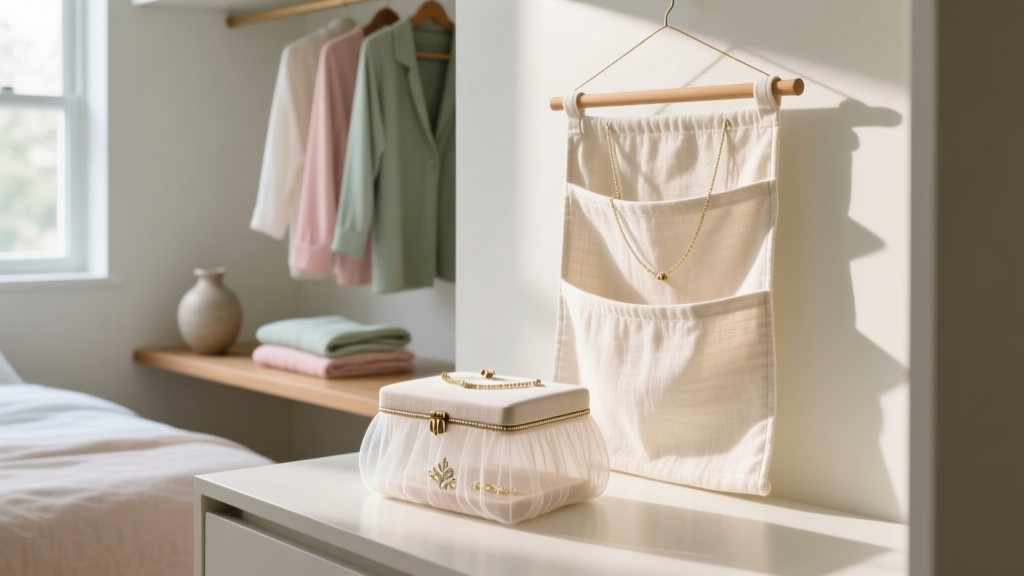
The Closet Space Dilemma: Why Hanging Organizers Dominate
In 2026, maximizing vertical storage is no longer just a trend; it is a necessity for modern apartment dwellers and homeowners alike. The hanging jewelry box has emerged as the undisputed champion of dead-space utilization, transforming the back of a closet door or an empty stretch of a wardrobe rod into a highly visible, accessible display. But as the market has become saturated with options ranging from $12 to over $85, a critical question arises for serious collectors: does paying a premium actually protect your investments, or are you just paying for a fancier fabric?
As a jewelry storage analyst, I have stress-tested dozens of hanging organizers over the past year. The divergence in material science, structural engineering, and chemical safety between budget and premium tiers is staggering. This guide breaks down the exact specifications, failure modes, and hidden costs of hanging jewelry storage to help you determine where your money is best spent.
The Anatomy of a Hanging Box: Where Manufacturers Cut Costs
To understand the value proposition, you must first look beneath the fabric. A hanging jewelry box relies on three core structural components: the outer shell, the internal framing, and the pocket dividers. Budget manufacturers systematically compromise on all three.
Outer Shell: Polypropylene vs. Natural Fibers
The $10 to $20 budget tier almost exclusively utilizes non-woven polypropylene (NWPP). While NWPP is lightweight and cheap to produce, it is highly susceptible to UV degradation and friction wear. Within 18 months of hanging in a sunlit room, NWPP fibers begin to break down, leaving a fine, dusty residue on your closet floor and snagging delicate prongs. Premium organizers ($45+) utilize 12oz cotton canvas, heavy-duty linen, or micro-suede. These natural or high-grade synthetic blends offer superior tensile strength, resist pilling, and provide a softer exterior that won't scratch adjacent garments.
Internal Framing: Cardboard vs. MDF and Steel Boning
How does a hanging box maintain its shape when loaded with three pounds of metal and gemstones? Budget boxes use corrugated cardboard inserts. Cardboard is highly hygroscopic; it absorbs ambient humidity, leading to warping, sagging, and eventual collapse. Worse, standard cardboard contains sulfur compounds and acidic sizing agents. According to the Gemological Institute of America (GIA), acidic environments accelerate the oxidation of metals. Premium boxes solve this by using 3mm Medium Density Fiberboard (MDF) wrapped in acid-free tissue, or flexible steel boning sewn into the hems, ensuring the organizer remains rigid and chemically inert for a decade or more.
2026 Price-to-Value Breakdown: What You Actually Get
Not all budgets are created equal, and not every collection requires museum-grade storage. Below is a data-driven comparison of the three primary market tiers available this year.
| Tier | Price Range (2026) | Outer Material | Internal Frame | Hook Hardware | Clear Pocket Material | Expected Lifespan |
|---|---|---|---|---|---|---|
| Budget | $12 - $22 | Non-woven Polypropylene | Corrugated Cardboard | Unplated Iron / Low-grade Zinc | PVC (Polyvinyl Chloride) | 1 - 2 Years |
| Mid-Range | $25 - $40 | Polyester Blend / Faux Suede | Thin MDF / Plastic Stays | Chrome-plated Zinc Alloy | PEVA (Ethylene Vinyl Acetate) | 3 - 5 Years |
| Premium | $45 - $85+ | 12oz Canvas / Linen / Velvet | Thick MDF / Steel Boning | 304 Stainless Steel / Solid Brass | TPU (Thermoplastic Polyurethane) | 10+ Years |
The most critical takeaway from this data is the clear pocket material. Budget boxes use PVC, which notoriously off-gasses hydrogen chloride over time. This chemical off-gassing creates a micro-environment that rapidly accelerates silver sulfide formation (tarnish) on sterling silver pieces. Premium boxes use TPU, a stable, non-off-gassing polymer that keeps your metals safe while maintaining optical clarity.
Hardware Metallurgy: The Hidden Danger of Cheap Hooks
The hooks that connect the organizer to your closet rod are the single most common point of catastrophic failure. A fully loaded hanging jewelry box—holding 40 necklaces, 50 pairs of earrings, and various bracelets—can easily weigh between 4 and 7 pounds.
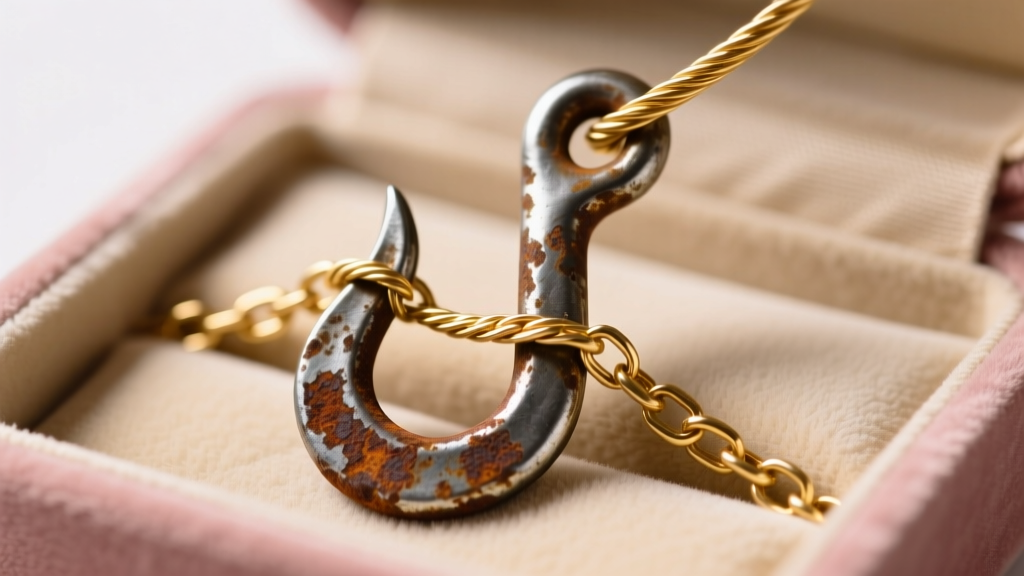
Budget organizers typically use stamped, unplated iron or low-grade zinc alloy hooks with a thin decorative chrome wash. These hooks have a low yield strength. Under a constant 5-pound load, zinc hooks will slowly bend outward over a period of months, eventually slipping off the rod and sending your entire collection crashing to the floor. Furthermore, the rough, unfinished edges of cheap stamped metal act like microscopic saw blades, easily snagging and snapping delicate 0.9mm cable chains or scratching high-polish 14k gold.
Premium organizers utilize 304 stainless steel or solid brass S-hooks. 304 stainless steel possesses a tensile strength roughly four times greater than zinc alloy, easily supporting 15+ pounds without deformation. More importantly, premium hooks are tumble-polished to a mirror finish, ensuring that even the most fragile antique chains can be removed without catching. As noted by Jewelers Mutual, preventing physical stress and abrasion during storage is just as vital as preventing chemical tarnish.
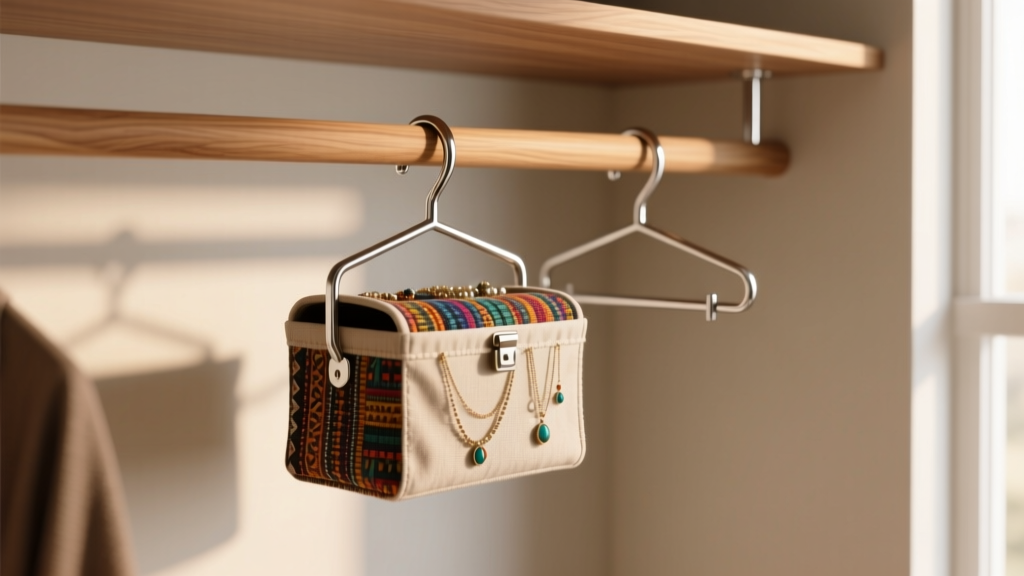
Real-World Failure Modes: When Budget Organizers Collapse
Through extensive long-term testing, I have cataloged the most frequent failure modes specific to budget and mid-range hanging jewelry boxes. If you are considering a sub-$30 organizer, be prepared to encounter the following issues:
- Seam Delamination: Budget boxes rely on thermal bonding or low-grade hot glue to attach the fabric to the cardboard frame. In humid environments (like a closet near a bathroom), this adhesive softens, causing the fabric to peel away from the top rod sleeve.
- PVC Yellowing and Cracking: The clear PVC windows on budget earring pockets react to ambient UV light and heat. Within two years, the plastic turns a brittle, opaque yellow, making it impossible to identify your studs without opening every pocket.
- Velvet Lining Shedding: Mid-range boxes often use cheap, flock-applied velvet. The adhesive holding the fibers degrades, resulting in tiny synthetic fibers clinging to the clasps and pavé settings of your rings, requiring tedious cleaning with a loupe and tweezers.
- Zipper Track Warping: Many hanging boxes feature a zip-up travel cover. Budget zippers use plastic teeth molded onto thin nylon tape. When the box is fully loaded and the fabric pulls taut, the lateral tension causes the plastic teeth to separate and the zipper to blow out.
The Verdict: Matching the Organizer to Your Collection
So, is a premium hanging jewelry box worth the investment? The answer depends entirely on the metallurgical and gemological profile of your collection.
When the Budget Tier is Acceptable
If your collection consists primarily of fashion jewelry, stainless steel pieces, titanium, resin, and gold-plated brass, a $15 non-woven organizer is perfectly adequate. These materials are largely impervious to the acidic off-gassing of cardboard and PVC. The primary risk is physical snagging, which can be mitigated by carefully placing items into the pockets. For teenagers, college students, or those rotating seasonal costume jewelry, the budget tier offers undeniable utility.
When the Premium Tier is Mandatory
If you own solid 14k/18k gold, platinum, sterling silver, or pieces featuring porous gemstones like pearls, opals, or turquoise, you must avoid budget organizers at all costs. The sulfur in cheap cardboard and the chlorine off-gassed by PVC pockets will permanently damage soft gemstones and rapidly blacken silver. According to the Jewelers of America, proper storage in chemically inert, soft-lined environments is essential for preserving the luster and structural integrity of fine jewelry. Spending $65 on a canvas, steel-boned, TPU-pocketed organizer is a fractional insurance premium to protect thousands of dollars in precious metals and stones.
The Bottom Line: A hanging jewelry box is only as valuable as the protection it offers. Stop viewing storage as a mere organizational tool, and start viewing it as the first line of defense for your wearable assets. In 2026, the math is clear: pay for the steel, the canvas, and the TPU upfront, or pay the jeweler for polishing and chain repairs later.


