Vintage Floral Jewelry Box: Value and Budget Assessment
Discover how to evaluate a vintage floral jewelry box in 2026. Compare materials, assess restoration costs, and find true value across all budget tiers.

The 2026 Market Landscape for Vintage Floral Jewelry Boxes
The secondary market for romantic, maximalist storage solutions has shifted dramatically over the past few years. As of 2026, the vintage floral jewelry box has transitioned from a niche collectible to a highly sought-after functional art piece. Driven by a resurgence in romantic-core aesthetics and a growing consumer preference for sustainable, heirloom-quality storage, prices for authentic mid-century and early 20th-century floral motif boxes have appreciated by an average of 18% since 2022. However, this surge in demand has also flooded online marketplaces with mass-produced reproductions and heavily restored pieces that lack structural integrity.
For the budget-conscious collector or the practical jewelry enthusiast, distinguishing between a genuine investment piece and an overpriced decorative trinket requires a rigorous assessment of materials, hardware, and structural failure modes. This guide provides a comprehensive value assessment framework to help you allocate your budget effectively, whether you are spending $40 on an estate-sale find or $600 on a curated antique.
Material Grades and Their Impact on Valuation
The primary driver of value in any vintage floral jewelry box is the base material and the technique used to render the floral motif. Understanding these distinctions is critical for accurate budgeting.
Hand-Painted Porcelain and Enamel
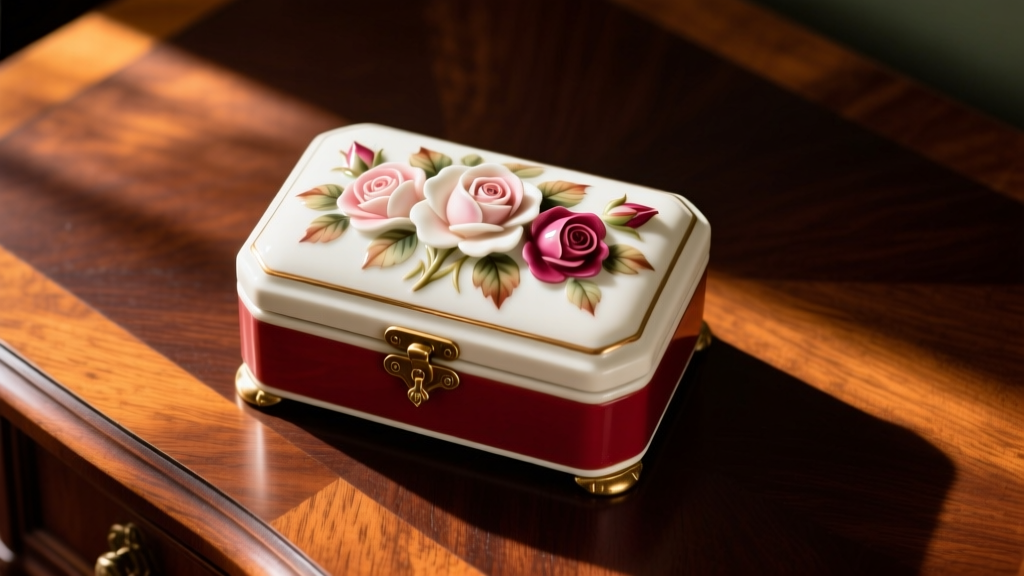
The pinnacle of the vintage floral market belongs to hand-painted porcelain, particularly pieces originating from Limoges, France, or Meissen, Germany. Authentic hand-painted floral lids feature visible brushstrokes, layered glazing, and often a cobalt blue underglaze or raised gilt trim. In the current market, an intact, hand-painted Limoges floral box with solid brass hinges commands between $250 and $800. Conversely, transfer-printed porcelain (where the floral design is stamped via decal) is vastly more common. You can identify transferware by examining the pattern under a loupe; if you see a uniform dot matrix or pixelation, it is a transfer. These pieces typically range from $40 to $120, making them an excellent budget entry point that still offers the elegant aesthetic of porcelain without the premium price tag.
Marquetry and Burl Wood Veneers
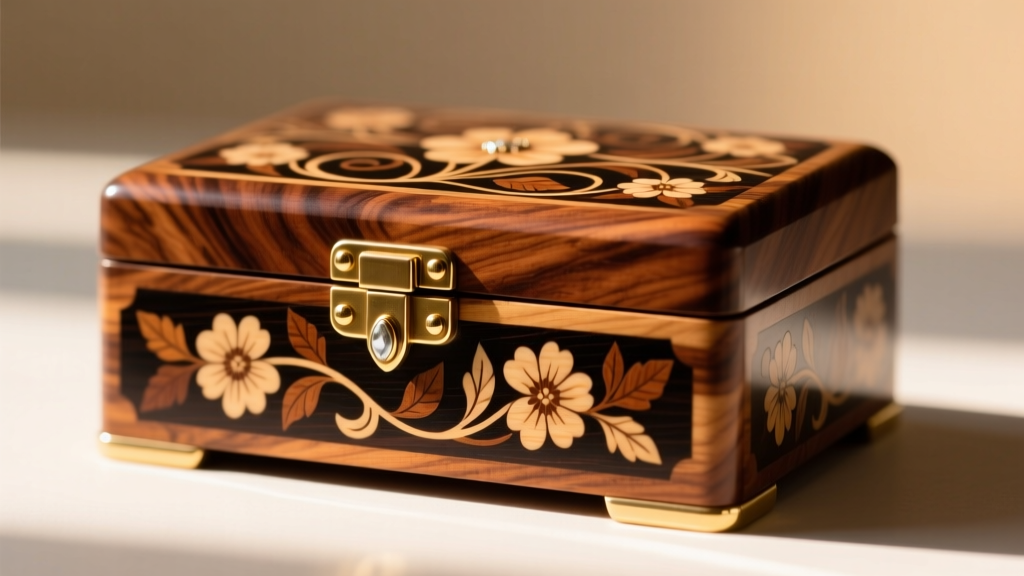
Wooden boxes featuring floral marquetry or inlay—such as Italian Sorrento ware or English Tunbridge ware—rely on the precision of the micro-mosaic wood pieces to create botanical patterns. The value here is dictated by the complexity of the inlay and the rarity of the veneer. Burl walnut, rosewood, and amboyna burl command top dollar ($200 to $500). A critical authentication step is checking the interior of the box; genuine vintage marquetry will often show slight, deliberate variations in the wood grain mapping, whereas modern laser-cut reproductions will look unnaturally uniform. According to data from Ruby Lane, verified mid-century Sorrento inlay boxes with complex floral rosettes have maintained strong value retention due to the near-extinction of traditional artisan workshops.
Molded Resin, Bakelite, and Celluloid
For strict budget buyers (under $60), vintage molded resin and celluloid boxes from the 1930s through the 1950s offer a highly accessible option. These boxes often feature high-relief, molded floral garlands or cameo-style roses. While visually striking, celluloid is inherently unstable. It is prone to off-gassing, which can actually accelerate the tarnishing of silver jewelry stored inside if the box is not properly ventilated. Furthermore, the material becomes brittle over time, making hinge-point cracking a ubiquitous failure mode. Budget accordingly: these are decorative, short-term storage solutions rather than generational investments.
The Hidden Value Indicators: Hardware and Lining
Amateur buyers focus entirely on the exterior floral motif; expert buyers inspect the hinges and the lining. These two elements dictate the functional lifespan of the box and its safety for storing precious metals and pearls.
Hardware: Brass vs. Stamped Steel
High-value vintage boxes utilize solid brass butt hinges, often with steel pins for structural rigidity. These hinges can be polished, re-tensioned, and repaired indefinitely. Budget-tier and mid-century mass-produced boxes frequently use stamped steel friction hinges or thin brass-plated zinc. If the plating is flaking to reveal grey zinc underneath, the hinge will eventually seize or snap. Replacing flush-mounted friction hinges on a porcelain or veneered box is exceptionally difficult and often damages the surrounding material, effectively destroying the box's value.
Lining Acidity and Degradation
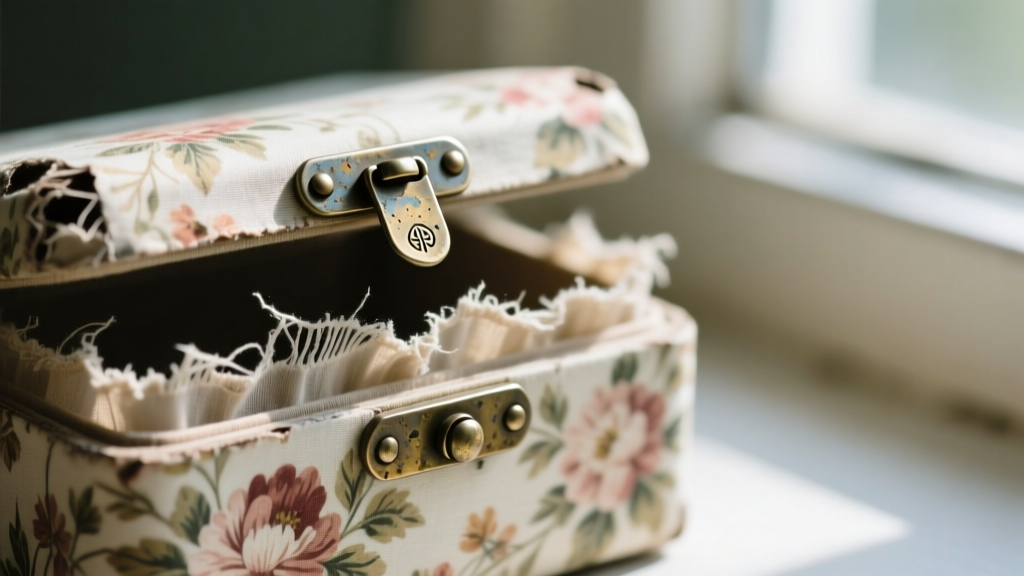
The interior lining is arguably the most crucial component for jewelry preservation. Many mid-century boxes were lined with synthetic rayon or early cellulose-based fabrics. As these materials degrade, they release acidic off-gases (including sulfur compounds and sulfuric acid vapors) that cause rapid, severe tarnishing of sterling silver and can permanently etch soft gemstones like pearls and opals. According to conservation guidelines from the Getty Conservation Institute, storing metals in acidic, degrading vintage textiles is a primary cause of irreversible surface pitting.
Expert Tip: Before purchasing any vintage floral jewelry box, perform the 'sniff test'. If the interior smells sharply of vinegar, old paper, or harsh chemicals, the lining is actively degrading and off-gassing. Factor in a $40 to $80 professional re-lining cost using acid-free silk velvet or archival-quality suede before finalizing your budget.
2026 Pricing Matrix: Budget vs. Investment Tiers
To streamline your purchasing decisions, refer to this market matrix based on current 2026 auction and curated retail data. This framework helps align your budget with realistic material expectations.
| Era / Style | Primary Material | Average Market Price | Value Retention | Common Failure Mode |
|---|---|---|---|---|
| 1950s Sorrento Inlay | Olive wood, micro-mosaic marquetry | $180 - $450 | High | Veneer lifting due to hide glue desiccation |
| 1920s Limoges | Porcelain, hand-painted floral, gilt | $300 - $850 | Very High | Gilt wear, hairline cracks near hinge mounts |
| 1970s Transferware | Ceramic, decal floral transfer | $45 - $120 | Moderate | Decal peeling, cheap steel hinge corrosion |
| 1940s Celluloid | Molded resin, high-relief roses | $25 - $65 | Low | Material brittleness, acidic off-gassing |
| 1980s Enamel over Copper | Copper base, cloisonné floral | $70 - $150 | Moderate | Enamel chipping, copper verdigris bleeding |
Critical Failure Modes and Restoration Economics
When evaluating a vintage floral jewelry box priced below market average, you must accurately estimate the restoration economics to determine if it represents true value or a money pit.
- Structural Veneer Lifting: If the floral marquetry is bubbling or lifting at the corners, the original animal hide glue has desiccated. Professional re-adhering and French polishing will cost between $90 and $150. Only attempt this on boxes with high intrinsic value (e.g., rare burl woods).
- Porcelain Hairline Cracks: A crack radiating from the hinge mount on a porcelain lid is a fatal flaw. The stress of opening and closing the lid will inevitably widen the crack. No amount of archival adhesive will restore its structural integrity for daily use. Avoid these entirely, regardless of the discount.
- Tarnished or Seized Hinges: Solid brass hinges that are merely tarnished can be cleaned with a mild, non-abrasive brass polish. However, if the hinge pin is seized or bent, extracting it without chipping the surrounding wood or porcelain requires a specialist, often costing more than the box itself.
Strategic Sourcing for the Budget-Conscious Collector
Where you buy dictates the premium you pay. Curated antique dealers and specialized vintage platforms like Kovels Antiques & Collecting or high-end Etsy sellers offer authenticated, restored pieces, but you will pay a 40% to 60% markup for their expertise and labor.
For maximum budget efficiency, target regional estate sales, local auction houses, and thrift stores in historically affluent neighborhoods. Sellers in these venues often lack the specialized knowledge to differentiate between a $50 transferware box and a $400 hand-painted Limoges piece. Bring a jeweler's loupe to inspect the floral brushwork and a small magnet to test the hinges (a magnet will stick to cheap stamped steel, but will not react to solid brass). By doing the authentication legwork yourself, you can acquire exceptional vintage floral jewelry boxes at a fraction of their curated retail value, ensuring your jewelry is stored in a piece that is as historically rich and beautiful as the collection it holds.


