Preserving a Vintage Pink Jewelry Box: Materials & Restoration
Discover expert techniques for restoring a vintage pink jewelry box. Learn about celluloid, enamel, and archival linings to protect your collection.

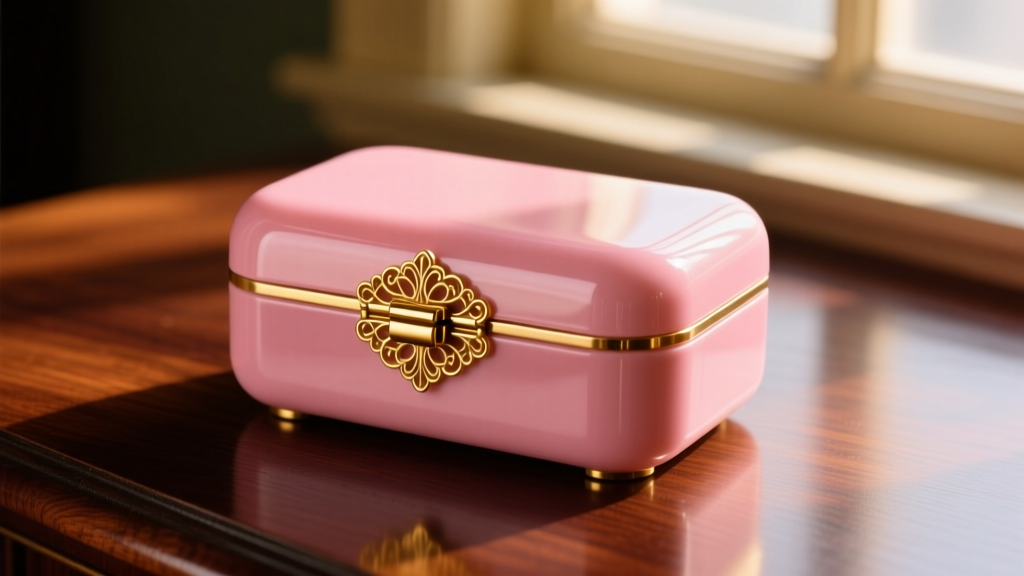
The allure of a vintage pink jewelry box lies in its romantic aesthetic, evoking the glamour of the Art Deco and Mid-Century eras. Whether finished in translucent guilloché enamel, glossy Bakelite, or early celluloid, these pieces are highly sought after by collectors and jewelry enthusiasts alike. However, beneath the beautiful pastel exteriors lies a complex web of material science challenges. As of 2026, conservation experts warn that the very materials used to construct these mid-century boxes can actively destroy the precious metals and gemstones stored inside them.
This expert deep dive explores the chemical realities of vintage pink plastics, the hidden dangers of period-accurate textile linings, and the precise archival restoration frameworks required to turn a beautiful antique into a safe, functional storage environment for high-value jewelry.
Material Identification: Celluloid, Bakelite, and Enamel
Before attempting any restoration or relining, you must accurately identify the exterior shell material. Pink jewelry boxes from the 1920s through the 1950s were predominantly crafted from three distinct materials, each with unique degradation profiles.
Celluloid and 'Celluloid Disease'
Celluloid, the first synthetic plastic, was created by combining nitrocellulose with camphor. It was frequently dyed in soft pinks and coral hues using early aniline dyes. While beautiful, celluloid is inherently unstable. As it degrades, it releases nitric acid and camphor gas—a process known as 'celluloid disease.' According to the American Institute for Conservation (AIC) Wiki, this acidic off-gassing creates a micro-environment inside the closed box that will rapidly corrode silver, copper, and brass jewelry. If your pink box has a distinct camphor or vinegar odor, it is likely celluloid and requires immediate intervention.
Bakelite (Phenol Formaldehyde)
Heavier and more durable than celluloid, Bakelite was often cast in opaque pastel pinks. It does not off-gas nitric acid, making it chemically safer for jewelry storage. However, Bakelite can suffer from 'bloom'—a white, powdery residue caused by the migration of unreacted phenol and formaldehyde to the surface when exposed to high humidity. This residue can transfer to porous gemstones like pearls and turquoise.
Guilloché Enamel over Metal
High-end vintage pink boxes often feature guilloché enamel, where translucent pink glass powder is fused over an engine-turned silver or copper base. The primary risk here is physical: micro-fractures in the glass enamel can trap moisture against the metal substrate, leading to subsurface oxidation that eventually pops the enamel off in shards.
The Hidden Danger: Acidic Linings and Tarnish Acceleration
The most critical failure point in any vintage pink jewelry box is the interior lining. Mid-century manufacturers frequently used silk, rayon, and early synthetic velvets dyed in complementary colors. Unfortunately, the chemical processes used to create vibrant pinks, reds, and blacks in the early 20th century relied heavily on sulfur-based mordants and dyes.
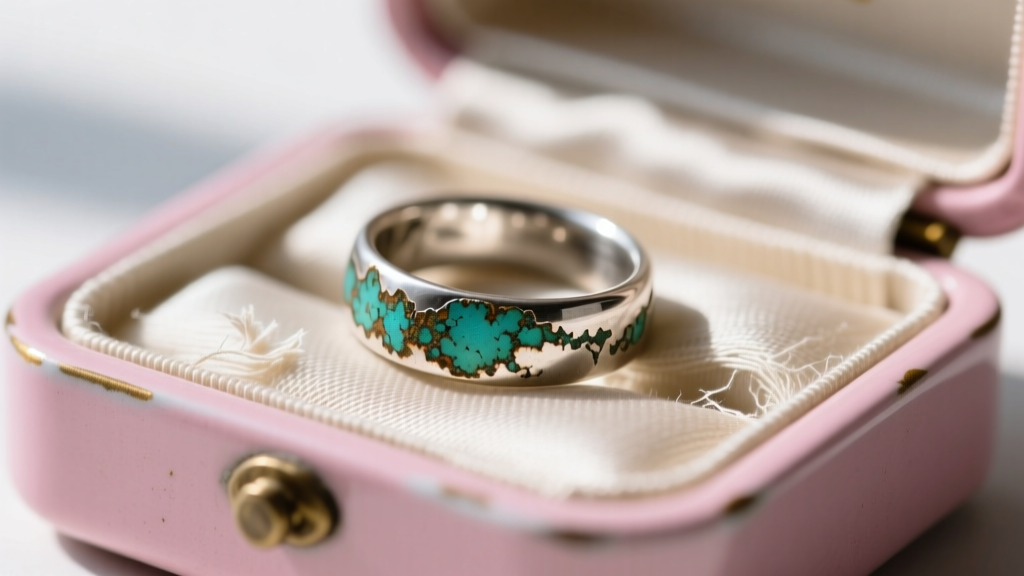
When a sterling silver necklace is stored in a sulfur-rich vintage textile, a chemical reaction occurs. The sulfur in the fabric combines with the silver to form silver sulfide (Ag2S), manifesting as a black tarnish layer. Furthermore, the polyvinyl acetate (PVA) glues used to adhere these fabrics to the cardboard or wood armatures break down over time, releasing volatile organic compounds (VOCs) that accelerate the oxidation of copper alloys and degrade the nacre of natural pearls.
Expert Insight: Never store unwrapped sterling silver or copper-alloy jewelry in a vintage box that retains its original 1930s-1950s textile lining. The aesthetic value of the original interior is vastly outweighed by the chemical damage it inflicts on your collection.
Step-by-Step Archival Restoration Framework
Transforming a vintage pink jewelry box into a safe storage vessel requires a systematic approach to stabilization and relining. The National Park Service (NPS) conservation guidelines emphasize reversible, non-destructive treatments for historical plastics and composites.
Step 1: Exterior Stabilization
For Bakelite and enamel exteriors, clean the surface with a mild, non-ionic surfactant (like Orvus WA Paste) diluted in distilled water. Avoid alcohol or ammonia, which will strip the aniline dyes from celluloid and cloud early plastics. Once dry, apply a microcrystalline wax, such as Renaissance Wax, to seal the surface against ambient humidity and prevent further oxidation or bloom.
Step 2: Archival Re-Lining
Removing the original lining requires careful mechanical scraping and the use of localized heat to soften aged PVA glues without warping the structural cardboard. Once the substrate is bare and neutralized, you must select an appropriate archival lining.
| Lining Material | Archival Safety | Tarnish Prevention Mechanism | Approx. Cost (per yard) |
|---|---|---|---|
| Pacific Silvercloth | Excellent | Active (Embedded silver particles absorb H2S gas) | $45 - $65 |
| Acid-Free Buffered Tissue | Excellent | Passive (Physical barrier, neutralizes acids) | $15 - $25 |
| Zenplex Archival Polyethylene | Excellent | Passive (Completely inert, no off-gassing) | $80 - $120 |
| Traditional Silk/Rayon | Poor | Negative (Sulfur dyes accelerate tarnishing) | $20 - $40 |
For high-value silver collections, lining the primary compartments with Pacific Silvercloth is the gold standard. For gold, platinum, and diamond jewelry, a neutral Zenplex foam or acid-free buffered tissue over a cotton flannel base provides excellent cushioning without chemical interference.
Climate Control and Storage Mechanics
Even with perfect archival linings, the macro-environment surrounding your vintage pink jewelry box dictates its longevity. Plastics like celluloid and Bakelite are highly sensitive to thermal expansion and moisture fluctuations.
- Relative Humidity (RH): Maintain a strict RH between 45% and 55%. Levels above 60% will cause cardboard armatures to swell and delaminate, while levels below 35% will cause celluloid to shrink, crack, and accelerate camphor loss.
- Temperature: Keep the storage area between 65°F and 70°F (18°C - 21°C). Avoid placing the box near HVAC vents, radiators, or in direct sunlight, as UV radiation will rapidly bleach the delicate pink aniline dyes into a sickly yellow.
- Airflow: If the box is confirmed to be celluloid, it must be stored in a well-ventilated area or alongside activated charcoal sachets to absorb acidic off-gassing. Never seal a degrading celluloid box inside an airtight plastic bin, as the trapped nitric acid will destroy both the box and its contents.
Sourcing Authentic Replacement Hardware
The structural integrity of a vintage box relies heavily on its hardware. Mid-century pink boxes often featured stamped brass or gold-plated steel hinges, piano wire hinges, and delicate push-button clasps. Over decades of use, the soft brass pins wear down, causing the heavy lid to sag and stress the fragile celluloid or enamel spine.
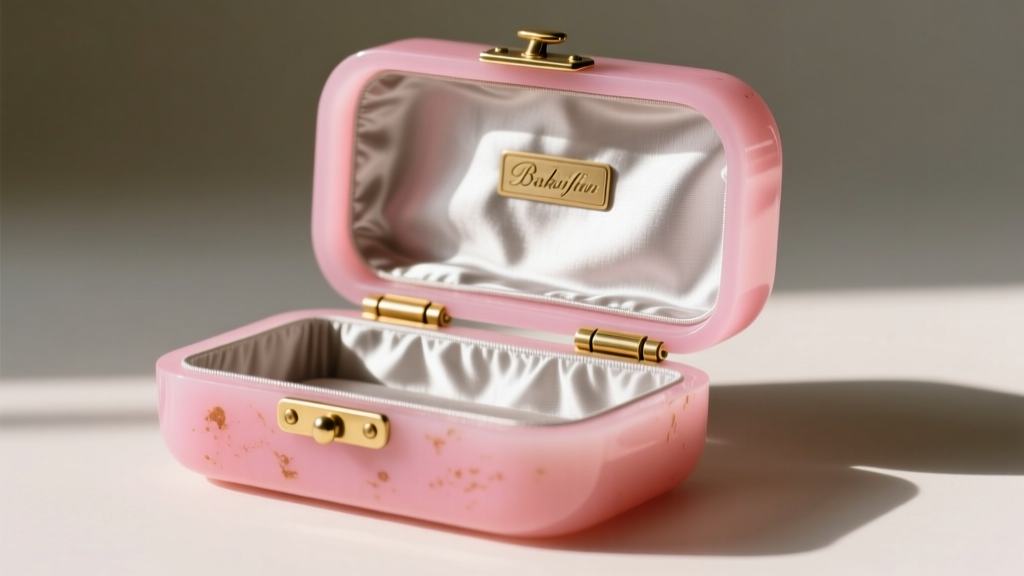
When restoring the hardware, avoid modern steel replacements, which will introduce galvanic corrosion if they touch original brass components. Instead, source solid brass or nickel-silver replacement hinges from specialized conservation suppliers. If the original clasp is broken, a custom-fabricated brass hook-and-eye mechanism can be installed using conservation-grade epoxy (such as Paraloid B-72 mixed with glass microballoons), ensuring the repair is reversible and does not require drilling new holes into the fragile vintage plastic.
Conclusion: Balancing Aesthetics and Preservation
Owning a vintage pink jewelry box is a privilege that requires a stewardship mindset. By understanding the chemical composition of mid-century plastics and the hidden dangers of period textiles, collectors can make informed decisions about restoration. For further guidance on caring for precious metals and gemstones, consult the Gemological Institute of America (GIA) jewelry care resources. Ultimately, the goal of expert restoration is not to erase the history of the piece, but to stabilize its materials so it can safely protect your jewelry for another century.


