Expert IKEA Jewelry Storage Hacks for Fine Collections
Discover expert IKEA jewelry storage hacks to transform basic units into archival-grade displays. Learn anti-tarnish mods and weight limits.

The Engineering Reality of Flat-Pack Jewelry Storage
When building a comprehensive collection, enthusiasts often overlook the chemical and structural realities of mass-market furniture. While IKEA offers modular brilliance and aesthetic flexibility, the default materials used in their flat-pack lines pose severe risks to fine jewelry. Unsealed Medium-Density Fiberboard (MDF) and particleboard are bound with urea-formaldehyde resins. As these materials cure and age, they release volatile organic compounds (VOCs) and acidic gases. According to the American Institute for Conservation, acidic off-gassing from unsealed wood enclosures accelerates silver sulfide formation (tarnish) and permanently degrades the nacre of natural pearls.
Transforming standard IKEA units into an archival-grade IKEA jewelry storage system requires a technical understanding of material science, load distribution, and micro-climate control. This guide bypasses basic aesthetic hacks and dives into the engineering modifications necessary to protect high-carat gold, platinum, and porous gemstones from structural and chemical degradation.
Modifying the MOPPE Mini-Drawers for Archival Preservation
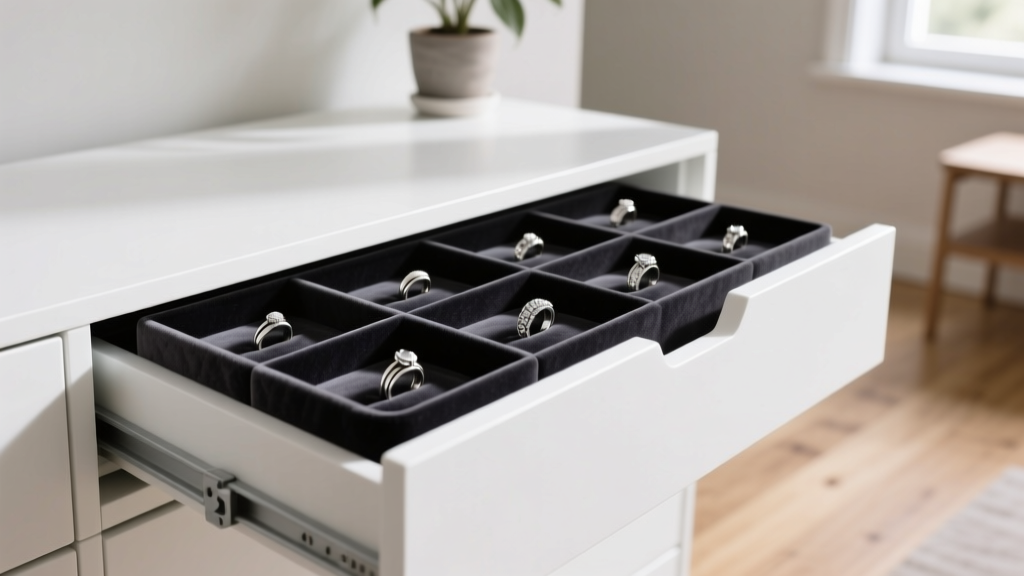
The IKEA MOPPE mini-drawer unit is a staple for small-item organization, measuring exactly 13 3/4" x 9 7/8" x 5". However, its raw MDF interior acts as an acid trap. Before placing any fine jewelry inside, the substrate must be hermetically sealed.
Sealing the Particleboard: Off-Gassing Prevention
Standard hardware store polyurethane often contains solvents that can cloud gemstones and damage porous stones like turquoise or opals. Instead, utilize a water-based, low-VOC sealant specifically designed for archival environments, such as AFM Safecoat Hard Seal or a specialized water-based polycrylic.
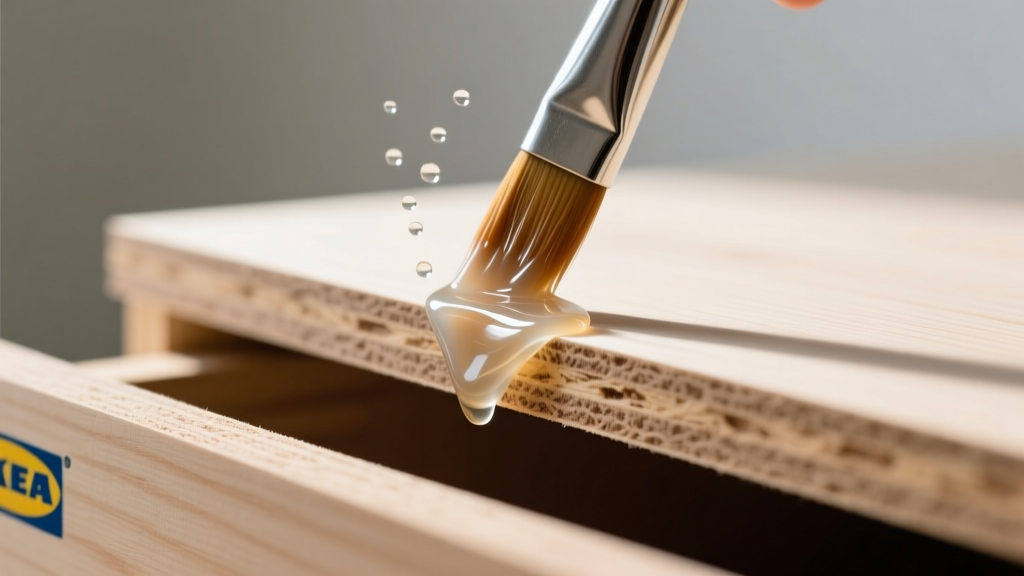
- Disassembly: Completely disassemble the MOPPE drawers. Sealing must occur on all six sides of each drawer component, including the hidden bottom panels.
- Application: Apply three thin coats of the water-based sealant using a high-density foam brush. Allow a full 24-hour curing period between coats in a climate-controlled room (68°F to 72°F).
- Off-Gassing the Sealant: Even water-based sealants require time to fully polymerize. Allow the sealed drawers to cure in a ventilated area for 14 days before introducing any jewelry.
Upgrading Drawer Inserts with Anti-Tarnish Textiles
Once sealed, the drawers must be lined. Avoid standard craft felt, which often contains sulfur-bearing dyes and recycled synthetic fibers that trap moisture. The industry standard for archival silver storage is Pacific Silvercloth, a 100% cotton flannel embedded with microscopic silver particles that intercept and neutralize hydrogen sulfide gases before they reach your jewelry. Cut the Silvercloth to the exact interior dimensions of the MOPPE drawers (12 1/4" x 8 1/4") and adhere it using 3M 9080 double-sided tape, which utilizes an archival-safe, acid-free acrylic adhesive that will not leach into the textile over time.
Reinforcing Glass Cabinetry for Heavy Metals
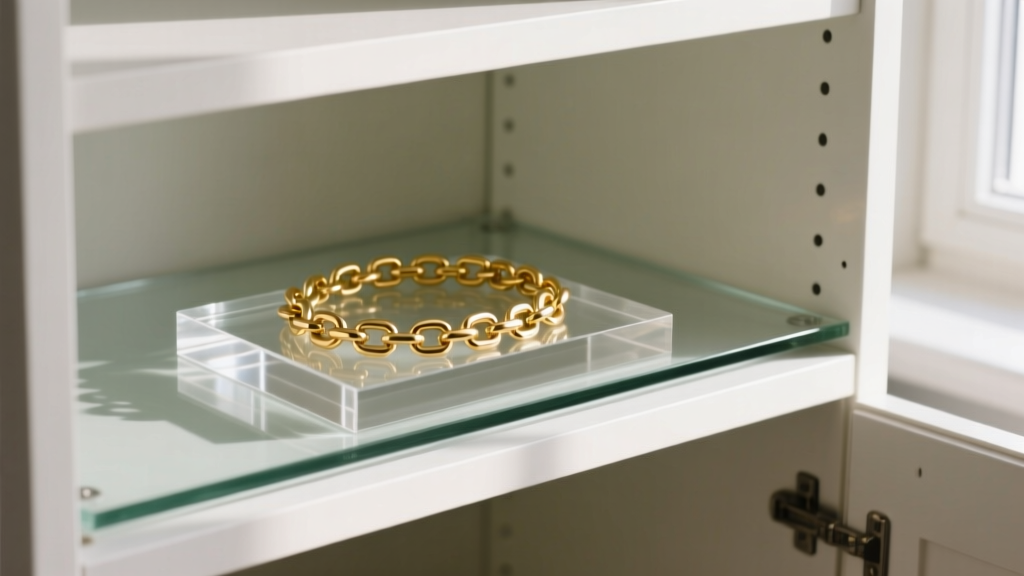
Display cabinets like the IKEA VITTSJÖ or GLASSISG are visually striking for exhibiting statement necklaces and heavy gold chains. However, these units utilize tempered glass shelves that are typically 5mm thick. While tempered glass boasts high compressive strength, it is highly vulnerable to concentrated point-loads.
A dense 18k gold chain or a platinum display stand resting on a small footprint creates a localized stress vector. Over time, or with minor environmental vibrations, this point-load can cause spontaneous glass shattering. To mitigate this, you must convert point-loads into distributed loads.
Acrylic Load Distribution Method
Purchase 1/4-inch thick cast acrylic sheets (extruded acrylic is prone to bowing under sustained weight). Cut the acrylic to span the entire width and depth of the glass shelf, resting directly on the metal support pins. The cast acrylic acts as a structural diaphragm, distributing the weight of heavy jewelry pieces evenly across the entire surface area of the tempered glass. Furthermore, the Gemological Institute of America (GIA) recommends avoiding direct contact between porous gemstones and cold glass surfaces, which can cause thermal shock or micro-abrasions; the acrylic layer provides a safer, slightly yielding thermal buffer.
| IKEA Model | Primary Material | Max Distributed Load | Max Point-Load | Required Modification |
|---|---|---|---|---|
| MOPPE | Unsealed MDF | 11 lbs (per drawer) | N/A | 3-coat water-based sealant |
| VITTSJÖ | 5mm Tempered Glass | 33 lbs (per shelf) | 4 lbs | 1/4" Cast acrylic diaphragm |
| GLASSISG | 4mm Tempered Glass | 22 lbs (per shelf) | 3 lbs | Neoprene weight-dispersing pads |
| KALLAX | Particleboard/Honeycomb | 55 lbs (per cube) | 15 lbs | Steel L-bracket corner bracing |
Integrating Micro-Climate Controls and Security
Fine jewelry storage is not just about physical organization; it is about atmospheric stabilization. Fluctuations in relative humidity (RH) cause metal expansion and contraction, which can loosen pavé diamond settings and crack emerald inclusions.
Silica Gel Integration
To maintain a stable 45-50% RH inside enclosed IKEA cabinets, integrate indicating silica gel cassettes. These cassettes change color (typically from orange to green) when saturated, providing a visual cue for regeneration. Mount these cassettes to the interior side panels of the VITTSJÖ using archival mounting squares, ensuring they do not block the door seals. Avoid loose silica packets, which can tear and release abrasive crystalline dust onto polished metal surfaces.
Non-Destructive Security Upgrades
Standard IKEA magnetic catches are designed for child safety, not theft deterrence, and fail under minimal lateral torque. Upgrade the door closures using 3M VHB tape-mounted magnetic cabinet locks. VHB (Very High Bond) tape provides a structural adhesive bond to the metal frames of IKEA glass cabinets without requiring drilling, which would void the warranty and compromise the tempered glass integrity. Pair these with a concealed magnetic key stored in a separate biometric safe.
"The longevity of fine jewelry is dictated as much by the chemistry of its storage environment as by the metallurgy of the piece itself. Unsealed wood is an active chemical agent, not a passive container." — Archival Conservation Guidelines for Metals
Final Assembly and Maintenance Checklist
To ensure your modified IKEA jewelry storage system remains structurally sound and chemically inert, adhere to this bi-annual maintenance protocol:
- Inspect Sealant Integrity: Check the interior corners of MDF units for micro-cracking in the polyurethane layer. Touch up with a fine artist's brush if the substrate is exposed.
- Regenerate Desiccants: Bake indicating silica cassettes at 250°F for 3 hours to restore their moisture-absorbing capacity. Never microwave them, as uneven heating can melt the plastic housing.
- Textile Rotation: Pacific Silvercloth loses efficacy once the embedded silver particles are fully converted to silver sulfide (indicated by a dark black color). Replace drawer liners every 3 to 5 years depending on ambient sulfur levels.
- Hardware Tension: Flat-pack cam locks loosen over time due to seasonal humidity changes causing the particleboard to swell and contract. Retorque all metal cam locks with a hex key every 12 months to prevent catastrophic structural racking.
By treating mass-market furniture as a foundational substrate rather than a finished product, collectors can engineer an IKEA jewelry storage environment that rivals custom-built, museum-grade vitrines at a fraction of the cost. The key lies in respecting the material limitations and systematically neutralizing chemical and structural threats.


