Jewelry Box Ballerina Materials: Wood vs Leather Guide
Discover how exterior and interior materials in a jewelry box ballerina impact tarnish prevention, durability, and mechanism lifespan.

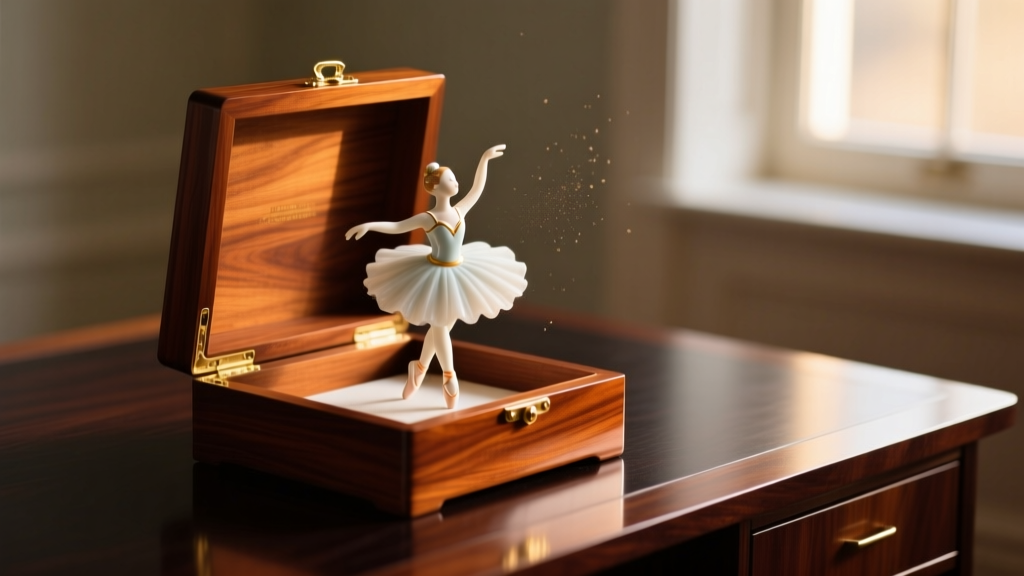
The Anatomy of Preservation: Beyond the Melody
When collectors and enthusiasts search for a classic jewelry box ballerina, the focus is often on the aesthetic charm of the spinning figurine and the nostalgia of the musical movement. However, from a material science and conservation perspective, the true value of these storage vessels lies in their exterior shells and interior linings. In 2026, with the rise of advanced anti-tarnish textiles and engineered composites, understanding the physical and chemical properties of your jewelry box is critical for preventing silver sulfide formation, protecting gemstone prongs, and ensuring the longevity of the mechanical core.
Exterior Shell Materials: Structural Integrity vs. Aesthetics
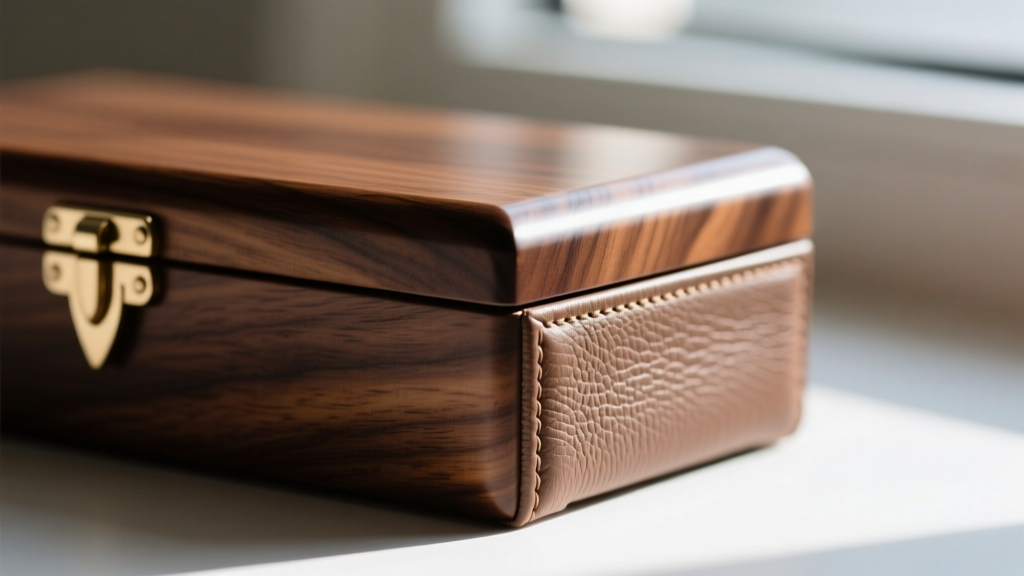
The exterior of a ballerina jewelry box dictates its dimensional stability, hinge longevity, and resistance to environmental fluctuations. We categorize the market into three primary material grades.
Solid Hardwoods (Walnut, Mahogany, Oak)
High-end ballerina boxes are crafted from kiln-dried solid hardwoods. These materials offer superior screw-holding strength for brass hinges, preventing the lid from sagging over decades of use. However, wood is hygroscopic. According to conservation standards, solid wood requires an ambient relative humidity (RH) between 40% and 50%. If the RH drops below 30%, the wood cells lose moisture, leading to micro-fissures that can compromise the structural integrity of the music box mounting plate.
Engineered Wood (MDF and Particleboard)
The majority of mid-tier boxes utilize Medium Density Fiberboard (MDF) with a density of 700–800 kg/m³. MDF is dimensionally stable and resists warping, making it an excellent acoustic dampener for the music box mechanism. The critical failure mode for MDF is hinge tear-out. Because MDF lacks the interlocking grain structure of solid wood, repeated opening and closing can strip the hinge screws. Premium manufacturers mitigate this by embedding internal hardwood blocks at the hinge stress points.
Polyurethane (PU) Leather Wraps
Budget-friendly options often feature an MDF core wrapped in PU leather. While this provides a luxurious tactile feel, PU leather is susceptible to hydrolysis—a chemical breakdown caused by moisture in the air. Over a 3-to-5-year lifespan, the polyurethane chains break down, resulting in the characteristic flaking and peeling. For long-term heirloom storage, PU-wrapped boxes should be kept in climate-controlled environments with silica gel desiccant packets to slow the hydrolysis process.
Interior Linings: The Anti-Tarnish Battlefield
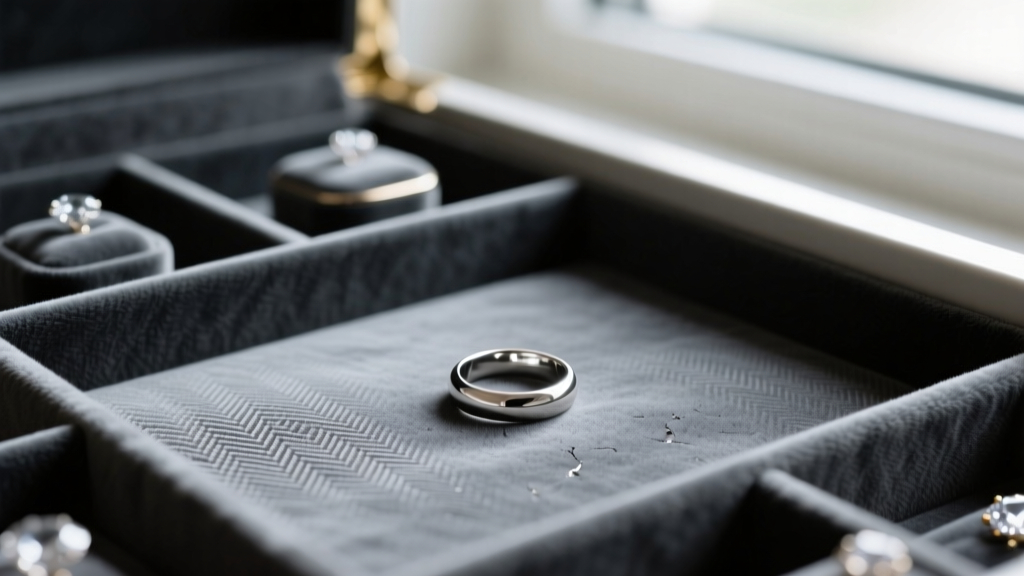
The interior environment of a jewelry box ballerina is where the battle against tarnish is won or lost. Tarnish on sterling silver is primarily silver sulfide (Ag2S), created when silver reacts with hydrogen sulfide (H2S) gas present in ambient air. The Gemological Institute of America (GIA) emphasizes that proper storage is the first line of defense against this chemical reaction.
Traditional Velvet vs. Microfiber
Historically, cotton or silk-blend velvet was the standard lining. While visually opulent, natural fibers can trap ambient moisture and, in some cases, emit trace acidic vapors from the dyes used during manufacturing. Modern microfiber (a polyester-polyamide blend) is vastly superior. It is chemically inert, lint-free, and does not retain moisture, making it a safe baseline for gold and platinum storage.
Pacific Cloth and Anti-Tarnish Suede
For sterling silver and copper pieces, standard microfiber is insufficient. Premium 2026 jewelry boxes utilize treated anti-tarnish suede or Pacific cloth. These textiles are impregnated with microscopic particles of zinc or copper. These metals act as sacrificial anodes; they have a higher oxidation potential than silver, meaning the hydrogen sulfide in the air reacts with the zinc/copper particles in the fabric rather than your silver jewelry. The Assay Office London notes that controlling the micro-environment is essential for preserving hallmarked silver.
Material Comparison Matrix
| Component | Material Grade | Moisture Permeability | Tarnish / Damage Risk | Expected Lifespan | Price Tier |
|---|---|---|---|---|---|
| Exterior | Solid Walnut | High (Hygroscopic) | Low (if RH controlled) | 50+ Years | $$$ |
| Exterior | MDF Core | Low | Medium (Hinge tear-out) | 15-20 Years | $$ |
| Exterior | PU Leather Wrap | Very Low | High (Hydrolysis peeling) | 3-7 Years | $ |
| Interior | Cotton Velvet | High (Traps moisture) | High (Accelerates Ag2S) | N/A | $ |
| Interior | Microfiber | Low | Low (Inert) | 10+ Years | $$ |
| Interior | Anti-Tarnish Suede | Low | None (Sacrificial anode) | 2-3 Years (until saturated) | $$$ |
The Mechanical Core: Metallurgy of the Music Movement
The defining feature of a jewelry box ballerina is the mechanical music movement. The material quality of this mechanism directly impacts the acoustic resonance and the physical vibration transferred to the jewelry stored inside.
- Sankyo Movements (Japan): The gold standard. These utilize precision-stamped brass gears and high-carbon steel spring mainsprings. The metallurgy ensures smooth torque delivery, preventing the sudden jerky starts that can cause delicate pearl necklaces to slap against the interior walls.
- Yunsheng Movements (China): Common in mid-range boxes. Modern iterations use POM (polyoxymethylene) polymer gears. While POM is highly durable and self-lubricating, it lacks the acoustic warmth of brass, resulting in a slightly more metallic, tinny resonance.
The centrifugal fan governor, typically made of stamped tin or lightweight aluminum, regulates the tempo. High-end boxes mount the movement on a dense EVA (ethylene-vinyl acetate) foam pad. This acoustic decoupling prevents the 400Hz-800Hz vibrations from traveling through the wood and causing micro-abrasions on soft gemstones like opals or turquoise resting in the lower drawers.
Expert Maintenance Rule: Never overwind the mainspring of a ballerina music box. Most 18-note movements have a physical stopper mechanism. Forcing the key past this point will overstress the high-carbon steel spring, leading to catastrophic metallurgical fatigue and snapping.
Environmental Troubleshooting and Care
To maximize the lifespan of your jewelry box ballerina and its contents, implement the following environmental controls:
- Desiccant Placement: Place a 5-gram silica gel packet in the lower drawer. Avoid direct contact with the wood or PU leather to prevent localized drying or chemical transfer.
- UV Protection: Keep the box out of direct sunlight. UV radiation accelerates the photodegradation of both PU leather exteriors and the dyed interior microfiber linings.
- Anti-Tarnish Refresh: If your box features anti-tarnish suede, remember that the sacrificial metals oxidize over time. Replace the fabric lining every 24 to 36 months to maintain maximum H2S absorption.
- Hinge Maintenance: Solid wood boxes with brass hinges may develop squeaks or stiffness over decades. Apply a microscopic drop of synthetic PTFE (Teflon) lubricant to the hinge pin. Avoid petroleum-based oils like WD-40, which attract dust and can emit volatile organic compounds (VOCs) that accelerate silver tarnish.
Final Verdict on Material Selection
Choosing the right jewelry box ballerina requires looking past the porcelain figurine and evaluating the material science of the storage environment. For heirloom silver and gold pieces, invest in a solid hardwood exterior paired with an anti-tarnish suede interior. For everyday fashion jewelry, a well-constructed MDF box with a microfiber lining and POM-gear movement offers the best balance of acoustic charm, dimensional stability, and budget-friendly preservation.


