Over Door Jewelry Armoire Buying Guide: What to Look For
Discover what to look for in an over door jewelry armoire. Learn about door clearance, anti-tarnish linings, mirror safety, and interior layouts.

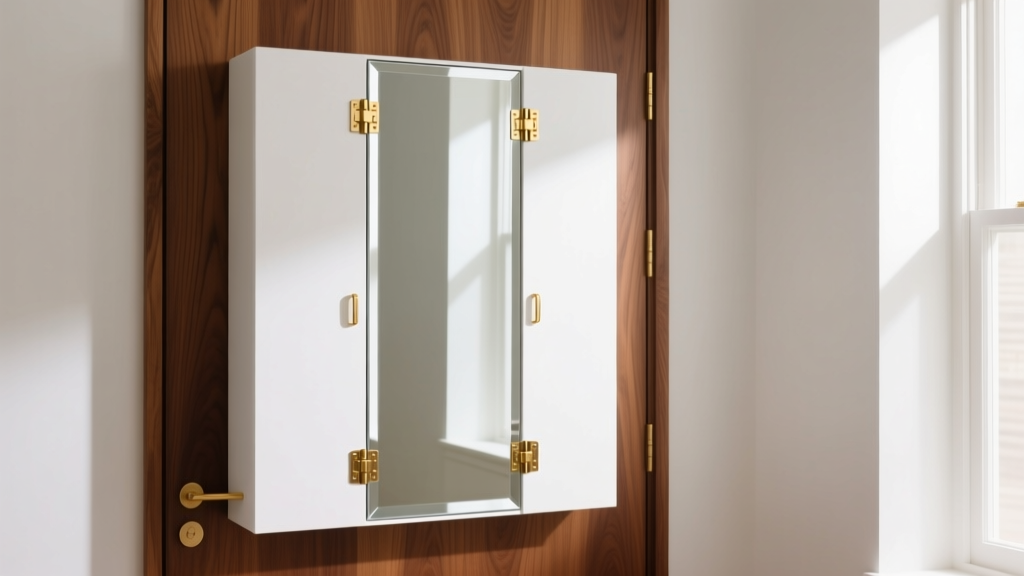
As jewelry collections grow and floor space becomes increasingly precious, the over door jewelry armoire has emerged as a staple for modern organization. By utilizing the often-wasted vertical space on the back of a bedroom or closet door, these units offer a dual-purpose solution: a full-length dressing mirror on the outside and a high-capacity, concealed storage vault on the inside. However, not all armoires are created equal. A poorly designed unit can scratch your doors, tarnish your silver, and shatter under the stress of daily use.
This comprehensive buying guide breaks down the critical engineering, material, and spatial considerations you must evaluate before purchasing an over-the-door jewelry cabinet in 2026.
The Spatial Advantage: Why Go Over-the-Door?
A standard freestanding jewelry armoire requires roughly 2 to 3 square feet of floor space and often obstructs natural walking paths in smaller bedrooms. An over door jewelry armoire, by contrast, operates within the existing architectural envelope of the room. Most units measure between 45 and 55 inches in height and 14 to 18 inches in width, providing the equivalent storage capacity of a 6-drawer dresser while remaining entirely out of the way. Furthermore, the integration of a full-length mirror eliminates the need for a separate dressing mirror, making it an ideal choice for compact living spaces, dorm rooms, and walk-in closets.
Door Clearance & Mounting Hardware: The Make-or-Break Factor
The most common point of failure—and the leading cause of returns—for over-the-door furniture is improper clearance mapping. Before purchasing, you must measure both your door thickness and the top gap between the door and the frame.
Door Thickness Standards
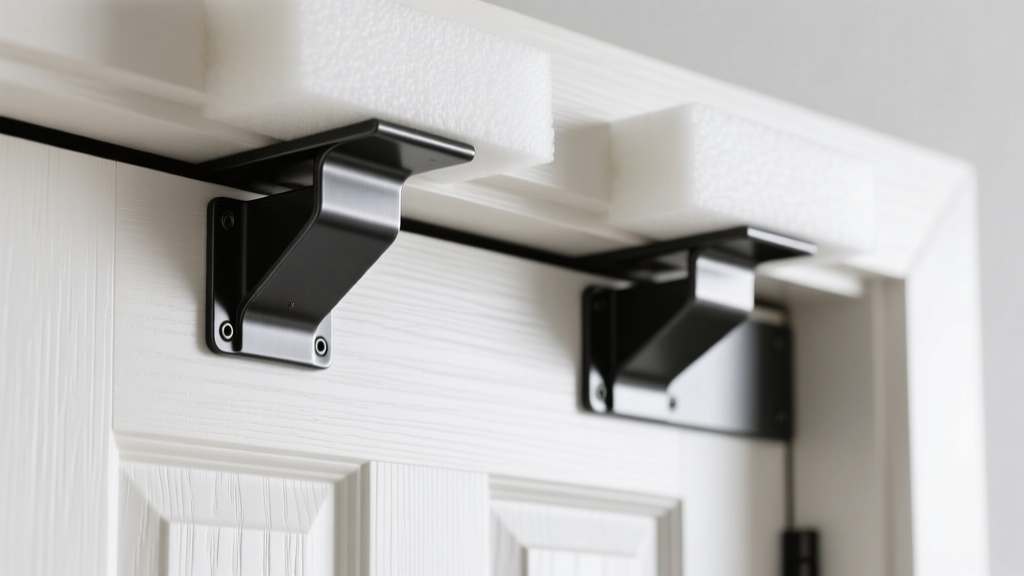
In North America, standard interior hollow-core doors are typically 1-3/8 inches (35mm) thick, while solid wood, exterior, or heavy closet doors measure 1-3/4 inches (45mm). If the armoire’s top brackets are fixed at a narrow width, they will scratch the finish of a thicker door or fail to hook over it entirely. Always look for units that include adjustable over-door brackets or multiple hook depth options.
| Door Type | Standard Thickness | Required Bracket Style |
|---|---|---|
| Interior Hollow-Core | 1-3/8 inches (35mm) | Standard Hook or Slim Adjuster |
| Solid Wood / Exterior | 1-3/4 inches (45mm) | Wide Adjuster or Offset Hinge |
| Fire-Rated / Commercial | 2-1/4+ inches (57mm+) | Wall-Mount or Custom Bracket |
Top Gap and Friction Padding
Measure the gap between the top of your door and the door frame. Many modern homes have a clearance of only 1/8 to 1/4 inch. If the armoire's metal hooks require a 1/2 inch gap, your door will not close. Premium models feature ultra-slim, low-profile steel hooks. Additionally, ensure the back of the armoire and the inside of the door hooks are lined with high-density EVA foam or felt padding. This prevents the unit from scraping the door's paint or veneer when the door is opened or closed forcefully.
Interior Linings: Anti-Tarnish Technology Explained
The interior environment of a jewelry armoire is just as critical as its exterior durability. According to the Jewelers of America, improper storage is a leading cause of accelerated tarnishing and gemstone degradation. When silver is exposed to hydrogen sulfide and moisture in the air, it forms silver sulfide, resulting in a dull, blackened surface.
The Danger of Untreated Velvet
Many budget-friendly armoires use standard poly-cotton velvet linings. While soft to the touch, untreated synthetic velvet can trap ambient humidity against your metals, creating a microclimate that accelerates tarnishing. Furthermore, cheap dyes used in low-grade velvet can sometimes off-gas or transfer onto porous gemstones like pearls and turquoise.
What to Look For: LusterLoc and Pacific Cloth
When evaluating an over door jewelry armoire, look for explicit mentions of anti-tarnish treatments. Technologies like LusterLoc™ or linings infused with Pacific Silvercloth materials are treated with zinc or silver nanoparticles. These treatments act as a sacrificial barrier, intercepting sulfide gases and neutralizing them before they can reach your jewelry. The Gemological Institute of America (GIA) also recommends storing sensitive pieces in airtight, anti-tarnish pouches even within a treated armoire for maximum preservation.
Mirror Quality and Safety Standards
Because an over door jewelry armoire is mounted on a moving hinge (the door itself), the mirror is subjected to constant kinetic shock every time the door is opened, closed, or slammed. Standard glass is a severe safety hazard in this application.
- Shatterproof Safety Film: This is non-negotiable. Ensure the mirror features an adhesive shatterproof backing (often a polyethylene film). If the glass breaks from impact, the film holds the shards together, preventing dangerous glass shards from falling onto the floor or scratching the door.
- Silver-Backed vs. Aluminum-Backed: Premium armoires use silver-backed mirrors, which offer superior reflectivity, resist edge-creep (blackening at the borders), and provide a truer color rendition for checking outfits. Aluminum-backed mirrors are cheaper but prone to oxidizing and clouding over time in humid environments like en-suite bathrooms.
- Beveled Edges: A beveled edge not only adds an elegant, framed aesthetic without the bulk of actual wood framing, but it also slightly reduces the sharpness of the glass perimeter, offering a minor safety benefit during installation.
Capacity Planning: Matching Storage to Your Collection
An armoire is only useful if its interior geometry matches the specific types of jewelry you own. A common mistake is buying a unit with excellent ring storage but inadequate necklace clearance.
Necklace Drop Zones
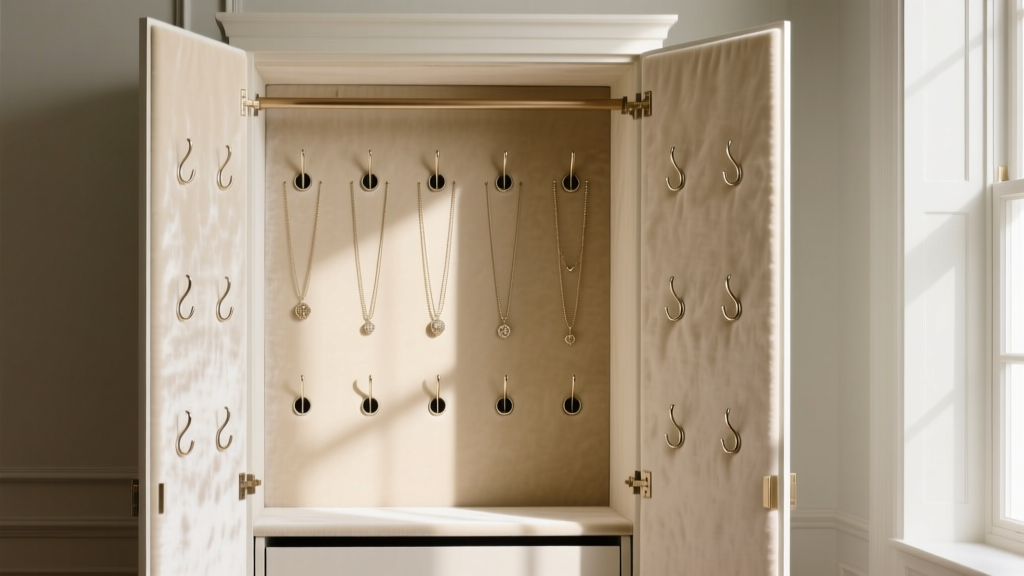
Standard necklace hooks in budget armoires offer a 10 to 12-inch drop. While fine for chokers and princess-length chains, this is entirely insufficient for opera-length (26 to 36 inches) or lariat necklaces, which will pool at the bottom and tangle. Look for an over door jewelry armoire that features at least one dedicated "long drop" zone with a minimum of 18 to 24 inches of vertical clearance, or a door-mounted attachment panel that can be lowered for extra length.
Ring Rolls vs. Flat Slots
For rings, consider your band widths. Standard velvet ring rolls are designed for delicate bands (2mm to 4mm). If you collect chunky signet rings, wide cocktail rings, or men's bands, tight ring rolls will stretch the velvet and make retrieval difficult. In this case, prioritize armoires that offer flat, individual ring slots or removable ring trays over tightly packed cylindrical rolls.
Earring Storage Dynamics
Stud earrings and hook wires require entirely different storage solutions. Ensure the armoire features a mix of pierced holes (for standard stud posts) and horizontal slotted velvet strips (for French wire and fishhook earrings). Some advanced 2026 models include magnetic backing plates specifically designed to hold heavy, oversized statement earrings without tearing the fabric.
Weight Capacity and Hinge Durability
A fully loaded jewelry armoire—packed with heavy metal bangles, gemstone necklaces, and glass perfume bottles on the top shelf—can easily exceed 30 to 40 pounds. The structural integrity of the cabinet and its hinges is paramount.
Avoid armoires constructed from low-density particleboard, which can strip and crumble around the screw joints under heavy loads. Medium-Density Fiberboard (MDF) or engineered hardwood composites offer much better screw retention and weight distribution. Finally, inspect the hinges connecting the mirror door to the back cabinet. Cheap, exposed butt hinges will inevitably sag over time, causing the door to scrape the interior velvet. Look for heavy-duty, concealed European hinges or continuous steel piano hinges that distribute the weight evenly across the entire vertical span of the unit.
Final Verdict: Prioritizing Longevity
Investing in a high-quality over door jewelry armoire is an investment in the longevity of your jewelry collection. By prioritizing adjustable mounting hardware, verified anti-tarnish interior linings, shatterproof silver-backed mirrors, and robust hinge construction, you can secure a storage solution that protects your valuables while maximizing your bedroom's spatial efficiency. Always measure your door's exact dimensions before checkout, and prioritize structural safety over superficial aesthetic details.


