The Ultimate Guide to Choosing and Fixing a Jewelry Box Latch
Learn how jewelry box latch mechanisms work, compare brass vs. zinc alloys, and discover step-by-step fixes for sticky or broken clasps.

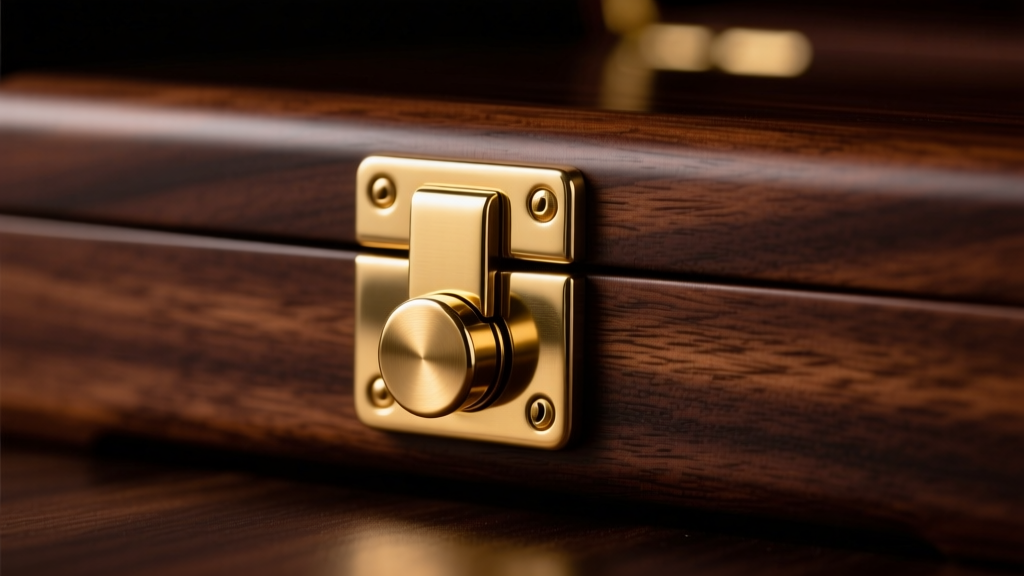
Why the Jewelry Box Latch Matters More Than You Think
When beginners shop for jewelry storage, they typically obsess over the exterior finish, the plushness of the velvet interior, or the number of compartments. However, the most critical mechanical component of any storage unit is often the most overlooked: the jewelry box latch. This tiny piece of hardware does far more than keep your lid closed. It is the primary gatekeeper of your jewelry’s micro-climate, dictating the compression of the interior seal and directly influencing how quickly your silver tarnishes or your pearls dry out.
In this beginner-friendly explainer, we will deconstruct the mechanics of jewelry box latches, compare the metallurgy of common hardware materials, and provide actionable, step-by-step troubleshooting for when your hardware fails. Whether you are restoring a vintage mahogany box or upgrading a modern travel case, understanding your latch is the first step toward true jewelry preservation.
The Anatomy of a Jewelry Box Latch: Three Common Mechanisms
Not all latches operate on the same physical principles. The mechanism you choose affects both the security of your pieces and the airtightness of the storage environment. Here are the three most prevalent designs found in modern and antique storage.
1. The Push-Button (Spring-Loaded) Latch
Common on mid-century and contemporary wooden boxes, the push-button latch relies on an internal spring and a beveled metal pin. When the lid closes, the strike plate pushes the pin inward until it drops into a recessed hole with an audible 'click.' For a proper seal, the pin depth must be precisely calibrated—usually between 1.5mm and 2.5mm. If the tolerance is too loose, the lid will rattle; if it is too tight, the velvet weatherstripping won't compress enough to block airborne sulfur.
2. Magnetic Catch Systems
Favored in modern leather travel cases and minimalist acrylic displays, magnetic latches use embedded neodymium magnets (typically N42 or N52 grades). They offer a seamless, silent closure and require zero manual dexterity. However, beginners must be cautious: a poorly shielded N52 magnet can generate a pull force of up to 5 lbf (pounds-force), which is strong enough to magnetize mechanical watch movements or erase magnetic stripe cards if stored in close proximity.
3. The Traditional Hasp and Clasp
Found on high-end, heirloom-quality boxes, the hasp and clasp requires manual engagement. While it demands more effort to open, it provides the highest degree of mechanical compression. By physically pulling the clasp over the strike plate, you can achieve 3mm to 4mm of velvet compression, creating a near-hermetic seal that is ideal for storing highly reactive metals like raw silver or copper.
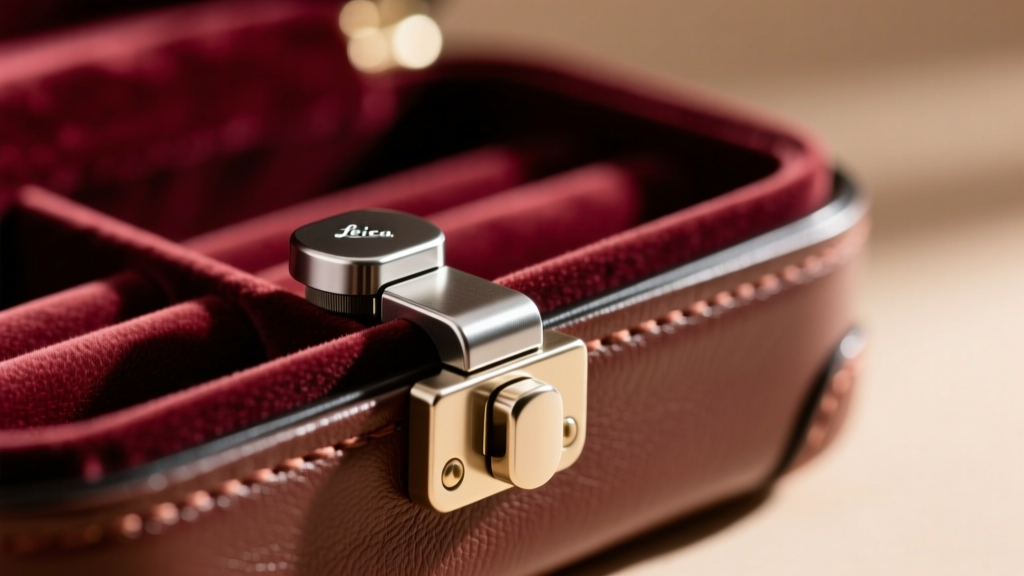
Material Matters: Brass vs. Zinc Alloy vs. Steel
The longevity of your jewelry box latch is entirely dependent on its metallurgy. Cheap hardware will pit, corrode, and eventually snap, potentially trapping your valuables inside. Below is a comparison of the three most common materials used in latch manufacturing.
| Material | Durability & Corrosion Resistance | Average Replacement Cost | Best Use Case |
|---|---|---|---|
| Solid Brass | Excellent. Develops a protective patina over time. Will not rust, though it can oxidize in high humidity. | $15 - $35 | Heirloom wooden boxes, antique restorations, high-humidity climates. |
| Zinc Alloy (Zamak) | Poor to Fair. Prone to 'zinc pest' (intergranular corrosion) and pitting. The plating often flakes off after 3-5 years. | $3 - $8 | Budget-friendly mass-market boxes, dry indoor environments. |
| 304 Stainless Steel | Superior. Highly resistant to moisture, sweat, and chemical cleaners. Maintains a utilitarian, modern aesthetic. | $12 - $25 | Travel cases, acrylic displays, bathroom or vanity storage. |
If you are replacing a broken latch on a cherished piece, always upgrade to solid brass or 304 stainless steel. Avoid Zamak alloys, which are notoriously brittle and prone to catastrophic failure at the hinge pin.
The Hidden Link: Latch Tension and Anti-Tarnish Seals
Why does latch tension matter for jewelry care? Tarnish on silver is a chemical reaction between the metal and hydrogen sulfide (H2S) in the air, forming silver sulfide. According to conservation guidelines from the Victoria and Albert Museum, limiting exposure to ambient air and pollutants is the most effective way to slow this degradation.
Your jewelry box relies on a gasket—usually a dense foam strip hidden beneath the interior velvet or a tightly woven velvet overlap—to block these gases. If your jewelry box latch is loose, bent, or failing to engage fully, the gasket remains uncompressed. This creates microscopic gaps that allow continuous air exchange, rendering your anti-tarnish strips useless. As noted by the experts at Rio Grande, an airtight environment is essential for maximizing the lifespan of anti-tarnish tabs and silver cloth linings. A properly tensioned latch is the physical anchor of that airtight environment.
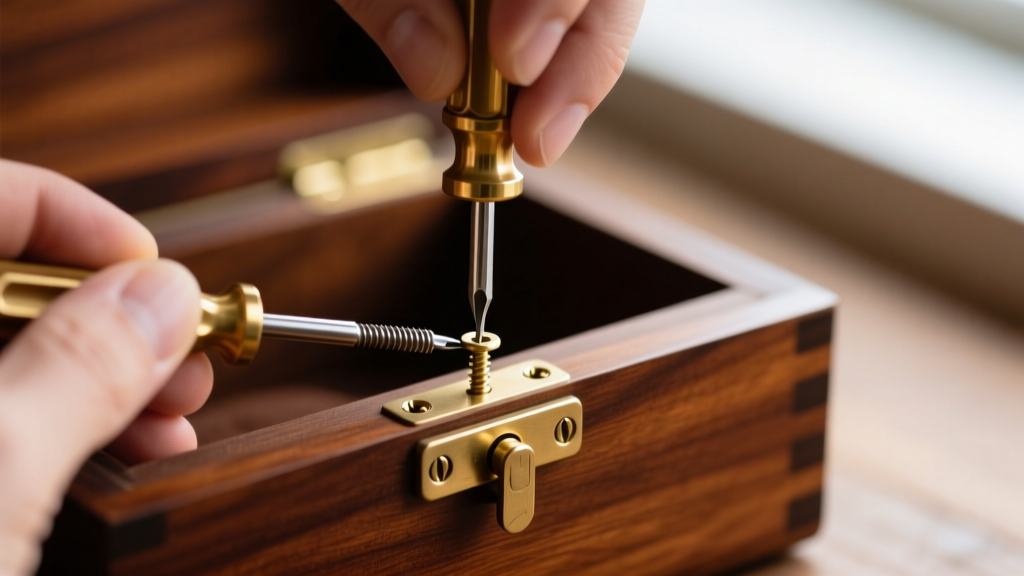
Troubleshooting: How to Fix a Sticky or Broken Latch
Before you throw away a beautiful storage box because the hardware is acting up, try these domain-expert troubleshooting steps. Most latch issues are mechanical, not structural, and can be resolved in under ten minutes.
Fixing a Sticky Push-Button
If your spring-loaded button requires excessive force to push, the internal pin is likely binding due to dust accumulation or microscopic rust. Never use WD-40 or liquid oils. Liquid lubricants will seep into the surrounding wood, degrade the velvet adhesives, and eventually attract more grime. Instead, use a dry PTFE (Teflon) spray or finely milled graphite powder. Apply a microscopic amount to the pin seam using a cotton swab, then press the button repeatedly to work the dry lubricant into the spring housing.
Adjusting a Loose Hasp for Better Compression
If your lid closes easily but rattles when moved, the hasp is not pulling the lid tight enough against the velvet seal. You can fix this without replacing the hardware. Using a pair of smooth-jawed needle-nose pliers (wrap the jaws in masking tape to prevent scratching the metal), grip the strike plate on the base of the box. Gently bend the plate upward by just 1 to 2 degrees. This forces the hasp to travel slightly further to engage, dramatically increasing the downward compression on the lid.
Dealing with Stripped Hinge Screws
The tiny screws holding latches to wooden boxes often strip their holes due to the torque of daily opening. To repair a stripped hole, dip a wooden toothpick in high-quality aliphatic wood glue, insert it into the stripped hole, and snap it flush. Let it cure for 24 hours. The toothpick provides fresh, dense end-grain wood for the original screw to bite into, restoring factory-level holding power.
Expert Tip: When installing a replacement latch, always pre-drill your pilot holes using a bit that is exactly 75% the diameter of the screw's core (excluding the threads). This prevents the surrounding hardwood or MDF from splitting under the torque of the brass screws.
Upgrading Your Storage: When to Replace the Hardware
Sometimes, a latch is beyond repair. If you notice 'zinc pest'—a white, powdery corrosion that causes Zamak hardware to crumble like chalk—or if a magnetic catch has lost its polarity due to heat exposure, it is time for a replacement. When shopping for aftermarket hardware, look for 'surface-mount' latches that require only basic pilot holes, avoiding the need to chisel out complex mortises in the wood. By understanding the mechanics, materials, and maintenance of your jewelry box latch, you transform a simple container into a true preservation vault, ensuring your collection remains pristine for decades to come.


