Jewelry Box Shell Buying Guide: Materials, Durability & Care
Discover what to look for in a jewelry box shell. Compare mother-of-pearl, capiz, and hard-shell materials for optimal protection and luxury display.

The Anatomy of a Jewelry Box Shell
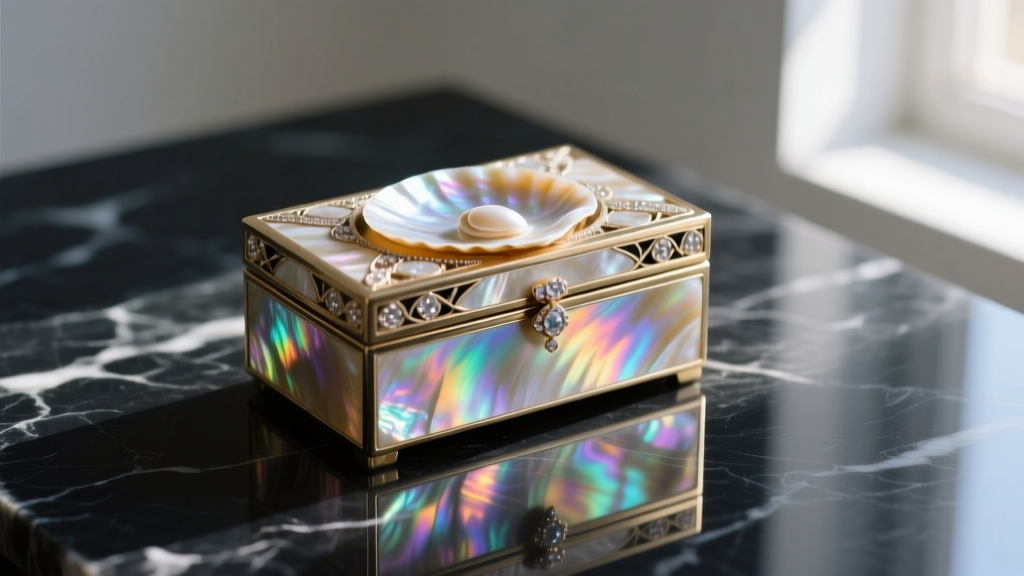
When evaluating high-end jewelry storage, collectors and buyers often fixate on the interior compartments, velvet linings, and locking mechanisms. However, the jewelry box shell—the outer carapace or exoskeleton of the storage unit—is the true determinant of both long-term structural integrity and aesthetic prestige. The shell dictates the box's crush-resistance, its ability to block ambient humidity, and its vulnerability to UV degradation. Whether you are investing in a vanity centerpiece featuring natural marine inlays or a crush-proof travel case, understanding the material science behind the shell is critical for making an informed purchase.
In the luxury storage market, the term "shell" generally refers to two distinct categories: natural shell inlays (such as nacre, abalone, and capiz) applied to a wooden or MDF substrate, and synthetic hard-shell exteriors (such as polycarbonate and ABS) engineered for impact resistance. This guide breaks down the technical specifications, failure modes, and maintenance requirements for every major jewelry box shell material available today.
Natural Shell Inlays: Aesthetic Mastery and Fragility
Natural shell inlays represent the pinnacle of artisanal jewelry box craftsmanship. These materials are prized for their iridescence, but they require specific manufacturing techniques to ensure they do not warp, crack, or delaminate over time.
Mother-of-Pearl (Nacre)
Nacre is the iridescent inner layer of certain mollusk shells. According to the Gemological Institute of America (GIA), nacre is composed of microscopic aragonite platelets bound by conchiolin, giving it a Mohs hardness of 2.5 to 4.5. In jewelry box manufacturing, nacre is typically sliced into veneers ranging from 0.5mm to 1.5mm thick. When purchasing a nacre-inlaid jewelry box shell, inspect the bonding agent. High-end manufacturers use two-part marine epoxy to adhere the shell to the wood substrate, which allows for slight thermal expansion. Cheaper alternatives use cyanoacrylate (super glue), which becomes brittle and leads to edge-lifting and delamination within a few years.
Paua (Abalone) and Capiz
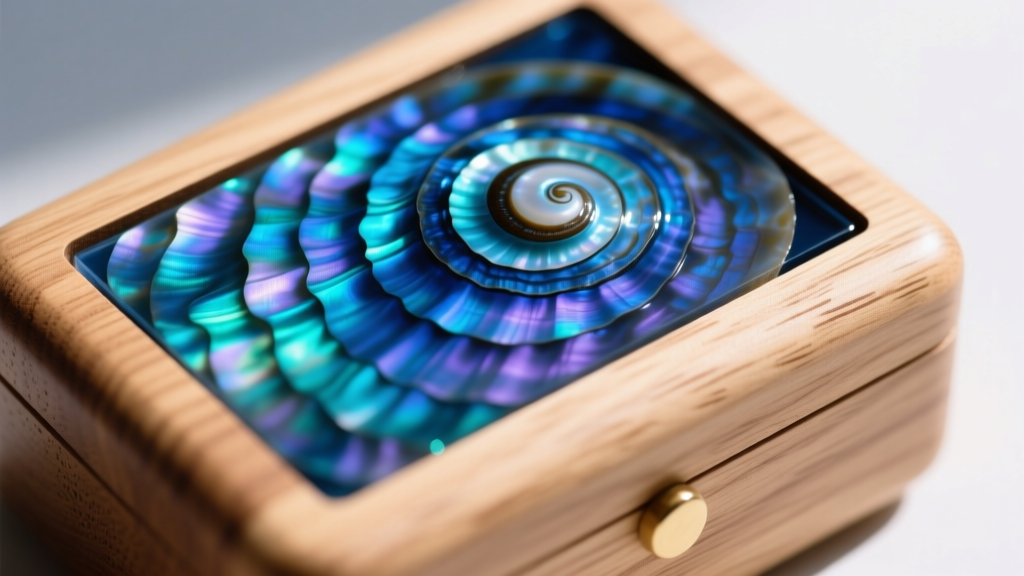
Paua shell offers striking blues and greens but is highly porous and fragile. Premium Paua shells are stabilized with penetrating resins before being cut. Capiz shell, often used in coastal or tropical decor, is softer and more translucent. Capiz is highly susceptible to scratching and should never be used for a jewelry box that will be frequently moved or stacked.
Hard-Shell Exteriors: The Travel and Protection Standard
For travel, daily commuting, or protecting high-value pieces from accidental impacts, synthetic and metallic hard shells are the industry standard. The effectiveness of these shells relies on material thickness, ribbing geometry, and corner reinforcement.
Polycarbonate vs. ABS Plastic
Polycarbonate (often branded as Makrolon) is an aerospace-grade thermoplastic that offers exceptional impact resistance. A high-quality polycarbonate jewelry box shell should feature a wall thickness of at least 2.0mm to 3.0mm. It can withstand significant compressive force without cracking, making it ideal for storing heavy gold chains or gemstone-set pieces in checked luggage. ABS (Acrylonitrile Butadiene Styrene) is a cheaper alternative. While rigid, ABS is prone to micro-fractures upon sharp impacts and becomes highly brittle in cold environments (below 40°F / 4°C), making it a poor choice for winter travel.
Aluminum and Crush-Proof Shells
Ribbed aluminum shells provide a vintage, industrial aesthetic while offering superior crush resistance. The structural strength comes from the corrugated ribbing, which distributes downward force across the entire surface area. Look for aluminum shells with reinforced steel corner bumpers and seamless welded edges to prevent moisture ingress.
Material Comparison Matrix
Use the following data table to compare the physical properties and ideal use cases for various jewelry box shell materials.
| Shell Material | Mohs Hardness / Impact | Weight Profile | Best Use Case | Price Range (USD) |
|---|---|---|---|---|
| Mother-of-Pearl Inlay | 2.5 - 4.5 (Scratches easily) | Heavy (Wood substrate) | Stationary vanity display | $250 - $1,500+ |
| Polycarbonate (PC) | High Impact (Shatterproof) | Lightweight | Frequent air travel | $80 - $300 |
| ABS Plastic | Medium Impact (Brittle cold) | Lightweight | Occasional road trips | $40 - $120 |
| Ribbed Aluminum | High Crush Resistance | Medium-Heavy | Heavy gold/bullion storage | $150 - $400 |
| Capiz Shell | 2.0 (Very fragile) | Medium | Lightweight decorative only | $60 - $180 |
Hinge Mechanics and Hardware Integration
A jewelry box shell is only as strong as the hardware that connects its lid to its base. The stress concentration at the hinge points is the most common failure zone. For heavy natural shell inlays, the added weight of the nacre requires heavy-duty brass piano hinges that span at least 75% of the box's rear width. This distributes the torque evenly across the substrate, preventing the wood from splitting. For hard-shell polycarbonate travel cases, look for integrated friction stays or hidden stainless-steel pin hinges. Avoid external screw-mounted hinges on plastic shells, as the screws will eventually strip the soft plastic threads during repeated opening and closing.
Interior Pairings: Microclimates and Anti-Tarnish Linings
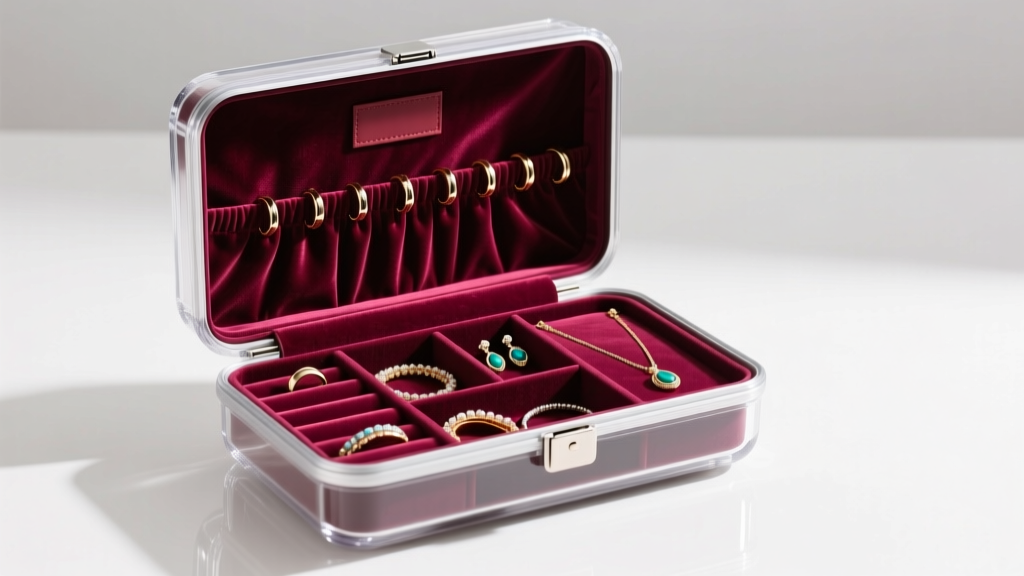
The exterior shell must work in tandem with the interior lining to create a stable microclimate. Natural shell inlays are completely inert and will not off-gas harmful volatile organic compounds (VOCs) that accelerate silver tarnishing. However, hard-shell plastics and certain synthetic leathers can trap sulfur-rich air inside the case. If you are buying a polycarbonate or ABS hard-shell travel case, ensure the interior is lined with certified anti-tarnish materials. Pacific Silvercloth (a cotton flannel embedded with microscopic silver particles that absorb sulfur) or Luster Lok treated fabrics are the gold standards. Standard untreated velvet or polyester will trap moisture against the metal, leading to rapid oxidation, especially in humid climates.
Maintenance, Cleaning, and Troubleshooting
Proper care of your jewelry box shell depends entirely on its material composition. The American Institute for Conservation (AIC) emphasizes that organic materials like natural shell are highly sensitive to fluctuations in relative humidity (RH).
- Natural Shell Care: Maintain an ambient RH between 40% and 50%. Extreme dryness will cause the wood substrate to shrink, leading to shell cracking; high humidity will cause the wood to swell, resulting in delamination. Clean nacre and abalone only with a slightly damp, lint-free microfiber cloth. Never use alcohol-based cleaners, ammonia, or ultrasonic cleaners, as these will strip the natural conchiolin proteins and destroy the iridescence.
- Polycarbonate and ABS Care: Clean with a mild soap and water solution. Avoid paper towels, which contain wood fibers that will inflict micro-scratches on the plastic surface over time. Use a dedicated plastic polish to buff out minor scuffs from travel.
- Aluminum Care: Wipe down with a non-abrasive metal cleaner. If the aluminum is anodized or painted, stick to standard glass cleaner to preserve the protective outer layer.
Conclusion
Selecting the right jewelry box shell requires balancing your aesthetic preferences with your practical storage needs. If your collection consists of delicate heirlooms meant for a climate-controlled vanity, a mother-of-pearl or abalone inlay offers unmatched luxury and inert protection. Conversely, if your jewelry travels with you across different time zones and climates, a 3mm polycarbonate hard-shell paired with a Pacific Silvercloth interior is the ultimate safeguard against impact and oxidation. By scrutinizing the substrate bonding, hinge mechanics, and material thickness, you can invest in a storage solution that protects your valuables for generations.


