Jewelry Box Walnut Care: Troubleshooting Warping & Tarnish
Learn how to troubleshoot common jewelry box walnut issues. Expert fixes for silver tarnish, sticking drawers, and finish damage.

The Unique Challenges of Walnut Wood Storage
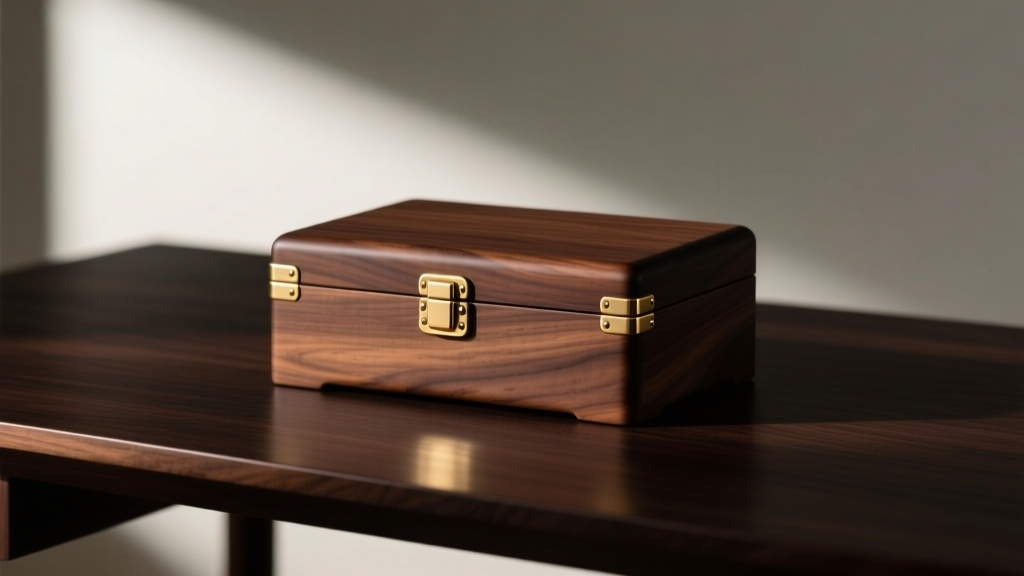
When evaluating a premium jewelry box, walnut construction is often the gold standard. Black walnut (Juglans nigra) boasts a Janka hardness rating of 1,010 lbf, making it highly resistant to dents and dings compared to softer woods like pine or cedar. Its rich, dark chocolate heartwood and striking grain patterns make it a centerpiece on any vanity. However, walnut is not without its chemical and mechanical quirks. If you have noticed your silver jewelry tarnishing rapidly, drawers sticking during humid months, or brass hinges sagging under the weight of a heavy lid, you are experiencing the classic failure modes of this specific hardwood.
Troubleshooting a walnut storage unit requires an understanding of both woodworking and metallurgical chemistry. Unlike inert plastics or powder-coated metals, walnut is a hygroscopic, biologically active material. This guide will walk you through the exact diagnostic steps and professional-grade solutions to restore your storage unit to museum-quality condition.
The Tarnish Catalyst: Acidic Off-Gassing
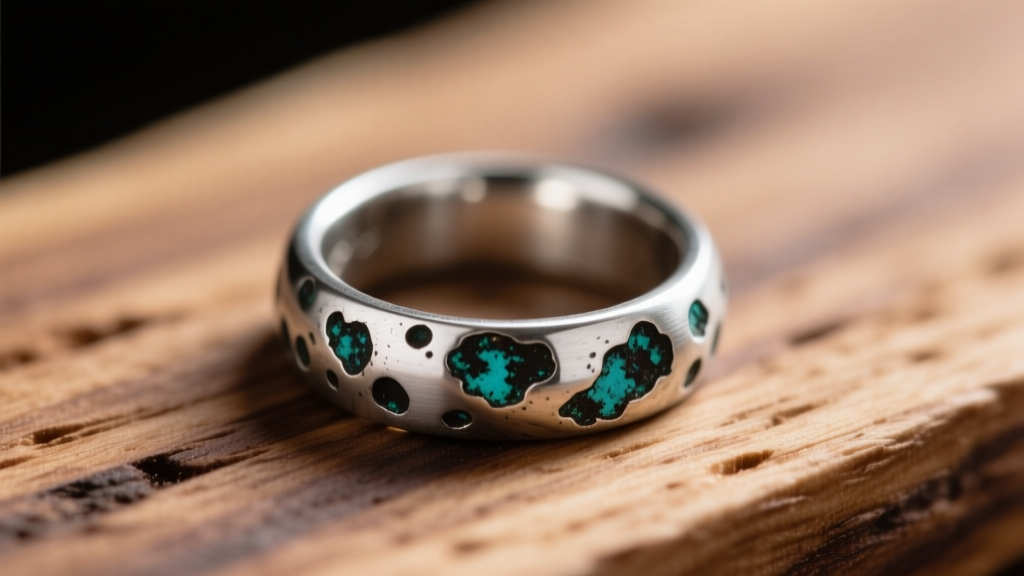
The most common and frustrating issue reported by collectors is the rapid oxidation of silver and copper pieces stored in walnut compartments. While walnut is beautiful, it contains natural compounds that can be highly corrosive to precious metals if the wood is not properly sealed.
The Science of Juglone and Acetic Acid
Walnut trees produce a chemical called juglone, which acts as a natural herbicide. While most of the juglone is concentrated in the roots and leaves, trace amounts remain in the heartwood. More importantly, as walnut ages and undergoes slow oxidation, it can emit volatile organic compounds (VOCs), including acetic acid. In an enclosed, unventilated space like a jewelry drawer, these acidic vapors become trapped. When they come into contact with the copper alloys in sterling silver (which is 92.5% silver and 7.5% copper), they accelerate the formation of copper sulfide and copper oxide, resulting in severe, dark tarnish.
Step-by-Step Neutralization and Sealing
If your silver is turning black within weeks of storage, the interior finish of your box has likely failed or was never applied. To fix this, you must create an impermeable vapor barrier.
- Step 1: Clean the Interior. Vacuum the drawers and wipe them down with a slightly damp microfiber cloth. Allow them to dry completely for 24 hours.
- Step 2: Apply a Vapor Barrier. Do not use standard polyurethane, which can take months to fully off-gas its own solvents. Instead, use dewaxed shellac (such as Zinsser SealCoat). Shellac is a natural, non-acidic resin that dries in minutes and completely locks in wood acids.
- Step 3: Re-line with Anti-Tarnish Fabric. Once the shellac is cured, line the drawers with Pacific Silvercloth or a zinc-impregnated flannel. These fabrics act as a sacrificial anode, absorbing sulfur and acids before they reach your jewelry.
Mechanical Failures: Sticking Drawers and Sagging Hinges
Because walnut is a ring-porous hardwood, it reacts dynamically to ambient humidity. A drawer that glides smoothly in the winter may become completely stuck in the summer. Furthermore, the sheer density of walnut (approximately 38 lbs/ft³) puts immense torque on lid hinges.
| Symptom | Root Cause | Diagnostic Test | Corrective Action |
|---|---|---|---|
| Silver tarnishing rapidly | Acidic off-gassing | pH test strip on damp wood | Seal with dewaxed shellac |
| Drawer sticking in summer | Hygroscopic swelling | Measure gap with feeler gauge | Apply paraffin wax to runners |
| Lid sagging / misaligned | Hinge screw stripping | Check for wobble on opening | Epoxy and toothpick fill |
| White cloudy rings on top | Moisture trapped in lacquer | Touch test (tacky vs hard) | Pumice and mineral oil rub |
The Paraffin Runner Method
Never sand a sticking walnut drawer immediately. Sanding removes material, which will cause the drawer to rattle and misalign when the wood inevitably shrinks back down in the winter. Instead, remove the drawer and rub a block of 100% pure paraffin wax or unscented candle wax along the bottom runners and the interior guide rails. The wax reduces the coefficient of friction without altering the wood's dimensions. If the drawer is still binding, use a 220-grit sanding sponge to lightly ease only the top edges of the drawer sides, where swelling is most likely to cause friction against the cabinet frame.
Fixing Stripped Hinge Screws
Heavy walnut lids often strip the pilot holes for brass hinge screws. To repair this without using oversized screws that might split the wood, use the conservator's toothpick trick. Dip wooden toothpicks in two-part clear epoxy (avoid standard PVA wood glue, as it lacks the sheer strength for metal-to-wood torque). Pack the stripped hole with the epoxy-coated toothpicks, let it cure for 24 hours, snap off the excess, and drill a fresh pilot hole using a bit that is 1/64th of an inch smaller than the screw's root diameter.
Finish Restoration: Erasing Water Rings and Clouding
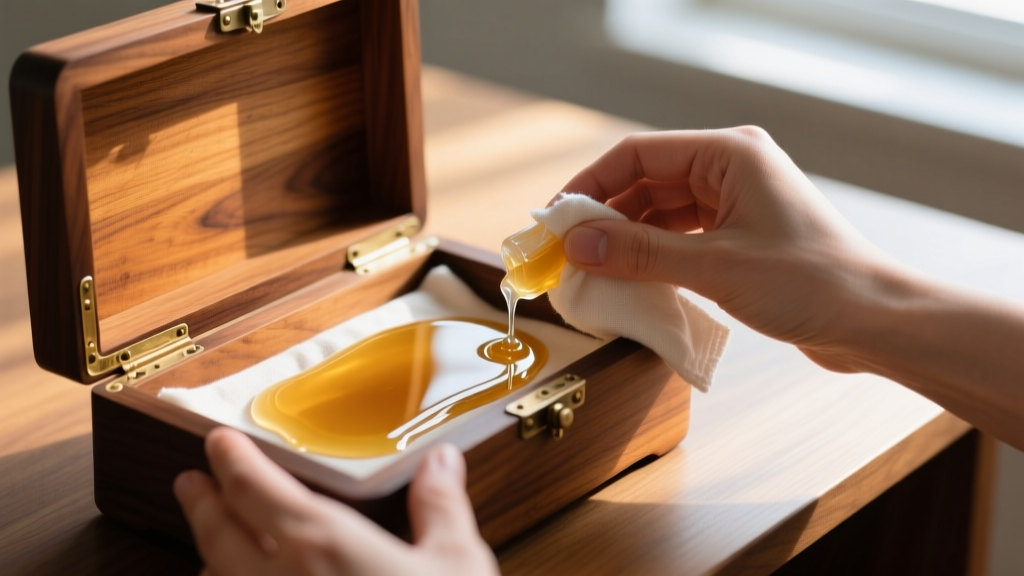
The exterior of a walnut storage unit is typically finished with a catalyzed lacquer or a penetrating oil. If a cold glass or a damp perfume bottle is left on the lid, moisture can become trapped beneath the lacquer, creating a milky white ring. According to conservation guidelines from the American Institute for Conservation, aggressive chemical strippers should be avoided on vintage pieces to preserve the original patina.
For mild clouding, create a paste using fine pumice powder and mineral oil. Rub the paste gently along the grain with a soft cotton cloth. The pumice acts as a microscopic abrasive to level the lacquer and release the trapped moisture, while the mineral oil prevents the finish from burning. Wipe clean and buff with a microfiber towel. For penetrating oil finishes that have dried out and look ashy, a high-quality carnauba-based paste wax applied twice a year will restore the deep, chatoyant glow of the walnut grain.
Long-Term Climate Control for Walnut
To prevent future warping and mechanical stress, the environment surrounding your storage unit must be stabilized. Walnut performs best when the ambient Relative Humidity (RH) is maintained between 40% and 50%. Fluctuations beyond this range cause the wood cells to absorb or release moisture, leading to panel cupping or joint separation.
Keep the unit away from direct HVAC vents, radiators, and south-facing windows. UV radiation will bleach the rich brown heartwood into a dull, lifeless yellow over time. If the box must sit near a window, apply a UV-inhibiting museum wax to the exterior finish annually. For expert woodworking techniques on maintaining fine furniture joints, resources like Wood Magazine offer excellent tutorials on seasonal wood movement and finish maintenance.
Summary Checklist
- Seal unlined walnut interiors with dewaxed shellac to stop acidic off-gassing.
- Use Pacific Silvercloth or zinc-impregnated flannel for drawer linings.
- Lubricate sticking runners with paraffin wax before resorting to sanding.
- Repair stripped hinges with epoxy and wooden toothpicks, not larger screws.
- Remove white water rings with a pumice and mineral oil paste.
- Maintain room humidity between 40% and 50% to prevent seasonal swelling.
By understanding the biological and mechanical nature of walnut, you can transform a problematic, tarnish-inducing container into a safe, heirloom-quality vault for your most precious collections.


