The Ultimate Makeup and Jewelry Organizer Buying Guide
Discover how to choose the perfect makeup and jewelry organizer. Learn about anti-tarnish linings, layout dimensions, and smart storage solutions.

The Rise of the Dual-Purpose Vanity: Why Combine Storage?
In 2026, the modern vanity is no longer just a place to apply cosmetics; it is a curated command center for personal adornment. The demand for a high-quality makeup and jewelry organizer has surged as collectors seek to consolidate their routines. However, merging cosmetics and fine jewelry in a single footprint introduces unique chemical and physical hazards. Setting sprays, perfumes, and nail polish removers emit Volatile Organic Compounds (VOCs) and aerosolized moisture. When these compounds settle on sterling silver or porous gemstones like turquoise and pearls, they accelerate the formation of silver sulfide—the black tarnish that ruins precious metals.
According to the Gemological Institute of America (GIA), improper storage near household chemicals and cosmetics is a leading cause of preventable gemstone degradation and metal tarnishing. Therefore, buying a dual-purpose organizer requires a strategic approach to material science, compartmentalization, and climate control. This guide breaks down exactly what to look for when investing in a combined storage solution.
Critical Dimensions and Layout Ergonomics
A common failure mode in poorly designed organizers is the 'one-size-fits-all' cubby. Jewelry and cosmetics have vastly different spatial requirements. When evaluating a makeup and jewelry organizer, you must measure your specific inventory against the unit's internal architecture.
Necklace Drop Zones vs. Ring Trays
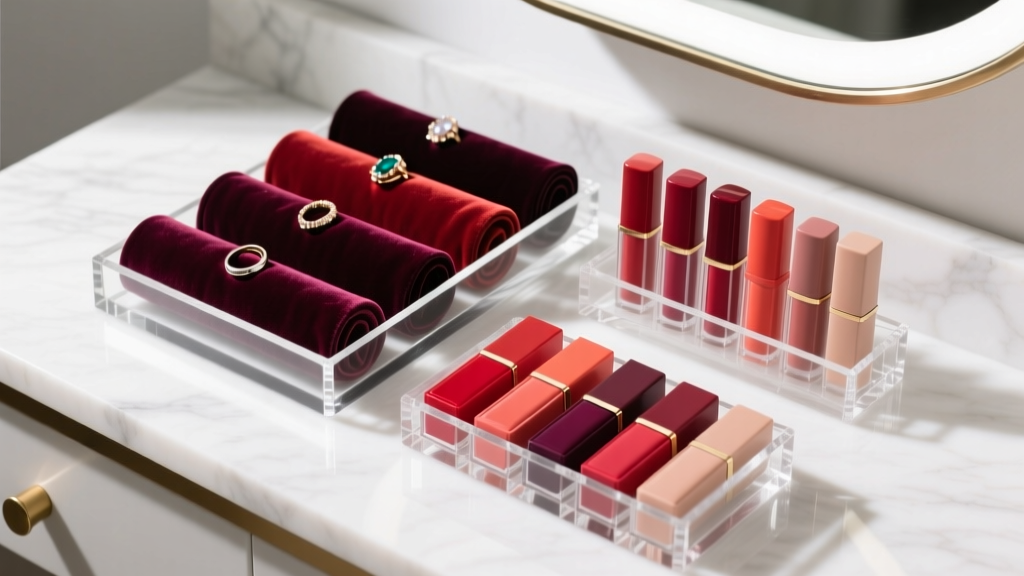
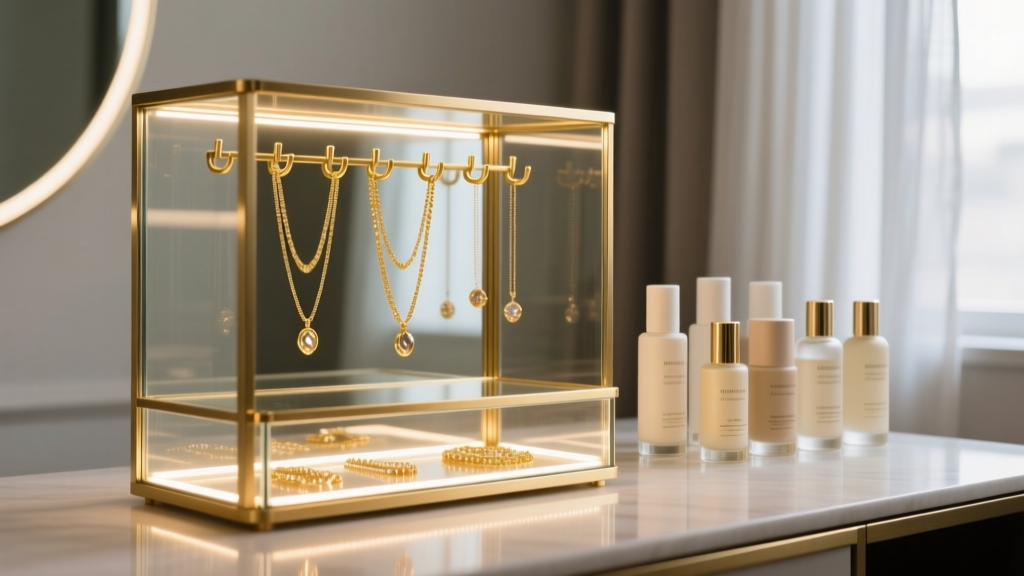
Necklaces require vertical clearance to prevent chain tangling—a frustrating issue that can weaken delicate links. Look for a designated hanging zone with a minimum 16-inch drop. This accommodates matinee and opera-length chains without forcing them to bunch at the bottom. For rings, avoid shallow, open trays where dust settles. Instead, seek out organizers with 1.5-inch diameter velvet rolls or individual silicone-lined slots that grip the bands securely and prevent metal-on-metal scratching.
Cosmetic Depth and Acrylic Clarity
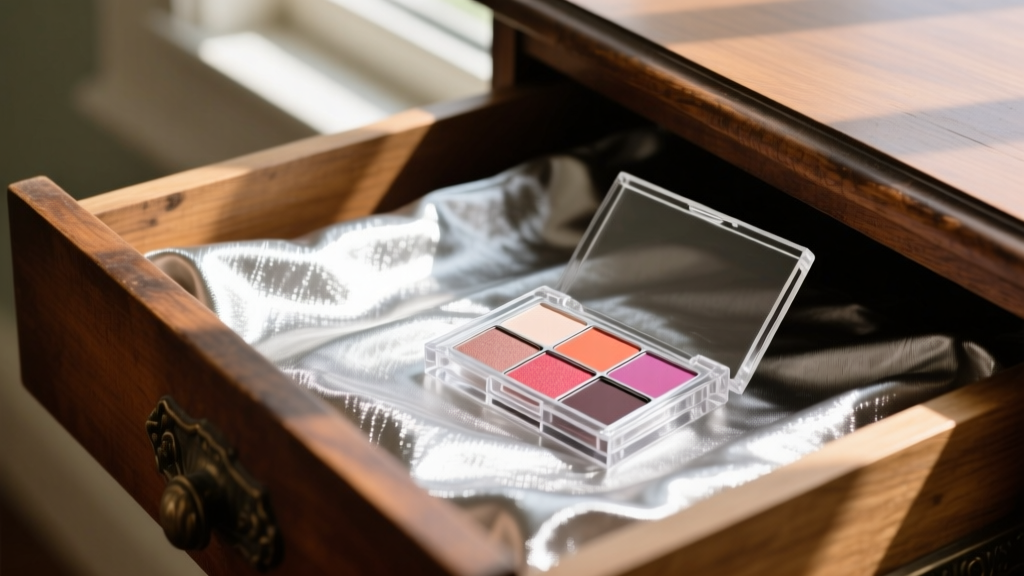
Makeup storage demands horizontal depth and visibility. Standard eyeshadow palettes (such as those from Pat McGrath or Natasha Denona) typically measure around 8x6 inches. Your organizer’s cosmetic drawers must offer at least a 2.5-inch interior depth to allow these palettes to slide in without scraping the lid. Furthermore, lipstick tubes require narrow, vertical dividers (roughly 1x1 inch per slot) to prevent them from toppling over and smudging the interior.
Material Science: Anti-Tarnish Linings and Acrylic Grades
The materials used in your organizer dictate the lifespan of your collection. The market is flooded with cheap plastics and reactive fabrics that can actively harm your valuables. Here is how to separate professional-grade materials from budget traps.
Cast Acrylic vs. Extruded Acrylic
Many transparent organizers are marketed simply as 'acrylic,' but there is a massive difference in manufacturing. Extruded acrylic is cheaper to produce but is highly susceptible to yellowing when exposed to UV light and bathroom humidity. Cast acrylic (PMMA), on the other hand, is optically clear, highly UV-stable, and resistant to the chemical solvents found in makeup removers. Always check the product specifications for 'cast' or 'optical grade' PMMA.
The Importance of Anti-Tarnish Linings
Standard felt or untreated suede linings trap moisture and do nothing to stop oxidation. Premium organizers utilize Pacific Silvercloth or embedded anti-tarnish flannel. These fabrics are impregnated with microscopic silver particles that intercept and absorb sulfur gases before they can reach your jewelry. For an extra layer of protection, look for organizers that feature a dedicated slot for 3M anti-tarnish strips.
| Material Component | Best Used For | Tarnish Protection | Durability & Lifespan |
|---|---|---|---|
| Cast Acrylic (PMMA) | Makeup drawers, lipstick slots, exterior shells | None (Inert) | High (10+ years, UV stable) |
| Extruded Acrylic | Budget cosmetic bins | None (Inert) | Low (Yellows in 1-2 years) |
| Pacific Silvercloth | Ring rolls, necklace hooks, earring pads | Excellent (Absorbs sulfur) | High (Washable, long-lasting) |
| Standard Felt/Polyester | Budget jewelry trays | Poor (Traps moisture) | Medium (Stains easily) |
Security, Dust-Proofing, and Climate Control
Bathrooms and vanities are high-humidity environments. An open-concept organizer might look beautiful on a showroom floor, but it will quickly become a magnet for cosmetic dust, hair spray residue, and ambient moisture. When shopping, prioritize the following structural defenses:
- Neoprene Gaskets and Silicone Seals: High-end organizers feature rubberized seals along the drawer edges to create an airtight closure, keeping out both dust and humidity.
- Magnetic Closures: For flip-top lids, rare-earth neodymium magnets ensure the lid snaps shut completely, preventing accidental spills from ruining your jewelry tier.
- Integrated Silica Compartments: Some luxury 2026 models include hidden, refillable silica gel chambers beneath the jewelry trays to actively desiccate the air inside the unit.
"Storing porous gemstones like opals and pearls in airtight, unconditioned plastic can cause them to dry out and crack. They require a slight amount of ambient moisture, making breathable anti-tarnish cloth in a climate-controlled room the superior choice over sealed acrylic."
Price Tiers and What to Expect in 2026
Understanding the pricing landscape helps you identify where manufacturers are cutting corners. Based on current market analysis and Consumer Reports durability standards, here is what you can expect to pay for a quality makeup and jewelry organizer.
Budget Tier ($25 - $45)
At this price point, expect extruded acrylic and standard polyester linings. These units are fine for fashion jewelry and daily cosmetics, but they lack the dust-proofing and UV stability required for fine jewelry or high-end makeup collections. Hinges are typically basic metal pins that may squeak or loosen over time.
Mid-Range Tier ($60 - $120)
This is the sweet spot for most consumers. You will find cast acrylic construction, basic anti-tarnish flannel linings, and smooth-gliding drawer tracks. Brands in this tier often include modular dividers, allowing you to customize the layout for your specific palette sizes and necklace lengths.
Luxury Tier ($150 - $350+)
Luxury organizers (from heritage brands like Wolf or Mele & Co.) feature genuine Pacific Silvercloth, solid wood or vegan leather exteriors, brass hardware, and integrated LED lighting with a high CRI (Color Rendering Index) for accurate makeup application. These units often include lockable compartments and airtight seals.
Final Verdict: Matching the Organizer to Your Collection
Selecting the right makeup and jewelry organizer is an exercise in balancing accessibility with preservation. If your collection consists primarily of everyday fashion pieces and you prefer an open-display aesthetic, a mid-range cast acrylic unit with modular dividers will serve you beautifully. However, if you are storing inherited sterling silver, high-carat gold, and expensive cosmetic palettes, you must invest in a luxury tier unit featuring Pacific Silvercloth linings, airtight seals, and UV-stable materials.
Before making your purchase, take inventory of your longest necklaces and widest palettes, measure your vanity space, and verify the specific acrylic grade and lining materials listed in the product specs. By prioritizing material science over superficial aesthetics, you will secure a storage solution that protects your investments and elevates your daily routine for years to come.


