Mirror Jewelry Holder Value Guide: Budget vs Premium Picks
Discover if a mirror jewelry holder is worth the cost. We compare budget vs premium materials, anti-tarnish features, and true value.

The Dual-Purpose Dilemma: Form vs. Function
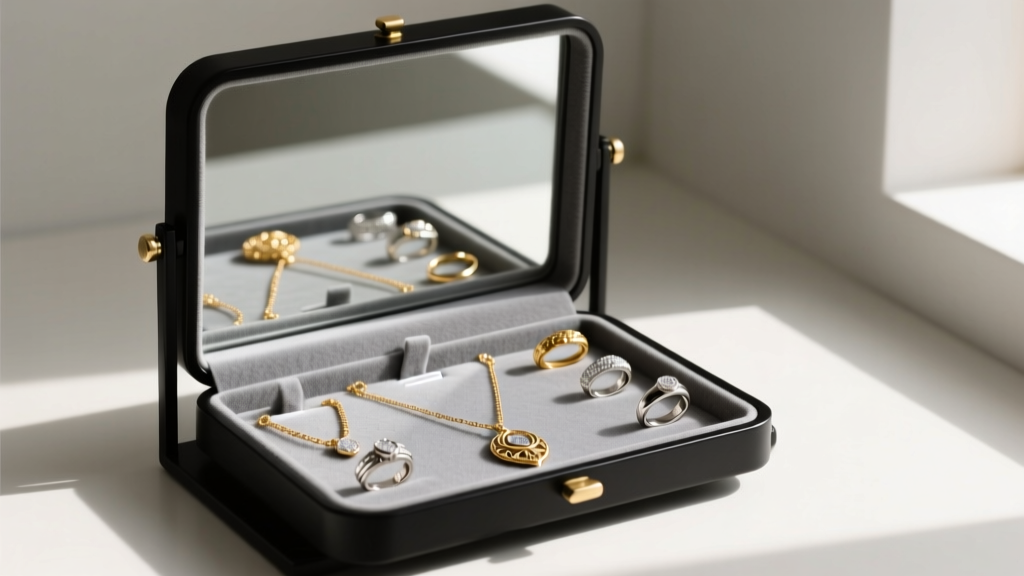
The modern vanity demands efficiency, which is exactly why the mirror jewelry holder has become a staple in bedroom organization. By combining a full-length or tabletop mirror with hidden storage, these units solve two spatial problems at once. However, the market is heavily saturated with options ranging from $25 flat-pack models to $300+ handcrafted cabinets. For the savvy collector, the critical question is not just about aesthetics, but about long-term value and the preservation of your assets.
When assessing the true value of a mirror jewelry holder, we must look past the reflective glass and examine the structural integrity, the interior lining chemistry, and the hardware mechanics. A budget-friendly organizer might save you money upfront, but if it accelerates tarnish or fails mechanically within a year, the return on investment plummets. This guide breaks down the material science and hardware realities to help you determine exactly where your money is best spent.
Material Breakdown: MDF vs. Solid Wood vs. Metal
The exterior shell of your storage unit dictates its lifespan, resistance to environmental changes, and overall structural rigidity. Budget models almost exclusively rely on engineered woods, while premium options utilize solid hardwoods or heavy-gauge metals.
| Material Type | Average Price Range | Durability & Lifespan | Moisture & Warping Risk |
|---|---|---|---|
| MDF with Paper Veneer | $25 - $55 | 1-3 Years (Low) | High (Swells if humidity exceeds 60%) |
| Plywood with Real Veneer | $60 - $120 | 4-7 Years (Medium) | Moderate (Resists warping better than MDF) |
| Solid Hardwood (Walnut/Oak) | $150 - $350+ | 15+ Years (High) | Low (Naturally stable, can be refinished) |
| Powder-Coated Steel (18-Gauge) | $80 - $200 | 10+ Years (High) | None (Impervious to humidity and pests) |
Medium-Density Fiberboard (MDF) is the undisputed king of the budget tier. While it provides a smooth surface for veneers, MDF is essentially compressed wood glue and dust. According to material science data, standard MDF has a density of 600-800 kg/m³ and acts like a sponge when exposed to high humidity. If you live in a coastal or tropical climate, a budget MDF mirror jewelry holder placed near a bathroom or open window will likely swell at the seams within 18 months, causing the mirror backing to crack.
The Hidden Costs of Budget Models
When evaluating value, the initial purchase price is only one variable. The hidden costs of cheap manufacturing manifest in two primary areas: interior linings and mechanical hardware.
Flocking vs. Velvet: The Tarnish Accelerator
Budget organizers typically line their interiors with 'flocking'—a process where tiny nylon or rayon fibers are electrostatically glued to a cardboard or MDF backing. While it looks soft initially, flocking is highly porous and traps ambient moisture. For silver jewelry, this is disastrous. Silver tarnishes when it reacts with hydrogen sulfide and moisture in the air to form silver sulfide. The Gemological Institute of America (GIA) notes that proper storage requires low-humidity environments and anti-tarnish materials. Flocking does the exact opposite, creating a micro-climate that accelerates oxidation. Premium models, conversely, use short-pile cotton velvet or Pacific Silvercloth, which actively absorbs tarnish-causing gases before they reach your metals.
Hinge Mechanics and Sagging Doors
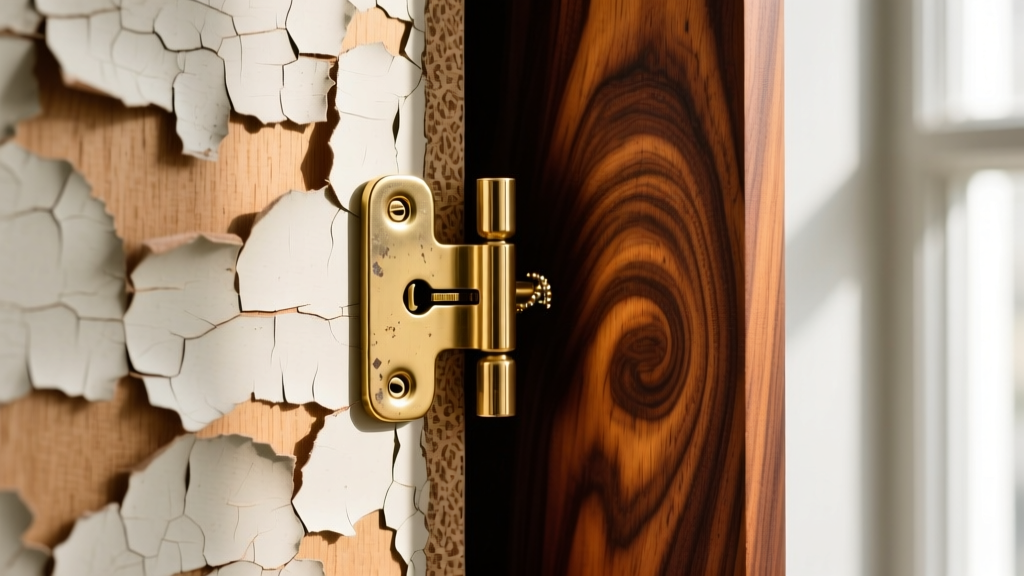
A mirror is heavy. A framed mirror is heavier. When that mirror is also a door holding the weight of necklaces and bracelets, the hinges bear an immense mechanical load. Budget units use standard stamped-steel butt hinges. Over time, the friction and weight cause the screw holes in the soft MDF to strip, leading to a sagging door that no longer closes flush. High-value models utilize continuous piano hinges, which distribute the weight of the mirror evenly across the entire length of the cabinet. As detailed in the Rockler Woodworking and Hardware hinge guide, piano hinges drastically reduce mechanical stress and prevent structural failure, making them a non-negotiable feature for heavy, mirror-fronted storage.
Assessing True Value: Price Tiers Explained
To make an informed purchasing decision, it helps to categorize the market into three distinct value tiers based on your collection's size and material sensitivity.
- The Budget Tier ($25 - $50): Best for fashion jewelry, costume pieces, and low-value everyday wear. Expect MDF construction, flocking interiors, and basic butt hinges. The value here is purely spatial efficiency; do not store heirloom silver or high-karat gold in these units long-term.
- The Mid-Tier ($60 - $130): The sweet spot for most consumers. These models often feature engineered wood with real wood veneers, upgraded microfiber or basic anti-tarnish velvet linings, and reinforced hinges. They offer excellent value for mixed collections of semi-fine and everyday gold-filled or sterling silver pieces.
- The Premium Tier ($150 - $350+): Essential for serious collectors and high-value assets. Constructed from solid hardwoods or heavy-gauge steel frames with tempered glass mirrors. Interiors are lined with treated anti-tarnish fabrics, and compartments are specifically sized to prevent gemstone scratching. The value here is asset protection and generational durability.
Space Allocation and Interior Ergonomics
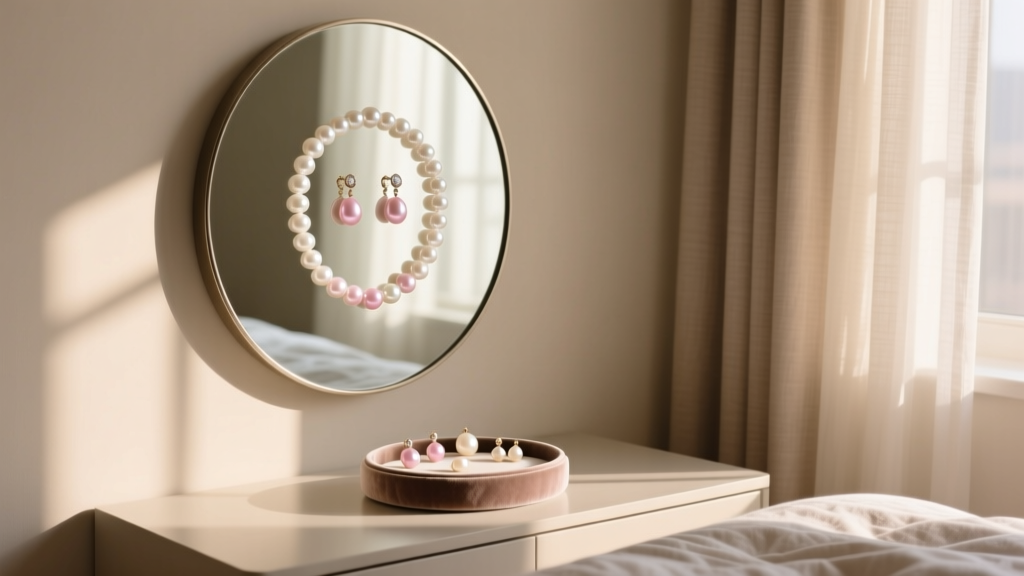
Value is also measured by how efficiently the interior space is utilized. A poorly designed $200 cabinet offers less functional value than a brilliantly designed $90 unit. When assessing the interior, look for adjustable shelving and modular ring rolls. Budget units often feature fixed, shallow compartments that cannot accommodate chunky statement rings or layered chain bracelets without them becoming tangled. Furthermore, the depth of the necklace hooks is crucial; if hooks are placed less than an inch from the back panel, longer pendants will scrape against the lining every time the door is closed, potentially damaging soft stones like pearls or opals.
Final Verdict: Who Should Buy What?
The mirror jewelry holder is an undeniably brilliant space-saving invention, but its value is entirely dependent on your specific needs and the composition of your jewelry collection. If your collection consists primarily of stainless steel, titanium, or plated fashion jewelry, a budget MDF model provides excellent spatial value and will serve you well for a few years. The tarnish risk is minimal, and the structural load is manageable.
However, if your collection includes sterling silver, raw gemstones, or sentimental heirlooms, the budget tier is a false economy. The cost of professional silver polishing and the risk of gemstone abrasion far outweigh the savings of a cheap cabinet. Investing in a mid-to-premium tier model with solid construction, continuous piano hinges, and chemically treated anti-tarnish linings is not just an organizational upgrade—it is a vital preservation strategy for your most prized possessions.


