2026 Trend Analysis: The Elevated Seashell Jewelry Holder
Discover how the seashell jewelry holder evolved from tacky souvenir to 2026's top biophilic storage trend, featuring material guides and styling tips.

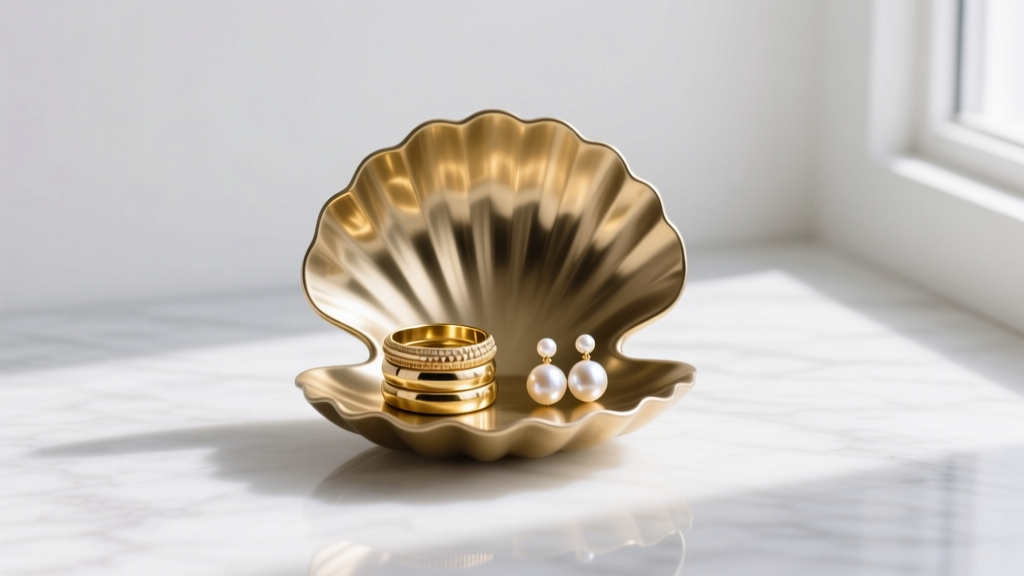
The Biophilic Shift: Why Coastal Storage Dominates 2026
In the landscape of interior design and vanity organization, the coastal aesthetic has undergone a radical maturation. Gone are the days of mass-produced, plastic-coated souvenir trays. In 2026, the seashell jewelry holder has been reclaimed by artisan designers and repositioned as a cornerstone of 'organic modernism' and biophilic design. Homeowners are increasingly seeking vanity accessories that bridge the gap between natural serenity and sculptural art. According to trend forecasts highlighted by Architectural Digest, biophilic elements in personal spaces are no longer just decorative; they are functional anchors meant to ground our daily routines in natural forms.
This shift means that modern collectors demand more than just a novelty shape. They require precise ergonomics, material longevity, and an aesthetic that complements high-end vanities featuring travertine, fluted glass, and brushed unlacquered brass. The contemporary seashell jewelry holder is now an investment piece, meticulously engineered to protect fine metals while serving as a standalone objet d'art.
Material Breakdown: From Souvenir Shop to Sculptural Art
The most critical evolution in coastal jewelry storage lies in material science. Designers are moving away from fragile, unsealed natural shells and leaning into advanced casting techniques and sustainable composites.
Cast Brass and Bronze Alloys
The premium tier of the market is dominated by sand-cast C36000 free-machining brass and silicon bronze. Artisans use 3D-printed wax models of actual *Strombus gigas* (queen conch) or *Pecten* (scallop) shells, utilizing the lost-wax casting method to capture microscopic growth lines and organic ridges. The result is a heavy, weighted seashell jewelry holder that won't tip over when draped with heavy gold chains. These metal alloys naturally develop a living patina over time, reacting to the oils from the jewelry they hold, which enhances their organic appeal.
Bio-Resin and Ethically Sourced Calcium Carbonate
For those who prefer translucency and color, 2026 has seen a surge in bio-epoxy resins infused with ethically foraged, invasive-species shell fragments. Unlike cheap polyurethane resins that yellow under UV exposure, modern plant-based epoxies maintain optical clarity. These pieces often feature embedded nautilus cross-sections or crushed abalone nacre, creating a stained-glass effect when placed near a sunlit vanity window.
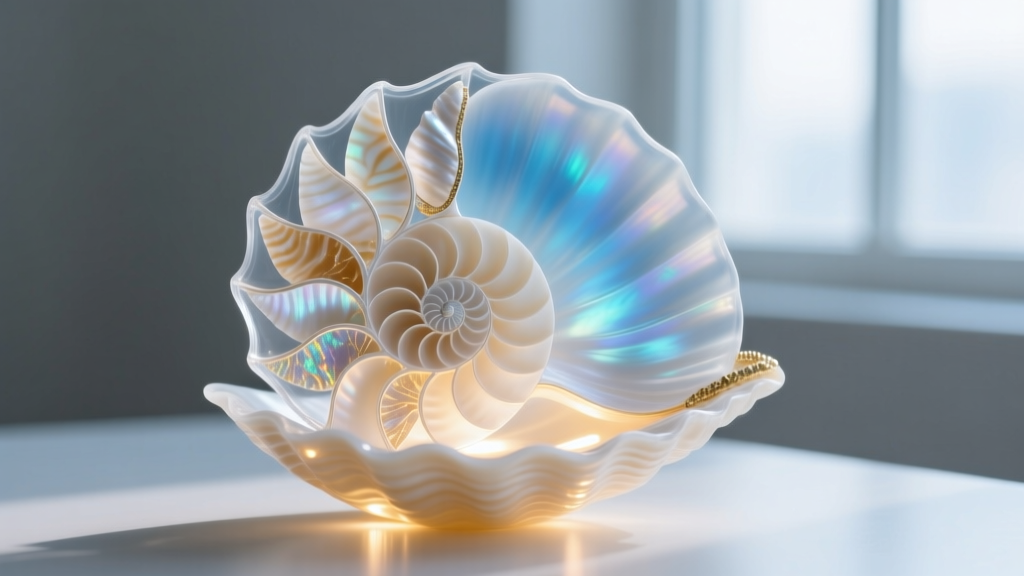
Functional Anatomy: Form vs. Function
A beautiful shell is useless if it damages your jewelry or fails to organize it. The morphology of the shell dictates its storage utility. Below is a functional analysis of the most common shell shapes utilized in high-end organizers this year.
| Shell Morphology | Optimal Storage | Common Failure Mode | 2026 Price Range |
|---|---|---|---|
| Scallop Fan (Radial Ridges) | Layered necklaces, chokers | Delicate prongs catching on unpolished ridge valleys | $85 - $140 |
| Conch Spiral (Deep Cavity) | Cocktail rings, thick bangles | Weight imbalance causing tip-overs if base isn't weighted | $110 - $220 |
| Clam Shell (Hinged/Concave) | Stud earrings, small signet rings | Moisture trapping in the hinge leading to metal oxidation | $60 - $95 |
| Nautilus Cross-Section (Flat) | Bracelets, watch bands | Scratching polished metals if shell interior isn't sealed | $150 - $300+ |
Anti-Tarnish Realities: Do Natural Materials Protect Metals?
One of the most pervasive myths in jewelry storage is that natural materials are inherently safe for precious metals. When dealing with authentic, uncast seashell jewelry holders, chemistry tells a different story. Natural shells are primarily composed of calcium carbonate. While beautiful, calcium carbonate is highly porous.
When you handle a natural shell organizer, your skin transfers acidic sebum and salts into those microscopic pores. If you then place sterling silver or copper pieces into that same shell, the trapped acids accelerate silver sulfide oxidation, leading to rapid, stubborn black tarnishing. Furthermore, the Mohs hardness of most seashells sits around 3.0, which is hard enough to micro-scratch high-polish 18k gold or platinum over time.
'To safely use natural calcium-carbonate vessels for jewelry storage, the interior must be sealed with a museum-grade microcrystalline wax or a thin, cured polyurethane barrier to prevent acid transfer and abrasive friction.' — Gemological Conservation Guidelines
If you are purchasing a genuine shell piece, always verify with the artisan that the interior has been treated with a jewelry-safe sealant like Renaissance Wax. If it hasn't, restrict its use to hard gemstones or gold-plated fashion jewelry, or line the interior with a piece of anti-tarnish Pacific cloth.
Curating the Coastal Vanity: Styling Frameworks
Integrating a sculptural seashell jewelry holder into a modern vanity requires an understanding of visual weight and textural contrast. The 'coastal grandmother' aesthetic of the early 2020s relied heavily on matching white-on-white elements. The 2026 approach is rooted in moody, grounded contrasts.
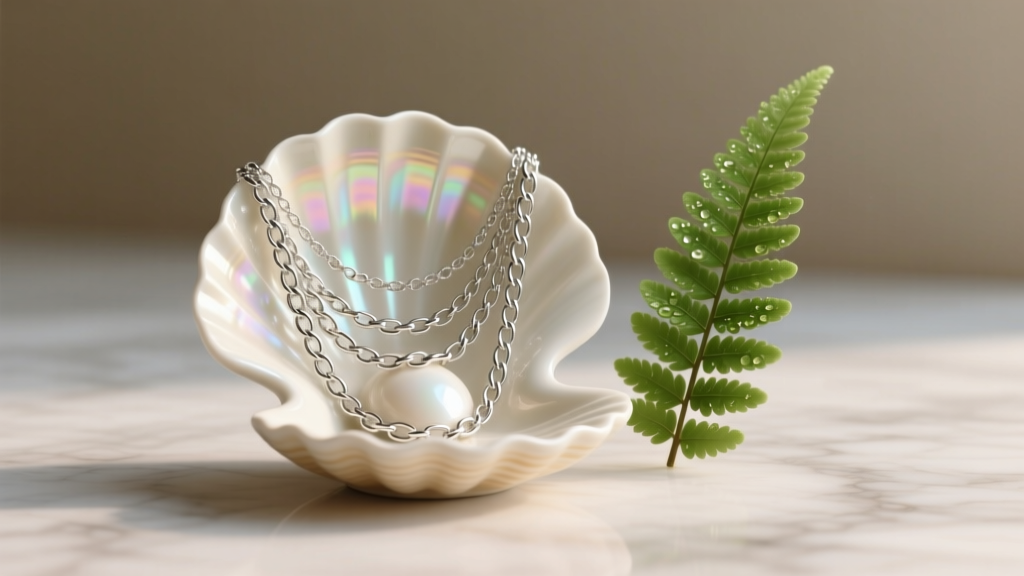
- The Rule of Thirds: Place your heaviest shell holder (like a solid bronze conch) at the intersection of the vanity's visual thirds, balancing it with a tall, slender element like a dried botanical stem or an amber glass perfume bottle.
- Textural Friction: Pair the high-gloss finish of a bio-resin shell tray with matte, porous surfaces like unglazed terracotta, raw travertine, or limewashed wood. This prevents the vignette from looking like a sterile showroom.
- Metal Mixing: Use a warm-toned brass shell organizer to hold cool-toned silver and white gold pieces. The contrasting temperatures elevate both the jewelry and the sculpture, creating a curated, intentional look rather than a matched set.
Sourcing and Price Points: Where to Invest
The market for elevated coastal storage is highly stratified. Mass-market retailers offer slip-cast ceramic shells in the $15 to $30 range, but these often suffer from thick, clumsy lip edges that make retrieving small earrings frustrating, and their glazes are prone to craze (fine cracking) over time.
For true longevity and design impact, the $85 to $150 tier is the sweet spot. Here, you will find independent metalworkers on platforms like 1stDibs and specialized Etsy ateliers offering sand-cast brass pieces with felt-lined bases to protect your vanity surface. For museum-quality bio-resin encapsulations or large-scale, ethically sourced giant clam replicas treated with automotive-grade clear coats, expect to invest upwards of $250. These pieces transcend mere storage, functioning as generational decor that honors the ocean while meticulously protecting your most cherished adornments.


