2026 Design Trends: The Modern Tall Jewelry Armoire
Discover 2026 interior design trends for the tall jewelry armoire, from smart LED mirrors to anti-tarnish modular interiors and space-saving profiles.

The Evolution of the Tall Jewelry Armoire in 2026
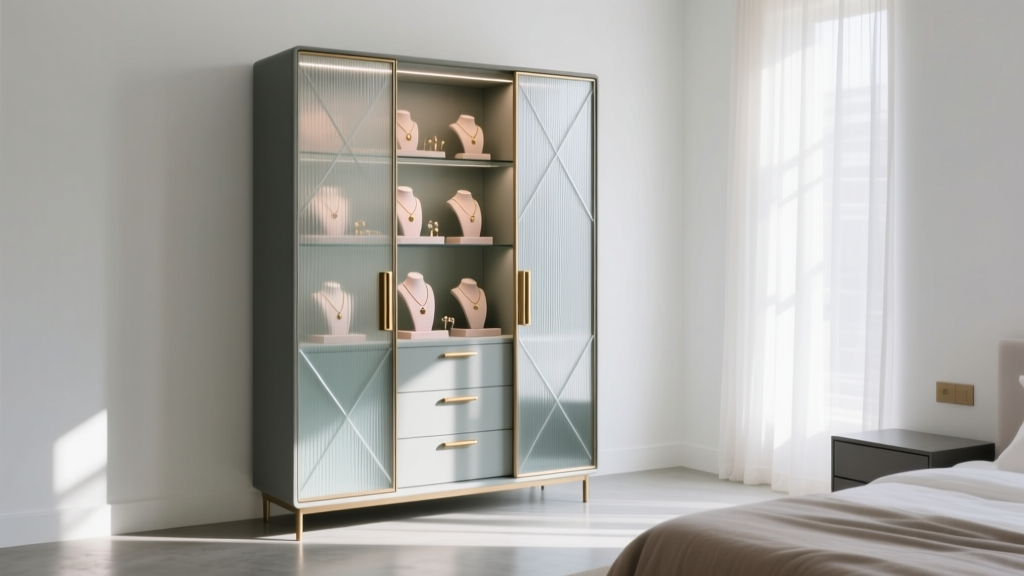
For decades, the traditional jewelry armoire was defined by its bulky, ornate wooden frames and heavy, space-consuming footprints. However, as we navigate the interior design landscape of 2026, the tall jewelry armoire has undergone a radical transformation. Today's collectors and design enthusiasts demand a synthesis of architectural minimalism, advanced material science, and smart-home integration. The modern tall jewelry armoire is no longer just a storage vessel; it is a curated, freestanding gallery designed to protect high-value assets while serving as a striking focal point in contemporary bedrooms and dressing areas.
This shift is driven by the rising value of fine jewelry collections and a growing awareness of how environmental factors degrade precious metals and gemstones. According to the Gemological Institute of America (GIA), improper storage is a leading cause of micro-scratching and accelerated tarnishing in silver and copper-alloy pieces. Consequently, 2026's premier armoires prioritize specialized interior engineering just as heavily as their exterior aesthetics.
Material & Finish Trends: Beyond Basic MDF
The era of high-gloss MDF and faux-mahogany laminates is definitively over. In 2026, the most sought-after tall jewelry armoires feature tactile, organic materials that align with the 'quiet luxury' and 'warm minimalism' movements. Fluted ribbed glass fronts have emerged as a dominant trend, offering a obscured, textured view of the interior while softening the visual weight of the furniture piece, a movement heavily documented by Architectural Digest.
- Wood Veneers & Solids: FSC-certified open-pore walnut and white oak are the premier choices. Open-pore finishes retain the natural texture of the wood grain, avoiding the plastic-like feel of heavy polyurethane topcoats.
- Hardware: Matte brushed brass and knurled antique bronze pulls have replaced polished chrome. These finishes resist fingerprint smudging and complement warm interior palettes.
- Hinges: Premium models now exclusively utilize concealed soft-close hinges (such as Blum Clip-Top systems) to prevent the jarring vibrations that can dislodge delicate pavé settings when doors are shut.
Interior Engineering: Anti-Tarnish & Modular Tech
The true value of a luxury tall jewelry armoire lies behind its doors. Standard polyurethane foams and cheap synthetic velvets are now recognized as liabilities; many off-gas volatile organic compounds (VOCs) and sulfur-based chemicals that actively accelerate silver tarnish. In 2026, high-end armoires utilize advanced sacrificial chemistry to protect collections.
Comparison: Standard vs. Premium Interior Linings
| Lining Material | Tarnish Resistance | Off-Gassing Risk | Typical Price Tier |
|---|---|---|---|
| Standard PU Foam | None (May accelerate) | High | Budget ($150-$300) |
| Standard Velvet | Low (Traps moisture) | Medium | Mid-Range ($300-$600) |
| Microfibre Suede | Medium (Moisture-wicking) | Low | Premium ($600-$1,200) |
| LusterLoc / Pacific Silvercloth | Extremely High (Zinc/Copper sacrificial layer) | None | Luxury ($1,200+) |
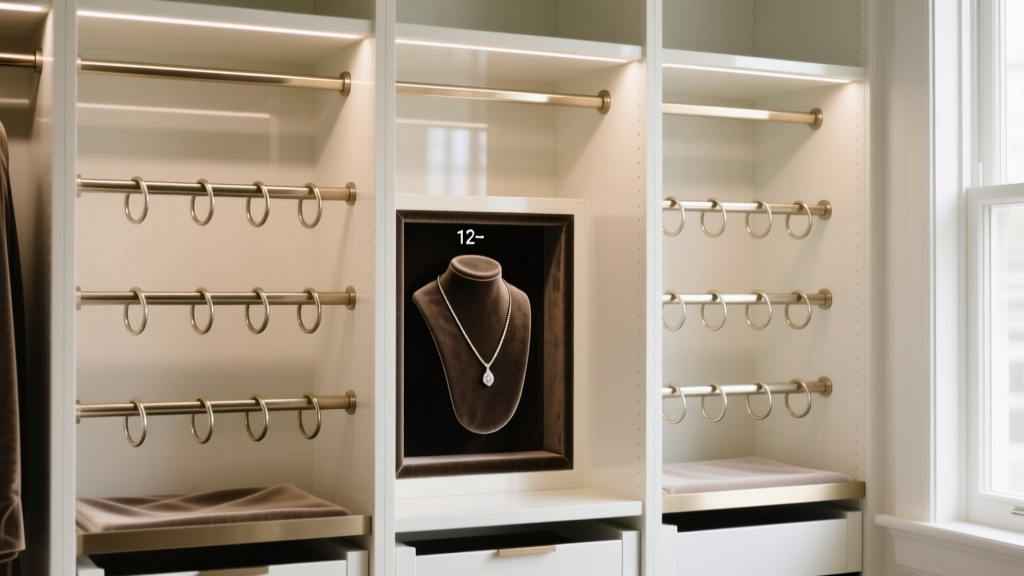
Premium linings like LusterLoc incorporate zinc or copper particles into the fabric weave. These metals act as sacrificial anodes, absorbing ambient sulfur and hydrogen sulfide before they can react with your sterling silver or white gold. Furthermore, modular interiors are now standard. Adjustable ring rolls that expand to accommodate chunky signet rings, and dedicated 12-to-15-inch necklace drop zones with silicone-gripped hooks, prevent the dreaded 'chain tangle' that plagues lesser organizers.
Smart Integration: LED Lighting & Security
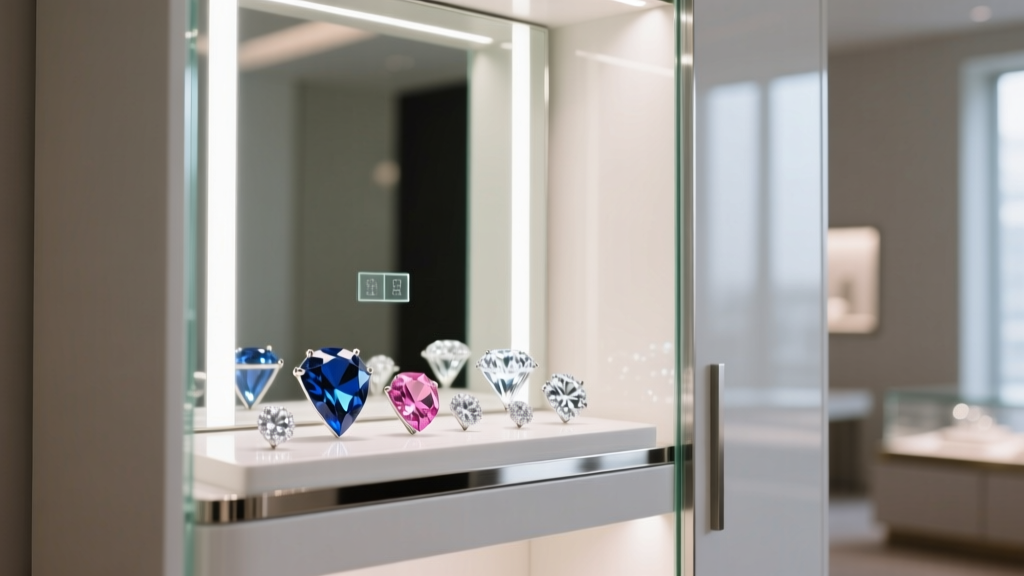
Lighting inside a jewelry armoire is critical, not just for visibility, but for accurate color rendering. The 2026 standard for integrated LEDs requires a Color Rendering Index (CRI) of 95 or higher. Low-CRI LEDs flatten the visual depth of gemstones and obscure the 'fire' (light dispersion) in diamonds. Modern tall jewelry armoires feature adjustable color temperature LEDs (ranging from 3000K warm to 4000K neutral) to simulate different lighting environments before you leave the house.
'In 2026, a jewelry armoire without high-CRI lighting and biometric security is essentially just a wooden box. Collectors are treating their storage furniture with the same technological rigor as a smart home safe.'
Security has also evolved past fragile barrel keys. High-end models now feature flush-mounted biometric fingerprint scanners and Bluetooth-enabled inventory tracking, allowing users to log pieces via a smartphone app and receive alerts if the armoire is opened without authorization.
Spatial Footprint & Placement Strategy
Despite their height, modern tall jewelry armoires are engineered to minimize their floor footprint. The standard 2026 dimensional profile measures approximately 14 inches wide by 10 inches deep, standing between 58 and 64 inches tall. This slender verticality makes them ideal for narrow alcoves or the dead space between a bedroom window and a corner wall.
However, this high center of gravity introduces a critical safety consideration. The Consumer Product Safety Commission (CPSC) strictly warns against freestanding tall furniture that is not properly anchored. When fully loaded with heavy metals and gemstones, a tall armoire can easily exceed 80 pounds. Always utilize the included anti-tip wall-anchoring hardware, securing it directly into a wall stud or using heavy-duty toggle bolts for drywall installations to meet ANSI/BIFMA safety standards.
Investment Tiers: What to Expect in 2026
When shopping for a tall jewelry armoire this year, expect pricing to reflect the integration of material quality and interior technology:
- Entry-Level ($200 - $450): Engineered wood with MDF cores, basic velvet interiors, standard 80 CRI battery-operated LED strips, and manual key locks.
- Mid-Tier ($500 - $950): Solid wood frames or high-grade walnut veneers, microfibre suede linings, hardwired 90 CRI LEDs, and soft-close hinges.
- Luxury & Bespoke ($1,200 - $3,500+): Fluted glass detailing, LusterLoc anti-tarnish fabric, 95+ CRI adjustable lighting, biometric locks, and customizable modular drawer inserts.
Final Verdict
The tall jewelry armoire has successfully shed its outdated, cumbersome reputation. In 2026, it stands as a sophisticated intersection of interior design and horological-grade preservation. By prioritizing high-CRI lighting, sacrificial anti-tarnish linings, and architectural exteriors like fluted glass, today's armoires offer a sanctuary for fine jewelry that is as beautiful on the outside as it is protective on the inside.


