Restoring Your Vintage Pilliod Swanton Ohio Jewelry Box: Care Guide
Learn expert care, maintenance, and cleaning tips for your vintage Pilliod Swanton Ohio jewelry box to preserve its wood finish and velvet lining.

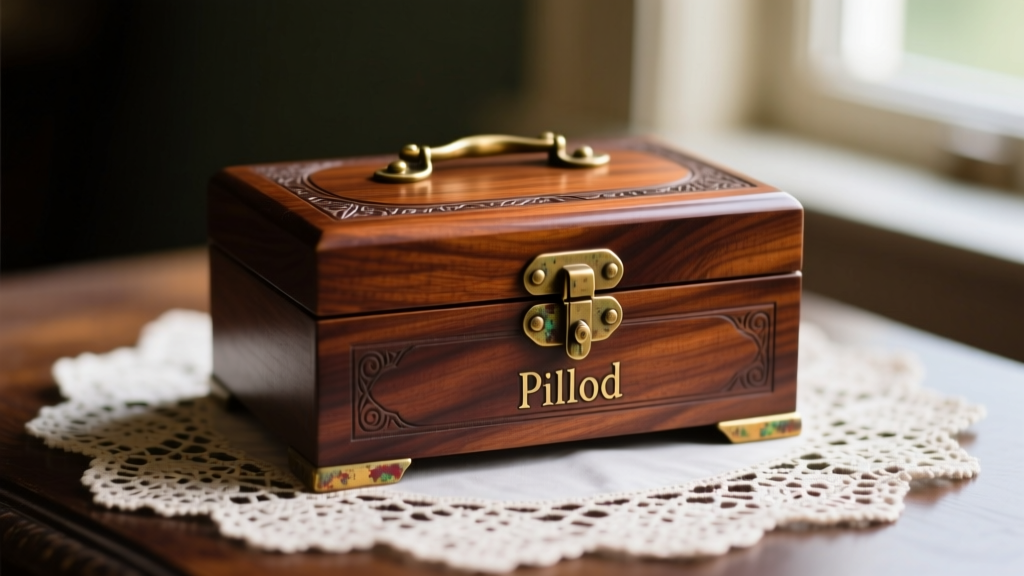
The Pilliod Company, historically based in Swanton, Ohio, built a formidable reputation in the early-to-mid 20th century for crafting exquisite cedar chests, occasional furniture, and heirloom-quality wooden jewelry boxes. Finding a vintage Pilliod Swanton Ohio jewelry box today is a rare treasure. These pieces were typically constructed from rich mahogany, walnut, or cedar, featuring intricate veneers, solid brass hardware, and plush velvet or rayon linings. However, decades of use and environmental exposure can leave the wood dried out, the hardware tarnished, and the interior compromised.
Restoring and maintaining an antique wooden jewelry box requires a delicate balance. You must clean and protect the piece without stripping its historical patina or using harsh modern chemicals that could damage the jewelry stored inside. This comprehensive guide provides expert-level care, maintenance, and cleaning protocols specifically tailored for mid-century Pilliod antique boxes.
Identifying the Original Wood Finish
Before applying any cleaning agents or waxes to your Pilliod box, you must identify the original topcoat. Furniture makers in the 1920s through the 1950s primarily used two types of finishes: shellac and nitrocellulose lacquer. Applying the wrong solvent can permanently cloud or strip the finish.
- The Alcohol Test (Shellac): Dampen a cotton swab with denatured alcohol and rub it gently on an inconspicuous area (like the bottom edge). If the finish becomes tacky or dissolves slightly, it is shellac. Shellac is highly susceptible to alcohol and water rings.
- The Lacquer Thinner Test (Lacquer): If alcohol has no effect, test a small area with lacquer thinner. If it softens, the box is finished in lacquer, which is more durable but can still be damaged by ammonia-based cleaners.
According to expert guidelines on antique wood care, you should never use modern silicone-based aerosol sprays (like standard Pledge) on antique veneers. Silicone creates a barrier that prevents future conservation-grade waxes from penetrating the wood grain and can cause veneer lifting over time.
The Step-by-Step Wood Cleaning Protocol
Once the finish is identified, proceed with a conservative cleaning approach. The goal is to remove decades of dust, skin oils, and old wax buildup without stripping the original color.
1. Dry Dusting and Debris Removal
Use a soft, natural-bristle brush or a microfiber cloth to remove loose dust from the carvings and crevices. Avoid feather dusters, as their stiff quills can scratch alligatored (cracked) finishes and catch on lifting veneer edges.
2. Solvent Cleaning for Grime
For sticky residue or heavy grime, use odorless mineral spirits. Dampen a clean, lint-free cotton cloth—never apply the solvent directly to the wood. Wipe in the direction of the grain, turning the cloth frequently. Mineral spirits will cut through old wax and dirt but will not dissolve shellac or lacquer.
3. Nourishing and Protecting
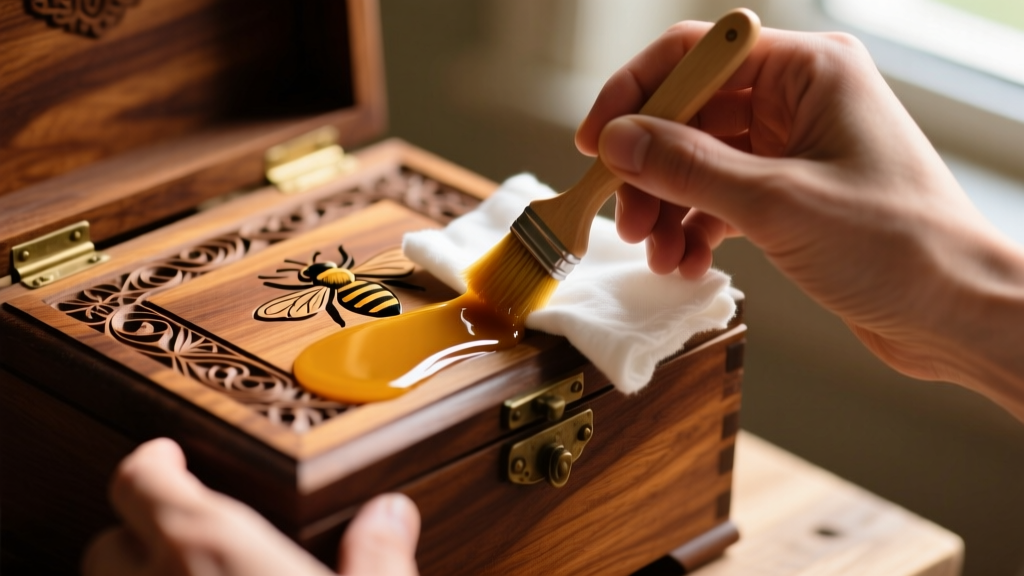
After the wood is clean and fully dry, apply a conservation-grade paste wax or a blend of beeswax and carnauba. Apply a thin, even layer with a soft cloth, let it haze for 15 minutes, and buff it to a gentle satin sheen. This seals the wood pores and protects against humidity fluctuations.
Restoring Brass Hardware and Hinges
Pilliod boxes frequently featured solid brass hinges, clasps, and decorative escutcheons. Over time, brass oxidizes and develops a dark patina. While some collectors prefer this aged look, heavy tarnish can corrode the metal and stain the surrounding wood.
Critical Rule: Never apply liquid brass polish directly to the hardware while it is attached to the box. The ammonia and mild abrasives in polishes will permanently stain the wood veneer and degrade the finish.
- Mask the wood immediately surrounding the hinge with painter's tape.
- Apply a small amount of high-quality metal polish (such as Wenol or Brasso) using a cotton swab.
- Buff gently, ensuring the swab does not touch the wood.
- Wipe away all residue with a clean, slightly damp swab, followed by a dry one.
If the hardware is heavily pitted, consult a professional metals conservator rather than aggressively sanding it, which will destroy the original machining marks and diminish the antique value.
Interior Lining and Jewelry Protection
The interior of a vintage jewelry box is just as critical as the exterior. Pilliod often lined their boxes with rayon velvet, felt, or cedar. These materials trap dust, skin cells, and acidic off-gassing that can tarnish silver and degrade pearls.
Cleaning Vintage Velvet and Felt
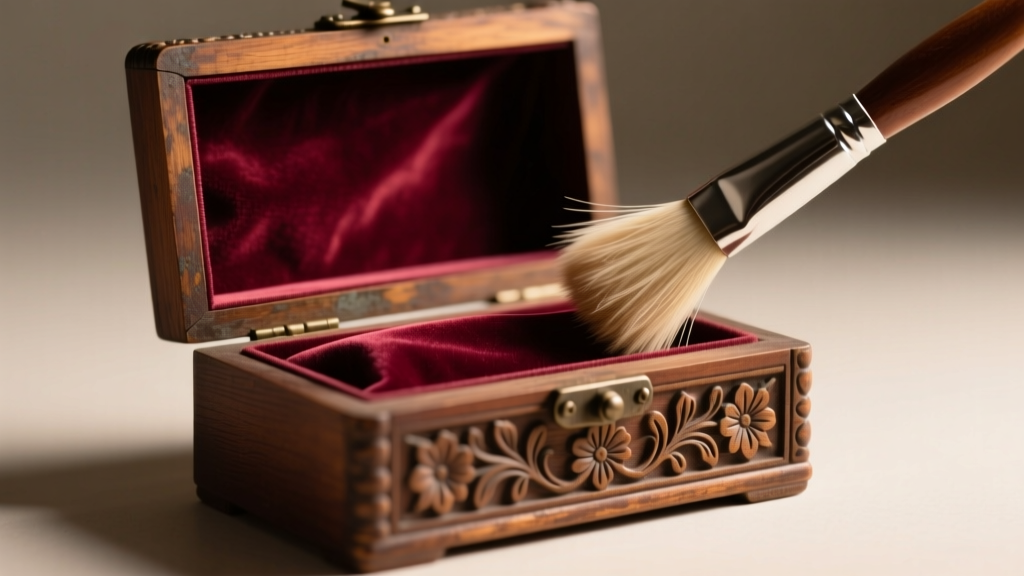
Do not use water or liquid upholstery cleaners on antique linings; the moisture can seep into the wooden substrate, causing warping and mold. Instead, use a soft horsehair brush to gently agitate the fibers and lift embedded dust. Follow this with a micro-vacuum attachment covered by a piece of sheer nylon stocking to safely extract the debris without pulling the fragile fabric.
Neutralizing Acidic Off-Gassing
Older adhesives used to bind the lining to the wood can become acidic over time, which accelerates jewelry tarnish. To combat this, line the bottom of the compartments with acid-free, archival-quality tissue paper or unbleached cotton muslin. The Gemological Institute of America (GIA) strongly recommends storing silver and porous gems like pearls and opals in environments free from sulfur and acidic vapors to prevent irreversible surface pitting.
Environmental Storage and Maintenance Matrix
Antique wood is hygroscopic, meaning it absorbs and releases moisture based on the surrounding environment. Rapid changes in relative humidity (RH) are the primary cause of veneer cracking and joint failure in Swanton-era furniture. Below is a maintenance matrix to ensure your box remains stable.
| Environmental Threat | Impact on Pilliod Box | Preventative Solution | Maintenance Frequency |
|---|---|---|---|
| Low Humidity (Below 30% RH) | Wood shrinks, causing veneer splitting and joint gaps. | Use a room humidifier; keep away from heating vents. | Continuous in winter |
| High Humidity (Above 60% RH) | Wood swells, drawers stick, mold risk increases. | Use silica gel packets in the room (not inside the box). | Continuous in summer |
| Direct Sunlight / UV Exposure | Fades wood stain, degrades lacquer, bleaches velvet. | Store in interior rooms; use UV-filtering window film. | Ongoing |
| Airborne Sulfur / Tarnish | Tarnishes silver jewelry and corrodes brass hinges. | Place 3M Anti-Tarnish strips inside the compartments. | Replace every 6 months |
Common Restoration Mistakes to Avoid
When dealing with a historic piece of American furniture, the desire to make it look "brand new" often leads to catastrophic mistakes. Preserve the integrity of your Pilliod box by avoiding these common errors:
- Over-sanding: Veneers on mid-century boxes are often paper-thin (less than 1/16th of an inch). Sanding will easily burn through the veneer to the cheap substrate wood beneath, ruining the piece.
- Using Water: Water raises the grain of the wood and turns antique hide glue white and brittle. Always use mineral spirits or specialized wood cleaners.
- Replacing Original Hardware: Swapping out the original brass hinges for modern steel or shiny new brass drastically reduces the historical and monetary value of the antique.
- Storing in Attics or Basements: The extreme temperature and humidity swings in these areas will destroy the wood structure and promote severe mold growth on the interior lining.
Preserving a Piece of Ohio History
A vintage Pilliod Swanton Ohio jewelry box is more than just a storage vessel; it is a tangible piece of American craftsmanship. By utilizing gentle, conservation-minded cleaning techniques and maintaining a stable environment, you ensure that both the box and the precious heirlooms it holds will survive for generations to come. For further reading on preserving antique textiles and wood, the National Trust's guide to wooden furniture care offers excellent foundational principles applicable to American antiques.


