Pottery Barn Jewelry Armoire Care: Cleaning & Maintenance Guide
Learn expert cleaning and maintenance tips for your Pottery Barn jewelry armoire. Protect wood finishes, velvet interiors, and hardware from damage.

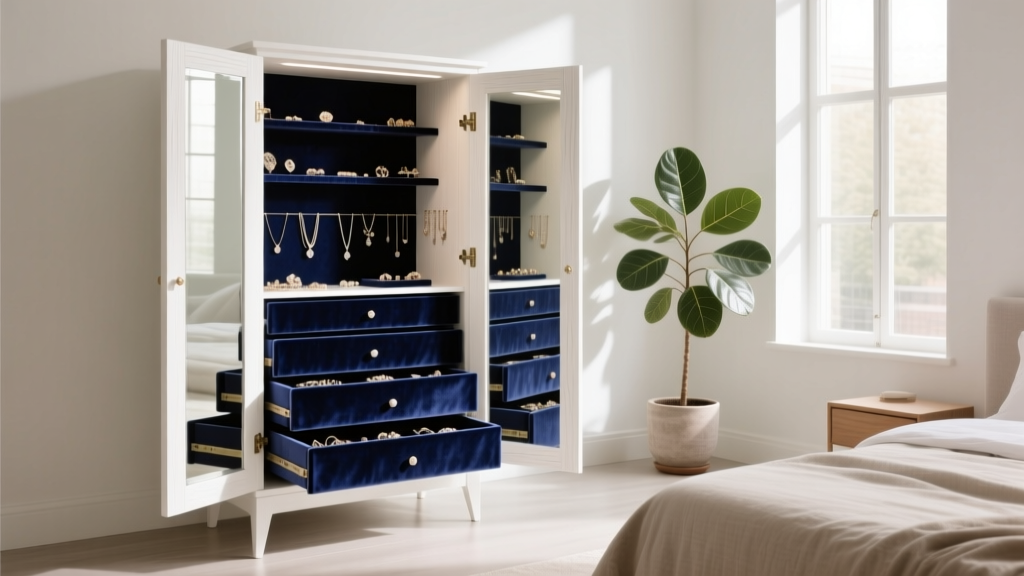
The Investment of Proper Armoire Maintenance
A Pottery Barn jewelry armoire is more than just a storage unit; it is a functional piece of furniture designed to protect your most valued accessories. Whether you own the classic Stratton Mirrored Jewelry Armoire, the rustic Cottage collection, or a modern Chevron inlay piece, these units require specific care to maintain their structural integrity and aesthetic appeal. Unlike standard dresser drawers, jewelry armoires feature specialized anti-tarnish linings, delicate beveled mirrors, and precision hardware that can easily be ruined by generic household cleaners.
In this comprehensive guide, we break down the exact protocols for maintaining the wood finishes, restoring velvet interiors, and protecting the hardware of your Pottery Barn jewelry armoire. By following these specialized techniques, you will extend the lifespan of both the furniture and the jewelry stored within it.
Understanding Your Armoire's Material Composition
Before applying any cleaning agent, you must identify the specific materials used in your armoire's construction. Pottery Barn utilizes a variety of materials depending on the collection and manufacturing year.
Solid Hardwoods vs. Engineered Wood Veneers
Many of the premium Pottery Barn armoires are crafted from solid rubberwood, mahogany, or poplar, while others utilize MDF (Medium-Density Fiberboard) with high-quality wood veneers. Solid woods can tolerate gentle wax-based polishes, whereas veneers require non-penetrating cleaners to prevent the adhesive layers from delaminating. According to the Smithsonian Museum Conservation Institute, avoiding silicone-based aerosol sprays is critical, as silicone creates a barrier that traps dust and eventually causes the finish to cloud and crack.
Anti-Tarnish Linings
The interior drawers are typically lined with treated velvet, flannel, or felt. These fabrics are often infused with zinc or silver particles designed to absorb sulfur and environmental pollutants before they reach your sterling silver and copper jewelry. Treating these linings like standard upholstery is a common mistake that strips them of their protective qualities.
Step-by-Step Exterior Wood Cleaning Protocol
Routine dusting is not enough to maintain the luster of a stained or painted wood finish. Over time, body oils from your hands, aerosolized perfumes, and ambient humidity create a microscopic film on the wood.
| Agent Type | Examples | Verdict | Reasoning |
|---|---|---|---|
| Aerosol Polishes | Pledge, Old English | Avoid | Contains silicones that build up and attract dust. |
| Ammonia Cleaners | Windex, Multi-surface | Avoid | Strips natural oils and damages painted finishes. |
| Beeswax/Carnauba Paste | Howard Feed-N-Wax, Minwax | Use (Stained Wood) | Nourishes wood grain and provides a breathable barrier. |
| Damp Microfiber | Water only | Use (Painted/Veneer) | Safely lifts dust without chemical residue. |
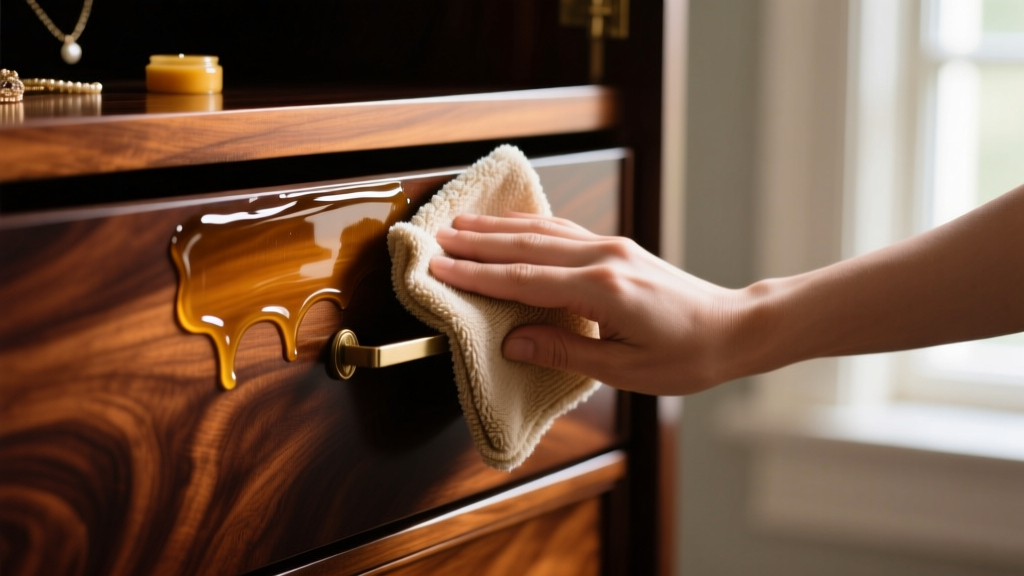
The Application Technique
For stained solid wood models, apply a small amount of carnauba-based paste wax to a lint-free microfiber cloth. Work the wax into the wood grain using circular motions, focusing on high-touch areas like drawer fronts and door handles. Allow the wax to haze for exactly 10 to 15 minutes before buffing it to a shine with a clean, dry cloth. For painted models (such as the white or gray wash finishes), skip the wax entirely. Instead, use a slightly damp microfiber cloth followed immediately by a dry one to prevent water spots.
Interior Velvet and Felt Restoration
The interior lining of your Pottery Barn jewelry armoire is the first line of defense against jewelry oxidation. However, these fabrics absorb skin oils, cosmetic residue, and moisture, which eventually saturates the anti-tarnish treatment.
- Vacuuming: Use a handheld vacuum with a soft brush attachment on the lowest suction setting. This removes abrasive dust and dead skin cells that can scratch soft gemstones like pearls or opals.
- Spot Cleaning: If a spill occurs, never soak the fabric. Use a barely damp cloth with a drop of mild castile soap to dab the area. Blot dry immediately. Never use chemical stain removers, as they will neutralize the anti-tarnish properties.
- Lining Replacement: If your velvet has become matted or your silver is tarnishing rapidly despite being stored inside, the anti-tarnish treatment has expired. You can purchase rolls of Pacific Silvercloth or anti-tarnish flannel from jewelry supply stores, cut them to the exact dimensions of your drawers, and lay them over the existing velvet without using adhesive.
Hardware, Hinges, and Mirror Maintenance
The hardware on a Pottery Barn armoire—ranging from brushed nickel knobs to antique brass drop pulls—requires specific care to prevent pitting and corrosion. Furthermore, the mirrored doors found on many models are highly susceptible to a destructive process known as desilvering.
Protecting the Mirrors
Never spray glass cleaner directly onto the armoire's mirrors. If the liquid seeps into the bottom bevel or the frame gap, it will attack the silver nitrate backing, causing permanent black edges (desilvering). Instead, spray a 50/50 mixture of distilled water and white vinegar onto a microfiber cloth, and wipe the mirror gently. Ensure the cloth is only damp, never dripping.
Lubricating Hinges and Tracks
If your armoire doors squeak or the drawers stick, avoid standard WD-40. WD-40 is a solvent and water displacer, not a long-term lubricant; it will attract dust and eventually create a gritty paste that ruins the hinge mechanism. Instead, use a PTFE (Teflon) dry lubricant. Apply a single drop to the hinge pin or drawer track, cycle the door or drawer back and forth five times, and wipe away any excess. The PTFE dries completely clear and leaves a frictionless film that repels dust.
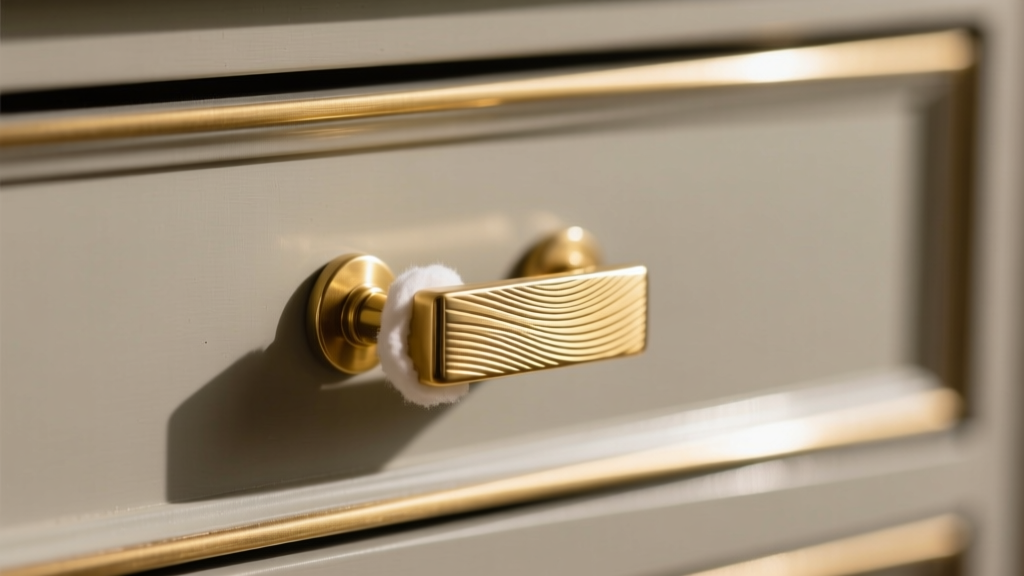
Environmental Controls: Humidity and Placement
Where you place your Pottery Barn jewelry armoire is just as critical as how you clean it. Wood is hygroscopic, meaning it absorbs and releases moisture from the air. The Gemological Institute of America (GIA) notes that extreme environmental fluctuations not only damage wood furniture but can also cause organic gems (like amber, coral, and pearls) to crack or craze.
Expert Rule of Thumb: Maintain a Relative Humidity (RH) level between 40% and 55% in the room housing your armoire. Keep the unit at least two feet away from HVAC vents, radiators, and direct sunlight, which can cause the wood veneers to fade and the joints to loosen over time.
Seasonal Maintenance Checklist
To keep your armoire in pristine condition, implement this bi-annual maintenance schedule:
- Spring: Deep clean the exterior wood with a appropriate cleaner/wax. Vacuum all interior velvet linings. Check hinge tension and tighten any loose screws with a precision screwdriver to prevent stripped threads.
- Autumn: Inspect the anti-tarnish linings for wear. Apply a micro-crystalline wax (like Renaissance Wax) to any exposed brass hardware to seal it against winter humidity changes. Ensure the armoire is not touching an exterior wall where cold drafts could cause the wood to contract.
By treating your Pottery Barn jewelry armoire as a specialized conservation environment rather than a standard piece of bedroom furniture, you ensure that both the unit and your precious jewelry collection remain flawless for decades.


