Troubleshooting & Restoring an Antique Velvet Jewelry Box
Learn how to troubleshoot, clean, and restore an antique velvet jewelry box. Fix crushed pile, remove musty odors, and repair tarnished hardware safely.

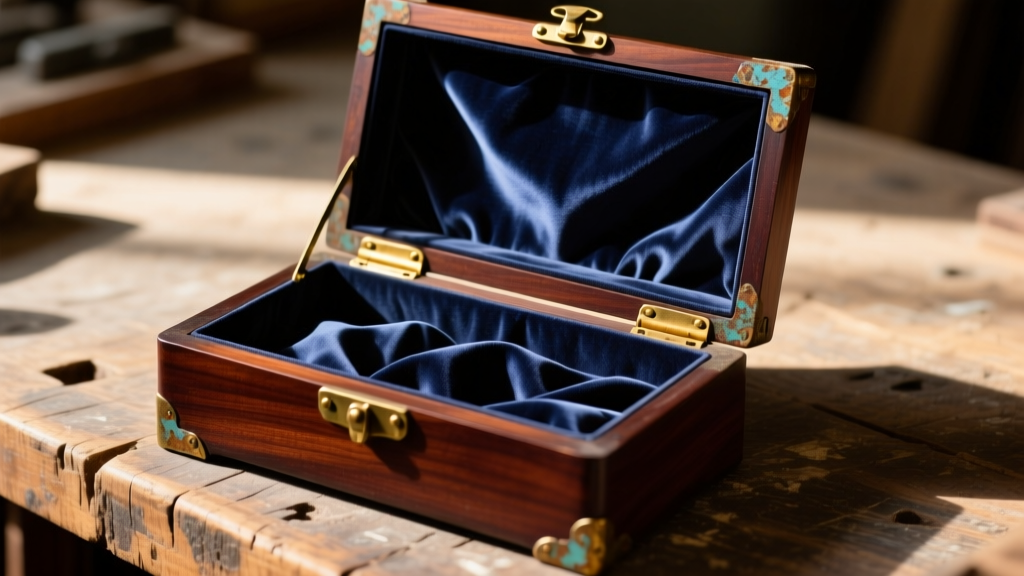
Owning an antique velvet jewelry box is a unique privilege. Whether inherited from a relative or sourced from an estate sale, these late-Victorian and Art Deco storage pieces are masterclasses in craftsmanship. However, they also present a highly specific set of conservation challenges. Unlike modern synthetic organizers, antique boxes were constructed using organic materials—silk plush, cotton velvet, animal hide glues, and reactive brass alloys—that degrade in predictable but damaging ways over a century of use.
In this guide, we bypass generic cleaning advice and dive straight into professional-level troubleshooting. We will cover the exact methodologies used by textile and furniture conservators to restore crushed velvet piles, neutralize acidic off-gassing, repair failing hardware, and stop the chemical reactions that cause your sterling silver to tarnish the moment it touches the fabric.
The Unique Anatomy of Antique Velvet Lining
Before applying any moisture or adhesive, you must identify the exact textile you are working with. According to the American Institute for Conservation (AIC), the term "velvet" in the 19th and early 20th centuries usually referred to one of two distinct materials:
- Silk Plush: A warp-pile fabric where the raised fibers (the pile) are made of silk, while the backing is often cotton or linen. Silk plush is highly susceptible to water spotting, alkaline damage, and permanent crushing if subjected to heavy pressure.
- Cotton Velvet (Velveteen):strong> A weft-pile fabric made entirely of cotton. It is more durable and less prone to water spotting but tends to mat down heavily and attract dust into its dense weave.
To test your lining, carefully extract a single fiber from an inconspicuous frayed edge using tweezers. If it burns quickly and smells like singed hair, it is silk. If it burns steadily and smells like burning paper, it is cotton. This distinction dictates your entire restoration strategy.
Troubleshooting Crushed and Matted Velvet Pile
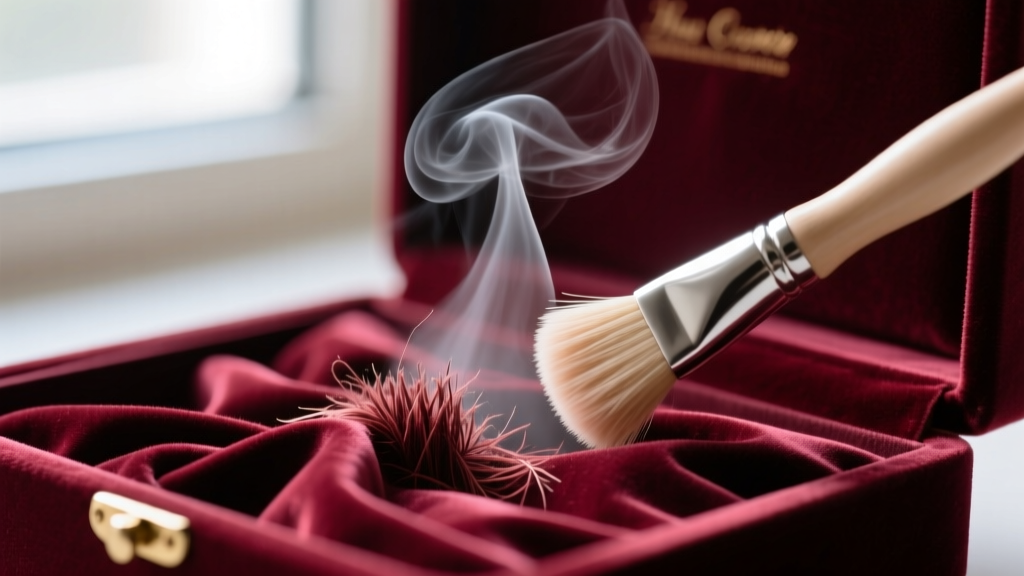
The most common complaint with an antique velvet jewelry box is flattened, matted pile, usually caused by decades of heavy brooches or watches pressing into the same compartments. Do not attempt to iron or aggressively scrub the fabric, as this will permanently distort the warp threads.
The Steam-and-Lift Technique
For both silk and cotton velvets, controlled steam is the safest way to relax the fibers. Follow this precise protocol:
- Use a handheld garment steamer filled strictly with distilled water. Tap water contains minerals that will leave permanent white calcification marks on silk.
- Hold the steamer nozzle exactly 4 to 6 inches away from the crushed area. Do not let the fabric become damp; you only want the ambient heat and moisture to penetrate the fibers.
- While steaming, use a clean, dry boar-bristle brush or a soft toothbrush to gently flick the pile upward against its natural grain.
- Allow the box to air dry in a low-humidity room for 24 hours before placing any jewelry back inside.
Conservator's Warning: Never use commercial fabric sprays or starch on antique silk plush. The Victoria and Albert Museum (V&A) explicitly warns that modern chemical softeners leave residues that attract atmospheric soil and accelerate silk degradation.
Eliminating Musty Odors Without Damaging Adhesives
That distinct "old box" smell is rarely just mildew. In boxes built between 1880 and 1930, the velvet was adhered to the wooden carcase using collagen-based animal hide glue. As this glue degrades over decades, it off-gasses acetic acid and ammonia, resulting in a sharp, sour odor that can actively corrode the metals stored inside.
To neutralize this without dissolving the century-old adhesive (which would cause the velvet to detach from the wood), you must use passive, non-aqueous desiccants.
- Activated Charcoal Sachets: Place 3 to 4 small, breathable muslin bags of activated bamboo charcoal inside the closed box for 14 days. The charcoal traps volatile organic compounds (VOCs) without adding moisture.
- Zeolite Minerals: For severe acidic off-gassing, use acid-adsorbing zeolite packets, which are specifically designed in archival conservation to trap acetic acid vapors.
Avoid placing baking soda directly inside the box. Baking soda is highly alkaline; if it dusts onto the silk velvet, it will raise the pH of the fibers, leading to rapid embrittlement and tearing.
Hardware and Hinge Failure: A Diagnostic Table
The brass and steel hardware on antique boxes frequently fail due to wood shrinkage and metal fatigue. Below is a diagnostic framework for troubleshooting common hinge and clasp issues without compromising the historical integrity of the piece.
| Issue Symptom | Root Cause | Professional Restoration Fix |
|---|---|---|
| Hinge pin slipping out | Wear on the brass knuckle or bent pin | Remove pin, gently swage (tighten) the brass knuckles with a nylon-jaw plier, and replace with a custom-cut brass rod. |
| Screws spinning freely | Wood threads stripped due to age/dryness | Inject a 50/50 mix of PVA wood glue and fine sawdust into the hole. Let cure 24 hours, then re-drill a pilot hole. |
| Clasp fails to catch | Spring tension loss or bent catch plate | Carefully bend the catch plate inward using a micro-spatula. Do not heat-treat, as antique brass will crack. |
| Hardware heavily tarnished | Oxidation and sulfur exposure | Clean with a mild solvent, then seal with a micro-crystalline wax (e.g., Renaissance Wax) to halt oxidation. |
Preventing Tarnish Transfer from Velvet to Silver

Have you ever placed a polished silver ring into an antique velvet jewelry box, only to find it coated in yellow or black tarnish a week later? This is known as tarnish transfer, and it is a chemical reaction, not a cleaning issue.
During the 19th and early 20th centuries, the dyes used to color velvet—particularly deep blacks, navies, and emerald greens—were heavily reliant on sulfur-based mordants and logwood extracts. Over time, these dyes break down and release sulfur dioxide gas directly into the micro-climate of the closed box. When this gas meets the copper content in sterling silver (which is 92.5% silver and 7.5% copper), it rapidly forms copper sulfide, manifesting as dark tarnish spots.
The Archival Solution: Interceptor Technology
You cannot safely strip the sulfur out of antique velvet without destroying the fabric. Instead, you must alter the micro-climate. The Canadian Conservation Institute (CCI) recommends the use of anti-tarnish interceptor materials.
- Pacific Silvercloth: Line the bottom of the most-used compartments with this specialized flannel, which is embedded with microscopic silver particles. These particles act as a sacrificial anode, attracting and neutralizing the sulfur gas before it reaches your jewelry.
- Anti-Tarnish Strips: Tuck 3M anti-tarnish copper-impregnated strips into the corners of the box. These strips absorb airborne sulfides and chlorides, effectively shielding your metals. Replace them every 6 months.
When to Re-Line vs. When to Conserve
The ultimate troubleshooting decision for an antique velvet jewelry box is whether to conserve the original lining or replace it entirely. As a general rule in textile conservation, originality dictates value. If the velvet is merely crushed, faded, or slightly frayed at the seams, conservation (steaming, surface vacuuming through a fiberglass screen, and edge stabilization) is always preferred.
However, re-lining is strictly necessary if you observe the following critical failure modes:
- Active Mold Bloom: If the velvet exhibits fuzzy, white or green hyphae that cannot be safely removed without embedding spores into the wooden carcase.
- Severe Acid Hydrolysis: If the silk plush shatters into dust when lightly touched, indicating the polymer chains have completely broken down.
- Pest Infestation Damage: If carpet beetle or moth larvae have consumed the warp threads, leaving the pile structurally unanchored.
If re-lining is unavoidable, avoid modern polyester velvets, which generate static electricity and attract dust. Source 100% cotton velveteen or, for high-end restorations, archival-grade silk rayon blends from specialized theatrical or conservation textile suppliers. By understanding the chemistry and mechanics of your antique velvet jewelry box, you ensure it remains a safe, beautiful sanctuary for your collection for another century.


