Expert Guide to Restoring a Ballerina Jewelry Box Vintage Find
Discover expert techniques for restoring a ballerina jewelry box vintage find, including mechanism repair, velvet replacement, and safe storage.

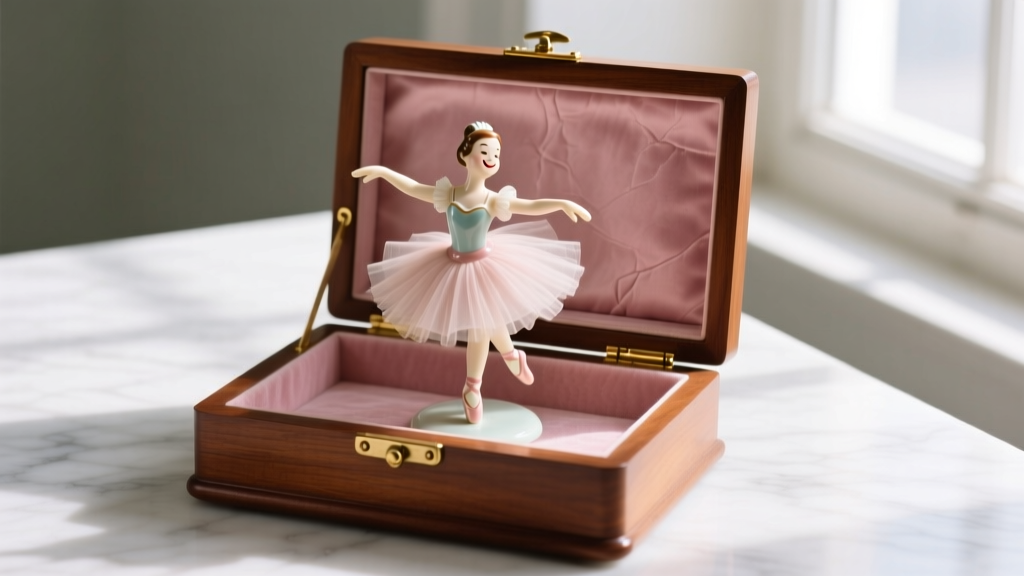
The Allure and Engineering of Mid-Century Music Boxes
Finding an authentic ballerina jewelry box vintage piece is only the first step in the preservation process. These mid-century marvels, primarily produced between the 1940s and 1970s, represent a fascinating intersection of horological engineering and decorative arts. Unlike modern, battery-operated replicas, a true vintage ballerina box relies on a complex mechanical movement powered by a coiled steel mainspring. For jewelry collectors and horology enthusiasts, restoring these boxes requires a deep understanding of both mechanical conservation and the chemical interactions between vintage storage materials and fine metals.
Before attempting any restoration, it is crucial to identify the origin of the internal movement. The two dominant manufacturers of the era were Reuge in Switzerland and Sankyo in Japan. Swiss movements typically feature 18-note or 36-note steel combs with a heavier, more resonant tone, while Japanese movements often utilized lighter brass alloys and simpler 15-note configurations. Identifying the maker's mark—usually stamped on the brass bedplate beneath the cylinder—dictates the specific tension tolerances and lubrication requirements for the restoration.
Material Degradation: Why Vintage Linings Tarnish Silver
The most critical issue with using a vintage box for modern jewelry storage is the chemical breakdown of the original interior linings. Many collectors assume that the plush velvet interior is inherently safe for fine jewelry. However, the synthetic velvets (often rayon or early nylon blends) and the polyurethane foams used as padding in the mid-20th century are highly unstable over decades.
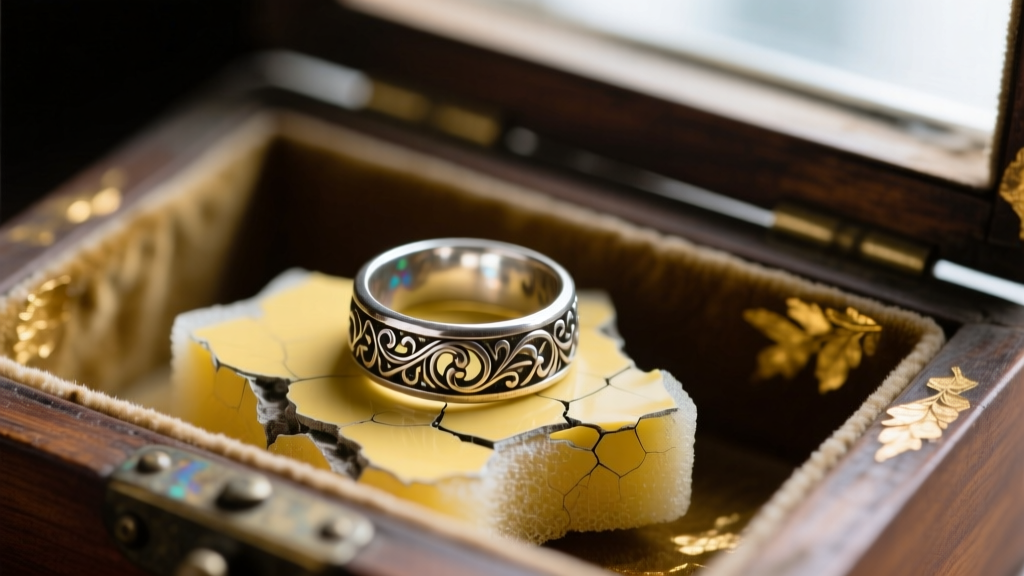
As these early polymers degrade, they off-gas volatile organic compounds (VOCs) and sulfur-containing amino acids. According to conservation guidelines outlined by the American Institute for Conservation, these acidic gases become trapped within the enclosed microclimate of the jewelry box. When sterling silver, copper, or low-karat gold alloys are exposed to this sulfur-rich environment, it accelerates the formation of silver sulfide—the black tarnish that plagues vintage jewelry collections. Furthermore, the original animal-hide glues used to adhere the velvet to the wooden carcass become brittle and acidic, potentially transferring corrosive compounds directly to the jewelry resting against the compartments.
Step-by-Step Mechanical Restoration Framework
Restoring the mechanical heart of the box requires precision and the correct horological tools. Never attempt to force the winding key if the mainspring is seized, as this will snap the spring arbor and destroy the movement.
Servicing the Governor and Comb
The governor is the fan-like mechanism that regulates the speed of the music. Over time, the pivot bearings dry out, causing the music to play erratically or the fan to wobble. To service this, carefully remove the governor assembly. Clean the pivot holes with a pegwood stick dipped in naphtha to dissolve old, resinified oils. For lubrication, apply a microscopic drop of Moebius 9010 synthetic clock oil to the pivot bearings. Warning: Never apply oil to the cylinder pins, the comb teeth, or the mainspring barrel teeth. Lubricating the comb will attract dust and deaden the acoustic resonance of the tuned teeth.
Stripping the Degraded Interior
To remove the acidic velvet and foam, use a plastic scraper to avoid gouging the soft mahogany or walnut carcass. The original hide glue can be softened and dissolved using D-Limonene, a citrus-based solvent that is highly effective on vintage adhesives but safe for most cured wood finishes. Allow the solvent to penetrate for 15 minutes before gently lifting the fabric. Once stripped, neutralize the bare wood with a light wipe of denatured alcohol and let it cure for 48 hours to ensure all off-gassing solvents have evaporated.
Selecting Archival Adhesives for Re-Lining
When installing new lining materials, the choice of adhesive is paramount. Standard craft glues and spray adhesives contain acidic plasticizers that will eventually bleed through the new fabric and damage your jewelry. Below is a technical comparison of adhesive options for archival jewelry box restoration.
| Adhesive Type | Chemical Composition | pH Level | Off-Gassing Risk | Verdict for Fine Jewelry Storage |
|---|---|---|---|---|
| Standard PVA (White Glue) | Polyvinyl Acetate | 4.0 - 5.5 (Acidic) | Moderate | Reject: Will acidify over time and tarnish metals. |
| 3M Super 77 Spray | Synthetic Elastomers | Neutral initially | High (VOCs) | Reject: Solvents trap in enclosed box, causing severe tarnish. |
| Archival PVA (e.g., Lineco) | Polyvinyl Acetate (Alkaline buffered) | 7.0 - 8.5 (Neutral/Basic) | None | Approve: Museum-grade, flexible, and chemically stable. |
| Neutral Silicone | Alkoxy Silicone | Neutral | Low | Conditional: Good for non-porous trims, poor for fabric. |
Modernizing for Anti-Tarnish Protection
To transform a vintage box into a safe haven for modern fine jewelry, you must integrate active anti-tarnish technologies into the restoration process. The Smithsonian Institution recommends controlling the microclimate of silver storage to prevent sulfide formation.
Integrating Pacific Silvercloth
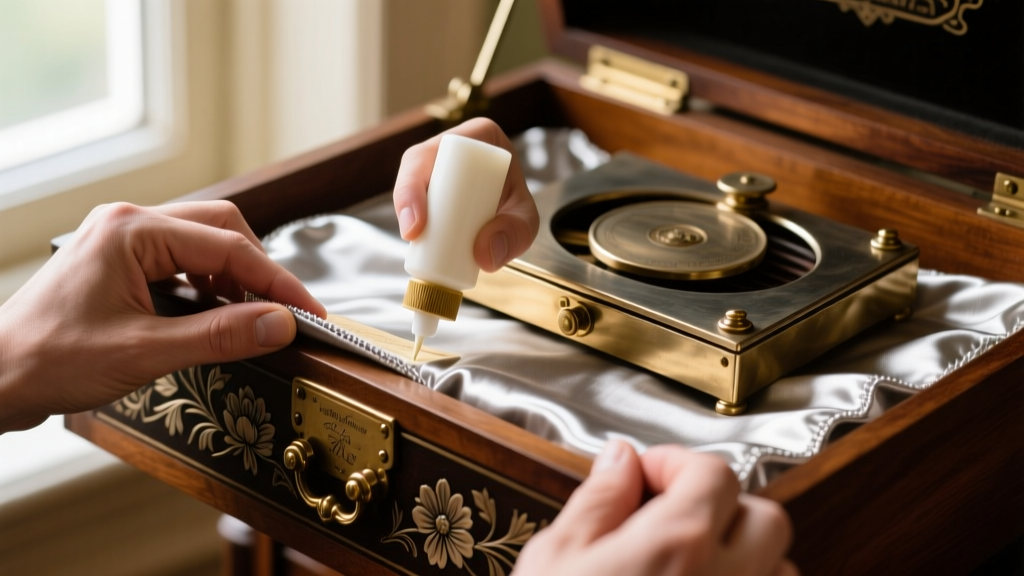
Instead of standard rayon velvet, line the primary compartments with Pacific Silvercloth. This specialized flannel is embedded with microscopic silver particles. Because the silver particles in the cloth are more reactive than the solid silver jewelry, they act as a sacrificial anode, absorbing sulfur gases and tarnishing themselves so your jewelry remains pristine. When cutting Pacific Silvercloth, use sharp fabric shears to prevent fraying, and secure it using the archival PVA mentioned above, applying the glue only to the wooden substrate, never directly to the cloth fibers.
Adding 3M Anti-Tarnish Strips
For the smaller, ring-roll compartments where Pacific Silvercloth is too thick to fold neatly, utilize 3M Anti-Tarnish Strips. These small, copper-infused paper strips absorb airborne pollutants and sulfur compounds. Hide a strip beneath the bottom drawer lining or tape it to the underside of the lid. They remain active for approximately six months in an enclosed space and are easily replaced during routine maintenance.
Sourcing Authentic Replacement Parts
If your vintage ballerina is missing her porcelain figure, or if the winding key is stripped, sourcing period-correct parts is essential for maintaining the box's valuation and mechanical integrity. Specialized horological suppliers and music box restoration guilds maintain inventories of New Old Stock (NOS) Sankyo and Reuge components. When replacing the ballerina figure, ensure the brass spindle pin matches the original gauge—typically 1.5mm for Japanese movements and 2.0mm for Swiss movements. Forcing an incorrect gauge will warp the plastic or porcelain base of the dancer, causing it to wobble and eventually snap during rotation.
Conclusion
Restoring a ballerina jewelry box vintage find is a meticulous process that bridges the gap between horological mechanics and archival conservation. By understanding the chemical dangers of degrading mid-century polymers and replacing them with modern, pH-neutral, and anti-tarnish materials, you preserve not only the mechanical magic of the music box but also the structural integrity of the fine jewelry stored within. Treat the movement with horological respect, line the interior with archival precision, and your vintage box will safely serve the next generation of collectors.


