Is Your Jewelry Box Old? A Complete Restoration Guide
Discover expert tips to clean, restore, and maintain an old jewelry box. Learn how to treat vintage wood, velvet linings, and tarnished brass hardware.

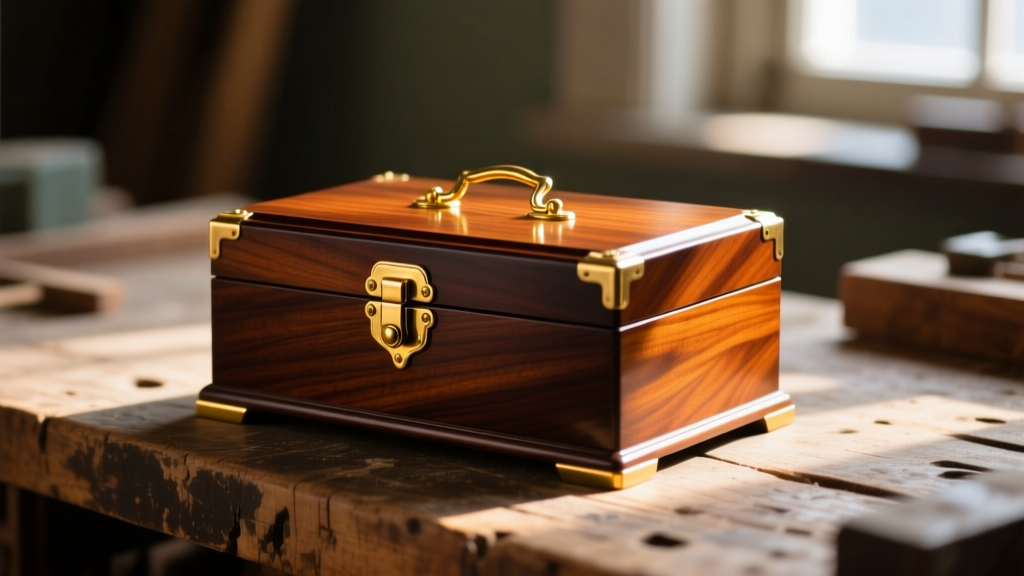
Inheriting or discovering a vintage jewelry storage piece is a thrilling experience, but it often comes with a host of preservation challenges. When you finally ask yourself, 'Is my jewelry box old enough to need professional restoration?' the answer usually lies in the condition of its materials. Over decades, the acidic glues used in mid-century manufacturing begin to off-gas, accelerating silver sulfide tarnish on your precious metals. Meanwhile, the exterior wood dries out, veneers lift, and brass hardware oxidizes into a dull, corroded state.
Restoring a vintage storage piece is not just about aesthetics; it is a critical step in creating a safe, chemically stable environment for your fine jewelry. Modern jewelry organizers are often made from MDF and synthetic suede, which lack the longevity and structural integrity of antique hardwoods. By investing time into properly cleaning and refurbishing an heirloom piece, you are actively protecting your collection from environmental damage while preserving a piece of functional art.
Assessing the Damage: Wood, Veneer, and Hardware
Before applying any cleaners or polishes, you must accurately identify the materials you are working with. Many antique boxes from the late 19th and early 20th centuries feature a solid wood core—often pine or poplar—covered in a thin layer of premium veneer, such as mahogany, walnut, or burl. Applying heavy liquid cleaners to compromised veneer can cause the water to seep beneath the surface, dissolving the original animal-based hide glue and causing irreversible bubbling.
Inspect the corners and edges closely. If you notice lifting veneer, do not reach for standard PVA wood glues like Titebond. PVA is permanent and will ruin the antique value of the piece. Instead, conservationists recommend using reversible hide glue or a specialized conservation-grade adhesive. According to the National Trust, maintaining the reversibility of repairs is a cornerstone of proper antique furniture conservation.
Next, examine the hardware. Determine whether the hinges, clasps, and drawer pulls are solid brass, brass-plated steel, or lacquered. A simple magnet test will reveal if the hardware is plated steel (the magnet will stick) or solid brass (no magnetic pull). This distinction is crucial, as using an abrasive polish on brass-plated hardware will strip the microscopic plating away, exposing the rust-prone steel beneath.
Cleaning and Restoring the Exterior Wood
The most common mistake amateurs make when treating vintage wood is reaching for silicone-based aerosol sprays. These products leave a cumulative, sticky residue that traps dust and creates a cloudy haze over time. To properly clean the exterior, start by wiping the surface with a lint-free cloth lightly dampened with odorless mineral spirits. This will safely dissolve decades of built-up wax, furniture polish, and grime without raising the wood grain or damaging the original patina.
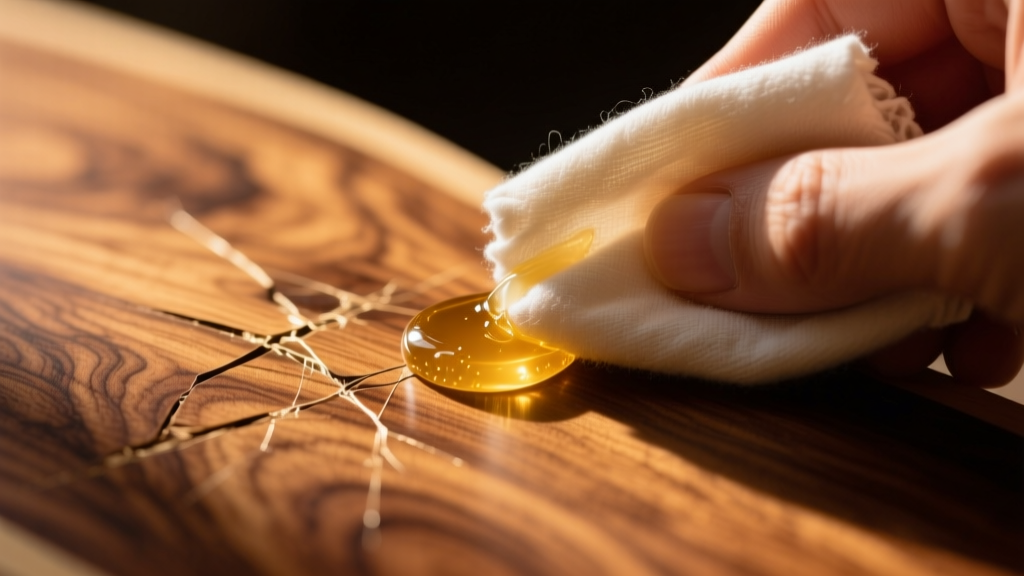
Once the surface is clean and completely dry, it is time to feed and protect the wood. For museum-quality preservation, microcrystalline wax is the gold standard. Products like Renaissance Wax provide a hard, durable barrier that does not bloom or turn white in humid environments. Apply a microscopically thin layer with a soft cotton cloth, allow it to haze for ten minutes, and buff it to a gentle satin sheen. This method stabilizes the wood and protects it from the natural oils on your hands.
If the wood is severely desiccated and the finish is entirely gone, you may need to use a blend of beeswax and orange oil to replenish the natural lipids in the timber. However, avoid over-oiling, as excess oil can seep into the interior compartments and stain the fabric lining or transfer onto your jewelry.
Deodorizing and Treating the Interior Velvet
Opening a vintage storage piece often reveals a distinct, unpleasant odor—a combination of mildew, degrading synthetic foams, and decades-old perfume. This smell is not just a nuisance; it indicates the presence of volatile organic compounds (VOCs) and acidic environments that will actively tarnish silver and degrade pearls. Never spray liquid deodorizers, water, or upholstery cleaners directly onto antique silk or rayon velvet linings, as this will cause immediate water spotting and potential dye bleeding.
To safely extract odors, use a passive desiccant and odor-absorbing method. Place a small, breathable muslin bag filled with activated bamboo charcoal and baking soda into each compartment. Close the lid and leave it in a climate-controlled room for two to three weeks. The charcoal will absorb the moisture and odor molecules without introducing any chemicals or moisture to the delicate textiles.
If the velvet is physically crumbling or stained beyond repair, it must be replaced. Carefully peel back the old fabric, noting the folding patterns at the corners. Use an acid-free PVA glue to adhere new, high-quality cotton velvet or anti-tarnish flannel to the cardboard or wooden sub-frames. The Smithsonian Museum Conservation Institute emphasizes the importance of using acid-free, archival-quality materials when storing metals and organic gems to prevent chemical degradation.
Polishing Tarnished Brass and Copper Hardware
Tarnished hardware can make even the most beautifully restored wood look neglected. However, aggressive polishing can strip away the antique character and damage the surrounding veneer. Always mask off the wood immediately surrounding the hardware using low-tack painter's tape before applying any chemical polishes.
| Hardware Material | Recommended Cleaner | What to Avoid |
|---|---|---|
| Solid Brass / Copper | Simichrome Polish or Maas | Ammonia-based liquid dips |
| Brass-Plated Steel | Mild dish soap and warm water | Abrasive pastes or steel wool |
| Lacquered Brass | Damp microfiber cloth only | Any chemical metal polish |
| Cast Iron / Steel | Mineral spirits and fine bronze wool | Water and liquid rust removers |
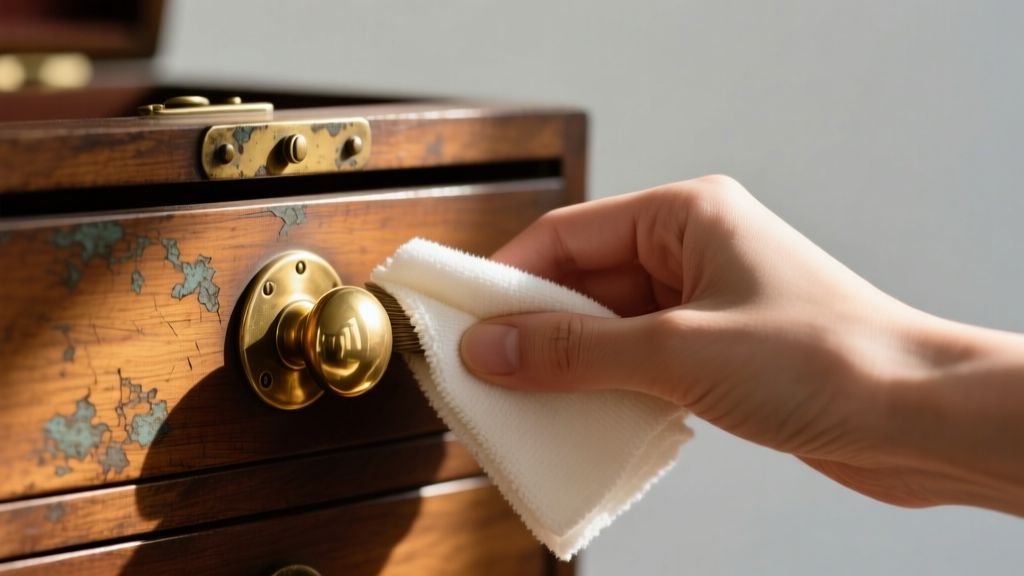
For solid brass components, Simichrome is highly recommended by conservators because it contains very fine, gentle abrasives and leaves behind a protective micro-thin barrier that slows down re-oxidation. Apply a pea-sized amount to a cotton swab or microfiber cloth, working it into the crevices of ornate cast pulls. Wipe away all residue thoroughly; leftover polish trapped in hinges will dry into a chalky white crust that is incredibly difficult to remove later.
Upgrading the Lining for Modern Anti-Tarnish Protection
While the original velvet lining holds historical charm, it offers zero protection against modern atmospheric pollutants that cause silver sulfide tarnish. If you plan to use this restored piece for your daily-wear silver and gold, consider integrating modern anti-tarnish technology into the restoration process.
Pacific Silvercloth is a specialized flannel embedded with microscopic silver particles that intercept and neutralize tarnish-causing gases before they reach your jewelry. You can line the bottom of the main compartment or create custom anti-tarnish pouches that sit discreetly inside the vintage drawers. Alternatively, 3M Anti-Tarnish strips can be hidden beneath the fabric lining or tucked into the hinges, providing up to two years of active chemical protection without altering the visual aesthetic of the antique interior.
Final Thoughts on Preservation
Restoring a vintage storage piece requires patience, the right materials, and a respect for the original craftsmanship. By avoiding harsh modern chemicals, utilizing reversible conservation techniques, and integrating modern anti-tarnish solutions, you can bridge the gap between historical beauty and modern functionality. A properly restored heirloom box will not only elevate the aesthetic of your dressing table but will serve as a chemically safe, secure vault for your most treasured jewelry for generations to come.