Restoring a Vintage Treasure Chest Jewelry Box for Archival Storage
Learn how to evaluate, restore, and upgrade a vintage treasure chest jewelry box with archival linings and anti-tarnish tech for safe storage.

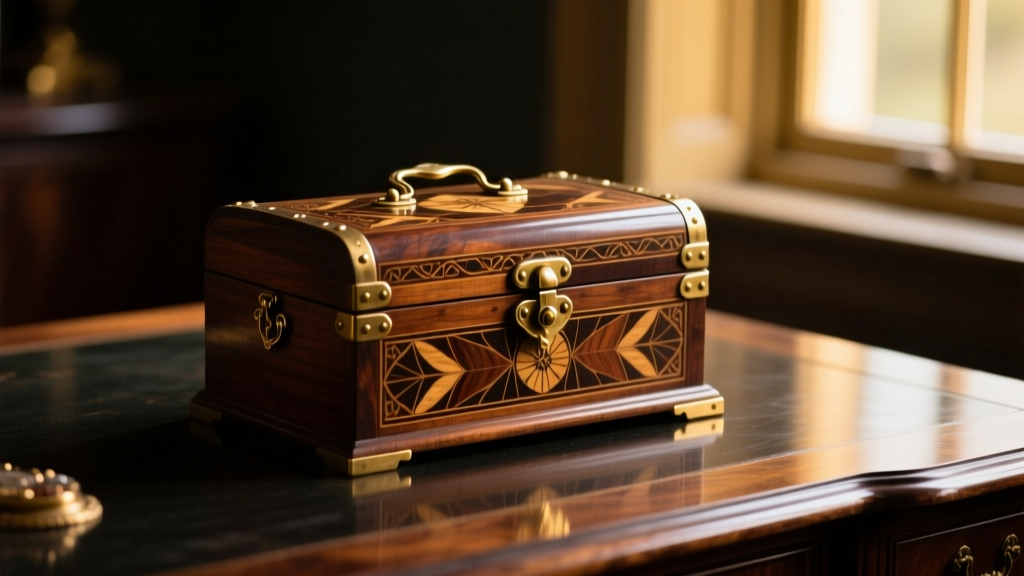
The Anatomy of Antique Storage: Wood Species and Joinery
When evaluating a vintage treasure chest jewelry box for modern archival use, the external beauty often masks internal chemical hazards. Nineteenth and early twentieth-century chests were primarily constructed from Quercus robur (European Oak), Juglans nigra (Black Walnut), or Swietenia macrophylla (Honduran Mahogany). While structurally magnificent, these woods present severe off-gassing risks. Oak, for instance, emits high levels of tannic and acetic acid, which accelerates the corrosion of silver and degrades organic gemstones like pearls and tortoiseshell.
According to the AIC Conservation Wiki, acidic off-gassing from unsealed hardwoods can lower the micro-climate pH inside a closed chest to below 5.0. To safely utilize a vintage treasure chest jewelry box for high-karat gold or sterling silver, the interior raw wood must be isolated. Conservationists typically apply a 5% to 10% solution of Paraloid B-72 (an ethyl methacrylate copolymer) dissolved in acetone. This creates a stable, non-yellowing, and reversible barrier that traps volatile organic compounds (VOCs) without altering the wood's external patina.
Evaluating Structural Joinery
Before addressing the interior chemistry, assess the structural integrity. High-end antique chests utilize hand-cut dovetail joinery at the corners and mortise-and-tenon joints for the internal tray dividers. If the drawers stick or the lid sags, the traditional hide glue has likely desiccated and crystallized. Rather than forcing the joints—which can splinter the aged timber—apply a localized warm water vapor to soften the hide glue, re-clamp the joint, and inject fresh liquid hide glue using a micro-syringe.
Evaluating the Interior: When Original Linings Become Hazards
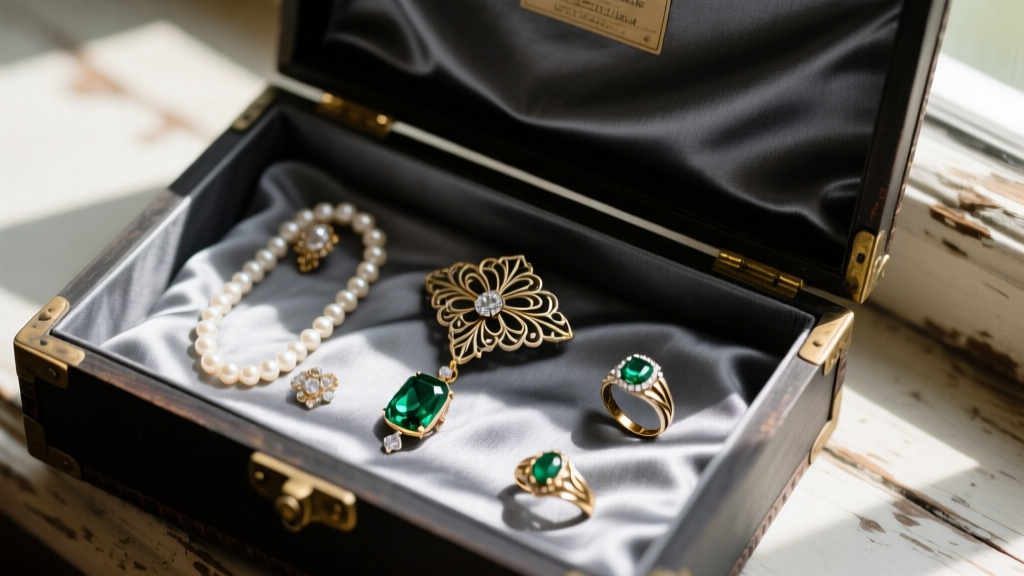
The original plush velvet or silk linings found in a vintage treasure chest jewelry box are rarely safe for long-term storage. Mid-century synthetic velvets often contain sulfur-based dyes and formaldehyde resins. When these materials degrade in the dark, enclosed environment of a jewelry box, they release sulfur compounds that react with the copper alloy in sterling silver, rapidly forming black silver sulfide.
Furthermore, the cardboard substrates used beneath the fabric to create padded ring rolls and necklace channels are highly acidic. Over decades, this acid migrates into the fabric, compromising the structural integrity of the lining and posing a direct threat to porous gems. The Gemological Institute of America (GIA) explicitly warns against storing porous gemstones (like turquoise, opal, and coral) in environments with untested, aging textiles due to the risk of chemical absorption and surface etching.
"Never assume that an antique textile lining is inert. If the fabric shows signs of dry rot, color fading, or a distinct acidic odor, it must be completely excised and replaced with Oddy-tested archival materials."
The 2026 Standard: Retrofitting for Archival-Grade Protection
To transform a vintage treasure chest jewelry box into a modern preservation vault, you must strip the interior to the bare, sealed wood and rebuild the storage architecture using modern conservation textiles. The gold standard for silver storage is Pacific Silvercloth—a cotton flannel embedded with microscopic silver particles that intercept and absorb sulfur gases before they reach your jewelry.
Anti-Tarnish Integration Matrix
| Material | Mechanism of Action | Effective Lifespan | Ideal Application |
|---|---|---|---|
| Pacific Silvercloth | Sacrificial silver particles absorb sulfur gases | Indefinite (if kept sealed from outside air) | Sterling silver flatware, rings, and chains |
| Acid-Free Suedette | Provides physical cushioning without chemical off-gassing | 10-15 years | Gold, platinum, and hard gemstones (diamonds, sapphires) |
| Activated Carbon Cloth | Adsorbs VOCs, moisture, and airborne pollutants | 2-3 years (requires replacement) | Organic gems (pearls, amber, ivory) and base metals |
| Silica Gel Cassettes | Maintains relative humidity (RH) at 40-50% | 1 year (requires re-conditioning) | Overall chest climate control to prevent wood warping |
When installing these materials, avoid using modern PVA (polyvinyl acetate) glues or hot glue, which off-gas acetic acid as they cure. Instead, use starch paste or mechanically fasten the archival fabrics using stainless steel micro-tacks.
Hardware and Hinge Mechanics: Preventing Structural Failure
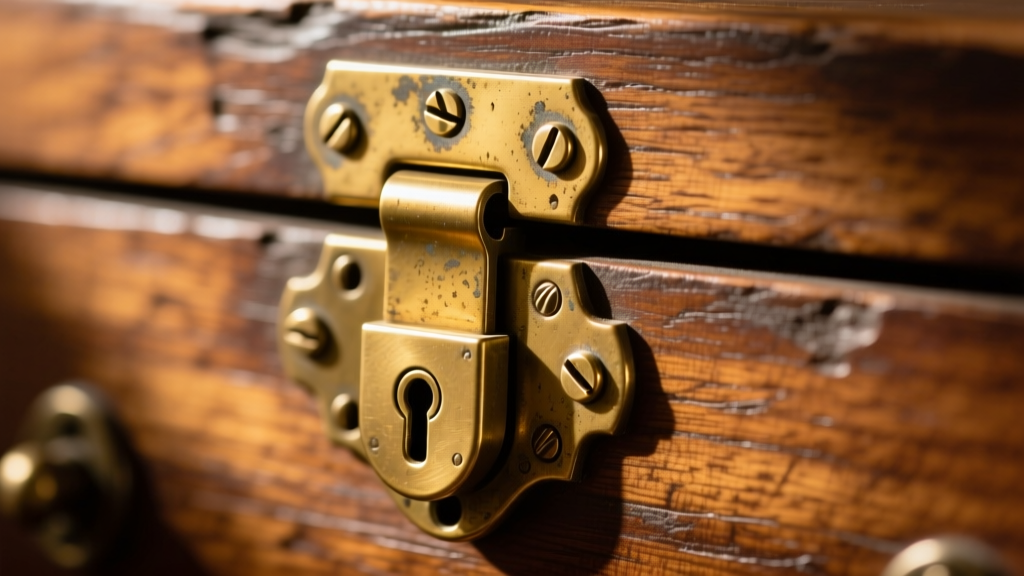
The hardware on a vintage treasure chest jewelry box—typically solid cast brass or steel with brass plating—requires meticulous maintenance. Original pin hinges and butt hinges often suffer from 'hinge bind,' where the accumulation of oxidized metal dust and degraded lubricants causes friction that can eventually tear the hinge mortise out of the wood.
Do not use standard petroleum-based oils (like WD-40) on antique hinges, as they attract dust and gum up over time. Instead, clean the hinge barrels with a soft brass wire brush and apply a dry PTFE (Teflon) lubricant or a microscopic amount of synthetic clock oil. For the exterior brass escutcheons and strike plates, avoid harsh commercial brass polishes that contain ammonia or abrasives. Use precipitated calcium carbonate mixed with distilled water to gently lift tarnish without stripping the historic patina or scratching the surrounding wood finish. For comprehensive guidelines on handling historic metals, refer to the AIC Storage Materials Guidelines.
Step-by-Step Restoration Protocol
Follow this systematic approach to safely restore and upgrade your chest:
- Documentation and Disassembly: Photograph the original interior layout. Carefully remove the old fabric using a micro-spatula. If the fabric is glued, soften the adhesive with a localized application of ethanol.
- Substrate Removal: Extract all acidic cardboard and degraded foam padding. Sand the bare interior wood lightly with 320-grit sandpaper to remove old glue residue.
- Vapor Sealing: Apply two coats of 5% Paraloid B-72 to all interior wood surfaces, including the underside of the lid and the drawer interiors. Allow 48 hours for complete solvent evaporation.
- Climate Buffering: Line the deepest cavity of the chest with a layer of activated carbon cloth, followed by a layer of acid-free cotton batting for cushioning.
- Archival Upholstery: Cut and fit your Pacific Silvercloth or acid-free suedette over the batting. Secure the edges using stainless steel staples or archival double-sided tape (such as 3M 415), ensuring no adhesive touches the jewelry-facing surface.
- Hardware Conservation: Clean, lubricate, and wax the exterior hardware and hinges using Renaissance Micro-Crystalline Wax to prevent future oxidation.
By respecting the historical craftsmanship of a vintage treasure chest jewelry box while integrating modern conservation science, you create a storage environment that is not only visually stunning but chemically inert. This ensures that your most precious heirlooms remain pristine for the next century of ownership.


