How to Clean and Restore an Incolay Stone Jewelry Box
Learn how to safely clean, restore, and seal your vintage Incolay stone jewelry box with this expert step-by-step conservation guide.

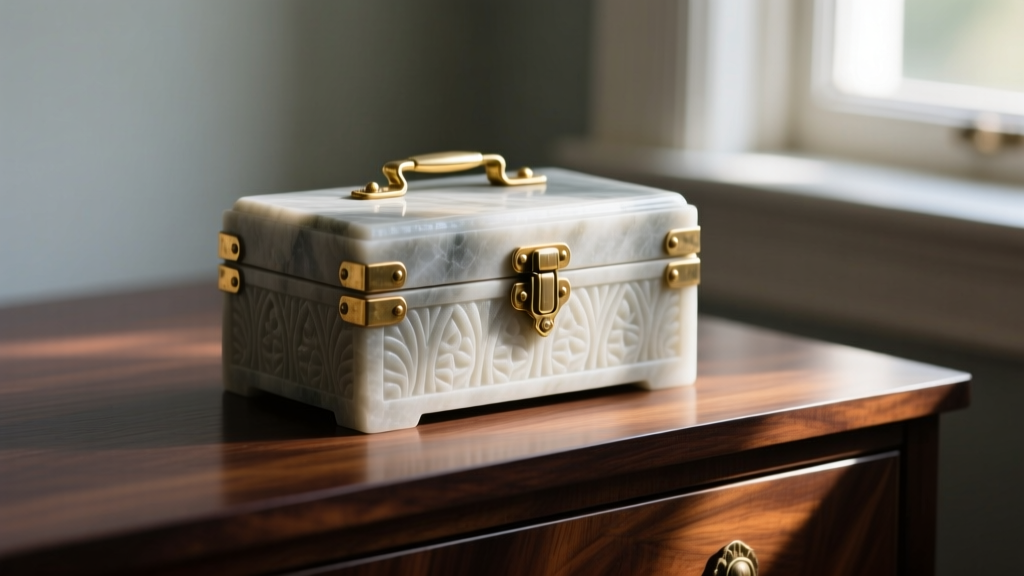
Understanding the Incolay Stone Matrix
Owning an Incolay stone jewelry box is a unique experience. Prized for their substantial weight, tactile cold-stone feel, and intricate mineral veining, these boxes are typically crafted from a composite matrix of crushed natural minerals (such as marble, soapstone, or quartz) bound together with a specialized polymer resin. While this cold-cast stone technique mimics the look and feel of carved natural stone, the resin binder introduces specific vulnerabilities. Standard household cleaners containing ammonia, bleach, or alcohol can break down the polymer matrix over time, leading to micro-fissures, surface chalking, and irreversible clouding.
As of 2026, museum conservation standards dictate that composite stone objects must be treated with pH-neutral, non-ionic solutions. Whether you have just acquired a mid-century vintage piece or are maintaining a modern artisan cast, this step-by-step guide will walk you through the professional restoration and preservation of your Incolay stone jewelry box, ensuring it remains a safe, beautiful haven for your valuables.
Essential Conservation Tools and Materials
Before beginning the restoration process, gather the appropriate conservation-grade supplies. Using the wrong chemicals is the leading cause of damage to resin-bound stone.
| Category | Recommended Product / Specification | What to Strictly Avoid |
|---|---|---|
| Cleaning Agent | Non-ionic surfactant (e.g., Orvus WA Paste) or conservation-grade soap | Dish soaps with degreasers, ammonia, or citrus extracts |
| Solvent / Polish | Renaissance Micro-Crystalline Wax | Carnauba paste waxes, silicone sprays, aerosol polishes |
| Brushes | Soft boar-hair detailing brushes, 300+ GSM microfiber cloths | Nylon bristle brushes, paper towels, abrasive sponges |
| Water Source | Distilled water only | Tap water (minerals cause spotting on porous stone) |
| Hardware Polish | Specific brass/copper polish (applied with Q-tips) | All-purpose metal polishes containing harsh acids |
For authoritative guidelines on handling composite and resin-bound heritage objects, the American Institute for Conservation (AIC) Wiki provides extensive documentation on why non-ionic surfactants are critical for preventing chemical reactions with polymer binders.
Step-by-Step Cleaning Process
Step 1: Dry Particulate Removal
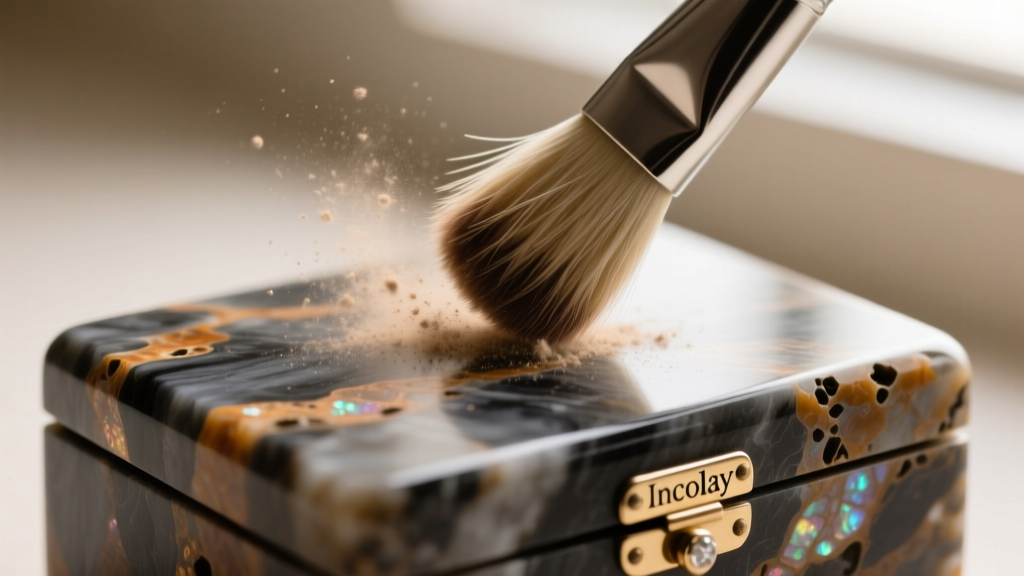
Never apply liquid to a dusty surface. Dust particles often contain microscopic silica, which acts like sandpaper when rubbed into the stone's finish. Using a soft boar-hair brush, gently sweep the entire exterior of the box, paying special attention to the carved crevices, hinge recesses, and the seam where the lid meets the base. Hold the box at an angle to allow gravity to pull the particulates away from the surface.
Step 2: Aqueous Surface Cleaning
Mix a cleaning solution using one gallon of distilled water and a pea-sized amount of a non-ionic surfactant like Orvus WA Paste. The solution should barely produce suds. Dampen a 300 GSM microfiber cloth in the solution and wring it out until it is only slightly moist—never dripping. Wipe the Incolay stone in gentle, overlapping circular motions. The goal is to lift surface oils and environmental grime without allowing water to pool, which can seep into microscopic pores and cause localized swelling of the resin.
Step 3: Controlled Drying
Immediately follow the damp cloth with a dry, lint-free cotton towel to buff the surface dry. Do not allow the box to air dry, as the evaporation of even distilled water can leave microscopic streaks on the matte or semi-gloss finish of the stone.
Restoring Metallic Inlays and Hardware
Many Incolay stone boxes feature decorative brass, copper, or silver inlays, as well as metallic hinges and clasps. These metals tarnish over time, but polishing them poses a risk to the surrounding stone.
- Mask the Stone: Use low-tack painter's tape to mask off the stone immediately surrounding the metal inlay or hinge.
- Apply Polish Locally: Dip a cotton swab (Q-tip) into a specialized metal polish (like Brasso or a milder conservation alternative) and apply it strictly to the metal.
- Wipe and Neutralize: Once the tarnish is removed, use a separate swab dampened with distilled water to wipe away any residual polish. If metal polish seeps into the porous stone, it will leave a permanent dark stain.
For deeper insights into metal-stone composite preservation, the Getty Conservation Institute offers excellent resources on managing galvanic corrosion and preventing chemical transfer between metallic accents and resin matrices.
Sealing and Protecting the Stone Finish
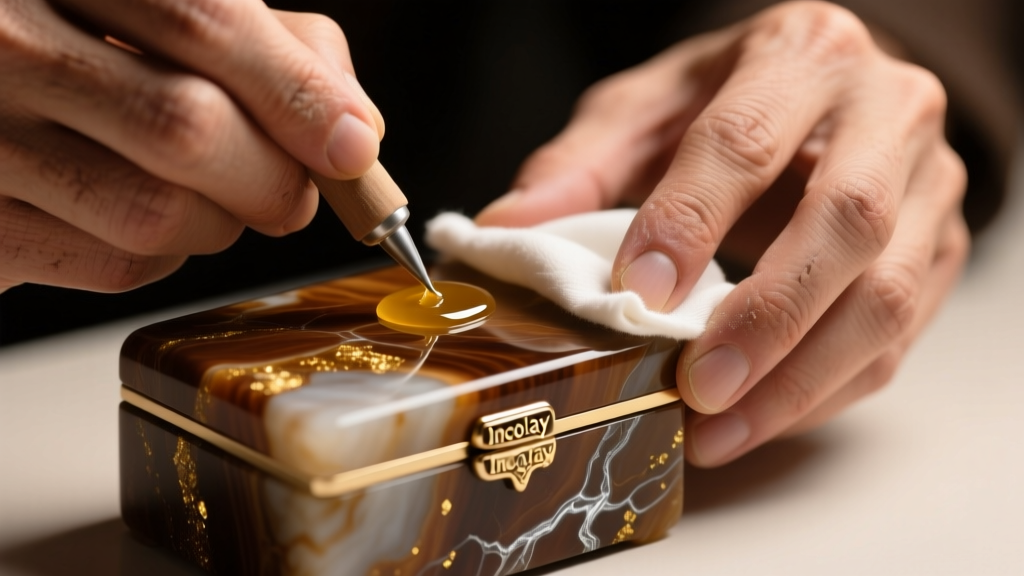
Once the box is clean and completely dry, it must be sealed to protect against ambient humidity and skin oils. Renaissance Micro-Crystalline Wax is the gold standard for this task. Unlike organic waxes (such as beeswax or carnauba), micro-crystalline wax has a higher melting point, remains stable over decades, and will not turn acidic or yellow over time.
- Apply a very thin, even layer of the wax using a clean cotton cloth.
- Allow the wax to cure and haze over for exactly 15 to 20 minutes at room temperature (68°F - 72°F).
- Buff the surface vigorously with a fresh microfiber cloth until the stone exhibits a soft, satin luster.
This wax barrier not only enhances the natural veining of the Incolay stone but also creates a sacrificial layer that prevents future grime from bonding to the resin.
Troubleshooting Common Incolay Stone Issues
Even with careful maintenance, vintage and older composite stone boxes can develop specific issues. Here is how to address the most common problems:
| Issue | Underlying Cause | Expert Solution |
|---|---|---|
| White Hazing / Clouding | Resin degradation from alcohol or ammonia-based cleaners. | Lightly polish with a plastic-safe polishing compound, then re-seal with micro-crystalline wax. |
| Sticky Surface Residue | Breakdown of old, organic wax coatings or exposure to high heat. | Wipe gently with a cloth dampened with mineral spirits (test in an inconspicuous area first), then re-wax. |
| Chalky / Powdery Feel | UV degradation causing the surface resin to micro-fracture. | Clean thoroughly, apply a consolidating resin (if severe), or multiple thin coats of Renaissance Wax to bind the surface. |
| Musty Interior Odor | Trapped moisture in the felt or velvet lining. | Remove lining if possible. Place activated charcoal briquettes inside the closed box for 72 hours to absorb odors. |
Long-Term Storage and Environmental Control
The environment in which you store your Incolay stone jewelry box is just as critical as the cleaning process. Composite stones are sensitive to extreme thermal expansion and contraction, which can cause the resin and the crushed stone aggregates to separate at a microscopic level.
- UV Protection: Never place the box in direct sunlight. Prolonged UV exposure will yellow the resin binder and fade the mineral pigments.
- Humidity Control: Maintain a stable indoor relative humidity (RH) between 40% and 55%. Fluctuations cause the interior wood or MDF substrate (often hidden beneath the stone veneer) to expand and contract, potentially cracking the stone exterior.
- Interior Lining Care: If your box features a fabric lining, vacuum it gently using a upholstery attachment covered with a nylon screen to prevent snagging. Replace degraded anti-tarnish strips every six months to protect the jewelry stored inside.
By treating your Incolay stone jewelry box not merely as a container, but as a composite work of functional art, you ensure that its heavy, luxurious feel and unique aesthetic will endure for generations. Consistent, gentle care using conservation-approved materials is the ultimate key to preserving both the stone's integrity and the precious items it holds.


