Buying a Vintage Powell Jewelry Armoire: Expert Guide
Discover how to authenticate, evaluate, and price a vintage Powell jewelry armoire. Expert tips on wood, linings, and joinery for serious collectors.

The Allure of the Powell Legacy
For serious jewelry collectors and antique furniture enthusiasts alike, securing a vintage Powell jewelry armoire represents the pinnacle of organizational elegance. Unlike mass-produced contemporary storage solutions, vintage Powell pieces—particularly those crafted between the 1920s and the late 1960s—were designed as freestanding monuments to craftsmanship. They feature rich, hand-selected timber, intricate veneer work, and interiors specifically engineered to protect high-value gems and precious metals. However, navigating the secondary market for these specific armoires requires a trained eye. From identifying authentic maker's marks to evaluating the chemical safety of the interior linings, this comprehensive buying guide will equip you with the exact specifications and historical context needed to make an informed acquisition in 2026.
Authenticating Your Vintage Powell Armoire
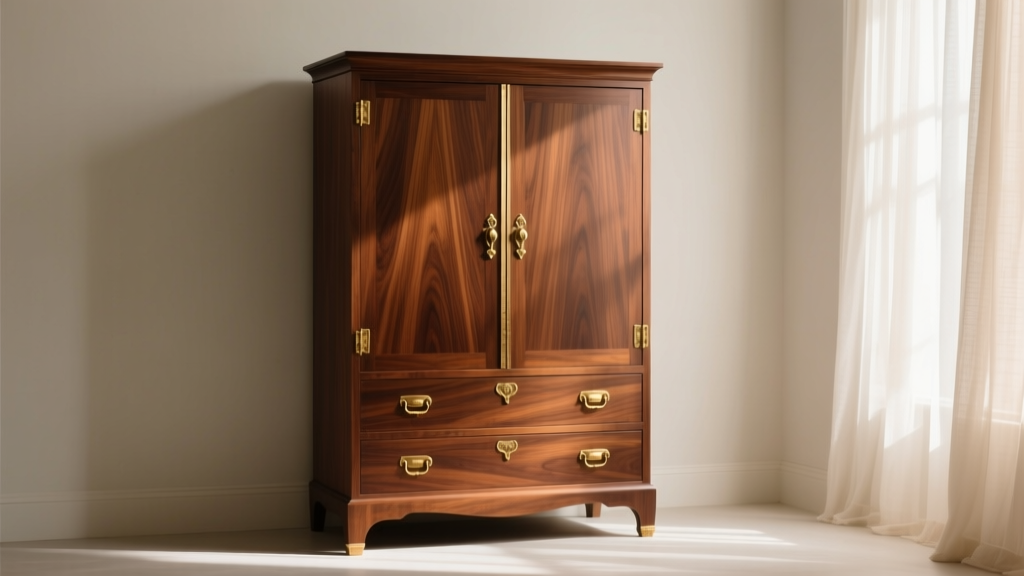
The first step in evaluating any vintage Powell jewelry armoire is verifying its provenance and structural authenticity. Powell furniture from the mid-20th century is renowned for its exceptional woodworking, often utilizing premium hardwoods such as Honduran mahogany, American black walnut, and striking burl wood veneers. When inspecting a potential purchase, pay close attention to the veneer application. Authentic vintage pieces will feature thick, hand-laid veneers with seamless book-matching on the primary facade. Beware of later reproductions or heavily compromised pieces that exhibit 'bubbling' or lifting at the edges, which indicates adhesive failure due to prolonged exposure to fluctuating humidity.
Examining Joinery and Hardware
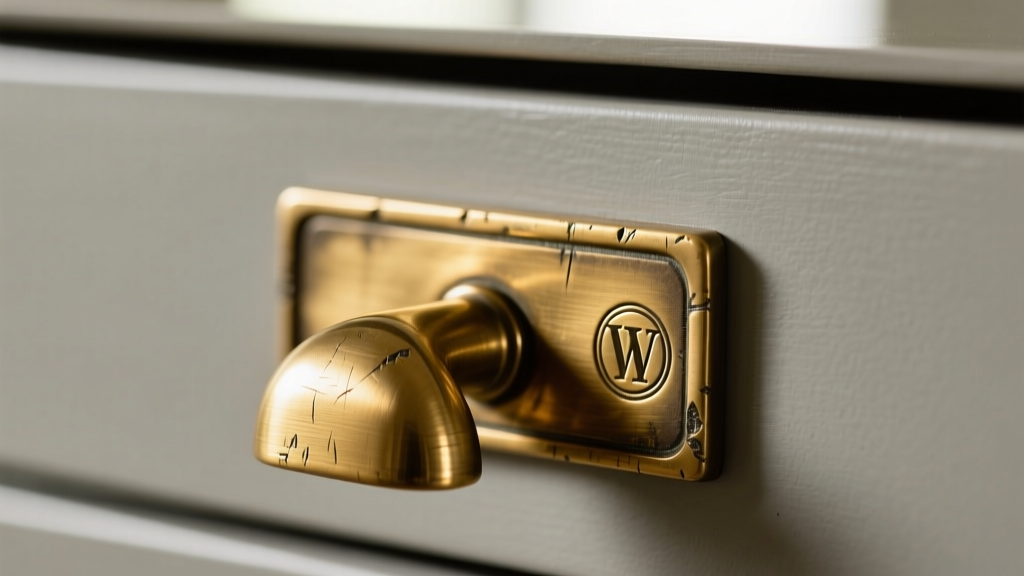
Turn the armoire around and examine the drawer construction. A genuine vintage Powell piece will almost exclusively feature dovetail joinery. Pre-1950s models often display hand-cut dovetails, which are characterized by slight asymmetries and varying pin widths. Post-1950s pieces may feature machine-cut dovetails, but the timber used for the drawer sides should still be high-quality, solid hardwood (often poplar or secondary mahogany), never particleboard or MDF. Furthermore, inspect the hardware. Original Powell armoires utilized solid cast brass pulls and custom escutcheons. Over time, this brass develops a natural, mottled patina. If the hardware looks uniformly bright or exhibits signs of modern electroplating (a flaky, overly reflective gold-tone), it has likely been replaced, which can diminish the armoire's collector value by up to 30%.
Evaluating the Interior: Linings and Tarnish Prevention
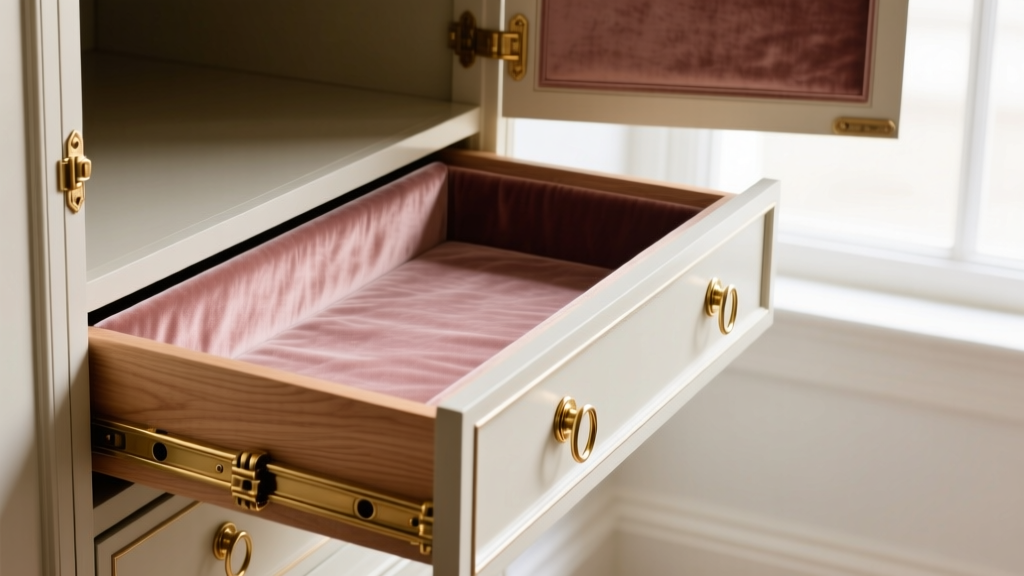
The exterior beauty of a vintage Powell jewelry armoire is only half the equation; the interior environment is critical for the preservation of your collection. Many vintage armoires on the market today still retain their original silk or velvet linings. While visually stunning, aged textiles can pose a severe threat to fine jewelry.
The Hidden Dangers of Vintage Textiles
According to conservation standards highlighted by the Gemological Institute of America (GIA), porous gemstones like pearls, opals, and turquoise are highly susceptible to damage from acidic environments and chemical off-gassing. Older synthetic velvets, polyester blends, and the polyurethane foams sometimes used in mid-century ring rolls can off-gas sulfur and volatile organic compounds (VOCs) as they degrade. This off-gassing accelerates the tarnishing of sterling silver and can cause irreversible surface pitting on delicate pearls. When buying a vintage Powell armoire, assume the interior lining will need to be replaced or professionally treated.
What to Look For in Replacement Linings
If the seller has already restored the interior, demand to know the exact materials used. The gold standard for jewelry armoire restoration is 100% acid-free cotton flannel or specially treated anti-tarnish cloth (such as Pacific Silvercloth). These materials actively absorb tarnish-causing gases before they reach your jewelry. Avoid any armoire that has been retrofitted with standard craft-store felt or PVC-backed fabrics, as these will actively harm your collection over time.
Market Value and Pricing Tiers
The valuation of a vintage Powell jewelry armoire in the 2026 secondary market depends heavily on the era of production, the rarity of the wood veneer, and the condition of the original finish. Below is a structured pricing framework to help you negotiate fairly.
| Era | Primary Wood / Veneer | Condition | Estimated 2026 Market Value |
|---|---|---|---|
| 1920s - 1940s | Honduran Mahogany / Burl Walnut | Mint / Original French Polish | $2,400 - $4,500 |
| 1920s - 1940s | Honduran Mahogany / Burl Walnut | Good / Minor Veneer Wear | $1,200 - $2,200 |
| 1950s - 1970s | American Walnut / Cherry | Mint / Original Lacquer | $1,500 - $2,800 |
| 1950s - 1970s | American Walnut / Cherry | Fair / Requires Restoration | $600 - $1,100 |
Note: Armoires featuring intact, original beveled mirrors, functional locking mechanisms with original skeleton keys, and unaltered interior layouts command a 20-30% premium over the upper bounds of these ranges.
Restoration vs. Preservation: What Buyers Must Know
When evaluating a vintage Powell jewelry armoire that requires cosmetic work, it is vital to understand the difference between preservation and destructive restoration. According to wood conservation guidelines from the Getty Conservation Institute, preserving the original historical finish is always preferable to stripping and refinishing. Early Powell pieces were often finished with traditional shellac-based French polish, which provides a deep, luminous glow that modern polyurethanes simply cannot replicate.
Red Flags in Refinished Pieces
If an armoire has a thick, plastic-like, high-gloss coating, it has likely been stripped and refinished with modern catalyzed lacquer or polyurethane. This not only destroys the historical integrity of the piece but can also trap moisture within the wood, leading to long-term warping. If you are purchasing an armoire with a worn but original finish, look for a conservator who specializes in 'amalgamation'—a process of gently reactivating the original shellac with alcohol and replenishing it, rather than stripping it down to bare wood.
Final Inspection Checklist
Before finalizing your purchase, run through this rigorous 5-point inspection checklist to ensure the vintage Powell jewelry armoire meets your standards for both aesthetics and functional jewelry storage:
- Drawer Glides: Ensure all drawers slide smoothly without binding. Wooden runners should show even wear; excessive wobbling indicates the runners are warped or severely degraded.
- Structural Squareness: Measure the diagonals of the main carcase. If they are unequal, the armoire is out of square, which will cause continuous stress on the joinery and prevent doors from closing flush.
- Locking Mechanisms: Test all locks with the provided keys. Vintage brass lock cylinders can become clogged with decades of dust and polish. A working lock is essential for securing high-value items.
- Odor Test: Close the doors and drawers, wait a minute, and open them. A strong scent of mildew, mothballs, or sharp chemical off-gassing indicates poor storage history or hazardous interior materials that will require extensive remediation.
- Mirror Desilvering: If the armoire includes a mirror, inspect the edges for 'desilvering' (black or cloudy patches). While minor edge desilvering is acceptable for its age, widespread mirror rot detracts significantly from the piece's utility and value.
Investing in a vintage Powell jewelry armoire is a commitment to both horological and gemological preservation. By prioritizing authentic joinery, safe interior environments, and historically accurate finishes, you will secure a breathtaking heirloom that protects your collection for generations to come.


