Why Collectors Choose an Unfinished Wood Jewelry Box
Discover why serious collectors prefer an unfinished wood jewelry box. Learn wood acidity, moisture metrics, and archival-safe finishing techniques.

The Hidden Danger of Pre-Finished Jewelry Storage
When investing in fine jewelry, particularly porous gemstones and precious metals, the microclimate of your storage environment is just as critical as the physical security of the container. Most commercial jewelry boxes on the market are constructed from Medium-Density Fiberboard (MDF) or cheap pine, coated in nitrocellulose lacquers, polyurethane, or acid-catalyzed formaldehyde resins. While these finishes provide a high-gloss, durable exterior, they continuously off-gas volatile organic compounds (VOCs) and acidic vapors for years after manufacturing.
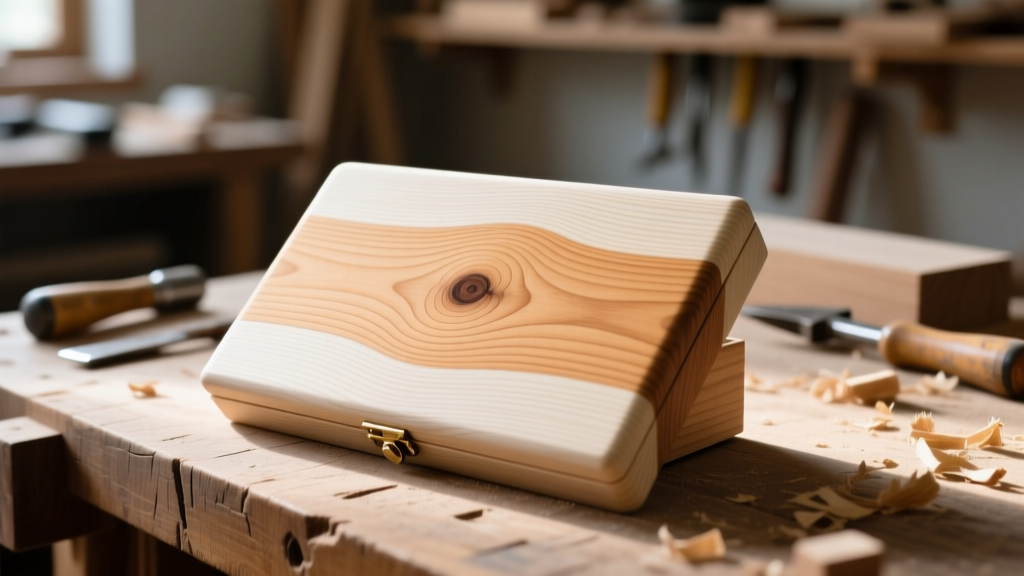
For serious collectors, silversmiths, and archivists, this off-gassing is a silent destroyer. Acidic vapors accelerate the formation of silver sulfide (tarnish) on sterling silver, degrade the nacre on natural pearls, and cause microscopic pitting on copper-alloy pieces. This is precisely why sourcing an unfinished wood jewelry box has become the gold standard for archival storage. By starting with raw, unsealed timber, collectors gain absolute control over the materials, moisture content, and chemical sealants that will ultimately share a confined airspace with their most valuable pieces.
Wood Species Selection: The Acidic vs. Alkaline Spectrum
Not all wood is created equal when it comes to chemical stability. The American Institute for Conservation (AIC) explicitly warns against using highly acidic woods for storing metal artifacts. Woods like oak, cedar, and sweet chestnut contain high levels of tannins and naturally emit acetic acid. In the enclosed, poorly ventilated environment of a jewelry box drawer, these acidic emissions can reach concentrations high enough to corrode silver and lead within months.
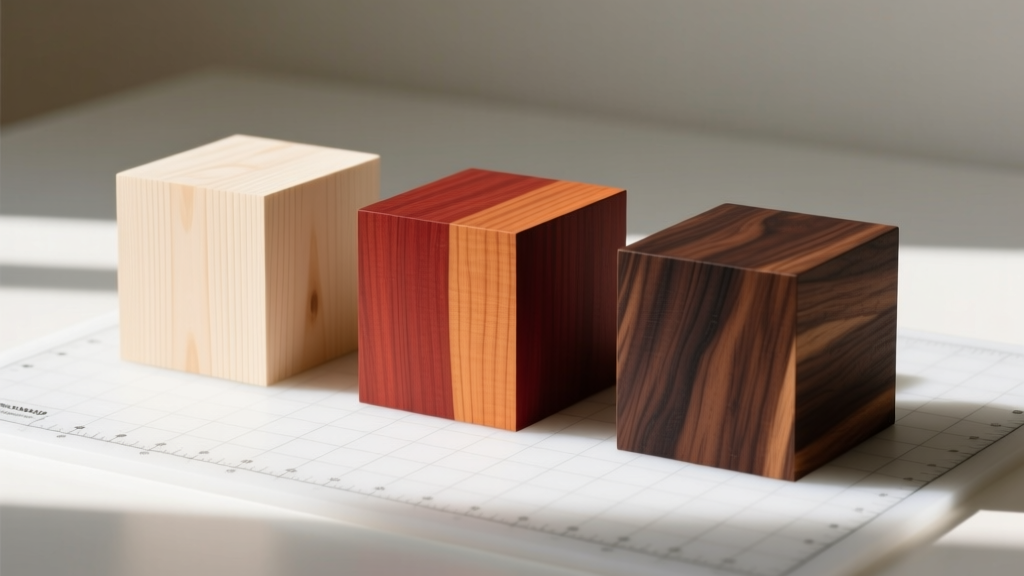
Conversely, species like maple, cherry, and walnut are significantly more stable, though they still require a proper archival barrier coat to prevent any long-term tannin migration. Basswood and poplar are exceptionally neutral and are frequently used in museum display cases, though their lower Janka hardness ratings make them less ideal for heavy, multi-drawer cabinetry.
Archival Wood Comparison Matrix
| Wood Species | pH Range | Tannin Level | Janka Hardness | Archival Verdict |
|---|---|---|---|---|
| Red Oak | 3.5 - 4.0 | High | 1290 lbf | Avoid: High acetic acid emission; severe tarnish risk. |
| Eastern Red Cedar | 4.2 - 4.8 | Medium | 900 lbf | Avoid: Aromatic oils and acids damage pearls and silver. |
| Hard Maple | 5.0 - 5.5 | Low | 1450 lbf | Excellent: Dense, stable, and highly neutral when sealed. |
| Black Cherry | 4.8 - 5.2 | Low | 950 lbf | Good: Safe for metals; requires UV-blocking finish to prevent darkening. |
| Basswood | 5.5 - 6.0 | Very Low | 410 lbf | Excellent: Museum-grade neutrality, but dents easily. |
Moisture Content and Kiln-Drying Metrics
The structural integrity and chemical safety of an unfinished wood jewelry box rely heavily on its Equilibrium Moisture Content (EMC). According to data from the USDA Forest Products Laboratory, interior furniture in climate-controlled homes should be constructed from wood dried to a moisture content (MC) of 6% to 8%.
If you purchase a raw box from a hobbyist woodworker who used improperly air-dried lumber (MC above 12%), the wood will slowly release trapped moisture into the enclosed drawers. This localized high-humidity microenvironment is catastrophic for opals, which can craze or crack from fluctuating hydration, and it drastically accelerates the electrochemical reactions that cause metal tarnish.
Testing Moisture at Home
Before applying any archival finish to your raw box, verify the moisture content using a pinless electromagnetic moisture meter. Scan the thickest parts of the box, particularly the drawer bottoms and the corner joinery. If the meter reads above 9%, place the box in a dehumidified room (maintained at 40-45% relative humidity) for three to four weeks, re-testing weekly until the wood stabilizes below 8%.
Archival-Safe Finishing Protocols
Once you have verified the wood species and moisture content, the raw timber must be sealed. Leaving an unfinished wood jewelry box completely bare is a mistake; raw wood is hygroscopic and will absorb ambient humidity and skin oils from handling. However, standard hardware-store polyurethanes and oil-based varnishes are unacceptable due to prolonged off-gassing.
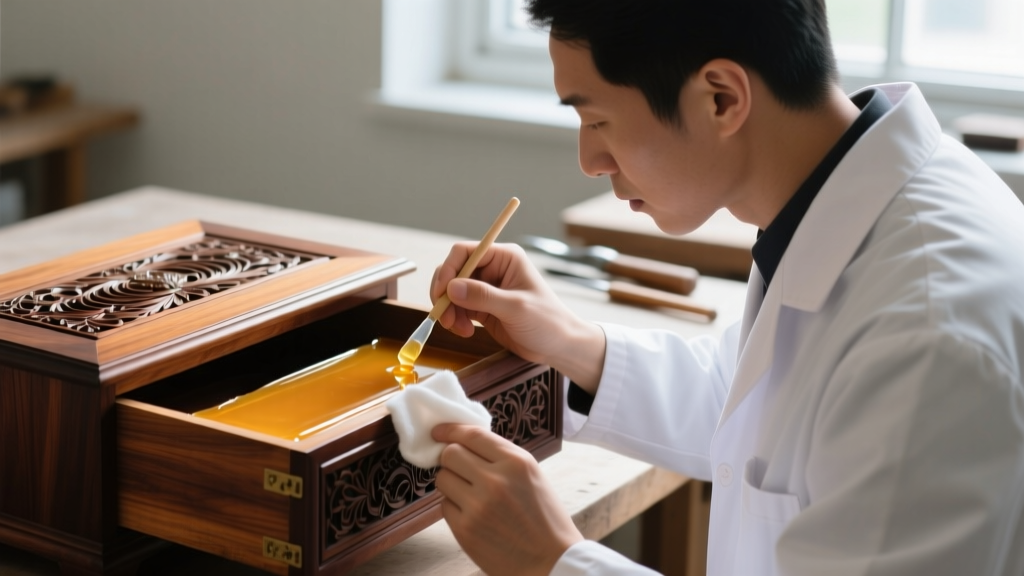
The Smithsonian Museum Conservation Institute recommends specific, chemically stable polymers and waxes for sealing wood that will be in direct proximity to sensitive artifacts. Your finishing protocol should involve sanding the raw wood up to 320-grit, removing all dust with a tack cloth, and applying one of the following archival-grade sealants:
- Renaissance Wax: A microcrystalline wax developed specifically for the British Museum. It is pH-neutral, non-yellowing, and provides an excellent moisture barrier. It requires reapplication every 12 to 18 months and must be buffed vigorously to avoid leaving a sticky residue that could attract dust to your jewelry.
- Paraloid B-72: An ethyl methacrylate copolymer dissolved in acetone or ethanol. It is the premier choice for permanent, non-reversible sealing. Once the solvent fully flashes off (usually within 48 hours), it leaves a completely inert, glass-like acrylic barrier that will never off-gas or cross-link.
- Water-Based Acrylic Polymers: Products like Golden Matte Medium can be thinned with distilled water and brushed on. They are safe once fully cured, but you must allow a minimum 21-day curing period in a well-ventilated space before introducing jewelry to the box to ensure all water and coalescing agents have evaporated.
Lining, Adhesives, and Hardware Considerations
The wood and finish are only part of the equation. The internal assembly of your unfinished wood jewelry box must also adhere to strict archival standards. Standard yellow PVA wood glues (like Titebond II) are highly acidic and can cause localized staining or corrosion if they seep through the joints. Instead, use a neutral-pH archival adhesive like Jade 403, or opt for a two-part clear epoxy for structural joinery.
Expert Warning on Textile Linings: Never line your drawers with standard felt, velvet, or synthetic suede. These textiles often contain sulfur-based dyes and formaldehyde-resin stiffeners that will aggressively tarnish silver. Always use Pacific Silvercloth or unbleached, undyed 100% cotton flannel that has been pre-washed in hot water to remove manufacturing sizing agents.
Furthermore, ensure that the hinges, clasps, and drawer pulls are made of solid brass or stainless steel. Cheap zinc-alloy hardware plated with nickel can flake over time, and the underlying metals can introduce galvanic corrosion risks if they come into contact with your jewelry pieces during transit or drawer movement.
Summary Checklist for Sourcing and Preparation
To successfully transition from a commercial, off-gassing storage unit to a true archival environment, follow this final checklist when procuring and preparing your unfinished wood jewelry box:
- Verify the wood species is low-tannin and low-acid (Hard Maple, Cherry, or Basswood).
- Confirm the lumber was kiln-dried to an MC of 6-8% using a pinless moisture meter.
- Sand all interior surfaces to 320-grit to prevent microscopic splinters from snagging delicate chains.
- Seal all interior and exterior surfaces with Paraloid B-72 or Renaissance Wax.
- Allow a minimum 48-hour off-gassing period for solvent-based archival sealants before use.
- Line drawers exclusively with sulfur-free, undyed cotton or specialized anti-tarnish textiles.
By taking control of the finishing process, you transform a simple wooden container into a museum-grade vault, ensuring your collection remains pristine for generations.


