Expert Guide: Selecting the Perfect Grey Jewelry Armoire
Discover the technical specs, anti-tarnish linings, and joinery details to look for when investing in a premium grey jewelry armoire for your collection.

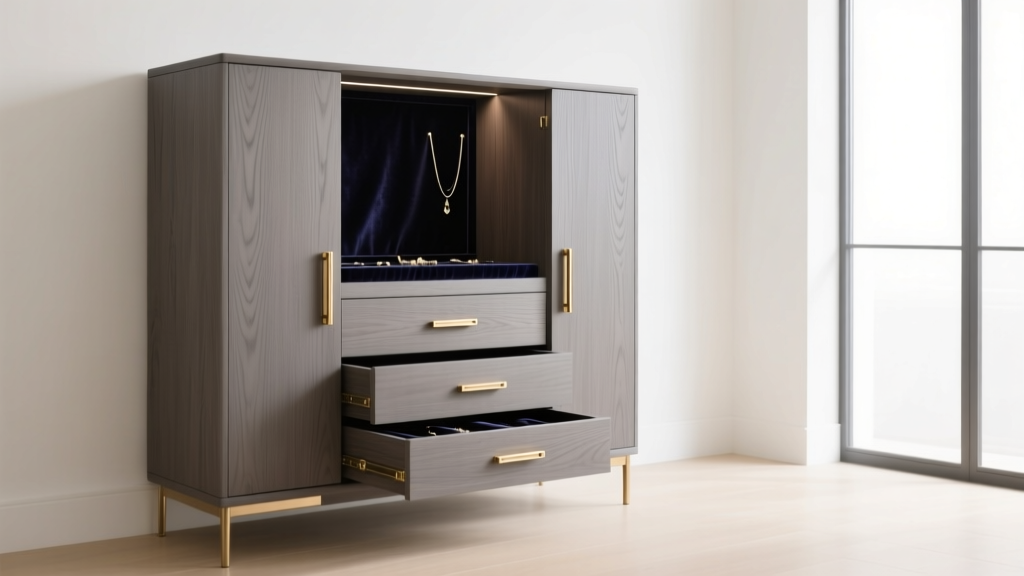
When curating a substantial collection of fine jewelry, the storage environment is just as critical as the pieces themselves. A grey jewelry armoire has become a staple in modern interior design, offering a sophisticated, neutral aesthetic that bridges contemporary and traditional spaces. However, beneath the elegant matte or distressed grey finishes lies a complex matrix of materials science, spatial ergonomics, and anti-tarnish chemistry. This expert deep dive dissects the technical specifications you must evaluate when investing in a premium jewelry armoire in 2026.
Frame Construction and Finish Chemistry
The structural integrity and chemical neutrality of an armoire's frame dictate its lifespan and its safety for delicate metals. Most mid-tier grey armoires are constructed from Medium-Density Fiberboard (MDF) or particleboard, while premium models utilize furniture-grade plywood or solid ash and oak.
The Hidden Danger of Off-Gassing
Cheap engineered woods are bound with urea-formaldehyde resins. As these resins degrade, they release acidic vapors. According to the Smithsonian Museum Conservation Institute, acidic environments and sulfur-bearing gases are the primary catalysts for silver sulfide (Ag2S) formation—the black tarnish that plagues sterling silver. If your grey armoire is painted with a low-quality, unsealed latex or acidic wood stain, it can actually accelerate the tarnishing of your collection.
Expert Specification: Demand armoires finished with fully cured, water-based polyurethane or catalyzed lacquer. These finishes act as an impermeable vapor barrier, locking in any off-gassing from the substrate and creating a chemically inert interior environment. Distressed grey finishes, while visually striking, often feature intentional micro-abrasions in the paint layer. If these abrasions penetrate down to the raw MDF or primer layer, they create micro-pockets where humidity can settle. Always inspect the edges and corners of a distressed armoire to ensure the topcoat has been properly applied over the distressed layers, sealing the substrate completely.
Anti-Tarnish Linings: The Technical Breakdown
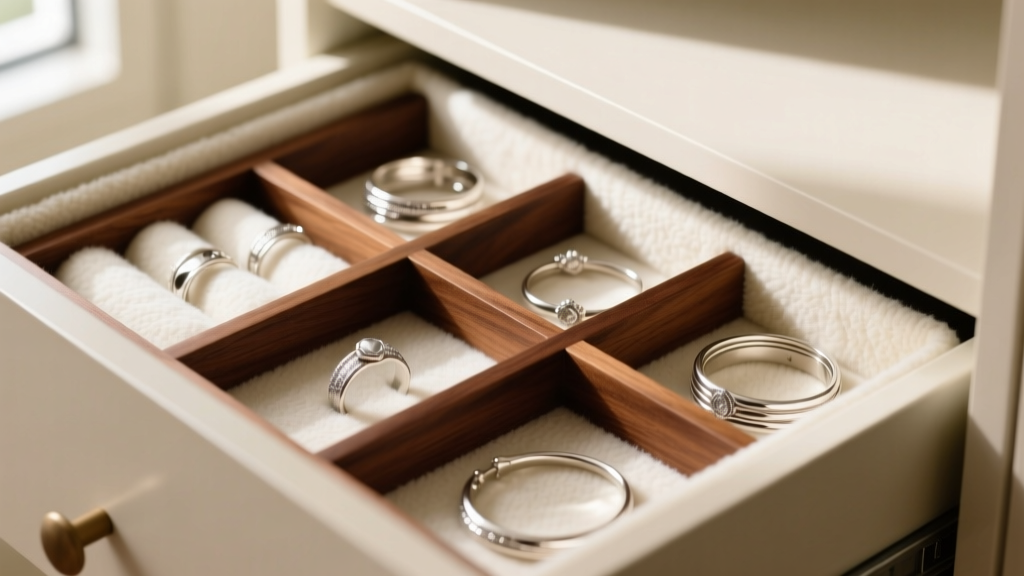
The interior lining is the first line of defense against atmospheric corrosion. Standard velvet or felt looks luxurious but offers zero chemical protection. In fact, traditional felt can trap moisture against the metal, accelerating localized galvanic corrosion. High-end grey jewelry armoires utilize specialized anti-tarnish textiles.
| Lining Material | Inhibition Mechanism | Effective Lifespan | Cost Tier |
|---|---|---|---|
| Standard Cotton Velvet | None (Physical barrier only) | N/A | Low |
| Pacific Silvercloth | Embedded microscopic silver particles absorb H2S gases before they reach your jewelry. | 10-15 Years | High |
| Luster Loc / Treated Flannel | Chemical treatment neutralizes sulfur and acidic vapors in the immediate microclimate. | 3-5 Years | Medium |
| Polyethylene Foam (Archival) | Inert, non-plasticized closed-cell structure prevents moisture trapping and acid migration. | Indefinite | High |
For collectors of high-karat gold, platinum, and untreated gemstones, archival polyethylene foam is the gold standard, as it contains no plasticizers that could leach onto porous stones like pearls or opals. For heavy sterling silver collectors, Pacific Silvercloth remains the undisputed champion of long-term preservation.
Spatial Ergonomics and Compartmentalization
A beautifully finished grey exterior is useless if the interior dimensions cause mechanical damage to your pieces. The Gemological Institute of America (GIA) emphasizes that jewelry damage most frequently occurs during storage due to improper compartmentalization, where harder gems (like diamonds, Mohs 10) scratch softer metals and stones.
Drawer Depth and Drop Zones
Standard ring drawers require a precise depth of 1.25 to 1.5 inches. Anything deeper allows rings to flip and stack; anything shallower crushes the ring rolls against the drawer above. For necklaces, a dedicated drop zone or pull-out hook board must offer a minimum vertical clearance of 18 inches to accommodate standard 16-to-18-inch chains without folding them, which weakens the links over time.
Watch Clearance and Security Integration
If your collection includes automatic watches or rigid bangles, look for armoires with adjustable dividers. Watch pillows should be sized to accommodate case diameters up to 44mm without overstretching the leather or fabric. Furthermore, consider the integration of lockable compartments. High-security armoires utilize biometric fingerprint scanners or RFID locking mechanisms integrated seamlessly into the grey facade. When evaluating locking armoires, ensure the locking bolt is constructed of hardened steel rather than soft zinc alloy, which can be easily defeated with minimal torque.
Hardware: The Mechanics of Longevity
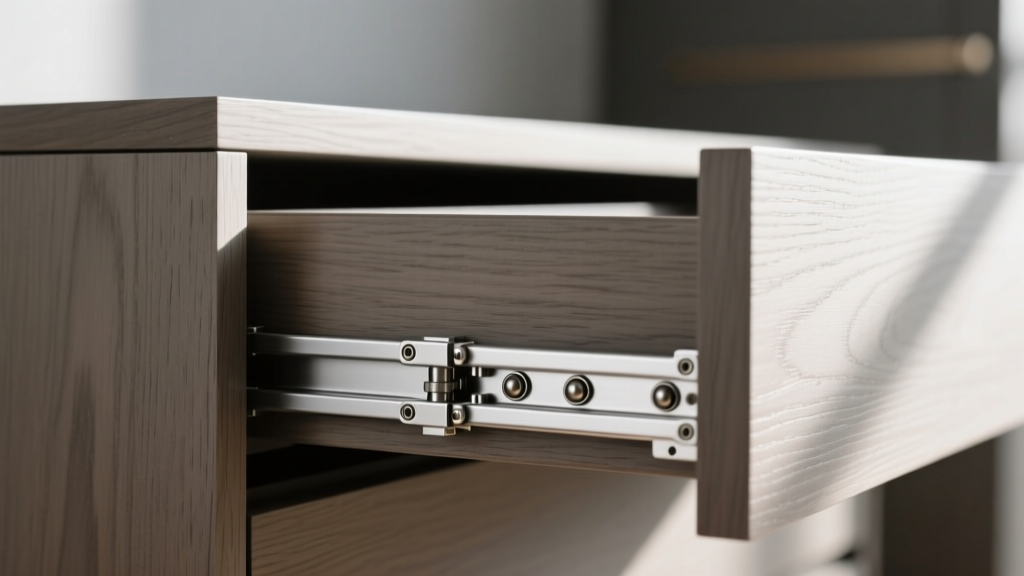
The hardware on a jewelry armoire dictates the user experience and the physical safety of the contents. Slamming a drawer sends shockwaves through the frame, which can dislodge delicate pavé settings or fracture brittle gemstones like emeralds and opals.
Drawer Slide Specifications
Avoid side-mounted friction slides. Premium grey armoires utilize undermount, soft-close drawer slides (such as those manufactured by Blum or Grass). These mechanisms provide lateral stability and typically support a dynamic load of 35 to 75 pounds. This is crucial because a large collection of silver jewelry, gemstones, and the wooden dividers themselves can easily exceed 20 pounds per drawer.
Hinge and Door Mechanics
For swing-door armoires, concealed European hinges with integrated soft-close dampers are mandatory. They allow for precise 3-way adjustability (depth, side-to-side, and height), ensuring the doors align perfectly even if the armoire is placed on an uneven floor. Look for hinges rated for at least 40,000 open-close cycles to ensure a lifetime of use.
Maintenance of the Grey Finish
The grey finish on your armoire requires specific care to maintain its aesthetic. Matte and chalk-style grey finishes are highly porous and can absorb hand oils, leading to permanent dark spots around the handles. To prevent this, choose a grey armoire with a satin or semi-gloss polyurethane topcoat. For daily maintenance, use a microfiber cloth and a pH-neutral cleaner. Avoid ammonia-based glass cleaners, which can degrade the polyurethane over time and cause the grey pigment to yellow or fade.
Final Verdict: Investing in Preservation
A grey jewelry armoire is more than a stylistic choice; it is a microclimate vault for your most prized possessions. By prioritizing chemically inert finishes, advanced anti-tarnish linings, precision spatial ergonomics, and heavy-duty soft-close hardware, you ensure that your storage solution actively preserves the metallurgical and gemological integrity of your collection. When evaluating options, always request the manufacturer's technical data sheets regarding wood substrates and lining materials to verify their claims against the rigorous standards of modern horological and gemological conservation.


