Standing Mirror Jewelry Box: 2026 Design Trends & Styling
Discover 2026 interior trends for the standing mirror jewelry box. Explore material forecasts, LED lighting specs, and spatial styling tips.

The Architectural Shift: From Bulky Cabinets to Sleek Monoliths
The standing mirror jewelry box has undergone a radical metamorphosis. Once relegated to the status of a bulky, utilitarian dorm-room fixture, it has emerged in 2026 as a cornerstone of sophisticated interior architecture. As the boundaries between furniture and functional art blur, today's freestanding mirrored organizers are defined by monolithic silhouettes, integrated smart lighting, and museum-grade preservation materials. For collectors and interior stylists alike, understanding the design trajectory of these pieces is essential for curating a dressing space that is both visually arresting and technically superior.
In the early 2010s, the market was saturated with ornate, heavy MDF armoires that dominated floor space and disrupted visual flow. The 2026 design ethos champions 'invisible storage' and strict verticality. Modern standing mirror jewelry boxes now favor slim profiles—typically measuring between 16 to 18 inches in width, soaring 60 to 65 inches in height, and requiring a mere 12 to 14 inches of depth. This reduced footprint allows them to function as architectural dividers in open-concept primary suites or slip seamlessly into narrow dressing alcoves.
Furthermore, the integration of hidden, push-to-open mechanisms has replaced protruding brass knobs, maintaining an unbroken reflective surface when the unit is closed. According to trend forecasts highlighted by Architectural Digest, the demand for multifunctional furniture that conceals clutter without sacrificing aesthetic purity has driven a 40% increase in flush-mount mirrored storage solutions over the past two years. The mirror itself is no longer an afterthought attached to a wooden door; it is the primary facade, often featuring bevel-edged, low-iron glass that eliminates the greenish tint found in standard mirrors, ensuring true-to-life color reflection for outfit styling.
Material Forecast: Sustainable Veneers and Brushed Metals
The material palette for 2026 rejects high-gloss lacquers and cheap particleboards in favor of tactile, sustainable luxury. FSC-certified walnut and white oak veneers, treated with matte, water-based polyurethanes, dominate the premium segment. These finishes allow the natural wood grain to interact with ambient light, providing warmth that contrasts beautifully with the cool, hard surface of the mirror.
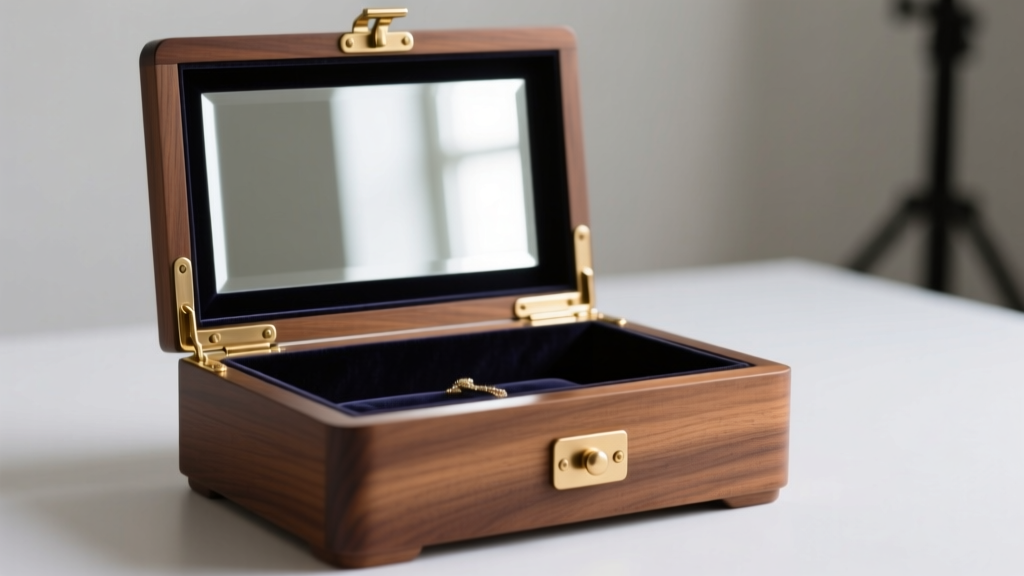
Hardware has also seen a distinct shift. Polished chrome is out; brushed brass, gunmetal, and antiqued bronze are in. These muted metallic finishes are often used for the internal structural components—such as the heavy-duty piano hinges that support the mirror's weight and the internal locking mechanisms. Because a 60-inch mirror is exceptionally heavy, premium models now integrate a concealed cast-iron or steel plate within the bottom 12 inches of the base. This weighted foundation prevents tipping when heavy drawers are fully extended, a crucial safety and engineering upgrade for freestanding units.
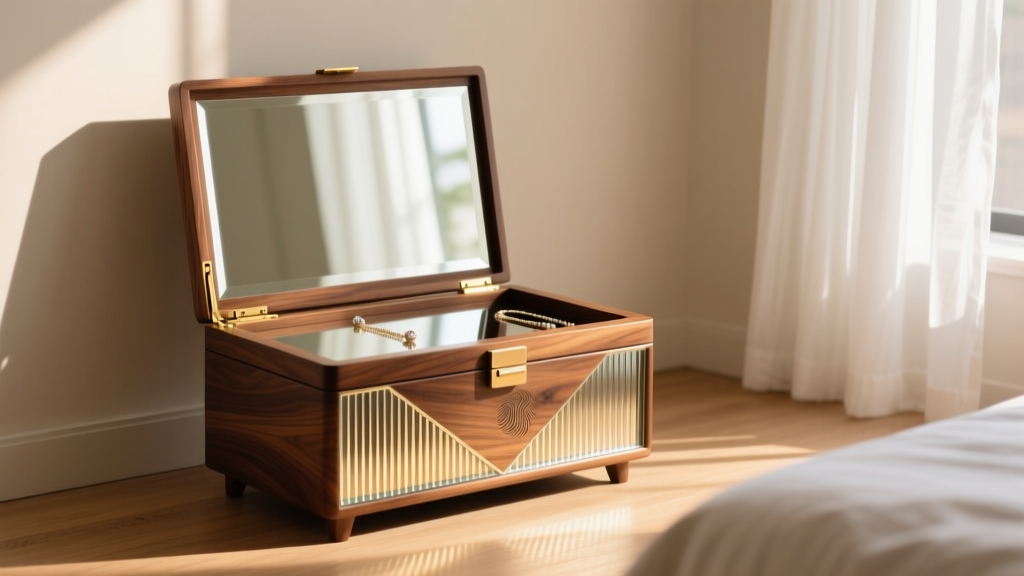
For the ultra-modern aesthetic, we are seeing the introduction of fluted glass panels on the side or rear casings of the standing mirror jewelry box, offering a semi-transparent glimpse of the storage within while diffusing light beautifully across the room.
The Technical Edge: Lighting CRI and Anti-Tarnish Linings
A beautiful exterior means little if the interior environment degrades your collection. The most critical technical advancement in the 2026 standing mirror jewelry box is the integration of high-CRI (Color Rendering Index) LED lighting and advanced atmospheric control.
When evaluating internal lighting, never settle for standard LEDs. The Gemological Institute of America (GIA) emphasizes that accurate color rendering is vital for evaluating gemstones. Look for integrated LED strips with a CRI of 95 or higher and a color temperature of 3000K to 3500K. This neutral-warm spectrum prevents the harsh blue wash of cool LEDs from distorting the fire of diamonds or the subtle pleochroism of sapphires.
Equally important is the interior lining. Standard polyester velvet is a relic of the past; it traps moisture and offers zero protection against hydrogen sulfide, the airborne pollutant responsible for silver tarnish. Premium models now utilize treated polyflannel or Pacific Silvercloth. These materials are embedded with microscopic silver particles that act as a sacrificial anode, absorbing tarnish-causing gases before they can react with your jewelry.
| Material | Tarnish Resistance | Moisture Wicking | Price Tier |
|---|---|---|---|
| Standard Polyester Velvet | None | Low (Traps Humidity) | Budget |
| Microfiber Suede | Low | Medium | Mid-Range |
| Treated Polyflannel | High (Sacrificial Anode) | High | Premium |
| Pacific Silvercloth | Maximum (Embedded Silver) | Maximum | Luxury / Bespoke |
Spatial Styling: Integrating the Standing Mirror Jewelry Box
Placing a freestanding mirrored unit requires an understanding of spatial flow and light dynamics. Because the standing mirror jewelry box commands vertical attention, it should be positioned to amplify natural light without exposing the interior lining to direct UV radiation, which can fade velvet and degrade elastic components in watch winders.
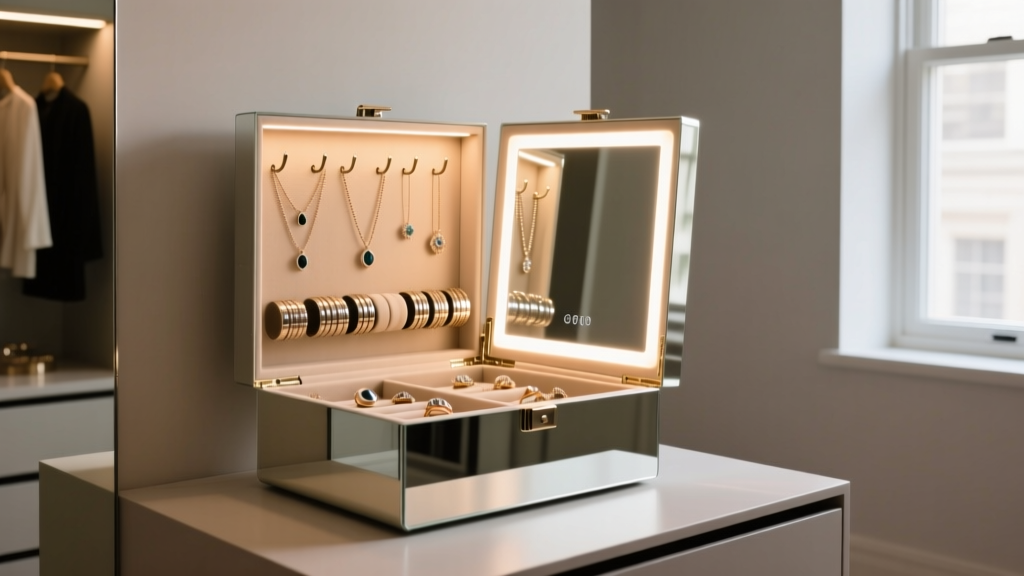
In a primary bedroom, position the unit at a 45-degree angle in a corner opposite the main window. This bounces morning light across the ceiling, creating an expansive feel, while keeping the internal storage shaded when the doors are open. In a dedicated walk-in closet, use the unit as a terminal focal point at the end of a central aisle, flanked by symmetrical cabinetry. Ensure you leave at least 36 inches of clearance in front of the mirror to allow for comfortable full-length viewing and unobstructed access to pull-out drawers. Avoid placing the unit near HVAC vents, as rapid fluctuations in temperature and humidity can compromise the wood veneer and accelerate metal oxidation inside the cabinet.
Curated Profiles: 2026's Defining Aesthetics
To align your storage with your broader interior design scheme, consider these three dominant profiles shaping the market this year:
Japandi Minimalism
Characterized by light ash or bleached oak frames, frameless beveled mirrors, and unbleached linen interior linings. These pieces prioritize serene, clutter-free visual weight and rely on hidden, soft-close Blum hinges to maintain a silent, seamless user experience.
Maximalist Glamour
Think heavy, dark macassar ebony veneers, antique brass corner caps, and deep emerald or sapphire anti-tarnish polyflannel interiors. These standing mirror jewelry boxes serve as dramatic, moody anchors in opulent dressing rooms, often featuring integrated watch winders with programmable rotation cycles.
Industrial Loft
Featuring blackened steel frames, riveted detailing, and smoked glass accents. The internal organization often utilizes raw leather straps and matte black metal hooks, appealing to collectors of rugged, artisan-crafted silver and leather goods who prefer a raw, architectural aesthetic.
Conclusion
The standing mirror jewelry box has firmly transitioned from a simple storage receptacle to a vital piece of interior architecture. By prioritizing high-CRI lighting, advanced anti-tarnish linings, and sustainable material palettes, you can invest in a piece that not only elevates your spatial design but actively preserves the integrity of your most prized collections for decades to come.


