How to Set Up a Trunk Show Jewelry Display: Step-by-Step
Master your trunk show jewelry display with our step-by-step guide. Learn modular storage, anti-tarnish travel tips, and layout strategies for sales.

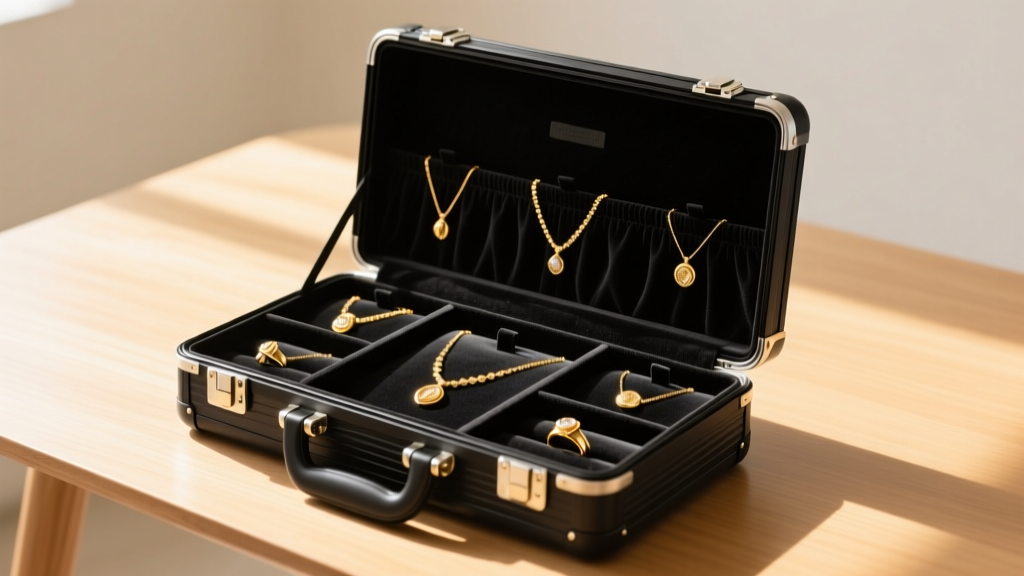
The Art and Science of Mobile Merchandising
Hosting a traveling trunk show is one of the most lucrative ways to connect with high-net-worth clients, test new collections, and build brand loyalty. However, the success of these pop-up events hinges entirely on how your pieces are presented and protected in transit. A haphazard trunk show jewelry display can diminish the perceived value of your work, while a meticulously organized setup elevates your brand to luxury status. In 2026, collectors and boutique buyers expect a seamless, gallery-like experience, even in temporary spaces like hotel suites or private residences.
This comprehensive guide breaks down the exact steps to selecting, packing, and arranging your mobile jewelry storage. We will cover material grades, spatial merchandising psychology, and climate-control tactics to ensure your inventory arrives in pristine condition and sells itself the moment the case is opened.
Phase 1: Selecting the Right Modular Storage Base
The foundation of any successful traveling display is the outer shell. Soft-sided rolls and fabric pouches are suitable for personal travel, but they offer zero structural protection for a professional trunk show. You must invest in a hard-shell modular case.
Material Specifications to Look For
- Outer Shell: Look for an ABS polycarbonate blend or aerospace-grade aluminum. These materials withstand the crushing forces of cargo holds and the inevitable bumps of ground transport.
- Interior Core: High-density EVA (Ethylene-Vinyl Acetate) foam is the industry standard. Unlike cheap polyurethane foams that degrade and off-gas over time, EVA foam is chemically stable, meaning it will not react with precious metals or porous gemstones like pearls and opals.
- Hardware: Ensure the case features TSA-approved combination locks, reinforced steel ball-bearing hinges, and pressure-release valves if you are flying to high-altitude destinations.
Professional-grade modular cases typically range from $150 to $350. Brands that specialize in photographer or watch-travel gear often provide the best cross-over utility for jewelers. According to transport security guidelines outlined by Jewelers Mutual, keeping your inventory in a locked, hard-shell case that remains within your line of sight is the first line of defense against both damage and theft during transit.
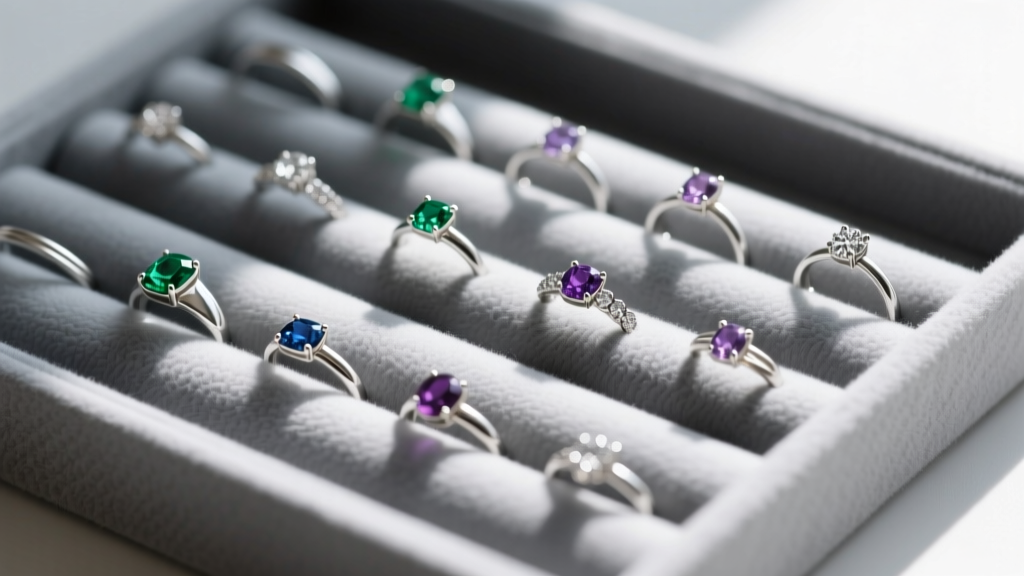
Phase 2: Configuring the Interior Layout for Conversion
Once you have the case, the interior configuration dictates the flow of your sales pitch. Standard modular jewelry trays measure exactly 14.5 inches by 8.5 inches. This standardized sizing allows you to mix and match inserts based on the specific inventory you are bringing to the show.
The 'Z-Pattern' Merchandising Strategy
Visual merchandisers rely on the natural eye-tracking movement of consumers, which typically follows a 'Z' or 'F' pattern. When arranging your trays inside the open case or on a display table:
- Top Left (The Anchor): Place your highest-ticket, most visually striking statement piece here. This captures immediate attention.
- Top Right (The Complement): Position items that pair well with the anchor piece, encouraging multi-item sales.
- Center (The Bread and Butter): Fill the middle trays with your core collection—mid-tier pricing, highly wearable everyday pieces.
- Bottom Right (The Impulse Buy): End the visual journey with accessible, lower-priced items like stud earrings or delicate stacking rings that require less deliberation.
Comparing Display Insert Types
| Insert Type | Best For | Material Recommendation | Capacity (per 14.5x8.5 tray) |
|---|---|---|---|
| Slotted Ring Rolls | Bands, signets, solitaires | Gray microfiber or vegan suede | 20 - 30 rings |
| Necklace Busts (Tiered) | Layered chains, pendants | PU leather over molded foam | 3 - 5 necklaces |
| Flat Slotted Cards | Drop earrings, hoops | Velvet-lined rigid cardboard | 12 - 15 pairs |
| Watch/Bracelet Pillows | Cuff bracelets, tennis bracelets | Satin or anti-tarnish cloth | 4 - 6 pieces |
Phase 3: Anti-Tarnish and Climate Control on the Road
Traveling exposes your jewelry to fluctuating humidity, temperature changes, and airborne pollutants. Sterling silver, in particular, is highly susceptible to hydrogen sulfide gases in the atmosphere, which cause rapid blackening. Copper alloys and brass can also oxidize quickly in humid environments.
Implementing a Multi-Layer Defense
To protect your inventory between shows, you must create a micro-climate within your storage trays.
- 3M Anti-Tarnish Strips: These small, unobtrusive paper strips absorb airborne sulfides and chlorides. Place one strip in every enclosed tray or zip-bag. They remain active for up to six months in a semi-enclosed space.
- Pacific Silvercloth: For high-end silver pieces, line the bottom of your trays with Pacific Silvercloth. This specialized fabric is embedded with microscopic silver particles that intercept and neutralize tarnishing gases before they reach your actual inventory.
- Indicating Silica Gel: Moisture is the enemy of both metals and organic gems (like turquoise and coral). Use orange indicating silica gel packets rather than the traditional blue ones, as the blue variety contains cobalt chloride, which is toxic and can pose a liability if a packet accidentally tears near your jewelry. Orange silica turns green when saturated and can be recharged in an oven.
'Never pack organic gemstones—such as pearls, amber, or coral—in the same airtight compartment as your silica gel packets. Organics require a minimal amount of ambient moisture to prevent cracking and crazing over time.'
Phase 4: Lighting and Final Showroom Setup
The most perfectly organized trunk show jewelry display will fail to convert if the lighting is poor. Hotel suites and private event spaces are notorious for relying on warm, dim, ambient lighting that completely kills the scintillation of diamonds and the true color of sapphires.
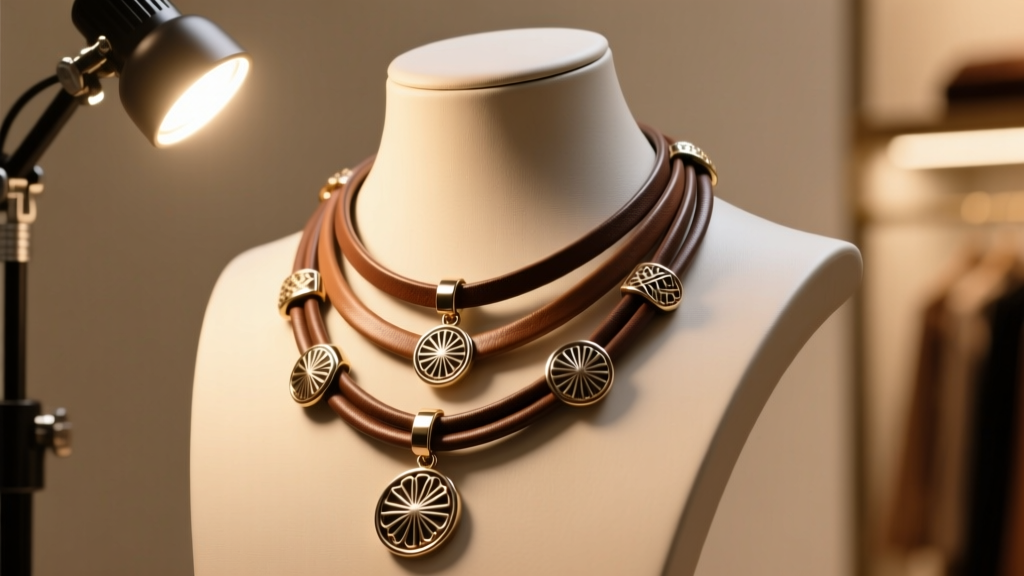
Mastering Color Temperature and CRI
You must bring your own lighting. Invest in rechargeable, clip-on LED display lights. When selecting these lights, pay strict attention to two metrics:
- CRI (Color Rendering Index): Your lights must have a CRI of 90 or higher. A high CRI ensures that the true colors of your gemstones (like the subtle padparadscha hue of a sapphire or the pigeon-blood red of a ruby) are rendered accurately, rather than looking washed out.
- Kelvin (Color Temperature): Match the light to the metal. According to display principles taught by the Gemological Institute of America (GIA), yellow gold looks richest under warm white light (2700K to 3000K). Conversely, diamonds, platinum, and white gold require cool white or daylight temperatures (4000K to 5000K) to maximize brilliance and fire.
For mixed-metal collections, a neutral 3500K light provides the best compromise, ensuring neither the gold looks muddy nor the diamonds look yellow.
Conclusion: The Professional Edge
Setting up a flawless trunk show jewelry display requires treating your storage not just as a protective box, but as a mobile retail environment. By investing in EVA-foam modular cases, applying the Z-pattern merchandising strategy, utilizing active anti-tarnish chemistry, and controlling your lighting environment, you signal to your clients that your brand operates at the highest tier of professionalism. Master these logistics, and your inventory will do the selling for you.


