Upcycled Jewelry Box: A Beginner Guide to Safe Storage
Learn how to safely restore and line an upcycled jewelry box. This beginner guide covers anti-tarnish materials, wood sealing, and organization tips.

The Hidden Risks of Vintage Storage
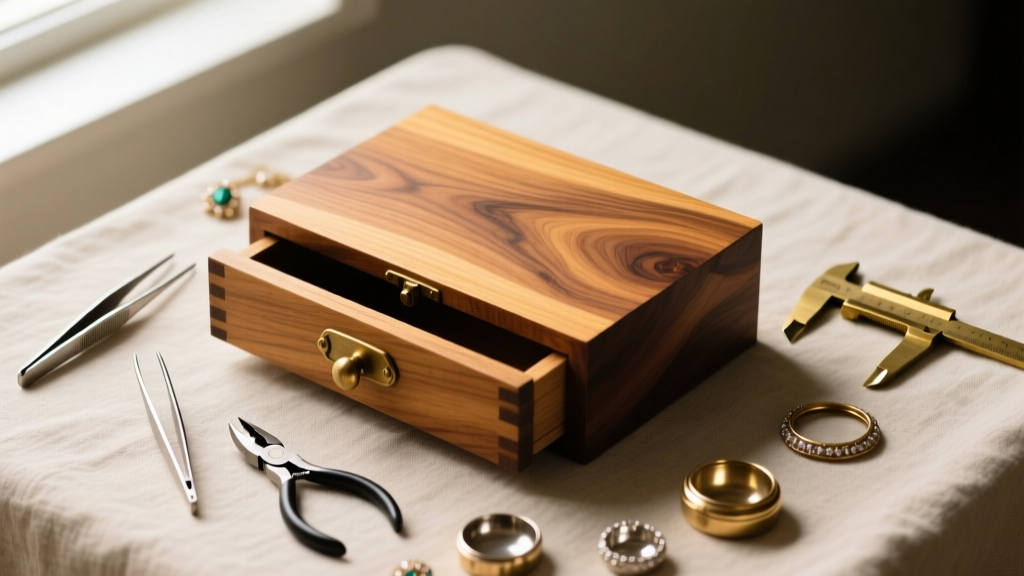
Upcycling a vintage cigar box, an antique drawer, or a repurposed tin into an upcycled jewelry box is a brilliant way to create sustainable, one-of-a-kind storage. However, beginners often make a critical mistake: assuming that any old container is safe for fine jewelry. In reality, many vintage materials harbor hidden chemical threats that can permanently damage your most prized pieces. According to the Gemological Institute of America (GIA), organic gems like pearls and opals are highly porous and susceptible to etching from acidic environments, while silver rapidly oxidizes when exposed to sulfur compounds commonly found in aged fabrics and rubbers.
This beginner-friendly explainer will walk you through the exact science of material safety, how to properly seal a repurposed container, and the specific anti-tarnish linings required to turn a flea market find into a museum-grade storage solution.
Assessing Your Base: Which Materials Are Safe?
Before you begin sanding or painting, you must identify the base material of your upcycled jewelry box. Different materials off-gas different volatile organic compounds (VOCs) that accelerate jewelry degradation.
The Danger of Off-Gassing Woods
Woods like oak, cedar, and plywood contain high levels of acetic acid and formaldehyde. As these woods age or are exposed to humidity, they release acidic vapors. If you store sterling silver or pearls in an unsealed oak box, the acetic acid will cause rapid tarnishing and surface pitting. MDF (medium-density fiberboard) is even worse, as the urea-formaldehyde resins used in its manufacturing continuously off-gas corrosive chemicals. If your upcycled jewelry box is made of these woods, it must be hermetically sealed before use.
Metal and Glass Considerations
Repurposed metal tins (like vintage tea tins) and glass apothecary jars are generally safer regarding off-gassing. However, bare copper, brass, or iron interiors can cause galvanic corrosion if they come into direct contact with your jewelry, especially in humid climates. Glass is chemically inert and entirely safe, but it offers no protection against light exposure, which can fade certain gemstones like amethyst and kunzite.
The Anti-Tarnish Lining Framework
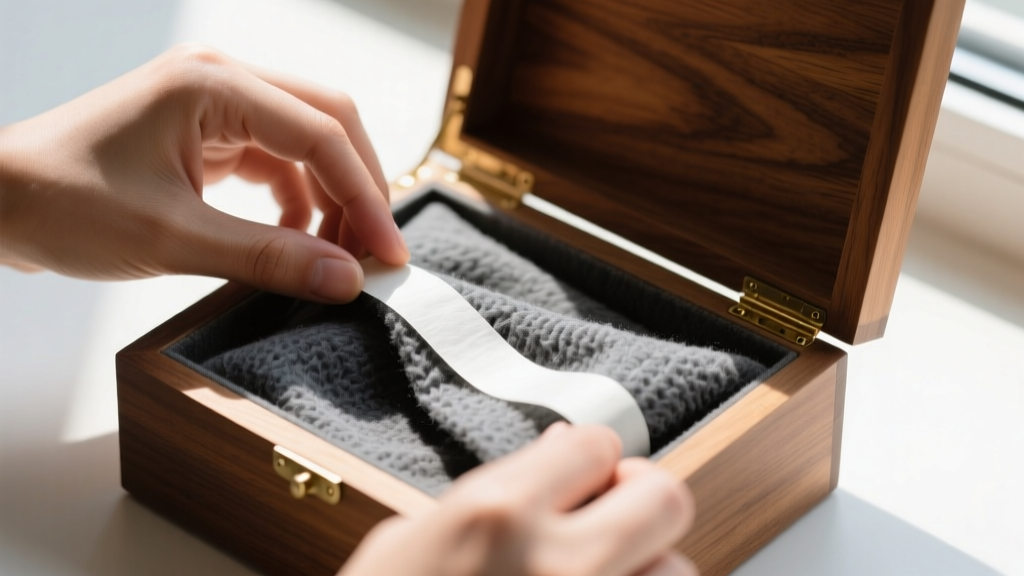
The most crucial step in building an upcycled jewelry box is selecting the right interior lining. Never use standard craft felt or vintage velvet. Standard felt is often manufactured with sulfur-based dyes and binders, which will turn sterling silver black within weeks. Instead, rely on scientifically treated materials designed to intercept corrosive gases.
| Lining Material | Avg. Cost (per yard) | Protection Mechanism | Best Used For |
|---|---|---|---|
| Pacific Silvercloth | $45 - $65 | Embedded microscopic silver particles absorb sulfur gases before they reach your jewelry. | Sterling silver, copper, and brass pieces. |
| Zinc-Treated Flannel | $15 - $25 | Zinc carbonate treatment neutralizes hydrogen sulfide in the air. | Mixed metals, gold-filled, and plated items. |
| Acid-Free Archival Tissue | $10 - $15 (pack) | Provides a pH-neutral physical barrier (pH 7.0-8.5) without chemical reactions. | Pearls, opals, amber, and soft organic gems. |
For a comprehensive approach, many professional conservators use a dual-layer system: a base layer of zinc-treated flannel to neutralize ambient gases, topped with acid-free tissue for delicate organic gems. For more on how sulfur impacts precious metals, refer to the GIA silver care guidelines.
Step-by-Step Restoration for Beginners
Transforming a raw, potentially hazardous container into a safe upcycled jewelry box requires a methodical approach to sealing and adhering. Follow this framework to ensure long-term safety.
- Strip and Clean: Remove all old fabric, foam, and rusted staples. Use a citrus-based adhesive remover rather than harsh chemical solvents like acetone, which can degrade the structural integrity of antique wood veneers.
- Seal the Substrate: If using wood or MDF, apply two coats of a shellac-based primer like Zinsser B-I-N. Unlike water-based polyurethanes, shellac creates an impermeable barrier that completely traps acetic acid and formaldehyde off-gassing. Allow 48 hours for full curing.
- Apply the Lining: Avoid standard spray adhesives, which can off-gas plasticizers over time. Instead, use a pH-neutral adhesive like Lineco Neutral pH Adhesive, or opt for double-sided archival mounting tape for a mess-free application.
- Condition the Exterior: Protect the outside of your upcycled jewelry box with a microcrystalline wax like Renaissance Wax. It provides a hard, moisture-resistant shell without the yellowing associated with traditional beeswax.
Hardware and Hinge Safety
Beginners often overlook the metal hardware on their upcycled jewelry box. Vintage brass or iron hinges can rust or transfer corrosive compounds to the interior. If your box features exposed interior hinges, coat them with a thin layer of Renaissance Wax to seal the metal. Alternatively, replace old hardware with 304-grade stainless steel hinges, which are highly resistant to corrosion and will not react with the interior environment.
Organizing the Interior: Dividers and Inserts
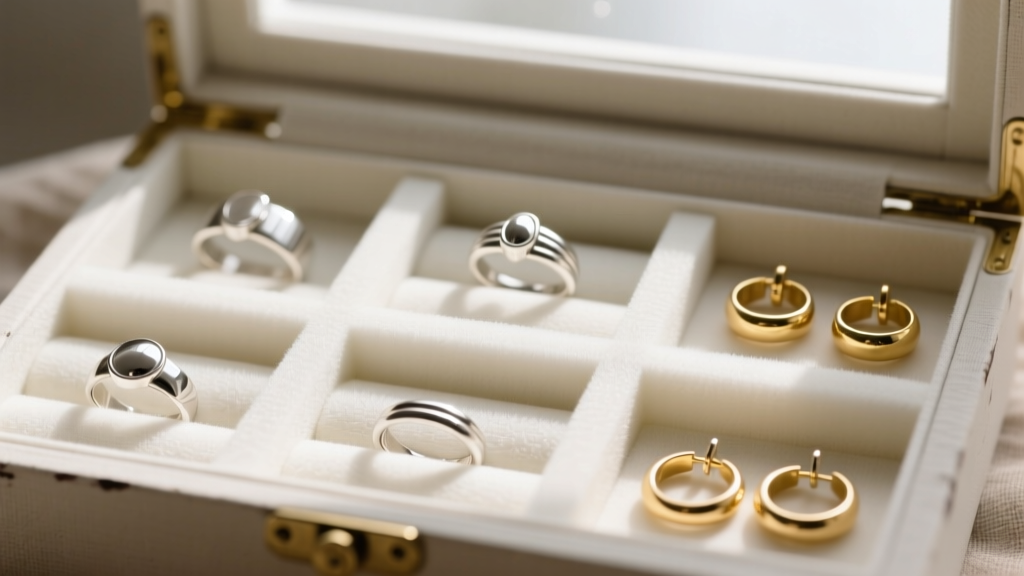
Proper organization prevents jewelry pieces from scratching one another. Diamonds, ranking a 10 on the Mohs hardness scale, will easily scratch gold, silver, and softer gemstones if stored loosely together.
To create custom dividers for your upcycled jewelry box, use acid-free foam core board. Standard craft foam contains plasticizers that can melt into jewelry finishes over time. Measure the interior dimensions precisely, and use a fresh utility blade to cut the foam core into interlocking grid slots. For ring rolls, wrap acid-free foam in your chosen anti-tarnish flannel, securing the seams with archival tape rather than standard hot glue, which can melt and emit damaging VOCs in warm environments.
Maintenance and Climate Control
Even the best upcycled jewelry box requires environmental awareness. Tarnish and degradation are accelerated by high humidity and temperature fluctuations.
- Silica Gel Packets: Place a few rechargeable silica gel desiccant packs in the corners of the box to maintain a relative humidity below 50%. Avoid standard clay desiccants, which can sometimes release dust.
- Anti-Tarnish Strips: If you opted for a standard fabric lining instead of Pacific Silvercloth, drop a 3M anti-tarnish strip into the box. These strips absorb airborne sulfides and last for about six months before needing replacement.
- Location: Never store your upcycled jewelry box in a bathroom or directly above a heating vent. The constant shifts in humidity and heat will compromise both the structural adhesives of your box and the metals inside.
Expert Tip: The Smithsonian Institution archives recommend the 'Oddy Test' for evaluating storage materials. While you cannot perform a full laboratory Oddy Test at home, the principle remains: always assume a vintage material is off-gassing until it has been hermetically sealed with a proven barrier like shellac.
By understanding the chemistry of tarnish and the physical properties of archival materials, you can confidently build an upcycled jewelry box that is not only a beautiful statement piece but also a genuinely safe haven for your most treasured accessories.


