Chinese Jewelry Box Vintage Guide: Authentication and Care
Discover how to authenticate, restore, and safely store treasures in a Chinese jewelry box vintage collectors love. Learn wood, lacquer, and enamel care.

Introduction to Vintage Chinese Jewelry Boxes
Collecting and using a Chinese jewelry box vintage enthusiasts seek out is about more than just securing your accessories; it is an exercise in preserving functional art. From the aromatic depths of carved camphor wood to the meticulous copper-wire cells of cloisonné enamel, these storage pieces represent centuries of artisanal mastery. However, integrating antique storage into a modern jewelry organization routine requires a nuanced understanding of material science. What protects your sterling silver might actively harm your porous gemstones.
This beginner-friendly explainer will guide you through the authentication, material properties, and restoration of vintage Chinese storage boxes, ensuring your collection remains pristine while honoring the craftsmanship of the past.
Identifying Authentic Materials: Camphor, Lacquer, and Cloisonné
The first step in utilizing vintage storage is understanding what it is made of. Chinese artisans historically favored three primary materials for luxury storage, each with distinct chemical properties that interact differently with modern jewelry alloys and gemstones.
Carved Camphor Wood
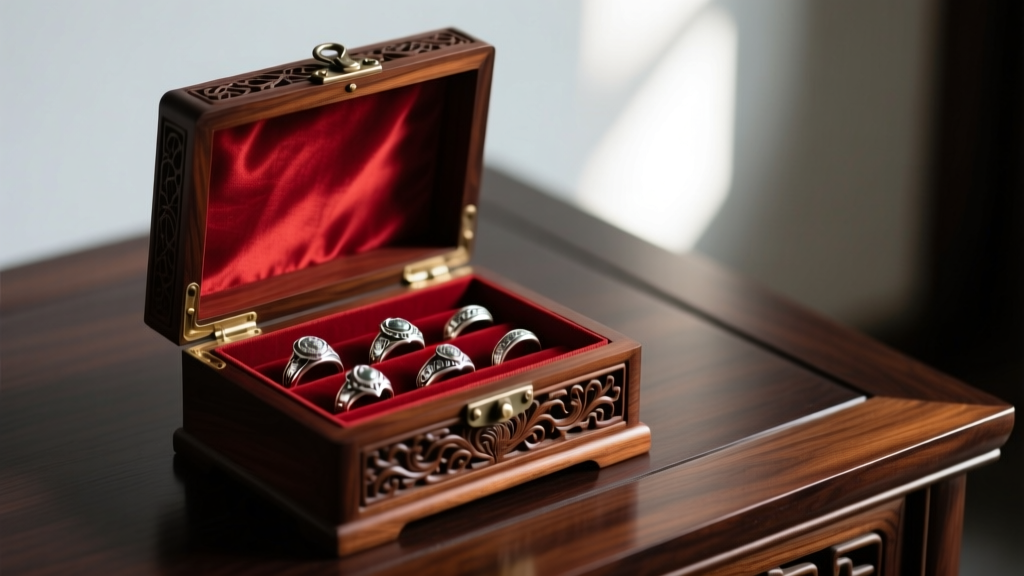
Camphor wood (Cinnamomum camphora) is perhaps the most famous material used in vintage Chinese storage chests and boxes. The wood naturally contains high concentrations of camphor oil, a volatile organic compound that acts as a powerful insect repellent and a natural anti-tarnish agent for silver. The oil creates a localized microclimate that slows the oxidation process, keeping sterling silver bright for months.
Expert Warning: While camphor oil is excellent for silver and gold, it is highly destructive to porous gemstones. According to the Gemological Institute of America (GIA), organic and porous gems like pearls, turquoise, coral, and opals can absorb these volatile oils, leading to permanent discoloration, surface pitting, and structural drying. Never store unprotected pearls in a raw camphor wood compartment.
Cinnabar and Urushi Lacquerware
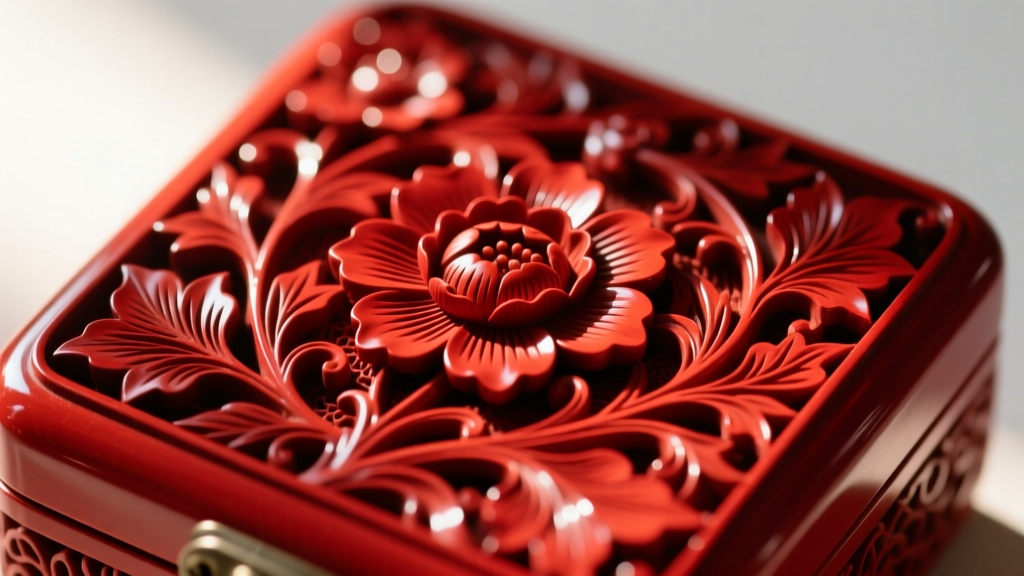
Authentic vintage lacquerware is crafted using the toxic sap of the Toxicodendron vernicifluum tree, applied in dozens of micro-thin layers. Cinnabar lacquer incorporates mercury sulfide pigment to achieve its signature deep, blood-red hue. Once fully cured, the lacquer is incredibly durable, water-resistant, and chemically inert, making it a remarkably safe environment for almost all jewelry types, including diamonds and porous stones.
Cloisonné Enamel
Cloisonné involves soldering fine copper wires onto a copper vessel to create cells, which are then filled with ground glass enamel and fired in a kiln. As noted by The Metropolitan Museum of Art, this technique reached its zenith in China during the Ming and Qing dynasties. The glass-like interior of a well-glazed cloisonné box is completely non-reactive, offering a safe haven for sensitive metals and stones alike.
Authentication Framework: Spotting Reproductions
The market is flooded with late-20th-century tourist reproductions masquerading as mid-century antiques. Use this structural decision framework to evaluate a potential acquisition.
| Feature | Authentic Vintage (Pre-1960) | Modern Reproduction |
|---|---|---|
| Joinery | Hand-cut dovetails or wooden pegs | Staples, uniform nails, or synthetic glue |
| Hinges & Hardware | Hand-cast brass, slight asymmetry, filed pins | Stamped steel or perfectly uniform machine screws |
| Lacquer Depth | 50 to 100+ dipped layers, deep carved relief | Painted resin or thin 2-3 layer spray finish |
| Cloisonné Wire | Hand-bent copper, varying thickness at joints | Machine-stamped, uniform width throughout |
| Interior Lining | Hand-stitched silk, often showing age-related shattering | Glued synthetic satin or modern polyester blends |
Restoration and Maintenance for Beginners
Restoring a vintage piece requires restraint. The goal is to stabilize the box for modern use without stripping its historical patina.
Brass Hardware and Hinges
Never use harsh chemical polishes like Brasso on vintage brass hardware. These abrasives strip the protective patina and can seep into the wood or lacquer, causing irreversible staining. Instead, use a mild solution of distilled water and a drop of castile soap applied with a cotton swab to clean grime. For stubborn tarnish on the hardware, apply a micro-thin layer of Renaissance Wax to seal the brass and prevent future oxidation without altering its antique tone.
Interior Lining Upgrades for Modern Storage
The original silk linings in vintage boxes almost always suffer from 'silk shattering'—a chemical degradation caused by historical metallic weighting agents used in the dyeing process. This degraded silk becomes acidic and can transfer harmful compounds to your jewelry.
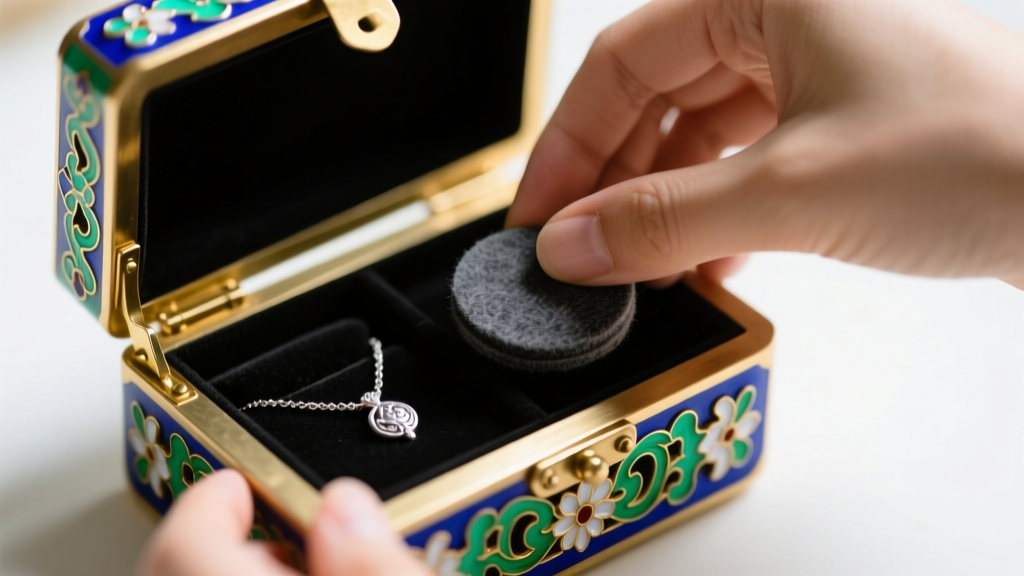
Carefully remove the shattered silk using a plastic spudger. Replace it with modern, archivally safe materials. For silver storage, line the compartments with Pacific Silvercloth or charcoal-infused anti-tarnish felt. For gold and gemstones, use unbleached, acid-free cotton flannel. Secure the new lining using double-sided archival tape or a few drops of pH-neutral wheat starch paste, avoiding modern super glues that off-gas cyanoacrylate vapors.
Environmental Control: Humidity and Temperature
Vintage materials are highly susceptible to modern HVAC systems. Urushi lacquer requires a relative humidity (RH) of around 50-60% to prevent micro-cracking, while camphor wood can warp if RH drops below 40%. Conversely, cloisonné enamel is vulnerable to thermal shock. Moving a cloisonné box from a cold car trunk into a 72°F heated home can cause the copper substrate to expand faster than the glass enamel, resulting in 'enamel pop'—where entire cells of color fracture and detach. Always allow vintage storage boxes to acclimate to room temperature slowly before opening them, and keep them out of direct sunlight and the path of forced-air heating vents.
Pricing Tiers and Sourcing Strategy
Understanding current market values prevents overpaying for reproductions. As of the current market landscape, pricing generally falls into three distinct tiers:
- Tier 1: Tourist Reproductions ($30 - $80): Mass-produced cloisonné and lacquer boxes from the 1980s onward. Often found in antique malls. Good for basic storage, but lack historical value and often use acidic interior glues.
- Tier 2: Mid-Century Export Camphor ($150 - $400): Genuine camphor wood boxes from the 1930s-1950s, featuring solid brass hardware and authentic hand-carved relief work. Excellent for silver storage and highly durable.
- Tier 3: Antique Cinnabar and Imperial Cloisonné ($800 - $5,000+): Pre-1920s pieces with verified provenance. These should be treated as museum-grade art rather than daily-use storage, as the risk of dropping or scratching the enamel or lacquer is too high for everyday jewelry access.
Final Thoughts on Vintage Storage Integration
Incorporating a Chinese jewelry box vintage collectors prize into your daily routine bridges the gap between historical preservation and modern organization. By respecting the chemical realities of camphor oil, the fragility of antique silk, and the thermal sensitivities of cloisonné enamel, you can safely house your most prized possessions. Always prioritize the specific needs of your gemstones over the aesthetic appeal of the box, and your vintage storage will serve as both a beautiful display piece and a highly functional protective vault for decades to come.


