The Vintage Victorian Jewelry Box Revival: 2026 Trends
Discover 2026 trends in vintage Victorian jewelry box collecting, restoration techniques, and how to upgrade antique storage.

The Resurgence of Victorian Elegance in Modern Storage
In 2026, the way we display and store our most intimate possessions has shifted from minimalist concealment to maximalist curation. The vintage Victorian jewelry box is experiencing a massive renaissance in interior design circles, driven by the enduring popularity of "grandmillennial" and "dark academia" aesthetics. Collectors and jewelry enthusiasts are moving away from sterile, mass-produced acrylic organizers and seeking the gravitas of 19th-century craftsmanship. But acquiring and maintaining a vintage Victorian jewelry box requires specialized knowledge. From identifying the shattering of weighted silk linings to recognizing the hallmark Bramah locks of elite London makers, this guide explores the intersection of antique storage and modern jewelry preservation.
Identifying Authentic Victorian Pieces: Wood, Veneer, and Hardware
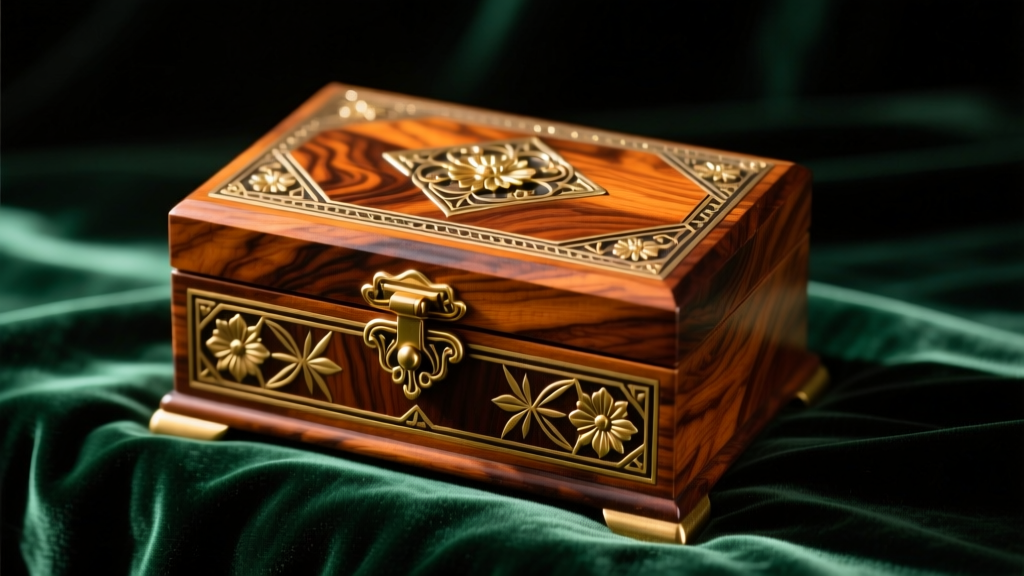
When analyzing the market for a vintage Victorian jewelry box, the exterior wood dictates the baseline valuation. The most coveted pieces from the 1840s to the 1880s feature Coromandel wood (often referred to as Calamander), a dense, exotic timber with striking dark and light banding. Burl walnut and Honduras mahogany were also prevalent, typically adorned with intricate brass stringing or mother-of-pearl inlay. The veneer on authentic pieces is hand-cut and often features cross-banding, a technique where the grain of the border runs perpendicular to the main panel, showcasing the artisan's skill.
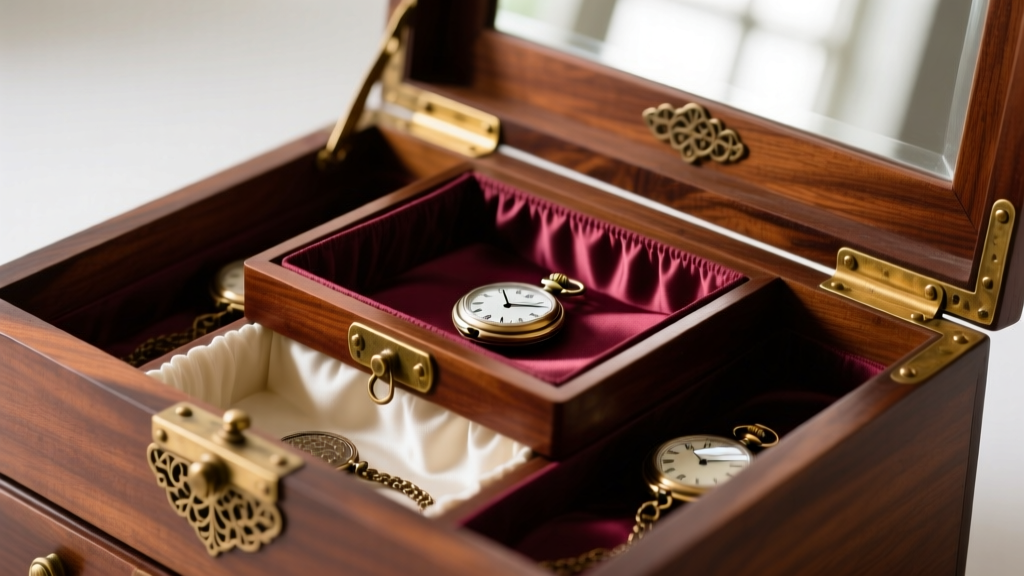
The hardware tells an equally important story. Elite London houses like Asprey, Thornhill, and Elkington & Co. utilized heavy cast-brass hinges and complex locking mechanisms. A genuine high-end Victorian box will often feature a Bramah lock—a specialized tubular pin tumbler lock that was virtually unpickable in the 19th century. If you are examining a piece, check the escutcheon (the decorative keyhole shield). Original Victorian escutcheons are typically hand-chased brass or silver-plated, whereas later Edwardian reproductions often feature stamped, thinner metalwork. According to the Victoria and Albert Museum's historical archives, these intricate locking mechanisms were essential for the aristocracy traveling with their most valuable family heirlooms.
The Anatomy of an 1890s Dressing Box
Unlike modern flat-lay organizers, the interior architecture of a vintage Victorian jewelry box is heavily tiered and highly specialized. A standard gentleman's or lady's dressing box from the late 1800s features distinct zones:
- The Top Tray: Usually removable, containing a velvet ring roll (often holding 12 to 18 rings), a central watch compartment with a glass or silk-covered dome, and specialized slots for cufflinks or brooches.
- The Mid-Section: A deeper well designed for bulkier items like chatelaines, long pearl sautoirs, or pocket watches.
- The Secret Drawer: Activated by a concealed brass lever inside the main well, a hallmark of Victorian travel boxes designed to hide sovereigns, banknotes, or highly sensitive correspondence.
- The Beveled Mirror: Housed on the underside of the lid, these were typically silver-backed and prone to desilvering (the black spotting seen in antique glass). Original beveled glass with minor desilvering is highly preferred over modern, harshly bright mirror replacements to maintain historical integrity.
Market Valuation: Authentic Antiques vs. High-End Reproductions
Understanding the pricing landscape in 2026 is critical for collectors. The market is currently saturated with "Victorian-style" boxes manufactured in the 1970s or modern mass-market replicas. Here is a comparative breakdown to help you evaluate potential acquisitions and avoid overpaying for modern fakes.
| Feature | Authentic Victorian (1840-1900) | 1970s Reproduction | Modern Mass-Market Replica |
|---|---|---|---|
| Wood Core | Solid mahogany or oak dovetailed | Particleboard with thin veneer | MDF with printed wood grain |
| Veneer | Hand-cut Coromandel or thick burl | Sliced commercial walnut | Synthetic laminate |
| Joinery | Hand-cut dovetails, hide glue | Staples, modern PVA glue | Machine-routed, synthetic adhesive |
| Lining | Weighted silk (often shattered) | Nylon or basic polyester | Synthetic velvet |
| Price Range (2026) | $800 - $4,500+ | $150 - $350 | $40 - $120 |
Modernizing the Antique: The Anti-Tarnish Imperative
The greatest challenge in owning a vintage Victorian jewelry box is the interior lining. Most authentic 19th-century boxes were lined with "weighted silk." Silk manufacturers of the era treated the protein fibers with metallic salts (like tin chloride) to increase the fabric's weight and drape. Over a century later, these metallic salts cause the silk to become highly acidic, leading to "silk shattering," where the fabric literally disintegrates into dust upon touch.
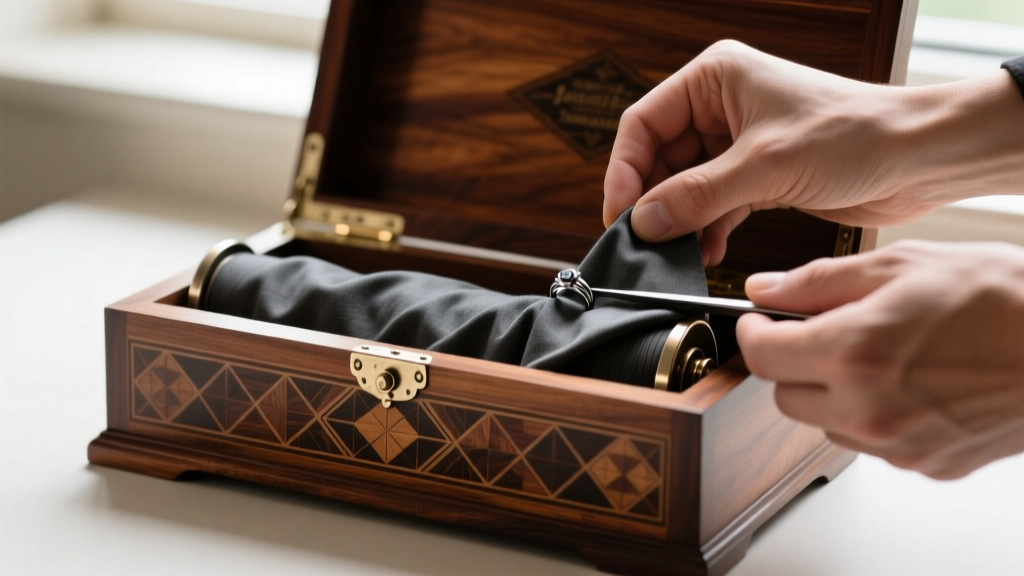
More importantly, this acidic degradation is actively harmful to your jewelry, accelerating the tarnishing of sterling silver and degrading the patina of antique gold. According to conservation guidelines referenced by the Metropolitan Museum of Art, preserving the textile history of an object is important, but not at the expense of the artifacts it houses. To modernize a vintage Victorian jewelry box for daily wear, the shattered silk must be carefully removed.
Replace it with unweighted, acid-free habotai silk for aesthetic accuracy, but back it with modern anti-tarnish technology. We recommend lining the deep wells with Pacific Silvercloth—a 100% cotton flannel embedded with microscopic silver particles that intercept and neutralize tarnish-causing gases before they reach your jewelry. For the ring rolls, inserting 3M anti-tarnish strips behind the new velvet or silk ensures your 14k and 18k gold stackers remain pristine without altering the visual romance of the antique interior.
Curating Your Victorian Storage for Contemporary Collections
Adapting a 130-year-old storage system for a 2026 jewelry wardrobe requires spatial creativity. Victorian ring rolls were designed for slender, single-band solitaires or mourning rings. Today’s popular chunky signet rings and multi-gemstone dome rings often do not fit into standard 1-inch roll pockets. To solve this, utilize the deep lower wells of the box. Place a custom-cut insert of acid-free polyethylene foam, slotted to accommodate wider band profiles.
Furthermore, Victorian mourning jewelry, such as jet brooches and woven hair bracelets, requires specific environmental controls. Jet is a soft, organic gemstone that can easily be scratched by harder modern metals. Dedicate a specific, velvet-lined quadrant of the mid-section exclusively for these fragile historical pieces, ensuring they do not come into contact with contemporary diamond or sapphire items that could mar their delicate surfaces. For delicate modern chains and layered necklaces, repurpose the original glass-topped cufflink compartments. By laying the necklaces flat and securing the clasps with small, archival-quality polyester organza bags, you prevent chain tangling while maintaining the visual elegance of the piece.
Conclusion
The vintage Victorian jewelry box is far more than a nostalgic relic; it is a masterclass in functional artistry. By understanding the nuances of Coromandel veneers, Bramah locks, and the chemical realities of weighted silk, you can confidently acquire, restore, and utilize these magnificent pieces. In an era of disposable acrylics, anchoring your collection in a meticulously restored 19th-century dressing box ensures your jewelry is housed with the reverence, security, and protection it truly deserves.


